Protect Inventory
Cover palletized goods, raw materials, finished products and packaged components during storage, staging and loading.
 News
News

DERFLEX supplies warehouse tarps and custom PVC warehouse covers for palletized inventory, machinery, raw materials, temporary partitions and indoor/outdoor storage. The material, cover geometry, seams, reinforcement and fastening method can be matched to the actual handling and exposure conditions instead of relying on a one-size-fits-all tarp.
Warehouse tarps are flexible protective covers used to isolate stored goods and equipment from dust, moisture, debris, handling contamination and weather exposure.
A light PE tarp may be sufficient for temporary indoor dust protection. Reusable covers, outdoor yards, machinery, frequently handled pallet loads and long-term storage usually justify a stronger PVC-coated polyester direction with welded seams and reinforced stress points.
Cover palletized goods, raw materials, finished products and packaged components during storage, staging and loading.
Shield idle machinery, spare parts and maintenance equipment from dust, drips, dirt and outdoor weather exposure.
Use fabricated tarp panels or curtains for temporary zoning, dust control and flexible warehouse separation where a rigid wall is not needed.
The figures below follow the specification range currently published on the DERFLEX warehouse-tarp page. Final construction should be confirmed against the required use environment and sample.
| Selection Item | DERFLEX Direction | What the Buyer Should Confirm |
|---|---|---|
| Material | PVC coated polyester fabric; other tarp structures may be discussed by application. | Handling frequency, indoor/outdoor exposure, weldability, abrasion and budget. |
| Weight | 380–1200 gsm customizable range currently published for warehouse tarps. | Do not select GSM alone; also review base fabric, coating, reinforcement and stress points. |
| Thickness | 0.30–1.2 mm direction currently published. | Use the actual material datasheet or approved sample as the controlling reference. |
| Roll Width | 1.02–3.20 m currently listed; larger finished covers can be produced by panel joining / welding. | Panel layout, seam count, usable cutting yield and finished-cover dimensions. |
| Color | Blue, grey, green, white, black, red, yellow; custom color direction can be discussed. | Color consistency, light reflection, dirt visibility, branding and outdoor heat exposure. |
| Surface | Glossy, matte, UV-resistant, anti-mildew and other project-defined directions. | Cleaning method, sliding/friction behavior, contamination and outdoor service conditions. |
| Fabrication | Cut panels, welded covers, reinforced hems, eyelets, webbing, straps, D-rings and custom shapes. | Load geometry, tie-down plan, removal frequency and forklift / aisle interference. |
| FR Requirement | Flame-retardant directions may be discussed for applicable warehouse projects. | Provide the exact standard, test method and acceptance requirement before quotation; do not rely on “FR” as a generic label. |
Final technical performance, compliance and acceptance criteria should be defined in the purchase specification and confirmed by the applicable DERFLEX product data / sample.
Different warehouse jobs fail for different reasons. The matrix below starts with the operating condition rather than a generic “heavy duty” label.
| Use Condition | Practical Cover Direction | Priority Design Details |
|---|---|---|
| Indoor dust protection | Light-to-medium tarp or fitted reusable cover, selected around handling frequency. | Easy removal, cleanability, low snag risk, identification / labeling. |
| Reusable pallet covers | Flat tarp or fitted five-sided hood in PE or PVC direction depending duty level. | Loaded pallet dimensions, skirt length, corner geometry, fastening and access. |
| Machinery protection | Custom PVC-coated cover for repeated use and dimensional stability. | Sharp projections, access doors, vents, lifting points, zipper / strap placement. |
| Outdoor storage yard | Heavier PVC-coated polyester with welded seams and reinforced perimeter. | UV exposure, water shedding, tie-down load, wind, pooling and abrasion beneath the cover. |
| Temporary partition | Fabricated PVC curtain / divider tarp; clear window or FR direction if required by project. | Track / hanging method, bottom restraint, traffic openings, visibility and site safety requirements. |
| High-cleanliness storage | Smooth, easy-clean cover with a controlled handling and storage procedure. | Cross-contamination risk, cover cleaning, condensation, contact surface and labeling. |
Geometry affects labor, fit, protection and repeatability just as much as fabric weight.
Best when load sizes change frequently or the same tarp must cover several shapes. It is flexible and simple, but requires folding, overlap and a consistent tie-down method.
Best for repeatable pallet or machine dimensions. A fitted cover improves installation consistency and reduces excess folds, but the loaded dimensions must be controlled.
Best for zoning, dust control or temporary separation rather than covering an object. Hanging points, traffic openings and lower restraint should be designed with the facility layout.
A fitted cover can reduce daily folding and improve repeatability. See DERFLEX pallet cover tarpaulin guidance for fitted hood logic and load dimensions.
When the requirement is separation rather than object coverage, review a warehouse divider tarp solution instead of over-specifying a loose tarp.
For repeated industrial use, review the load shape, drainage, abrasion and fastening before freezing the material specification.
Outdoor covers should shed water rather than form large unsupported pockets. Pooling increases load on seams, tie-downs and the covered goods.
Pallet edges, steel corners and machine projections can concentrate abrasion. Use corner protection or local reinforcement instead of relying only on a heavier base tarp.
Eyelets and D-rings should transfer load into a reinforced hem or webbing path. Hardware spacing should match the fixing method and expected tension.
Large warehouse covers often require joined panels. Keep seams away from unnecessary high-friction edges and confirm the welding method on the actual material.
Loose skirts, cords and low straps can become snag points in busy aisles. Cover dimensions and fastening should support safe routine handling.
A waterproof cover blocks external water, but it can also reduce ventilation. Sensitive goods may require venting, breathable strategy or moisture-control procedures.
Real DERFLEX images are used below rather than generic stock visuals.
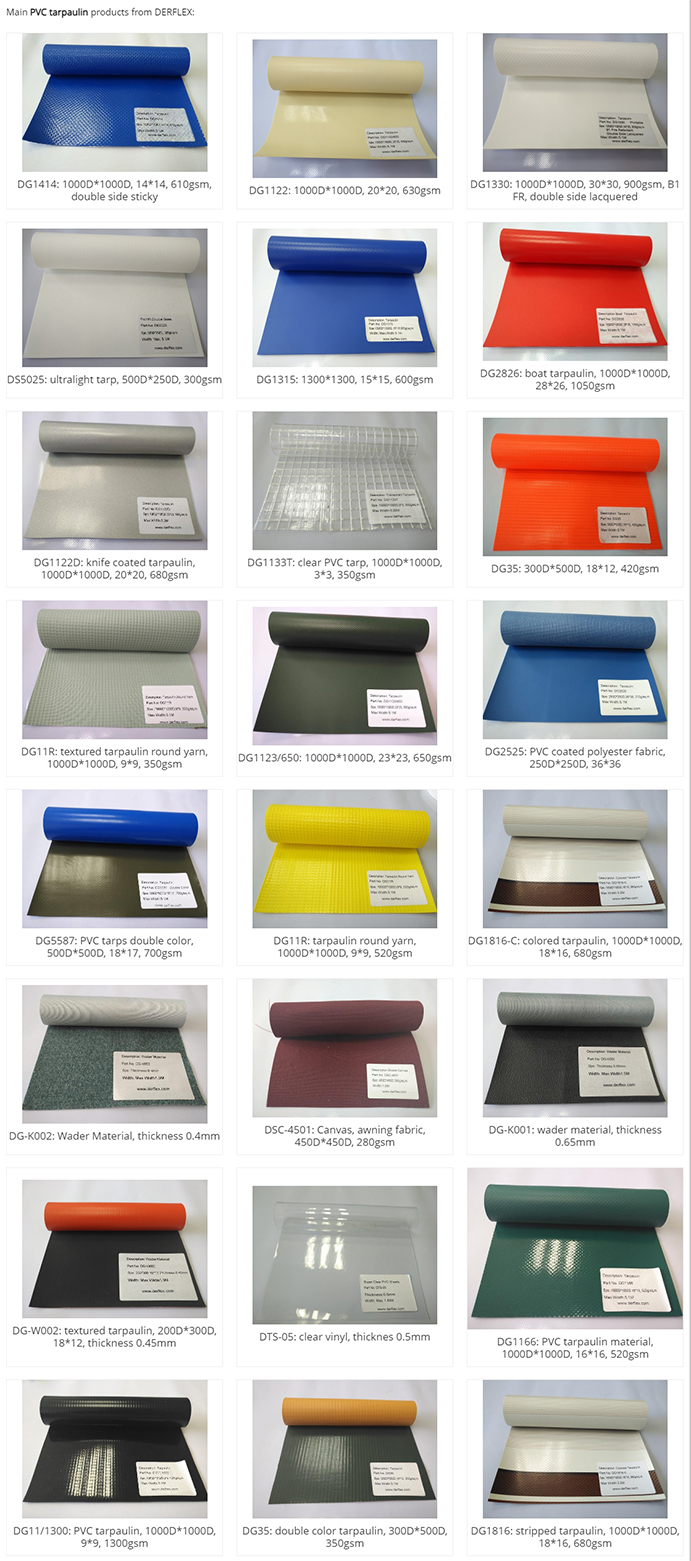
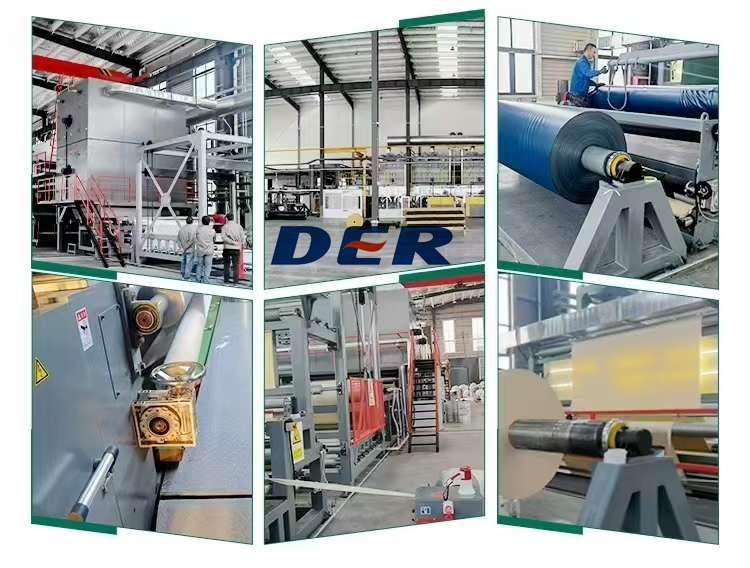
Each application below has a different dominant risk, so the tarp construction should follow the use case.
Dust and moisture protection for cartons, bagged goods, spare parts and packaged materials in storage or staging areas.
Custom loose or fitted covers for machines, generators, fabrication equipment and idle production assets.
Protection for rolls, steel, lumber, bundled products, bulk packaging and work-in-process inventory.
Weather protection for stock kept outside the main building, where UV, rain, wind and tie-down stress become more important.
Temporary containment and cover systems during facility repair, equipment maintenance or dusty internal construction work.
Repeatable warehouse-cover ranges with controlled size, material, color, hardware, labels and packing for B2B resale.
DERFLEX also organizes related solutions under industrial tarps and the main tarp product hub, which can help buyers compare warehouse protection with transport, construction and outdoor-cover applications.
Custom manufacturing should control the full finished-cover specification, not only the sheet size.
PVC coated polyester, lighter tarp directions or project-defined material based on duty cycle.
Flat cover, fitted hood, machine cover, curtain panel, custom cut shape or welded large panel.
Welded hem, webbing, reinforced corners, rope edge, abrasion patches and local stress reinforcement.
Eyelets, D-rings, straps, buckles, rope, sleeves, pockets and project-specific fastening points.
Review DERFLEX heavy duty vinyl tarps when repeated handling, outdoor exposure and welded fabrication are central to the requirement.
Use the custom heavy duty tarp capability page when the project requires detailed reinforcement, hardware, branding or a repeat OEM program.
These mistakes create unnecessary cost even when the tarp fabric itself is acceptable.
Heavier material does not automatically fix weak hems, poor seam design, bad tie-down geometry or sharp-corner abrasion.
Pallet or machine dimensions should be measured in the actual covered condition, including projections, handles, skids and clearance.
The fabric surface may be waterproof while water still enters through openings, poor overlap, failed seams or ponding.
Sealed waterproof protection may reduce airflow. Sensitive stored goods can need a ventilation or moisture-control strategy.
Repeat B2B orders need controlled dimensions, hardware position, reinforcement, color and packing—not only a catalog size.
If flame performance matters, state the exact required standard and testing / documentation expectation before material selection.
A more complete inquiry reduces unnecessary sampling cycles and prevents weak assumptions during quotation.
Goods type, machine shape, pallet profile, loaded dimensions and any sharp projections.
Indoor dust, humidity, outdoor rain, UV, wind, abrasion, temperature and storage duration.
Flat or fitted cover, seams, hems, reinforcement, eyelets, straps, D-rings and access needs.
Quantity, repeat-order plan, color, logo, labels, packing, destination and required test direction.
These six verified DERFLEX pages form the closest topic cluster for warehouse tarp buyers.
Send DERFLEX the covered object, loaded dimensions, indoor/outdoor conditions, preferred material or GSM direction, cover geometry, reinforcement, hardware, quantity and destination. The team can review a practical material and fabrication direction for sampling and quotation.
Direct answers to common specification and procurement questions.
There is no single best material for every warehouse. Light PE can work for temporary indoor dust protection, while PVC-coated polyester is usually the stronger direction for reusable covers, welded fabrication, frequent handling and outdoor storage. The final choice should follow the duty cycle and exposure.
PVC-coated tarp material provides a waterproof surface, and welded fabrication can support water-resistant finished cover construction. Actual protection also depends on seams, openings, overlap, fastening, water shedding and installation, so the complete cover design matters.
Use a flat tarp when load dimensions vary and flexibility matters. Use a fitted five-sided cover when pallet or machine dimensions repeat and you want faster, more consistent daily installation.
Spacing should follow the cover size, tie-down method, expected wind or pulling load and reinforcement layout. A fixed spacing rule should not be copied across every project. The hardware must transfer load into a reinforced edge rather than only through the base fabric.
Yes. DERFLEX can discuss custom flat covers, welded large panels, fitted hoods, machine covers, curtain panels, reinforced hems, eyelets, webbing, straps, D-rings, printing and project-specific shapes.
Only when the site, insurer, customer specification or applicable code requires it. If flame performance is required, provide the exact standard and acceptance criteria before quotation so the material and test direction can be selected correctly.
First identify whether moisture is entering from outside or forming from trapped humidity and temperature change. A waterproof cover alone does not solve condensation. Sensitive goods may need ventilation, spacing, desiccant, a breathable strategy or changes to the storage procedure.
Provide the application, loaded dimensions, environment, material or weight direction, flat or fitted geometry, seam and reinforcement requirements, grommet / D-ring / strap layout, color, branding, qua, ntity, destination and any required testing or documentation.