Company News Industry News

Fumigation Tarps Manufacturer | Gas-Barrier PVC & PE Covers | DERFLEX

Professional Fumigation Cover Programs

Fumigation Tarps for Gas-Barrier Pest Control & Quarantine Enclosures

DERFLEX supplies custom fumigation tarps and fabricated cover programs for stored grain, timber, export cargo, containers, machinery and structural pest-control projects that require a controlled enclosure rather than an ordinary waterproof sheet.

The purchasing question is not simply “PVC or PE?” A professional fumigation tarp must be specified as a complete barrier system: sheet construction, gas-permeability criterion, welded seams, reinforced handling zones, perimeter interface and the acceptance method required for the target fumigant and local treatment rules.

PVC Coated Fabric PE / Barrier Sheet Direction Welded Panel Construction Reinforced Edges Custom Size & OEM
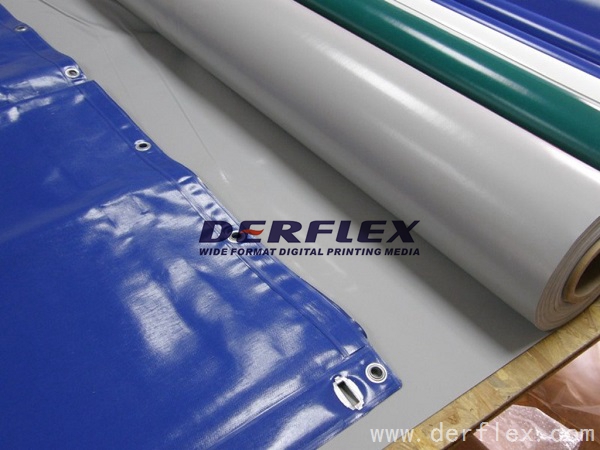
DERFLEX custom heavy duty tarpaulin material for fumigation tarp fabrication
Material reference: reinforced coated tarp construction for custom fabrication. Final fumigation suitability must be verified against the target gas, seam method and project acceptance criteria.
Answer-First

What is a fumigation tarp?

A fumigation tarp is a low-permeability flexible sheet used to form a controlled enclosure around commodities, cargo, timber, equipment or structures during professional fumigation. Unlike a general rain tarp, it must be selected around gas retention, seam leakage, puncture risk, handling and the sealing method used around the perimeter.

For procurement teams, “gas-tight” should not be treated as a marketing adjective. The target fumigant, permeability or retention criterion, test method, temperature, seam construction and complete enclosure design should be defined before material approval. A waterproof sheet can still be unsuitable for fumigation if the gas permeates the film or escapes through seams, holes or the perimeter.
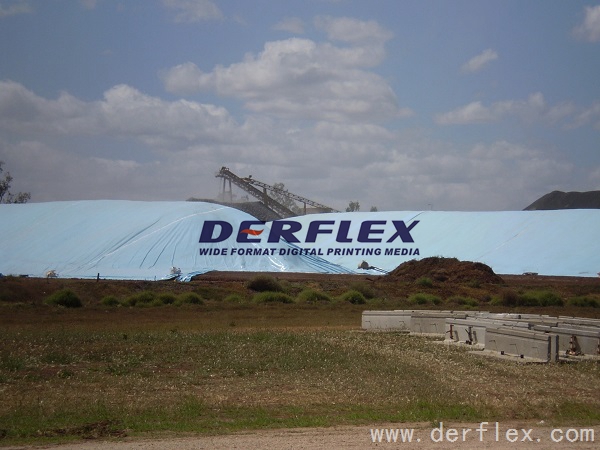
Search Intent Clarified

“Fumigation tarp” can describe three very different products

Separating the intended job prevents buyers from comparing materials that look similar but are engineered, tested and regulated for different containment conditions.

01

Commodity & cargo fumigation covers

Reusable or semi-reusable sheets for bagged grain, bulk grain, timber, logs, cargo, machinery, warehouses and container-related quarantine treatment. Handling strength, panel welding and perimeter sealing are major procurement variables.

02

Structural fumigation tenting

Large fitted or panelized covers used around buildings and structures by licensed fumigation operators. The tenting system, closures, panel layout and safety procedures are specialist requirements and must follow the responsible operator and local regulations.

03

Soil fumigant barrier films

Thin agricultural films used over treated soil are a separate category. VIF/TIF and other soil-fumigant films may be evaluated under fumigant-specific permeability methods and pesticide-label rules; do not substitute a general industrial tarp specification for this application.

Procurement Specification

Fumigation tarp specification: what should actually be on the RFQ?

DERFLEX can discuss a coated-fabric or project-specific barrier direction around the buyer's application. Values not already defined by an approved project document should be confirmed before bulk production rather than assumed from a generic tarp grade.

Specification Item Recommended Procurement Direction Why It Matters
Product definition Custom fumigation tarp / gas-barrier fumigation sheet / professional pest-control cover. Separates the project from a generic waterproof cover.
Target fumigant State the fumigant or professional treatment system. Do not assume one material performs identically with every gas. Film permeability can change with fumigant chemistry and test conditions.
Barrier criterion Buyer-defined gas-permeability, retention or approved material criterion, including the required test method where applicable. “Gas-proof” should be tied to a measurable acceptance requirement.
Material structure PVC-coated reinforced fabric, reinforced PE/PE laminate, multilayer barrier construction or other project-defined structure. Controls barrier performance, strength, weight, weldability and repair approach.
Weight / thickness Available according to barrier, handling, puncture, tear, reuse and fabrication requirements. A heavier sheet is not automatically a better fumigation tarp.
Seams Heat-welded or HF/RF-welded panel seams where compatible with the selected material; seam validation by agreed method. Leakage at panel joins can negate good sheet-level barrier performance.
Edges / perimeter Reinforced skirt or edge configuration compatible with the fumigation contractor's approved sealing system. Perimeter leakage is a system-level risk, not just a fabric property.
Reinforcement Localized reinforcement at corners, lifting zones, folds, abrasion points and project-defined interfaces. Protects high-stress areas without making the entire tarp unnecessarily heavy.
Finished size / panel map Custom dimensions, panel orientation, folding plan, size coding and enclosure geometry. Large-format deployment must be practical for the crew and treatment zone.
Outdoor exposure Specify sunlight, temperature, weather and storage exposure if the tarp will be reused outdoors. UV aging and repeated folding can change surface integrity and flexibility.
Inspection / approval Define the buyer's material, seam, visual, dimensional and barrier acceptance plan before production. Creates a repeatable standard for future orders and field inspection.
Important: DERFLEX does not recommend treating a standard waterproof tarp as a fumigation sheet without project-specific gas-barrier and seam verification. Waterproofing and fumigant permeability are different performance questions.
Material Decision

PVC vs reinforced PE vs multilayer barrier film

There is no universal best fumigation tarp material. The right construction is the one that meets the required barrier criterion while remaining practical for the expected handling, welding, abrasion, reuse and cost target.

Reusable heavy-duty direction

PVC-coated polyester

A reinforced PVC-coated textile can combine strong handling durability, weldability, cleanability and custom fabrication. It should still be evaluated for the specific fumigant and barrier criterion.

  • Strong textile reinforcement
  • Useful for large welded custom covers
  • Can accept reinforced hems, skirts and wear patches
  • Typically heavier than thin-film alternatives
Lower handling weight

Reinforced PE / PE laminate

Reinforced polyethylene constructions can reduce sheet weight and may be commercially attractive for large covers where an appropriate gas-barrier grade is available.

  • Lower mass can simplify deployment
  • Available in reinforced laminated structures
  • Barrier performance depends on the exact grade
  • Seam durability and repair method require review
Specialty barrier direction

Multilayer barrier film

Specialty multilayer films can provide very low permeability at comparatively low weight. Thin constructions can require more protection from puncture, abrasion and rough handling.

  • Potential for high barrier at low mass
  • Useful when deployment weight is critical
  • Puncture protection becomes more important
  • Joining method must match the film structure
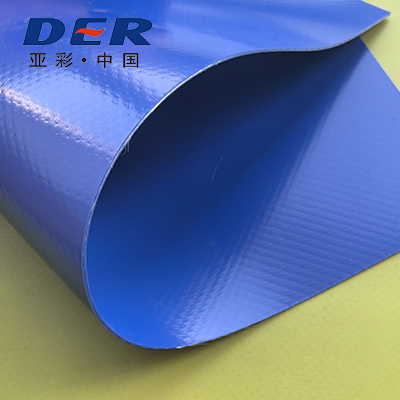
DERFLEX PVC coated polyester tarpaulin cross section for custom gas barrier fumigation cover development
Coated textile reference. The reinforced base fabric supports mechanical strength; the coating provides the continuous surface needed for waterproofing, weldability and project-specific barrier development.
Material Construction

Why the complete layer structure matters

A fumigation cover must survive two jobs at once: it has to maintain the specified barrier function, and it has to remain usable as a large flexible industrial sheet. The reinforcement, coating or film layers, surface finish and joining method should therefore be considered together.

For reusable PVC fumigation tarps, a high-tenacity woven substrate can help control tensile and tear behavior while a compatible coating supports welding and cleaning. For lighter PE or multilayer barrier sheets, the balance can shift toward handling efficiency and gas permeability, making puncture protection and seam design more important.

For buyers developing a reusable industrial enclosure, DERFLEX recommends comparing material by barrier requirement + mechanical duty + fabrication method + field handling, not by one GSM number.

Engineering Notes

A fumigation tarp is a five-part containment system

Good barrier film can still perform poorly when the rest of the enclosure is under-specified. These five elements should be reviewed as one system.

1. SheetMaterial structure, target fumigant compatibility and required permeability.
2. SeamsWelding process, overlap, seam width, process control and seam acceptance.
3. High-wear zonesCorners, folds, contact points, lifting areas, protrusions and abrasion protection.
4. PerimeterEdge or skirt design that can interface with the professional sealing method.
5. InspectionDefined pre-use and repeat-use checks for punctures, coating damage, seams and edges.

Why fumigant-specific testing matters: U.S. EPA tarp-testing guidance states that permeability can differ from one fumigant to another because chemical properties differ. Classic FAO post-harvest guidance likewise emphasizes high gas tightness, tear resistance, manageable weight, UV/temperature resistance and properly joined seams for fumigation sheets. These references are useful engineering background; the current pesticide label, local regulations and project-specific acceptance criteria remain controlling.

Technical references: U.S. EPA tarp testing guidance · FAO fumigation under sheets

Selection Matrix

Which fumigation tarp direction fits the application?

Start with the treatment enclosure and failure risks, then choose the barrier construction and fabrication details. Final approval should follow the responsible fumigation professional and applicable project requirements.

Application Main Procurement Risk Material Direction Fabrication Focus
Bagged grain stacks Leakage, repeated handling, abrasion on pallets or sacks. Reinforced gas-barrier sheet selected for the required fumigant and handling cycle. Welded seams, practical panel size, protected corners, controlled perimeter.
Bulk grain / bunker treatment Very large area, wind, irregular surface, deployment difficulty. Reinforced coated or laminated barrier structure with adequate tear resistance. Panel map, perimeter reinforcement, fold plan, treatment interfaces.
Timber / logs / export wood Splinters, sharp edges, puncture, repeated transport handling. More abrasion-tolerant reinforced barrier tarp where reuse is expected. Wear pads, local reinforcement, repair plan, welded large panels.
Container / export cargo Door interfaces, confined geometry, penetrations and sealing details. Barrier material matched to the professional treatment method. Custom geometry, controlled seams and interface details.
Machinery / irregular equipment Protrusions, puncture risk, excess folds and difficult perimeter control. Reinforced flexible cover with defined gas-barrier requirement. Custom patterning, localized reinforcement and protected contact points.
Structural pest-control tenting Large surface area, wind, panel handling, closures and regulated procedures. Dedicated fumigation tent material specified by the licensed operator. System-level design; fabric selection alone is insufficient.
Application Engineering

Where custom fumigation tarps are commonly specified

Each application changes the enclosure geometry, abrasion pattern and handling method. DERFLEX therefore recommends an application-specific specification instead of one universal tarp grade.

A

Stored grain & seed

Bagged stacks, bulk piles and warehouse storage can require low-permeability covers with manageable panel weights, welded seams and a perimeter compatible with the professional sealing method.

B

Timber & logs

Rough surfaces and splinters make puncture, abrasion and localized reinforcement especially important when the cover is intended for repeated use.

C

Containers & export cargo

Quarantine and pest-control treatments may involve packaged goods, machinery or containerized cargo. Interface details and closure zones should be defined before fabrication.

D

Warehouses & stockpiles

Large stack enclosures benefit from panel identification, engineered folding, high-wear reinforcement and repeatable inspection criteria.

E

Machinery & equipment

Custom shape development can reduce excessive folds around protrusions and move seams away from high-stress points.

F

Structural tenting

Buildings and structures use specialist fumigation systems. The material, panel layout, closures and full containment plan should be approved by the licensed fumigation operator.

Custom Manufacturing

From treatment requirement to a repeatable cover program

For distributors, pest-control suppliers, grain-storage companies and OEM buyers, the goal is to turn one project into a controlled specification that can be repeated without re-engineering every order.

Step 01

Define the enclosure

Commodity or structure, dimensions, indoor/outdoor exposure, handling frequency and expected reuse.

Step 02

Set barrier criteria

Target fumigant, required permeability or retention criterion, test method and seam expectation.

Step 03

Engineer fabrication

Panel map, welding route, reinforced zones, perimeter construction, labeling and fold plan.

Step 04

Approve & repeat

Confirm the agreed sample or first article, inspection points, packaging and repeat-order specification.

Image Pack

DERFLEX material, large-cover and reinforcement references

These are verified DERFLEX web assets. They show material and fabrication context; they should not be interpreted as proof that a generic tarp grade is approved for a specific fumigant.

Common Procurement Mistakes

Six ways fumigation tarp projects become under-specified

1

Assuming waterproof = gas-tight

Liquid-water resistance and fumigant permeability are not the same property.

2

Buying by GSM only

Weight does not define gas barrier, seam integrity or handling efficiency.

3

Leaving the target gas undefined

Barrier behavior can differ by fumigant, temperature, material structure and test method.

4

Using ordinary stitched seams

Needle holes can create leakage paths; the approved joining method should be part of the specification.

5

Ignoring the perimeter

A strong sheet cannot compensate for a sealing interface that is not designed around the field method.

6

Reusing damaged covers without criteria

Punctures, abrasion, seam damage and coating wear can compromise containment performance.

Buyer Checklist

What to send DERFLEX for a fumigation tarp quotation

  • Application: grain stack, timber, cargo, container, machinery, warehouse or structure.
  • Target fumigant or professional treatment method.
  • Required gas-permeability / retention criterion and test method, when specified.
  • Finished dimensions, enclosure geometry, panel drawing or measured photos.
  • Indoor/outdoor exposure, sunlight, temperature and expected reuse frequency.
  • Preferred material direction, if already specified by the project.
  • Seam, edge, reinforcement and perimeter-interface requirements.
  • Quantity, color, identification marks, OEM labels, packing and destination.
Quality & Repeat Orders

What should be controlled before bulk production?

  • Approved material structure and visual standard.
  • Finished size and panel-layout tolerances.
  • Welding process a, nd seam acceptance criteria.
  • Reinforcement locations and edge construction.
  • Barrier-test requirement when part of the purchase specification.
  • Identification, fold method and packing orientation.
  • Inspection records required by the buyer or project.
  • Approved construction record for repeat supply.
DERFLEX Supply Logic

For buyers who need a manufactured specification—not a generic retail tarp

DERFLEX's role is material and fabricated-cover supply for B2B programs. A fumigation project can be built around the required construction, welding, reinforcement, dimensions, identification and packaging instead of selecting only from fixed retail sizes.

01

Application-matched material

Discuss PVC-coated fabric, reinforced PE or project-specific barrier structures according to the professional specification.

02

Large-format fabrication

Plan welded panels, reinforced edges, high-wear zones, custom dimensions and practical folding for deployment.

03

Repeat B2B programs

Standardize approved construction, identification, packing and inspection points for repeat orders and OEM supply.

People Also Ask

Fumigation tarp FAQ for buyers, distributors and project teams

Direct answers to the questions that most often determine whether a fumigation cover specification is complete enough to quote and approve.

Are ordinary waterproof tarps suitable for fumigation?

Not automatically. Waterproofing describes resistance to liquid water, while fumigation requires sufficiently low permeability to the target fumigant plus controlled seams and a suitable perimeter sealing system. A standard weather tarp should not be treated as a gas-barrier fumigation sheet without project-specific verification.

What material is used for fumigation tarps?

Common material families include PVC-coated reinforced fabric, reinforced polyethylene laminates and specialty multilayer barrier films. The correct choice depends on the target gas, permeability requirement, handling weight, tear and puncture risk, UV exposure, reuse frequency and joining method.

What is the difference between a gas-tight tarp and a waterproof tarp?

A waterproof tarp is intended to block liquid water through the intact material. A fumigation tarp must additionally control gas transmission and leakage through seams, edges, penetrations and the perimeter. Gas-barrier performance must be defined against the specific fumigant and acceptance method.

Why are welded seams important on fumigation tarpaulins?

Large covers are commonly assembled from multiple panels. Compatible heat-welded or HF/RF-welded seams can avoid the needle holes created by ordinary stitching and can support a lower-leakage panel assembly. The welding process still has to be validated for the selected material.

Can DERFLEX make custom-size fumigation tarps?

DERFLEX can discuss custom finished dimensions, panel layouts, coated-fabric structures, welded seams, reinforced edges, wear zones, identification, color and OEM packaging. Final gas-barrier requirements should come from the buyer's approved fumigation specification.

Are fumigation tarps reusable?

Many reinforced covers are intended for repeated handling, but reuse should depend on the approved inspection procedure. Punctures, abrasion, seam damage, coating wear or compromised edges can reduce the containment performance of a previously serviceable tarp.

What is the difference between a grain fumigation tarp and a grain storage tarp?

A grain storage tarp primarily protects against weather, sunlight, dust and contamination. A grain fumigation tarp must also meet a defined gas-retention requirement. A weather cover becomes suitable for fumigation only when its material, seams and complete sealing system have been specified and verified for that use.

What should I send a fumigation tarp manufacturer for an accurate quotation?

Send the application, target fumigant or treatment method, barrier criterion, dimensions, enclosure geometry, material preference if specified, seam and edge requirements, reinforcement zones, indoor/outdoor exposure, reuse expectation, quantity, color, labeling, packaging and destination.

Need a Custom Gas-Barrier Fumigation Cover?

Send the application, enclosure dimensions, target fumigant, required barrier criterion, seam requirement, handling conditions, quantity and destination. DERFLEX can review the material and fabrication direction for your B2B program.

Safety & regulatory note

Fumigants are hazardous and fumigation is regulated in many jurisdictions. This page is a material-procurement guide, not an operating procedure. Selection, deployment, monitoring, aeration, clearance and treatment operations must be handled by properly qualified professionals in accordance with the pesticide label, local regulations and the approved fumigation plan.
Copyright © 2015 DERFLEX ( PVC tarpaulin manufacturer )All Rights Reserved.