New Products
PVC coated polyester fabric containers cover
DERFLEX is professional PVC coated polyester fabric containers cover manufacturer and wholesaler in China.
Description
Container Rain Cover | Waterproof PVC Shipping Container Covers | DERFLEX
Open-Top Cargo & Outdoor Weather Protection

Container Rain Cover for Open-Top Shipping & Outdoor Storage

DERFLEX supplies custom PVC coated polyester covers for containers exposed to rain, standing water, wind movement and repeated outdoor handling. The cover can be developed around 20 ft, 40 ft or drawing-based dimensions, with welded seams, reinforced hems, eyelets, webbing, rope, straps or TIR-cable compatible fastening layouts.

Rain protection: waterproof PVC coated fabric plus welded construction direction.
Fit: standard container references or custom dimensions from drawings.
Stress control: reinforced perimeter, corners and fastening zones.
OEM: color, print, labels, packing and repeat-order specifications.
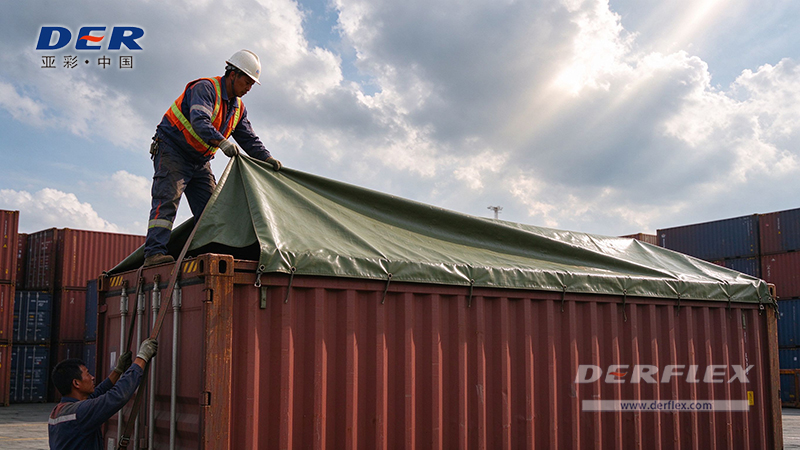
DERFLEX container rain cover for open-top shipping container weather protection
DERFLEX container rain cover for open-top shipping, terminal handling and outdoor cargo protection.
PVC Coated PolyesterReusable waterproof cover material direction
20 ft / 40 ft / CustomDimensions confirmed from container or drawing
650 / 900 gsm ReferencesPublished DERFLEX container-cover directions
Welded + ReinforcedFinished-cover design for seams, hems and attachment zones
Quick Answer

What Is a Container Rain Cover?

A container rain cover is a flexible waterproof cover placed over an open-top container, exposed cargo area or weather-sensitive container roof to reduce rainwater entry. For reusable industrial service, PVC coated polyester is commonly selected because it combines a waterproof surface with textile reinforcement, weldability and the ability to add reinforced edges and fastening hardware.

Rain protection depends on more than the sheet itself. A finished container cover must also control seam leakage, water ponding, wind uplift, corner abrasion and tie-down stress. That is why the most reliable specification starts with the container geometry and installation method rather than only a GSM number.
Rain-Protection Engineering

Five failure paths matter more than simply ordering a heavier tarp.

The strongest container rain-cover programs define the path of water and load through the whole finished cover. These are the five points procurement teams should review before approving a sample.

01

Water Ponding

Low unsupported areas can hold rainwater, increasing load and pulling tension into seams, hems and eyelets.

02

Seam Paths

Waterproof fabric can still leak if panel joints, overlaps or weld continuity are not designed for the cover profile.

03

Wind Movement

Loose panels flap and fatigue. Over-tight panels concentrate stress. Fit allowance and attachment spacing must work together.

04

Corner Abrasion

Container edges, bows and cargo protrusions can rub through coating unless contact zones are protected or padded.

05

Local Pull-Out

An eyelet or strap can fail before the fabric body if reinforcement does not spread the tie-down load into a wider area.

Search Intent & Product Type

Which kind of container rain cover do you actually need?

Buyers use “container cover” for several different products. Defining the job first prevents a quotation for the wrong construction.

Transport

Open-Top Container Tarpaulin

A fitted tarp for an open-top shipping container carrying cargo in transport or terminal handling.

  • Controlled dimensions and side drop
  • Perimeter reinforcement and lashing layout
  • Roof-bow / cargo-profile coordination
Storage

Container Roof Rain Cover

A weather cover used mainly for stationary storage, temporary roof protection or an older container with rain-exposure concerns.

  • Drainage slope and ponding control
  • UV exposure and long stationary service
  • Easy inspection and removable fastening
Custom

Full or Partial Weather Cover

A custom cover around containerized equipment, exposed cargo or a modified container where standard dimensions do not apply.

  • Drawing-based shape and cut-outs
  • Straps, webbing, D-rings or special hardware
  • Logo, labels and OEM packing
PVC coated polyester fabric container cover for waterproof shipping and outdoor storage
DERFLEX PVC coated polyester fabric used for waterproof container covers, combining textile reinforcement with a weldable PVC surface.
Material Construction

Why PVC coated polyester is a practical container-cover material.

DERFLEX’s published container-cover references use PVC coated tarpaulin with polyester reinforcement. The material direction is useful for reusable rain covers because it supports welded panel fabrication, edge reinforcement and repeated outdoor handling.

A buyer should not evaluate the cover only by thickness or finished weight. The base fabric, coating bond, seam design, surface finish, reinforcement layout and fastening method determine how the cover behaves after installation.

  • Polyester base: carries tensile load and helps control dimensional stability.
  • PVC coating: forms the waterproof surface and supports cleaning and weather exposure.
  • Weldable construction: large covers can be assembled from panels using suitable welding methods.
  • Reinforcement options: hems, webbing, extra layers and corner patches can be positioned where stress is concentrated.

For broader material selection, see DERFLEX PVC tarpaulin material and the main tarpaulin guide.

Specification Guide

Typical DERFLEX container rain-cover directions.

The table below combines currently published DERFLEX container-cover references with project-based customization logic. Final values should be confirmed against the approved drawing, sample and purchase specification.

Specification Item Available / Published Direction What the Buyer Should Confirm
Material PVC coated polyester tarpaulin Reuse frequency, abrasion, outdoor exposure and fabrication method
Base Fabric DERFLEX container-cover reference includes 1000D × 1000D structures Weave / density, finished strength requirements and approval sample
Finished Weight 650 gsm and 900 gsm are published container-cover directions Balance handling weight, wind movement, abrasion and expected service duty
Container Size 20 ft, 40 ft and custom / drawing-based dimensions Actual top opening, side drop, cargo height, corner clearance and roof bows
Outdoor Temperature Published container-cover direction approximately -30°C to +70°C Destination climate and any project-specific cold-flex requirement
Seam / Fabrication High-frequency and other compatible welding directions depending on material / design Panel layout, overlap, water path and repeated folding line locations
Edges Reinforced hems, extra PVC layers, webbing, rope edge or corner patches by project Load direction and sharp-contact zones rather than uniform reinforcement everywhere
Fastening Eyelets, rope, webbing loops, straps or TIR-cable compatible layouts Actual lashing-bar / ring position and required spacing from the container drawing
Surface & Color Custom color; lacquered / surface-finish directions can be discussed Cleaning expectation, gloss / matte direction and color tolerance
Branding & Packing Printing, orientation marks, labels and OEM / wholesale packing can be discussed Logo artwork, FRONT / REAR marks, SKU labels, fold pattern and carton marks
Procurement note: “waterproof fabric” and “rain-tight finished cover” are not identical claims. Finished rain performance also depends on seam continuity, holes / hardware, cover fit, drainage and installation. Define any required finished-cover test method in the purchase specification.
Application Decision Matrix

Match the construction to the rain exposure and operating pattern.

The same 20 ft or 40 ft container can need a different cover depending on whether it is moved daily, stored for months, exposed to tropical rainfall or used with irregular cargo.

Repeated Export / Terminal Handling

Prioritize: repeatable fit, reinforced perimeter, robust lashing layout and abrasion protection.

Send the exact container model, roof-bow arrangement, cargo height and terminal fastening method.

Long Outdoor Yard Storage

Prioritize: water shedding, UV direction, reduced flap, easy cleaning and inspection access.

Discuss exposure duration, support under the cover and whether water can collect between bows.

High-Rainfall / Storm-Prone Sites

Prioritize: drainage geometry, seam layout, tie-down load distribution and cover tension.

Do not compensate for poor drainage simply by increasing GSM; standing water can create concentrated load.

Irregular Cargo / Modified Containers

Prioritize: drawing-based shape, protected contact zones, custom cut-outs and localized reinforcement.

Photos plus a dimensioned sketch are usually more useful than nominal container length alone.

Measurement & Customization

How to specify a custom container rain cover.

A clear RFQ reduces back-and-forth, prevents fit errors and makes competing quotations easier to compare.

Step 01

Identify the Container

State 20 ft, 40 ft or custom container type and provide actual top-opening dimensions where possible.

Step 02

Map the Roof Profile

Show roof bows, cargo protrusions, corner castings, side-drop requirement and areas that need clearance.

Step 03

Define Fastening

Mark lashing bars, rings, TIR cable, straps, webbing or rope points and the direction of expected tension.

Step 04

Define Rain Exposure

Describe storage duration, transport conditions, rainfall, UV, temperature and how the cover will drain.

Step 05

Choose Material Duty

Confirm target GSM only after reviewing handling, abrasion, wind movement, folding frequency and climate.

Step 06

Approve Reinforcement

Review hem width, corner patches, extra layers, webbing and any edge protection at sharp contact points.

Step 07

Approve Marking & Packing

Confirm color, logo, FRONT / REAR marks, item labels, folding method and carton / pallet requirements.

Step 08

Lock the Repeat Specification

For recurring orders, keep the approved material, drawing and hardware layout as the controlled reference.

Fabrication Detail

Reinforcement should follow the load path, not just the perimeter.

Finished-cover durability often depends on the small areas where load is concentrated. Extra material is most useful when it is located at corners, eyelets, straps, fold lines and metal-contact zones rather than added uniformly without a clear purpose.

DERFLEX can discuss finished custom tarpaulin details such as welded hems, webbing, eyelets, rope edges and logo printing. For buyers comparing broader weather-cover options, the tarpaulin cover range provides additional material and application directions.

  • Keep major welds away from predictable hard-abrasion points where possible.
  • Spread tie-down force across reinforced fabric instead of relying on one hardware opening.
  • Protect corners and roof bows that contact the cover during vibration or wind movement.
  • Design enough fit allowance for installation without creating uncontrolled loose fabric.
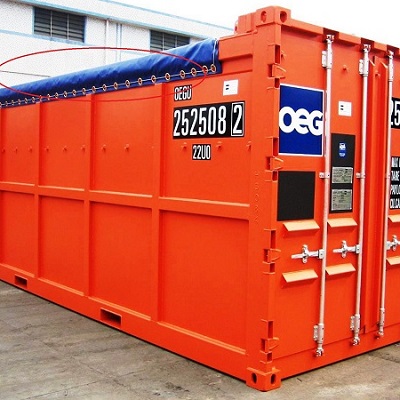
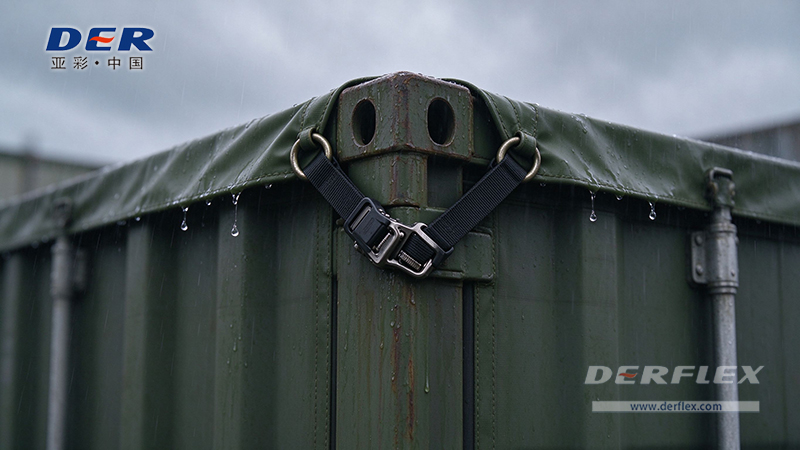
Custom PVC container rain covers with reinforced fastening and made-to-size fabrication
DERFLEX custom PVC container rain cover showing how reinforced edges, tie-down details and made-to-size fabrication support repeated outdoor use.
Common Procurement Mistakes

Avoid the errors that make rain covers fail early.

Most premature problems are easier to prevent in the drawing and sample stage than after containers are already loaded or stored outdoors.

Ordering by GSM only

GSM is useful, but it does not define tear resistance, reinforcement, weld quality, fit or the strength of the fastening system.

Ignoring drainage

A flat loose tarp can collect water. The cover profile, support and tension should encourage runoff instead of forming a basin.

Copying nominal dimensions

“20 ft” and “40 ft” are not enough for every fitted cover. Confirm top opening, drops, bows and lashing geometry.

Using universal eyelet spacing

Fastening points should follow container geometry and expected tension. More eyelets do not automatically solve a poor load path.

Leaving sharp edges unprotected

Corner rubbing can damage a strong fabric. Pad or reinforce known contact areas before approving the finished drawing.

Skipping repeat-order control

For fleet or wholesale supply, record the approved fabric, dimensions, color, hardware and packing so later lots remain comparable.

Quality Control

What to inspect before a container cover ships.

Inspection should concentrate on the risks that affect fit and water protection. The exact acceptance plan can be aligned to your approved drawing and purchase requirements.

Finished Dimensions

Verify length, width, drop, cut-outs and tolerance after hemming and reinforcement, not only the raw panel size.

Weld Continuity

Check visible seam skips, lifting, contamination and overlap consistency in areas exposed to runoff or ponding.

Hardware Position

Measure eyelet, strap or webbing placement against the drawing and verify secure setting and edge distance.

Reinforcement Location

Confirm extra layers and corner patches are positioned where the real stress or abrasion is expected.

Material Identification

For repeat supply, record the approved fabric code, weight, color and surface finish to reduce substitution risk.

Pack Identification

Use size, item code and quantity labels so installation teams can identify the correct cover before opening.

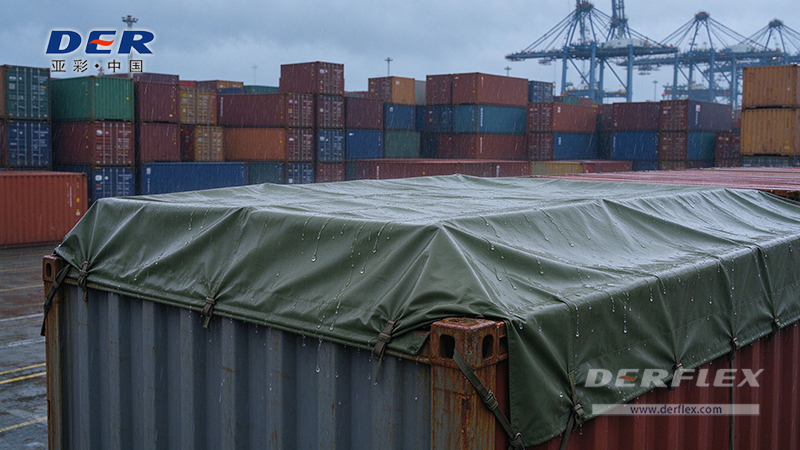
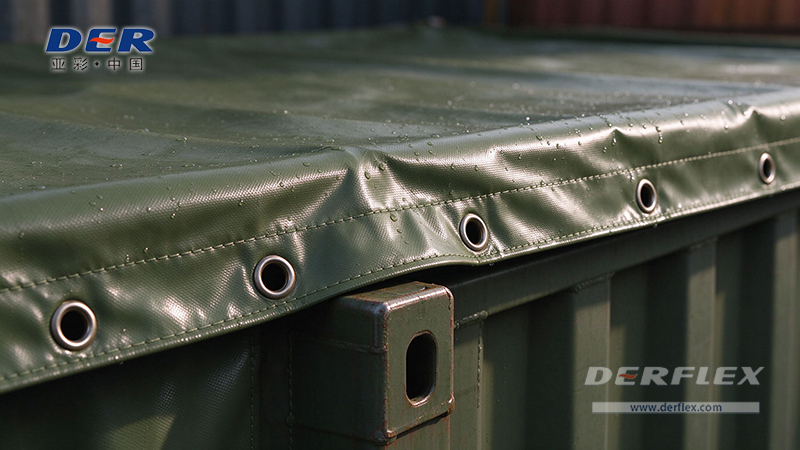
Waterproof PVC shipping container covers for rain and outdoor cargo protection
Waterproof PVC shipping container cover for rain protection during outdoor storage, terminal handling and logistics operations.
Application Image

Waterproof PVC shipping container covers for transport and outdoor storage.

This application image shows the weather-protection solution the page is designed around: a fitted PVC cover that protects exposed cargo while still allowing the fastening system, side drop and reinforcement layout to be specified for the real container.

For procurement teams, this image should be reviewed together with the approved drawing. The finished cover must match the container opening, roof support, cargo profile and lashing points so rainwater can shed without creating uncontrolled loose fabric or deep ponding areas.

B2B RFQ

Send a drawing, not just “20 ft blue tarp.”

The fastest path to a comparable container rain-cover quotation is to send the actual container dimensions, fastening arrangement, use environment and quantity. DERFLEX can then discuss material duty, reinforcement and fabrication around the real installation.

Send Your Container Cover Requirements
Frequently Asked Questions

Container Rain Cover FAQ

Short answers to common buyer questions about open-top and outdoor container covers.

What material is suitable for a reusable container rain cover?

PVC coated polyester is commonly selected for reusable industrial covers because the polyester base provides reinforcement while the PVC surface supports waterproofing, cleaning and welded fabrication. The final grade should be matched to wind, abrasion, handling and outdoor exposure.

Can DERFLEX make 20 ft and 40 ft container covers?

Yes. DERFLEX publishes container-cover directions for 20 ft, 40 ft and custom / drawing-based units. For fitted covers, actual opening dimensions, roof bows, side drops and lashing points should be confirmed instead of relying only on nominal container length.

Is a waterproof PVC tarp automatically a rain-tight finished container cover?

No. Waterproof fabric is only one part of the system. Finished rain protection also depends on welds, hardware holes, fit, cover tension, drainage, abrasion and installation. If water ingress is critical, define the finished-cover test or inspection requirement before production.

Should I choose 650 gsm or 900 gsm for a container cover?

DERFLEX has published 650 gsm and 900 gsm container-cover directions, but there is no universal best choice. Reuse frequency, wind movement, abrasion, folding, handling weight, UV exposure and reinforcement design should be evaluated together.

How do I prevent rainwater from pooling on the tarp?

Use correct support, drainage slope and cover tension so the fabric does not form low pockets. Roof bows, cargo profile and side fastening should be considered in the drawing. A heavier tarp does not eliminate ponding if the geometry still creates a basin.

Can eyelets, webbing, rope or TIR cable layouts be customized?

Yes. Fastening details can be developed around the container geometry and project requirements. Send a photo or drawing of the lashing bars, rings and expected tie-down method so reinforcement and spacing can follow the real load path.

What information should I send for a container rain-cover quote?

Send container type, actual dimensions, quantity, use environment, roof-bow or cargo profile, fastening method, target material or current sample, color, print / labels, packing and any required test or documentation requirements.

Technical values shown here are published DERFLEX reference directions or project-selection guidance. Final material properties, dimensions, tolerances, compliance documentation and finished-cover performance should be confirmed in the approved specification, sample and purchase order.
Copyright © 2015 DERFLEX ( PVC tarpaulin manufacturer )All Rights Reserved.