Equipment Geometry
Record overall length, width and height, then identify the cab, ROPS, exhaust stack, loader arms, hitch, folded implements and any protrusion that changes the panel layout.



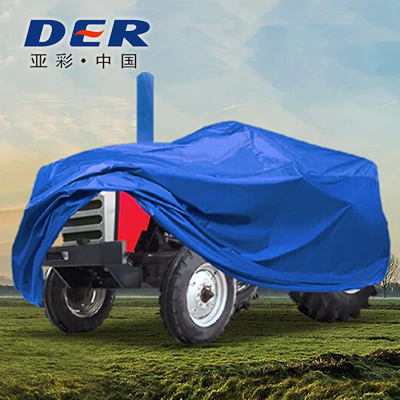
Custom farm equipment covers protect tractors, combines, harvesters, balers, sprayers, planters and other agricultural machinery from rain, UV exposure, dust and storage contamination. DERFLEX can support PVC-coated tarp material, cut panels and finished covers engineered around equipment geometry, handling frequency, fastening points and outdoor exposure.

For tractors and agricultural machinery stored outdoors, PVC-coated polyester is a practical heavy-duty material direction because it combines a waterproof surface, reinforced textile strength, weldability and outdoor formulation options. The cover still needs correct fit, drainage, tie-downs and wear-zone reinforcement; fabric weight alone does not make a good machinery cover.
For seasonal or lower-cost use, reinforced PE can be considered. For sheltered storage where breathability is more important than a fully waterproof barrier, other cover constructions may be appropriate. A farm equipment cover should be selected by exposure and use cycle rather than by color or thickness alone.
Tractors, combines and farm implements create local stress at mirrors, cabs, loader arms, hitches, guards and corners. A useful custom cover controls those points before choosing the final GSM.
Record overall length, width and height, then identify the cab, ROPS, exhaust stack, loader arms, hitch, folded implements and any protrusion that changes the panel layout.
Continuous sun, open wind, snow, weekly handling and yard abrasion create a different specification from seasonal storage under a shed.
Tie-down force should enter reinforced hems, webbing, D-rings or straps—not one unsupported eyelet. Sharp contact points should receive separate wear patches.
Use this as a quotation starting point. Final material weight and fabrication should be confirmed from the equipment profile, climate, wind exposure and expected handling.
| Use condition | Material direction | Duty / GSM starting point | Cover construction | Important options |
|---|---|---|---|---|
| Seasonal tractor storage in a sheltered or semi-sheltered area | Reinforced PE or lighter PVC-coated polyester | Choose by target handling life; PVC programs commonly fall within DERFLEX's broader 450–900 gsm farm-equipment range | Flat or semi-fitted cover | Hem reinforcement, rope or straps, drainage slope |
| Regular outdoor tractor, baler or planter storage | PVC-coated polyester | Medium-duty direction within the project range | Semi-fitted or fitted cover | Welded panels, corner patches, webbing, grommets or D-rings |
| Large combine, harvester or irregular machinery exposed to wind | Heavier reinforced PVC-coated polyester | Heavy-duty direction; confirm after reviewing surface area and anchor layout | Shaped multi-panel cover | Reinforced stress zones, closer control points, abrasion patches, access flaps where required |
| Dealer, OEM or machinery-export program | Project-defined coated fabric system | Approved sample becomes the repeat-order reference | Model-specific reproducible pattern | Logo, label, barcode, serial/model marking, standardized packing |
Important: a storage cover is not automatically suitable for highway transport. Road-speed airflow, dynamic securement loads and legal load-restraint requirements must be reviewed separately.
The right fit level depends on how often the cover is used, how exposed the machine is, and whether the buyer needs one cover for many machines or a repeatable cover for one model.
Useful when one tarp must cover several implements or irregular assets. It is simple to stock, but creates more loose fabric and depends heavily on tie-down discipline.
Uses a defined roof/cab profile with flexible drops or straps. It improves drainage and wind control without requiring a complex pattern for every detail.
Best when manufacturers, dealers or fleets repeatedly cover the same equipment model and need consistent fit, appearance, installation sequence and branding.
DERFLEX can organize the cover as roll material, cut panels, semi-finished components or finished tarps depending on the buyer's fabrication model.
| Product form | Roll goods, cut panels, flat tarps, semi-fitted covers, fitted machinery covers or OEM product-line programs |
|---|---|
| Main material direction | PVC-coated polyester fabric for reusable waterproof outdoor covers; alternative structures can be reviewed for seasonal or specialized use |
| Common PVC duty range | Approximately 450–900 gsm is a practical DERFLEX farm-equipment material range; final specification should be approved by application and sample |
| Surface / formulation | Outdoor UV direction, anti-mildew direction, matte or glossy finish, custom color and other project-defined treatments where available |
| Fabrication | Hot-air or HF welded panels where compatible, sewn construction, reinforced hems, webbing, rope edges, patches and shaped patterning |
| Fastening | Grommets, D-rings, webbing loops, straps, buckles, drawcords, elastic sections or other drawing-based layouts |
| Access features | Project-defined zipper, flap, opening, inspection point or removable section where the approved design requires access |
| Branding | Custom color, printed logo, warning text, product labels and private-label packaging according to project requirements |
| Equipment | Main cover challenge | Useful design direction | Buyer should provide |
|---|---|---|---|
| Tractor | Cab/ROPS height, mirrors, exhaust, loader attachments | Semi-fitted or fitted profile, reinforced protrusions, secure lower straps | Model, overall dimensions, cab/ROPS photo, loader position |
| Combine harvester | Large surface area, irregular profile, ladders and folded components | Multi-panel pattern, reinforced wear zones, clearly defined tie-down map | Transport/storage configuration, folded dimensions, photos from four sides |
| Baler / planter / seeder | Sharp corners, drawbars and multiple moving or folded sections | Local abrasion patches, shaped ends, simple access where required | Working vs storage configuration, protrusion locations, anchor points |
| Sprayer | Tanks, booms, valves and contamination after field use | Cover only after cleaning/drying; design around folded boom geometry | Folded boom dimensions, cleaning process, chemical-contact expectations |
| Farm pumps / generators / stationary equipment | Heat, ventilation, access and repeat inspection | Fitted cover with project-defined vents/flaps and service access | Heat sources, operating/storage state, access panels, cable/pipe exits |
A heavier sheet with weak edge construction can still fail around corners or tie-down points.
Waterproof material does not make an unsupported flat span a safe roof. The cover needs drainage geometry.
Mirrors, brackets and guards create localized abrasion. Add clearance or patches instead of excessive tension.
Fastening points should correspond to the actual frame and expected pull direction.
Heat can damage the cover and trapped moisture can increase condensation risk.
Road-speed airflow and dynamic loads require a different securement review from stationary yard storage.
A complete brief reduces pattern revisions and helps the supplier recommend a more useful tarp construction.
The following images use currently accessible DERFLEX website assets. The hero is equipment-specific; the remaining images support material, manufacturing and agricultural application context.
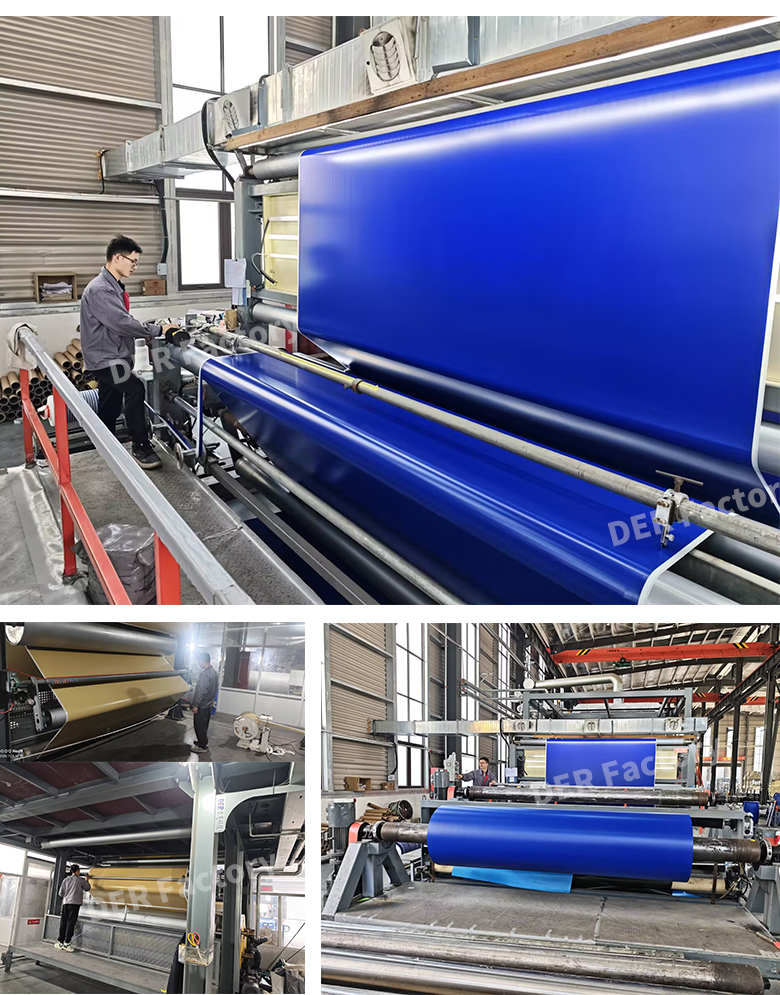
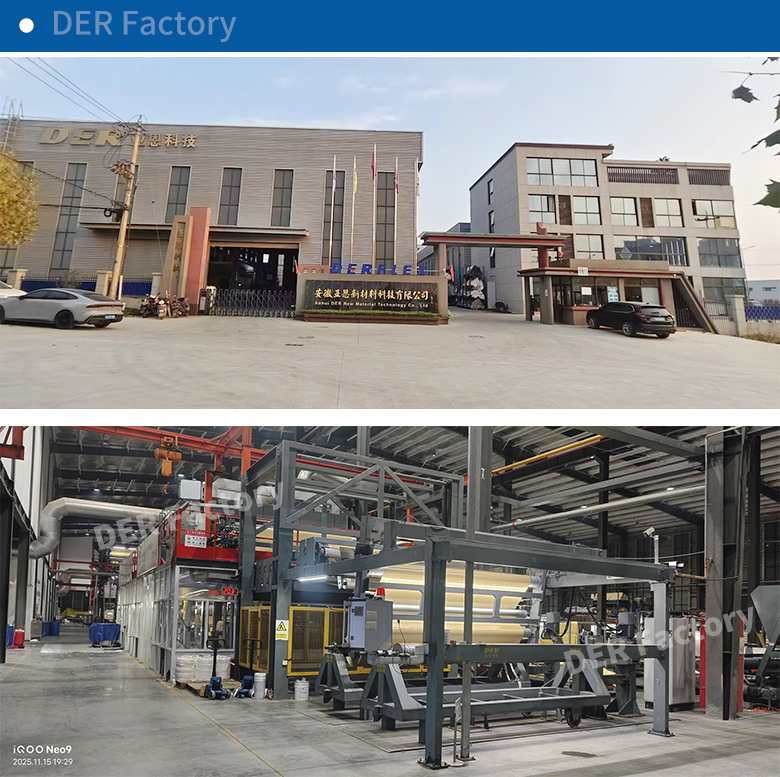
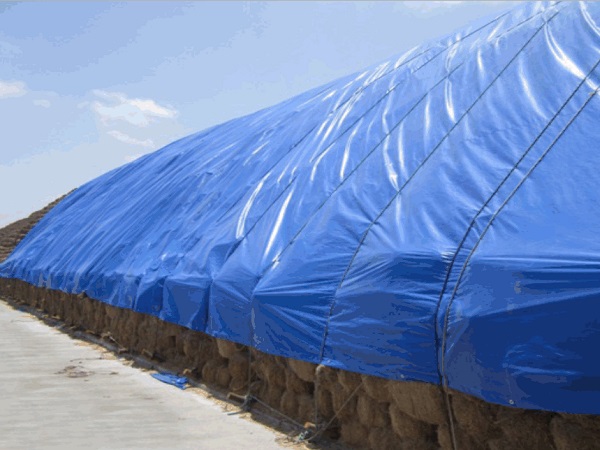
PVC-coated polyester can provide a waterproof material surface, and welded seams can improve rain protection. The finished cover still depends on seam design, openings, drainage, fit and installation. Water pooling or an open bottom can change real-world protection.
PVC-coated polyester is usually the practical direction for reusable outdoor protection and custom fabrication. Reinforced PE can be economical for seasonal use. Canvas may be considered where breathability is important, but its water and mildew behavior depends on the exact treatment and storage conditions.
Record the machine in its storage configuration: overall length, width and height, then separately identify the cab or ROPS, exhaust, mirrors, loader arms, hitch, folded implements and anchor points. Photos from four sides and a simple dimension drawing are highly useful.
Use fastening points that correspond to the machine frame and distribute load through reinforced hems, webbing, D-rings, straps or suitable grommets. Avoid relying on one or two corner eyelets or allowing large loose areas to flap repeatedly.
Vents can be useful for long storage when condensation risk is important, but the best design depends on rain exposure, wind, machine temperature and cover geometry. Equipment should be allowed to cool and dry before covering.
Not automatically. A stationary storage cover may not be designed for road-speed airflow and dynamic load. Transport use requires separate review of fit, securement, abrasion, legal load-restraint requirements and the risk of fabric movement.
DERFLEX can review custom machinery-cover projects for tractors, combines, harvesters, balers, sprayers, planters and other agricultural equipment. Provide dimensions, photos or drawings, use conditions, quantity and required finishing details for a project review.
Provide the equipment model or cover dimensions, approved material direction, outdoor exposure, fastening layout, quantity, color, logo, labels, packaging and destination. For repeat programs, keep an approved sample or controlled specification as the reference for future production.
Send DERFLEX the equipment type, dimensions or drawing, photos, outdoor exposure, fixing points, expected handling frequency, quantity, color, branding and destination. The team can organize a practical material and fabrication direction for quotation.
Final cover performance depends on the approved material, pattern, fabrication, installation, anchoring, environment, equipment condition and maintenance. Project-specific testing or compliance requirements should be confirmed before production.