Overhead Rain & Shade Shelter
Creates a covered cooking, rest or gathering zone beside a tent. Coverage, drainage angle, seam design and tie-out spacing matter more than decorative features.
 News
News

DERFLEX develops custom camping tarp materials and finished shelter tarps for outdoor brands, wholesalers, tent makers, overlanding suppliers and private-label programs. Build a rain fly, hammock cover, tent footprint, camp kitchen roof or vehicle-side shelter around the right balance of packed weight, waterproof construction, tie-out strength and repeatable production.
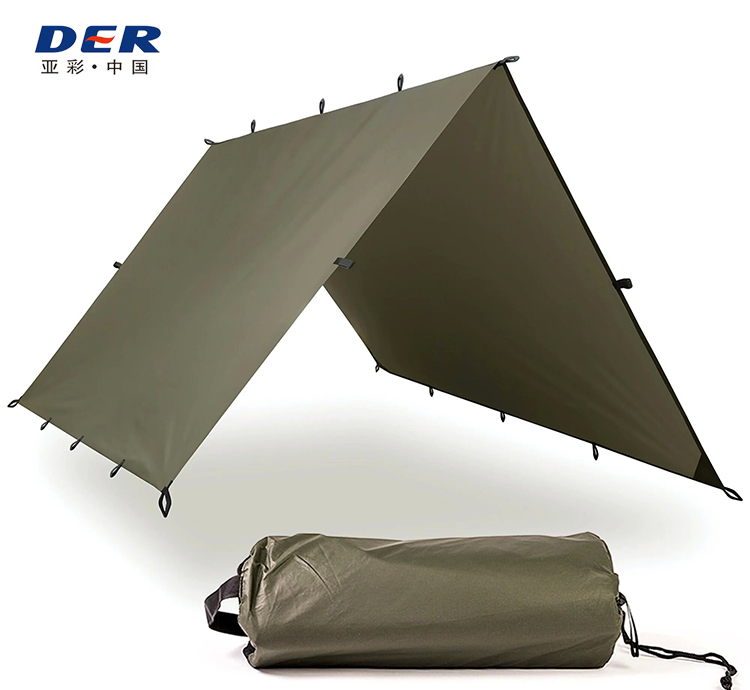
Retail product listings often reduce a camping tarp to size, weight and a waterproof number. Those details matter, but they do not explain whether the tarp will pitch cleanly, hold tension at the corners, protect a hammock, stay manageable when wet or fit the packaging and price position of your market.
For a camping tarp manufacturer, the real work begins with use conditions. A backpacking-style rain fly prioritizes low packed volume. A family campsite canopy needs wider coverage and simple setup. An overlanding tarp may need stronger edges and repeated handling. A tent footprint needs abrasion and moisture protection without unnecessary hardware. One material cannot serve every purpose equally well.
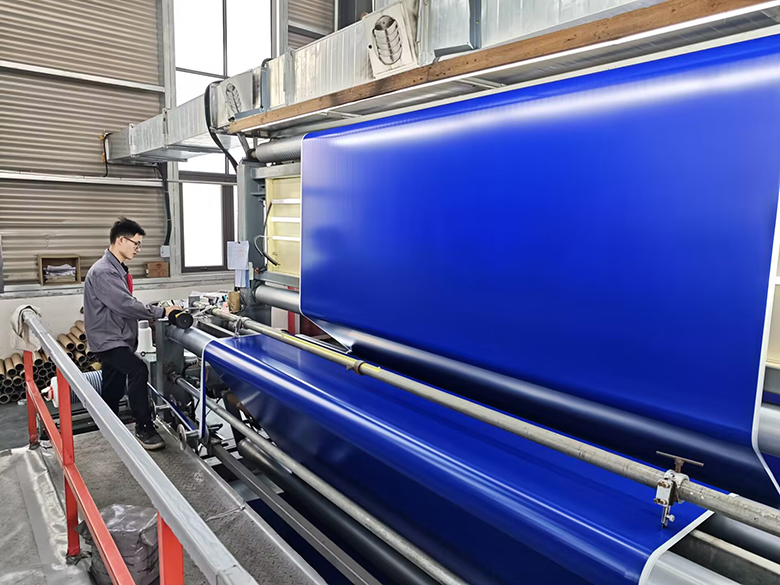
DERFLEX supports outdoor product buyers from coated-fabric selection through cutting, edge finishing, welding, reinforcement, accessories and private-label packing. The objective is a specification that can be sampled, explained to customers and reproduced across future orders.
A well-planned range can cover several outdoor needs, but each model should have a clear priority rather than an inflated list of claims.
Creates a covered cooking, rest or gathering zone beside a tent. Coverage, drainage angle, seam design and tie-out spacing matter more than decorative features.
Uses a ridgeline and multiple side points to protect the sleeping area. Shape, centerline strength and wind-facing pitch options should be considered during design.
Reduces direct contact with damp or abrasive ground. The finished footprint should stay inside the tent perimeter so rainwater is not collected under the floor.
Provides temporary protection for camping equipment, bicycles, wood, roof-rack cargo or a vehicle-side work area, with reinforced fixing points for repeated use.
The product is only as dependable as the relationship between the fabric, edges, fixing points, seams and packing method.
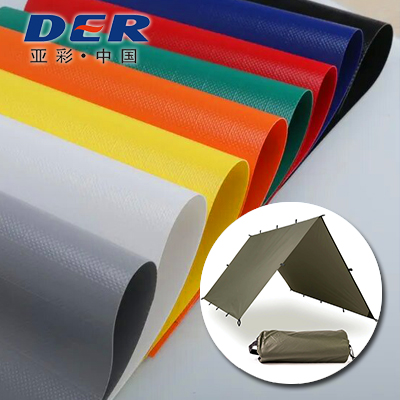
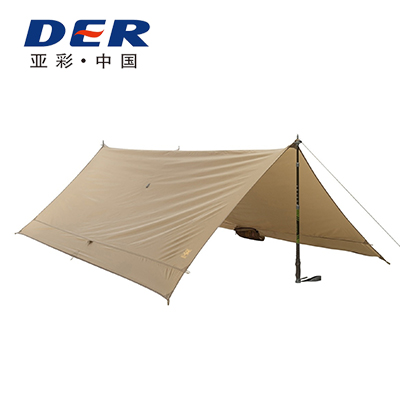

The ranges below are planning directions for sourcing discussions. Final construction, weight and performance should be confirmed by approved sample and agreed test method.
Suitable where reduced bulk and easier folding matter, subject to material validation and the expected weather conditions.
Balances handling, coverage, waterproof construction and repeat use for campsite, picnic and tent-support products.
Prioritizes stronger material, reinforced edges and dependable fixing details where service life matters more than minimal packed weight.
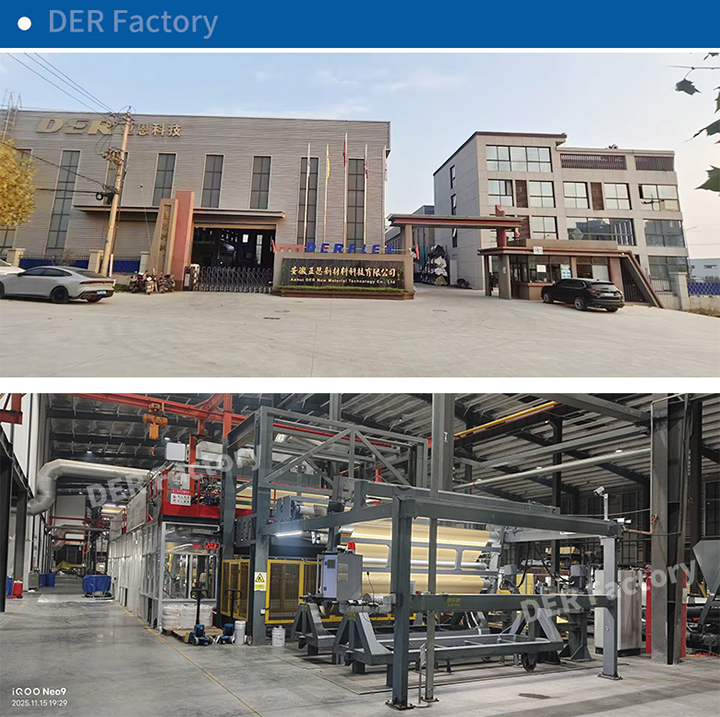
DERFLEX combines coated-fabric production experience with custom tarp development for distributors, converters and outdoor brands. Material selection, reinforcement layout, edge finishing, accessories, labeling and packing can be documented around an approved sample so future orders follow a clearer specification path.
This approach is especially useful for wholesale camping tarp ranges, private-label outdoor products, tent-component programs and buyers who need both roll goods and finished items from one technical conversation.
Use this table as an inquiry checklist. The final specification depends on application, climate, target packed size, market position, test requirements and sample approval.
| Product Formats | Finished camping tarp, rain fly, hammock tarp, tent footprint, ground sheet, vehicle-side shelter, cut panel or coated fabric roll. |
|---|---|
| Material Direction | PVC-coated polyester, laminated coated textile and project-specific coated structures selected according to durability, portability and target price. |
| Common Weight Discussion | Approximately 250–900gsm across packable, all-round and rugged directions. Other constructions can be reviewed for specific programs. |
| Shapes & Sizes | Square, rectangular, hex, diamond, winged or custom panel geometry. Metric and imperial retail sizes can be developed. |
| Water Protection | Waterproof coated constructions, welded or sealed seam planning, and project-specific hydrostatic-head discussion where a defined test method is required. |
| Outdoor Functions | UV-resistant direction, mildew-resistant direction, cold-flexible direction, easy-clean surface and flame-retardant pathway where the application and order justify it. |
| Attachment Points | Reinforced fabric loops, webbing loops, grommets, D-rings, center ridgeline points, perimeter points, corner patches and custom spacing. |
| Edge & Seam Construction | Heat-welded edges, stitched hems, webbing reinforcement, rope-in-hem, panel welding and project-specific seam layouts. |
| Color & Surface | Olive, khaki, beige, grey, black, blue, white, safety colors and custom color matching; matte, semi-matte or other approved surface direction. |
| Accessories | Guy lines, pegs, poles, tensioners, repair patches, storage bags, instruction cards and bundle configuration subject to sourcing plan. |
| Branding & Packaging | Logo printing, woven label, size label, barcode label, branded carry bag, instruction sheet, carton mark and distributor-ready packing. |
| Supply Mode | OEM, private label, wholesale, project supply, retail pack, bulk carton, cut panels or roll material for local conversion. |
Note: Values and functions on this page are not universal guarantees. Final performance is governed by the confirmed material specification, construction, test method, sample and contract.
A lighter tarp is easier to carry, but reducing weight can change puncture resistance, edge strength and expected service life. Define whether the customer is hiking with the tarp or transporting it by car before choosing the structure.
A fabric rating does not automatically describe the finished shelter. Panel joints, stitching, welding, ridgeline tension and drainage angle all influence practical rain protection.
More attachment points create more pitching options only when reinforcement and spacing are designed around likely load paths. Corner, ridgeline and side-panel points serve different purposes.
Dark outdoor colors suit bushcraft and overlanding aesthetics, while lighter colors can improve interior brightness. Safety programs may require high-visibility or reflective details.
A ground sheet that extends beyond the tent wall can collect runoff. Finished footprints should be sized to protect the floor without creating an exposed water-catching edge.
Outdoor retailers also evaluate fold consistency, bag size, labeling, instructions, carton organization and repeat color presentation. Packaging should be developed alongside the tarp, not after it.
DERFLEX is structured for B2B development, from material supply to finished and packed outdoor products.
Private-label camping tarp collections with custom dimensions, colorways, carry bags, labels and instruction content.
Wholesale camping tarps arranged by use level, size and market segment for repeat catalog supply.
Rain-fly panels, footprints, canopy components and coated fabric roll supply for downstream sewing or welding.
Ridgeline-oriented tarp shapes, multiple reinforced attachment points and outdoor color directions.
Rugged shelter and vehicle-side cover programs designed around repeated handling and field deployment.
Temporary shelter, ground protection and equipment-cover products with project-defined size, visibility and packing.
Confirm the tarp’s primary job, climate, target user, setup style, quantity and commercial position.
Compare coated structures, weight, hand feel, surface, color and performance direction.
Plan panel geometry, seams, edges, reinforcement, tie-outs, accessories and packing dimensions.
Review finished size, appearance, setup behavior, seam quality, fixing points and packaging.
Manufacture, inspect, document and pack according to the approved product specification.
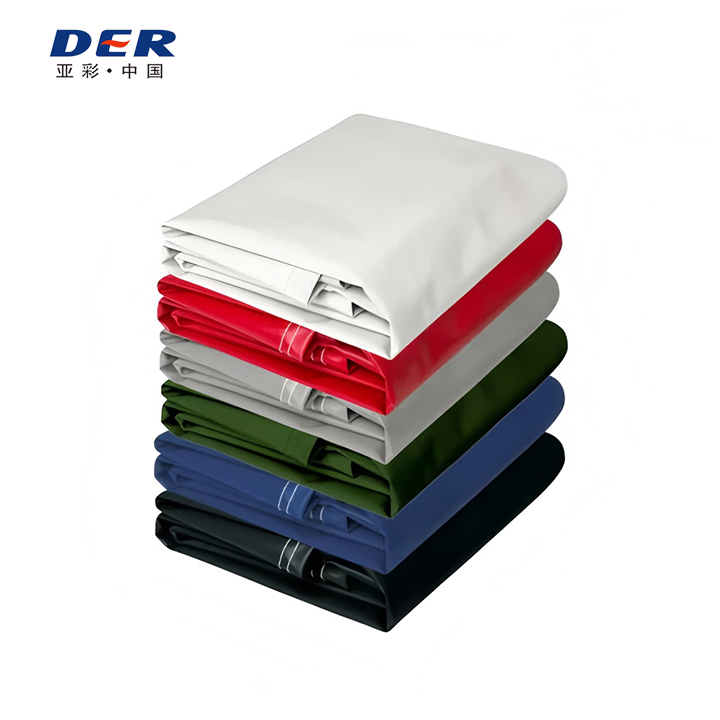
A stronger retail or wholesale range separates use cases. A compact rain-fly model, a family-camp canopy and a rugged overlanding tarp can share a brand language while using different materials, fixing details and packaging. This gives buyers a clearer reason to choose the right model and helps distributors avoid selling every customer the same product.
No single material is automatically right for every campsite. A credible specification starts by acknowledging the trade-offs.
Best considered when: minimal packed weight and backpack portability are the central requirements. Very light programs require dedicated material development and careful puncture, seam and tie-out evaluation.
Best considered when: price, simple handling and short- to medium-term use are priorities. It can suit entry-level ground sheets, temporary covers and high-volume seasonal programs.
Best considered when: waterproof construction, cleanability, weldability, color consistency and repeated outdoor use matter more than ultralight packing. This is a core DERFLEX development direction.
Yes. DERFLEX supports custom size, shape, material direction, color, tie-out layout, reinforcement, logo, carry bag, label, instruction sheet and carton packing for qualified OEM and private-label programs.
DERFLEX can develop waterproof coated constructions for camping shelters, footprints and outdoor covers. The final waterproof performance depends on the selected material, seams, finished construction and agreed test method.
A practical range often includes a compact personal or hammock size, an all-round square or rectangular size, and a larger family or group shelter. Exact dimensions should follow the target market, pitch style and packaging limits.
Yes. Supply can include coated fabric rolls for local conversion, cut panels, semi-finished components or finished and packed camping tarps, depending on the project.
Options include reinforced fabric loops, webbing loops, grommets, D-rings, center ridgeline points, perimeter tie-outs, corner patches and custom layouts. The reinforcement should match expected tension and setup method.
Please provide the intended use, finished dimensions, shape, quantity, target weight or material direction, climate, color, tie-out requirements, accessories, packaging and destination. A sketch or reference sample can shorten the development process.
Send DERFLEX the application, target size, quantity, material direction and packaging idea. The team can help narrow a practical construction for wholesale supply, OEM development, tent components or a finished private-label outdoor range.