 News
News

Heat Insulation Window Film Manufacturer | OEM Rolls | DERFLEX
Heat Insulation Window Film for Building Glass
DERFLEX supplies heat insulation window film for architectural glazing programs where buyers need to manage solar heat, glare, visible light and facade appearance without replacing the existing glass. The useful specification is not “dark tint” alone: compare the exact film on the intended glass using solar, visible-light, adhesive, installation-side and roll-supply requirements.

What is heat insulation window film?
Heat insulation window film is a thin functional film applied to glass to reduce unwanted solar heat gain by changing how solar energy is transmitted, reflected and absorbed. Architectural heat-control films may also change glare, visible-light transmission, reflectance, UV exposure and exterior appearance.
“Heat insulation” usually means solar heat control—not a replacement for insulated glazing.
A solar-control film can reduce the solar load entering through glass, but that is different from adding the insulating cavity of double glazing. If a project needs wintertime radiant-heat retention, ask specifically whether a low-emissivity film is required and compare emissivity and whole-glazing data for the exact construction.
Solar Heat
Compare whole-solar performance on the exact glass-film system, not a single marketing percentage.
Visible Light
Use VLT and visible reflectance to balance daylight, glare, exterior appearance and interior view.
Glass Safety
Review glass type, coatings, heat treatment, shading and installation side before project approval.
Repeat Supply
Lock the approved model, roll dimensions, liner, core, labels, cartons and sample reference for repeat orders.
Heat Insulation Window Film Models Listed by DERFLEX
DERFLEX currently lists two heat-insulation film references on its PVC glass-film page. The dimensions below are published references; live availability, exact substrate/layer structure, adhesive, optical values and solar data should be confirmed for the order being quoted.
| DERFLEX Reference | Listed Thickness | Listed Max Width | Listed Roll Length | Buyer Confirmation Before Order |
|---|---|---|---|---|
| DY508 – Heat Insulation Flash | 0.08 mm | 127 cm | 50 m | Current availability, film appearance, exact construction, adhesive/liner, VLT, reflectance and solar-performance data. |
| DY523 – Heat Insulation Glass Film | 0.08 mm | 127 cm | 50 m | Current availability, film appearance, exact construction, adhesive/liner, VLT, reflectance and solar-performance data. |
Select Heat Insulation Film by the Thermal Result You Need
“Heat blocking window film” can refer to several constructions. The right direction depends on the building, glazing, daylight requirement, acceptable reflectance, climate and whether the project also needs privacy or low-emissivity performance.
| Project Goal | Film Direction to Evaluate | Data to Compare | Selection Note |
|---|---|---|---|
| Reduce strong solar heat & glare | Reflective / tinted solar heat-control film | VLT, solar transmittance, reflectance, absorptance, whole-solar metric, visible reflectance | Useful where a more reflective facade appearance is acceptable. |
| Keep a brighter, more neutral view | Higher-transmission / spectrally selective direction where available | VLT, color neutrality, haze, reflectance, solar data | Do not approve from a roll photograph; evaluate on representative glass and daylight. |
| Daytime privacy plus heat control | Reflective tinted film | Exterior/interior reflectance, VLT, solar data, lighting balance | Reflective privacy is not reliable night privacy when interior lighting is brighter. |
| All-season radiant-heat management | Low-emissivity / low-E film direction where specified | Emissivity, VLT, solar data, glass compatibility | Confirm the existing IGU / low-E coating location before selecting another low-E layer. |
| Exterior installation is required | Exterior-rated heat-control film | Weathering, adhesive, scratch layer, solar data, edge condition | Use only a construction documented for exterior exposure. |
Five Numbers Matter More Than “Heat Insulation Rate” Alone
Professional B2B comparison requires the same glass configuration and the same test basis. A single IR-rejection percentage can be useful, but it should not replace whole-solar and visible-light data.
Visible Light Transmission
How much visible light passes through the tested glass-film assembly. It influences interior brightness, views and perceived glare.
Visible Reflectance
How reflective the glazing looks from the measured side. Exterior and interior reflectance may differ.
Transmittance / Reflectance / Absorptance
These three values describe where incoming solar energy goes: through the glazing, back outward or into the glass-film assembly.
Whole-System Summary Metrics
Useful for comparing thermal performance when the measurement method, glass configuration and film model are clearly stated.
Heat Insulation Window Film vs Solar Control vs Low-E Film
These terms overlap in everyday sourcing, but they should not be treated as identical engineering specifications.
Heat Insulation Window Film
A commercial search term commonly used for film intended to reduce heat through glazing, especially solar heat.
- May be reflective, tinted or higher-transmission
- May overlap with solar-control film
- Requires measured solar/visible data
- Exact winter-performance claim must be verified
Solar Control Window Film
A more precise architectural category focused on controlling solar heat gain, glare, daylight and reflectance.
- Compare solar transmittance, reflectance and absorption
- VLT and facade appearance are core inputs
- Glass thermal-stress review can be important
- Often the closest match to “heat blocking film”
Low-E Window Film
A film direction selected when low emissivity is part of the thermal objective, particularly radiant heat exchange.
- Emissivity becomes a key metric
- Must be checked against existing low-E coatings
- Can differ from a simple reflective solar film
- Needs exact glazing-system compatibility review
For broader solar-control selection, see DERFLEX’s solar control window film guide.
Check the Glass Before You Approve the Film
Window film changes the amount of solar energy transmitted, reflected and absorbed by the glazing. On coated, laminated, insulated or partially shaded glass, that change can alter the temperature distribution in the pane.
- Single pane, laminated glass or insulating glass unit (IGU)
- Glass thickness and pane dimensions
- Annealed, heat-strengthened or tempered condition
- Low-E or other coating and its surface location
- Existing scratches, edge damage or seal condition
- Interior vs exterior film installation
- Facade orientation, overhangs and partial shading
For a broader building-film overview, use the architectural window film selection hub.
What to Confirm in a Heat-Control Film Sample
Reflective architectural film is commonly built around a polyester-type film structure with functional solar-control layers, a pressure-sensitive adhesive and a release liner. The exact structure varies by film family, so the approved construction should be tied to the model and current technical sheet.
- Substrate / layer construction for the selected model
- Protective hard-coat or exposed surface treatment
- Color tone, haze, reflection and optical appearance
- Adhesive type, liner and installation method
- Usable roll width, roll length and core
- Splice policy, labels, carton marks and private packaging
- Required optical / solar test documentation
DERFLEX’s current PVC glass film reference page lists the DY508 and DY523 heat-insulation model dimensions used on this page.
Where Heat Insulation Window Film Is Commonly Specified
Application matters because the same film can produce a different balance of heat, daylight, reflectance and visual comfort on different glass and facade orientations.
Office Buildings
Prioritize solar heat, workstation glare, useful daylight and a facade appearance acceptable to the building owner.
Retail & Storefronts
Balance shopper comfort and product visibility with exterior reflectance, display visibility and UV/fading management.
Hotels & Hospitality
Coordinate room comfort, glare control, guest views and the exterior uniformity expected across many glazing panels.
Residential Glazing
Choose an appearance that reduces hot spots and screen glare without making the interior darker than the homeowner expects.
Schools & Public Buildings
Separate solar-control requirements from any safety/security requirement, which should have its own film system and test target.
Canopies & High Facades
Where interior access is difficult, evaluate an exterior-rated construction and define weathering, cleaning and edge-exposure conditions.
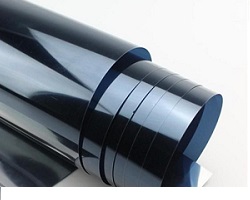
Building Application, Film Rolls & Material Close-Ups
Real DERFLEX-hosted images are used below. For Google Images, each image has descriptive alternative text and surrounding context tied to a real buyer decision.


Six Heat Insulation Window Film Buying Mistakes
Most sourcing problems begin before the film reaches the installer: the thermal target was vague, the glass was never identified or the approved sample was not connected to the purchase-order specification.
Buying by darkness
A darker film is not automatically a better heat-control film. Compare the required solar and visible-light data.
Comparing IR % without the test basis
Ask for wavelength range and method before treating two IR-rejection figures as directly comparable.
Ignoring the glass make-up
Coated, laminated, insulated and partially shaded glazing may need additional thermal-stress and compatibility review.
Assuming mirror film means night privacy
Reflective privacy depends on lighting balance and can weaken or reverse when the interior is brighter at night.
Mixing architectural and automotive film
Flat building glass and curved vehicle glazing have different optical, installation, regulation and service requirements.
Leaving repeat-order details open
Width, length, core, liner, model code, splice rule, label and carton identification should be fixed after approval.
Build a Repeatable Heat-Insulation Film Program
For distributors, project suppliers and window-film brands, the commercial product is more than the coating. The approved technical sample and the converting / packaging specification should be connected so repeat orders can be checked consistently.
Define the Glass Market
Building type, glazing make-up, exposure, installation side and destination market.
Set Measurable Targets
VLT, reflectance, solar data, UV data, appearance and any required project documentation.
Approve the Sample
Evaluate film on representative glass under relevant indoor and outdoor lighting.
Lock the Supply Spec
Roll format, core, liner, model ID, labels, cartons, barcode and repeat-order identification.
Related DERFLEX Window Film Resources
These six verified DERFLEX pages cover broader building-film selection and adjacent material directions without forcing every window-film intent onto one URL.
Heat Insulation Window Film FAQ
Direct answers to common buyer questions about thermal performance, glass compatibility and OEM sourcing.
Does heat insulation window film really reduce heat?
Properly selected solar heat-control film can reduce solar energy entering through glazing by changing how sunlight is transmitted, reflected and absorbed. The actual result depends on the film, glass make-up, orientation, shading and test basis, so compare the exact glass-film performance data rather than a generic heat-rejection claim.
Is heat insulation window film the same as solar control window film?
The terms often overlap. “Heat insulation window film” is a broad commercial phrase, while “solar control window film” more precisely describes film designed to manage solar heat gain, glare, daylight and reflectance. A low-E film may add another objective: controlling radiant heat exchange through low emissivity.
Can heat insulation film be applied to double glazing or low-E glass?
Some film-and-glass combinations can be suitable, but the exact insulated-glass and coating configuration must be checked. Confirm pane construction, low-E surface location, heat treatment, pane size, shading and film installation side before approval.
Which performance data should I compare before buying?
Start with visible light transmission, visible reflectance, solar transmittance, solar reflectance and solar absorptance, then use the project’s required whole-solar metric such as TSER or SHGC when available on the same test basis. If low-E performance is important, compare emissivity as well.
Does reflective heat insulation film provide privacy at night?
Not reliably. Reflective privacy depends on lighting balance. It is strongest when the viewed side is brighter; at night, bright interior lighting can reduce or reverse the privacy effect. Use a frosted or more opaque film direction when consistent day-and-night privacy is required.
What are DERFLEX DY508 and DY523?
DERFLEX currently lists DY508 “Heat Insulation Flash” and DY523 “Heat Insulation Glass Film” as heat-insulation references. Both are listed at 0.08 mm thickness, 127 cm maximum width and 50 m roll length. Confirm live availability and current optical, solar, adhesive and construction data before ordering.
Can DERFLEX discuss OEM or private-label heat insulation window film?
DERFLEX supports project-oriented roll sourcing and can discuss roll dimensions, model identification, liner, core, labels, cartons and private packaging according to the selected film, order plan and destination market.
What information is needed for a heat insulation window film quotation?
Send the building application, glass make-up, installation side, target visible-light and solar performance, desired appearance, required test documentation, roll width and length, quantity, sample needs, packaging requirement and destination market.
Specify the Thermal Result Before You Ask for a Price
Send DERFLEX the glass make-up, installation side, desired appearance, measurable thermal / optical target, roll dimensions and quantity. That information makes sample selection and quotation more comparable.