No Pressure-Sensitive Glue
Static cling film is selected when the glass should not receive a conventional adhesive layer. This helps reduce residue concerns and makes repositioning or later removal easier.



DERFLEX supplies static cling window film for smooth glass where buyers need a clean, removable film without a pressure-sensitive adhesive layer. Clear, white, super-clear and decorative directions can support temporary retail graphics, office privacy, seasonal displays, reusable window decals and printable OEM programs.
The key sourcing decision is not simply “cling or adhesive.” Buyers should define the glass surface, visual effect, print process, roll format, expected service environment and reuse requirement before approving a static cling film.
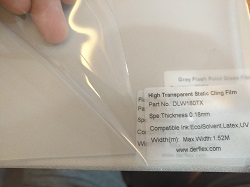
What is static cling window film? It is a non-adhesive film that holds to clean, smooth glass through close surface contact and electrostatic attraction rather than a conventional glue layer. Because the film is not permanently bonded to the glass, it can be positioned, removed and—when kept clean and flat—reapplied for temporary privacy, decoration, promotions and reusable window graphics.
Many retail pages describe static cling only as a renter-friendly privacy film. For B2B procurement, it is more useful to treat static cling as a specific non-adhesive film construction that can be converted into several product families.
Static cling film is selected when the glass should not receive a conventional adhesive layer. This helps reduce residue concerns and makes repositioning or later removal easier.
The cling effect works best on clean, smooth, non-textured glass or similarly polished surfaces. Rough, etched, heavily textured or strongly curved glazing can reduce contact and holding performance.
A removed panel can be reused more successfully when the cling surface is protected from dust, lint, creasing and stretching. Keep the release liner or a clean protective sheet for storage.
Static cling earns its place when the glass graphic, privacy panel or decorative treatment is intentionally temporary, frequently changed or sensitive to adhesive residue.
Seasonal campaigns, temporary offers, glass-door promotions and short-cycle merchandising that needs clean removal.
Frosted or translucent removable film for meeting rooms, partitions, doors and temporary visual zoning.
Printed graphics that may need to be repositioned, stored and reused when the cling face and liner are kept clean.
Roll or converted-pack programs for distributors and brands that need defined film, liner, print compatibility, labels and packaging.
The following model information is taken from the currently accessible DERFLEX static-cling product page. Confirm live availability, liner construction, tolerances, print profile and sample approval before purchase.
| DERFLEX Model | Listed Film Direction | Listed Thickness | Listed Roll Size | Buyer Use Direction |
|---|---|---|---|---|
| DLW160 | White static cling film | 0.15 mm | 1.52 × 50 m | White-base graphics, temporary promotions, display programs and opaque / higher-contrast printing direction. |
| DLW150 | Transparent static cling film | 0.15 mm | 1.52 × 50 m | Clear window graphics, transparent decals, temporary branding and glass display applications. |
| DLW160TX | Super-clear static cling film | 0.18 mm | 1.52 × 50 m | Projects that place greater emphasis on clear appearance and glass visibility; approve optical appearance on real glass. |
| DLW180TD | Flash-point static cling film | 0.18 mm | 1.52 × 50 m | Decorative glass effects and visually distinctive window-film programs; pattern and batch appearance should be sample-approved. |
The correct film depends on what the buyer expects to see, print, remove and reuse. This matrix turns a general inquiry into a more useful sample request.
| Application | Film Direction to Evaluate | What Matters Most | Information to Put in the RFQ |
|---|---|---|---|
| Storefront promotion | Clear or white printable static cling | Print quality, color density, clean removal, panel size and indoor/outdoor exposure | Artwork, print method, glass side, campaign duration, roll size / finished size, quantity |
| Office glass privacy | Frosted / translucent static-cling direction | Privacy level, daylight diffusion, finish uniformity and removable installation | Glass dimensions, viewing distance, required privacy, film color / frost style, installation side |
| Reusable seasonal decoration | Decorative static cling | Pattern, removable handling, liner quality and storage after removal | Pattern / artwork, finished cut size, retail pack format, reuse cycle and storage expectation |
| Transparent promotional decal | Transparent or super-clear static cling | Clarity, print registration, white-ink strategy if required and glass visibility | Printer / ink, white-ink use, viewing direction, transparency target and approved sample |
| High-volume OEM retail roll | Project-specific static-cling film | Repeatable model, thickness, liner, usable width, roll length, labels and carton specification | Target SKU, annual volume, private label, barcode, pack size, destination market and compliance needs |
Static cling is not the right solution for every pane. Textured, sandblasted, heavily patterned, dirty, porous or strongly curved surfaces may not provide enough uniform contact. Test the actual glass rather than assuming a no-glue film will hold on every “window.”
These materials can look similar after installation, but their attachment method changes repositioning, residue risk, surface tolerance and best-fit applications.
| Film Type | How It Holds | Repositioning | Surface Tolerance | Typical Best Fit |
|---|---|---|---|---|
| Static cling window film | Close surface contact / electrostatic cling; no conventional pressure-sensitive adhesive | High during installation; removable and potentially reusable if kept clean | Best on smooth, flat, clean glass | Temporary privacy, seasonal graphics, storefront promotions, reusable decals |
| Removable adhesive film | Pressure-sensitive removable adhesive | Depends on adhesive design and installation stage | Can often tolerate a wider range of suitable smooth surfaces than cling | Longer campaigns, graphics that need more positive bonding, some non-glass surfaces |
| Permanent / standard adhesive frosted film | Pressure-sensitive adhesive designed for durable attachment | Low after final installation | Application-specific; still requires clean compatible glazing | Permanent office privacy, long-life decorative glazing and project installations |
For broader building-film selection, compare static cling with architectural window film and the wider PVC glass film and vinyl sticker range before locking the adhesion route.
DERFLEX lists solvent, eco-solvent, Latex and UV ink directions for static-cling vinyl. Professional converters should still qualify the exact model on their own printer and finishing workflow.
Confirm ink anchorage on the actual film surface. A film that feeds well but scratches during trimming or installation is not a finished commercial specification.
Keep drying or curing conditions compatible with film stability. Excessive heat can affect dimensional behavior, flatness or handling.
Transparent film may need white ink, layered print or selective opacity depending on whether the graphic is viewed through glass or from the printed side.
The images below are hosted on DERFLEX and show material samples and actual glass / display directions. Captions describe the purchasing context rather than serving as decoration only.
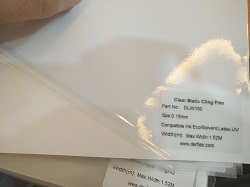
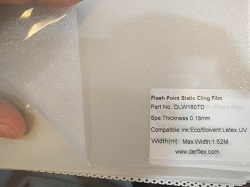

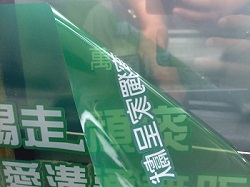


Static cling is forgiving compared with permanent adhesive film, but clean glass and careful water removal still determine the finished appearance.
Remove dust, grease, silicone residue and particles. Static cling needs close surface contact, so contamination can show as bubbles or weak holding areas.
Lightly spray the glass with clean water or the installation solution approved for the film. The wet surface allows the panel to slide into position.
Peel the protective liner, position the cling face on the glass, then work from the center outward to remove trapped water and air.
Trim the edge carefully, allow residual moisture to dissipate and avoid disturbing the panel until the contact area has stabilized.
Temporary removal is a strength, not a universal performance advantage. Long-term exterior exposure, strongly textured glass or engineering safety requirements may require a different film system.
Use static cling for campaigns that change frequently, promotional glass, temporary product launches and seasonal visual merchandising.
Graphic size, viewing side, ink system, campaign duration, glass condition and removal schedule.
Frosted / translucent removable film can create temporary privacy zones without converting the glass to a permanently bonded finish.
Privacy level, daylight requirement, panel dimensions, pattern, cleaning routine and whether later reuse is expected.
Useful for holidays, event branding, exhibition glass, temporary wayfinding and short-term decorative themes.
Design cycle, cut size, pack format, storage liner and number of expected reuse cycles.
Removable privacy or decoration can suit rentals and interiors where the owner does not want a permanent adhesive modification.
Glass texture, interior / exterior side, wet-area exposure, required privacy and cleaning method.
Selected cling constructions can also be evaluated on smooth acrylic, polished plastic and other high-energy surfaces.
Substrate type, surface energy, temperature, contact area, dwell time and removal expectation.
Static cling may be the wrong direction when a project requires long-term positive adhesion, certified fragment retention or harsh-weather exposure.
Project-specific adhesive decorative glass film, architectural film or safety-oriented systems with defined test requirements.
A no-glue film looks simple, but commercial performance still depends on surface matching, model control, printing, installation and packaging.
Smooth glass, acrylic, textured glass and coated surfaces behave differently. State the exact substrate and test the film on it before volume supply.
Thickness does not define clarity, softness, liner behavior, print surface, cling performance or decorative appearance. Lock the full sample and model.
A generic “UV printable” or “eco-solvent printable” claim is not enough for repeat production. Test ink adhesion, curing, scratching and cling after printing.
Reuse depends on cleanliness, flatness, liner storage and handling. Dust, creasing or contamination can reduce cling on the next installation.
For private-label programs, pack size, liner, core, label, barcode, instruction sheet, carton and pallet limits should be approved together with the film.
Approve film + liner + printing + converting + application + packaging as one commercial specification. This makes quotations easier to compare and repeat orders easier to inspect.
“Need static cling film, send price” leaves too many variables open. Use the checklist below to receive a more relevant sample and quotation.
DERFLEX already lists multiple static-cling model directions and printable glass-film products. The stronger B2B workflow is to connect the approved material to the buyer’s converting and packaging requirement.
Start with the glass, appearance, print method and service cycle. Then compare transparent, white, super-clear or decorative cling directions on representative surfaces.
Solvent, eco-solvent, Latex and UV directions are listed by DERFLEX. Converters should qualify the exact roll model before repeat production.
For brand and distributor programs, discuss usable roll width, roll length, liner, core, labels, cartons, instructions and repeat-order identification.
Short direct answers for distributors, converters, window-film brands and project buyers.
No conventional pressure-sensitive adhesive layer is required for a static-cling construction. The film holds best through close contact with a clean, smooth, flat glass surface. This is why it can be repositioned and removed more easily than permanent adhesive film.
It can often be removed and reapplied when the cling face remains clean, flat and undamaged. Reuse performance decreases if the film collects dust, is folded sharply, stretches, or is stored without a protective liner.
Usually not as reliably as on smooth flat glass because texture reduces continuous surface contact. If the glazing is etched, sandblasted, patterned or strongly curved, test first or consider an adhesive film designed for that surface.
DERFLEX currently lists solvent, eco-solvent, Latex and UV ink directions for vinyl cling window film. A production buyer should still test the exact film, ink, printer, curing conditions and finishing method before bulk printing.
The current DERFLEX legacy product page lists DLW160 and DLW150 at 0.15 mm and DLW160TX and DLW180TD at 0.18 mm, with 1.52 × 50 m roll references. Confirm current availability and final roll specification during quotation.
No. Both can be removable, but static cling does not rely on a conventional pressure-sensitive adhesive layer. Removable adhesive vinyl uses an adhesive formulated to release later. The correct choice depends on surface, campaign duration, handling and how much positive bond is needed.
Yes, when supplied in frosted, matte, translucent or patterned directions. Privacy level depends on the film appearance, lighting and viewing distance. Clear printable static cling is mainly a graphics material rather than a full-privacy solution.
Send the application, surface, desired appearance, thickness / model, roll size or finished size, print method, quantity, service environment, removal / reuse requirement, packaging format, private-label needs and destination market.
DERFLEX can use your application, surface, required appearance, printer / ink, roll size, quantity and packaging plan to organize a practical static-cling film direction for sampling and quotation.