Tarpaulin
OIL SPILL BOOM
DERFLEX manufactures floating oil spill booms for marine, harbor, river, refinery and industrial spill containment. Compare foam-filled, inflatable and PVC/TPU boom options, selection factors and custom project requirements.
Description
Marine & Industrial Spill Control

Oil Spill Boom Manufacturer for Marine & Industrial Spill Containment

Floating containment booms engineered to control, divert and concentrate oil on water—available in foam-filled, inflatable and project-specific configurations for ports, rivers, terminals, refineries and emergency response.

DERFLEX supports finished oil boom projects with reinforced PVC or TPU coated fabric options, visible safety colors, configurable freeboard and skirt geometry, connector choices, anchoring interfaces and OEM manufacturing requirements.

20+ YearsCoated-fabric manufacturing experience
120+ MarketsInternational project and export reach
PVC / TPUMaterial routes for different boom architectures
OEM / CustomDimensions, fabric, color, connector and packing
Direct Answer

What Is an Oil Spill Boom?

An oil spill boom is a floating physical barrier used to contain, divert or concentrate oil on the water surface so that the slick spreads less and can be recovered more effectively. A conventional containment boom combines above-water freeboard, buoyancy, a below-water skirt and a longitudinal tension or ballast member.

For procurement, the critical question is not simply “What size boom do I need?” The correct system depends on water movement, wave exposure, oil type, response time, deployment method, section connection, anchoring and how often the boom will be stored, folded, towed and cleaned.

DERFLEX can support floating oil containment boom projects for protected water, inland waterways, industrial waterfronts and emergency response programs with material and construction options matched to the application.

Boom Selection

Choose the Oil Containment Boom by Water Conditions and Response Method

The boom architecture should follow the operating environment. Buying only by overall height or price can result in poor deployment, storage problems, connector mismatch or inadequate stability in moving water.

01

Foam-Filled Curtain Boom

Suitable for rapid deployment where a self-supporting float system is preferred and inflation equipment is undesirable.

  • Protected water, harbors, terminals and inland sites
  • Closed-cell flotation options
  • Simple deployment and retrieval workflow
  • More storage volume than inflatable systems
02

Inflatable Oil Boom

Useful when compact storage and transport efficiency are important, especially for mobile emergency-response inventory.

  • Compact storage before deployment
  • Air chamber and valve design must match handling needs
  • Fabric and seam integrity are critical
  • Inflation equipment and operating procedure should be planned
03

Fence-Type / Light-Duty Boom

A practical direction for calm or protected water where lightweight handling and straightforward deployment are priorities.

  • Shallow or relatively calm environments
  • Compact flat barrier construction
  • Useful where wave exposure is limited
  • Not a universal substitute for rough-water curtain booms
04

River / Current-Focused Boom

Designed around tension, anchoring, flotation reserve and skirt behavior where water movement creates higher dynamic loads.

  • Rivers, canals and current-exposed waterways
  • Anchoring and angle of deployment become critical
  • Connector compatibility should be verified
  • Site conditions should be reviewed before final sizing
05

Permanent / Semi-Permanent Boom

For facilities needing continuous protection around terminals, loading areas, industrial waterfronts or sensitive zones.

  • Longer outdoor exposure and repeated inspection
  • UV, abrasion and surface-cleaning demands matter
  • Mooring hardware should be planned as a system
  • Material choice should follow exposure and maintenance plan
06

Custom OEM Boom System

For spill-response equipment brands, contractors and project buyers working to an existing drawing, connector or tender specification.

  • Custom geometry and section length
  • PVC or TPU coated fabric direction
  • Connector, tow point and anchor configuration
  • Private label, color and export packing options
Quick Specification

Oil Spill Boom Specification Framework for RFQ and Tender Review

The table below separates published DERFLEX product directions from the project details that should be confirmed before production.

Specification Item DERFLEX Direction What the Buyer Should Confirm
Product Type Foam-filled, inflatable, fence-type or project-specific floating boom Deployment environment, response time and storage method
Shell / Skirt Material Reinforced PVC coated fabric; TPU coated fabric options for selected designs Oil/fuel compatibility, folding frequency, abrasion and welding method
Overall Height Current DERFLEX product information publishes approximately 300–1200 mm for selected models Required freeboard + draft/skirt for the actual water conditions
Float Diameter Published product direction approximately 100–400 mm for selected configurations Buoyancy requirement, handling method and boom architecture
Freeboard Published product direction approximately 150–600 mm for selected configurations Wave splash, wind exposure and desired containment margin
Connector ASTM-style Z connector, Unicon-type or customized connection direction Compatibility with existing boom inventory and response equipment
Color High-visibility orange, yellow, red or custom project color Visibility, branding, tender specification and identification needs
Temperature Direction DERFLEX has published -30°C to +70°C for selected oil-boom constructions Confirm the final material system and site temperature before order
Accessories Connector hardware, tow / anchor interfaces and project accessories can be discussed Anchors, tow bridles, repair kit, storage rack/reel, lights or handling equipment
Packaging Roll, folded packing or export-oriented protective packing depending on model Container plan, handling equipment, storage footprint and destination
Final boom dimensions, fabric construction, connector standard, accessory configuration and performance requirements should be confirmed against the actual project, water conditions and tender documentation before bulk production.
Engineering Reality

Why an Oil Boom Can Fail Even When the Fabric Is Strong

A containment boom is a system, not only a coated textile. Water movement, anchoring, freeboard, draft, tension and deployment geometry can determine whether oil stays where responders need it.

Containment Performance Depends on More Than GSM

Heavier fabric can improve durability, but a successful boom also needs the right flotation reserve, stable skirt geometry, suitable ballast or tension members, compatible connectors and an anchoring plan that does not force the boom into an ineffective shape.

For flowing water, the boom angle and load distribution can matter as much as the nominal boom height. For long-term installations, UV exposure, fouling, repeated cleaning, connector wear and abrasion at contact points should also be included in the maintenance plan.

Questions DERFLEX Recommends Reviewing

  • Is the site calm, protected, tidal, river-current or offshore exposed?
  • Will the boom contain, deflect, divert or concentrate the slick?
  • How will each section be anchored, towed, connected and retrieved?
  • Will the boom remain deployed or be stored for emergency use?
  • What oil or fuel may contact the coated fabric and seams?
  • How will the boom be cleaned, dried, inspected and repaired?
SplashoverWaves or low freeboard allow oil to pass over the top.
EntrainmentFast water movement can pull droplets beneath the skirt.
SubmergenceImproper loading or anchoring can pull the boom too low.
Planing / TwistHydrodynamic forces can distort the boom and reduce effective draft.
Structural DamageTears, abrasion, failed seams or connector damage can compromise the barrier.
Material Decision

PVC vs TPU for Oil Spill Boom Fabric

The material should be matched to boom architecture and deployment cycle. DERFLEX supplies both PVC and TPU coated-fabric routes for spill-control applications.

Decision Factor PVC Coated Fabric TPU Coated Fabric
Typical Direction Cost-efficient heavy-duty boom shells, skirts and foam-filled systems Inflatable, foldable or higher-flexibility boom constructions
Fabrication Commonly compatible with high-frequency, hot-air or thermal fabrication depending on formulation Can be developed for RF/HF welding, hot-air welding and heat sealing after sample confirmation
Storage & Folding Practical for robust general-purpose systems; stiffness depends on construction and temperature Useful when compact packing and repeated folding are important design goals
Oil / Fuel Contact Compatibility depends on PVC formulation, oil type, exposure time and temperature TPU formulation can be selected for oil-contact applications; actual liquid testing is still recommended
Procurement Focus Balance of durability, availability, fabrication efficiency and cost Flexibility, airtightness, welding behavior, compact storage and application-specific compatibility

For material-only sourcing, see DERFLEX TPU coated fabric for oil spill containment booms and PVC tarpaulin for oil spill containment booms.

Real DERFLEX Images

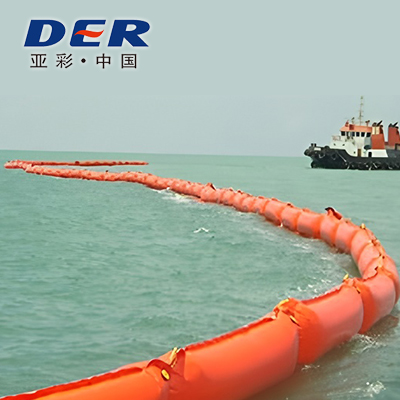
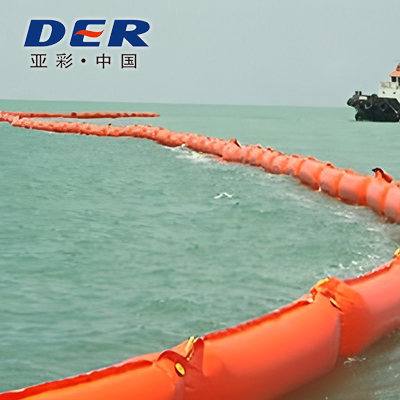
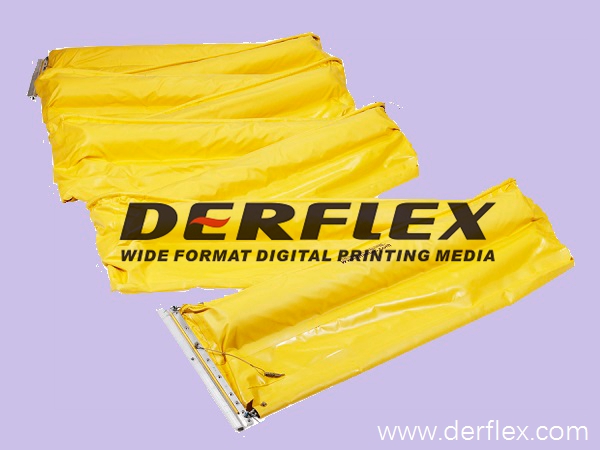
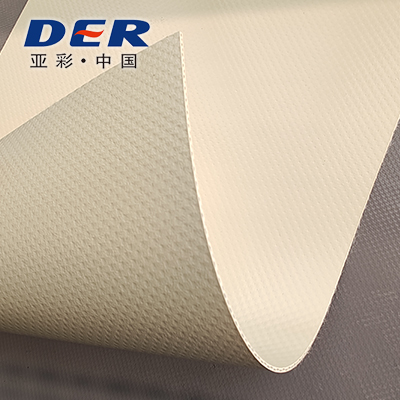
Oil Boom Product, Material and Manufacturing Image Pack

Product and factory visuals use existing DERFLEX website assets. Use descriptive alt text and meaningful captions so each image supports product understanding rather than acting as decoration.

Applications

Where Floating Oil Containment Booms Are Used

Different locations create different loading, storage and deployment requirements. The application should drive boom type, not the other way around.

Ports & Harbors

Containment around berths, loading zones, service areas and protected waterfronts where rapid section connection and routine inspection are important.

Refineries & Fuel Terminals

Preparedness around transfer points, tank farms and industrial waterfronts where oil-contact compatibility, connector standard and deployment readiness matter.

Rivers & Inland Waterways

Current-sensitive containment or deflection applications that require careful anchoring, boom angle and tension management.

Offshore & Coastal Response

Higher-exposure environments where buoyancy reserve, wave behavior, towing, retrieval and specialist response planning become more important.

Shipyards & Marine Contractors

Temporary or semi-permanent barriers around repair areas, vessels and maintenance operations with repeated deployment and cleaning cycles.

Emergency Response Inventory

Stored boom systems for OSROs, industrial plants, municipalities and contractors that need compact packing, clear labeling and fast deployment procedures.

For current-sensitive inland applications, compare DERFLEX river boom systems for oil and floating pollution control.

Procurement Workflow

From Site Conditions to a Production-Ready Oil Boom Specification

A cleaner RFQ shortens technical clarification and helps prevent the wrong boom architecture from being priced against the wrong use environment.

Define the Water Environment

Harbor, river, lake, canal, terminal, shipyard or offshore; include current, wave and wind information where available.

Define the Response Job

Contain, divert, exclude, concentrate or protect a sensitive area; specify emergency use versus permanent deployment.

Set Geometry & Hardware

Overall height, freeboard, skirt depth, section length, connector, ballast/tension member, anchor and tow interfaces.

Match the Coated Fabric

Select PVC or TPU direction by boom type, folding cycle, oil contact, abrasion, welding process, climate and budget.

Verify Before Bulk Production

Confirm sample construction, seam quality, fit with connectors, dimensional requirements, packing and required project documentation.

Buyer Checklist

10 Details to Include in Your Oil Spill Boom RFQ

A complete inquiry helps DERFLEX distinguish a calm-water harbor boom from a river-current boom, an inflatable emergency system or an OEM project.

Technical Information

  • Water body and site location / environment
  • Expected current, wave and wind conditions
  • Oil, fuel or liquid likely to contact the boom
  • Target overall boom height, freeboard and skirt depth
  • Preferred foam-filled, inflatable or fence-type design

Commercial & Integration Information

  • Total length, section length and quantity
  • Required connector standard or existing boom interface
  • Anchor, tow, repair, storage or reel accessories
  • Color, logo, packing and labeling requirements
  • Destination port plus any tender or test documentation requirements
Avoid Sourcing Errors

Common Oil Boom Procurement Mistakes

These errors frequently create field problems even when the finished boom looks acceptable during factory inspection.

Buying by Height Alone

Two booms with the same overall height can behave differently because freeboard, skirt depth, flotation, ballast and tension structure are not the same.

,

Ignoring Connector Compatibility

A response inventory is only useful when sections can connect to existing equipment quickly. Confirm connector geometry before production.

Confusing Sorbent Boom with Containment Boom

Sorbent products absorb oil but generally do not provide the same skirted physical containment function as conventional floating booms.

Skipping Liquid Compatibility Review

“Oil resistant” is not one universal condition. Crude oil, diesel, lubricants and industrial liquids can behave differently against coatings and seams.

Underplanning Storage & Deployment

An inflatable boom may save space but requires inflation planning. A foam-filled boom deploys differently and usually needs more storage volume.

Treating Anchoring as an Accessory

Anchoring, tow points and load paths affect boom shape and performance. They should be reviewed with the barrier, not after delivery.

DERFLEX Manufacturing Support

Coated-Fabric Knowledge Behind the Finished Boom

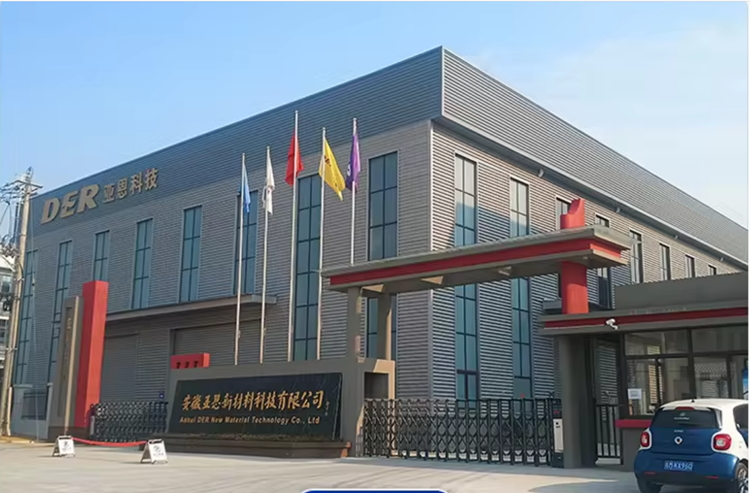
DERFLEX combines finished boom supply with coated-fabric manufacturing knowledge, helping buyers discuss both the barrier system and the material that forms its shell and skirt.

For Project Buyers

DERFLEX can review application, total length, section geometry, water conditions, color, connectors, anchoring interface, accessories, packing and shipment requirements for a finished marine oil boom or industrial oil containment boom project.

Buyers working from a tender, drawing or existing boom can send the document or physical reference so the quotation is based on a defined configuration rather than a generic catalog assumption.

For Boom Manufacturers & OEM Fabricators

If you manufacture the boom locally, DERFLEX also supplies coated textile directions such as industrial PVC coated fabric, oil-resistant TPU coated fabric and custom PVC coated fabric roll programs.

This is useful for buyers who need to control coating type, base fabric, color, roll width, welding behavior, repeated-folding performance and batch consistency before their own fabrication process begins.

Questions Buyers Ask

Oil Spill Boom FAQ

Short, direct answers for procurement teams, spill-response contractors, ports, refineries and marine equipment distributors.

What does an oil spill boom do?

An oil spill boom is a floating barrier that contains, diverts or concentrates oil on the water surface. By slowing the spread and gathering oil into a more manageable area, a boom helps response teams protect sensitive locations and improve recovery efficiency.

What is the difference between an oil containment boom and an absorbent boom?

A conventional containment boom creates a physical barrier using freeboard, flotation and a below-water skirt. An absorbent boom is designed to absorb oil but usually does not provide the same skirted containment function. They may be used together, but they are not interchangeable.

Should I choose foam-filled or inflatable oil boom?

Foam-filled boom is useful when simple deployment without inflation equipment is important. Inflatable boom is attractive when compact storage and transport are priorities. The final choice should consider deployment speed, storage space, waves, current, section handling and maintenance capability.

Is PVC coated fabric suitable for oil spill booms?

Yes, reinforced PVC coated fabric is widely used in oil boom shells and skirts because it can combine waterproofing, strength, weldability and cost efficiency. The coating formulation and construction should still be checked against the actual oil or fuel, temperature, UV exposure and service cycle.

When is TPU coated fabric a better direction?

TPU is often considered for inflatable or foldable boom systems where flexibility, airtight seam fabrication and compact packing are important. Oil-contact compatibility should be tested with the actual liquid because performance varies by formulation, exposure time and temperature.

What boom dimensions should I send for a quotation?

Send total length, section length, overall height, freeboard, skirt depth, float size or boom architecture, connector standard and any tow or anchor interfaces. Also provide water conditions so the dimensions can be reviewed in context.

Can DERFLEX customize oil containment booms for OEM or tender projects?

DERFLEX supports project-specific discussion for dimensions, coated fabric, color, connectors, accessories, labels and export packing. For tender work, send the specification, drawing or existing model requirements so the configuration can be reviewed before quotation.

Can oil spill boom work in fast currents or rough water?

Containment efficiency decreases when current, waves or wind loads exceed what the boom and deployment geometry can handle. Fast-water or more exposed applications require careful review of buoyancy, freeboard, skirt, tension system, anchoring and deployment angle rather than simply selecting a taller boom.

Send Your Water Conditions Before You Ask for “a Standard Oil Boom”

Tell DERFLEX where the boom will work, what liquid it may contact, the expected water conditions, required length, preferred construction, connector standard, quantity and destination. That information allows a more useful technical and commercial recommendation.

Suggested attachment: tender sheet, site photo, boom drawing, connector photo or existing sample specification.
Copyright © 2015 DERFLEX ( PVC tarpaulin manufacturer )All Rights Reserved.