


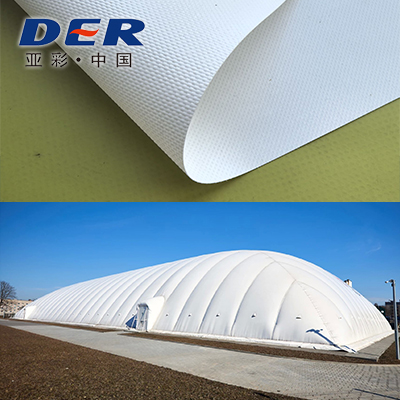
Tent Material Supplier for Event Tents, Warehouse Tents, Industrial Shelters, and Custom OEM Fabric Programs
DERFLEX positions itself as a tent material supplier for buyers who need more than a generic roll of coated fabric. In today’s tent market, customers are no longer sourcing only by color and price. They want performance that matches the final application, whether the project involves event tent fabric, warehouse tent material, military tent fabric, inflatable tent fabric, industrial shelter fabric, or custom technical textile for semi-permanent and heavy-duty outdoor structures. That means the material must be evaluated through a commercial lens as well as a technical one: waterproof performance, UV resistance, flame-retardant direction, tear strength, coating stability, finishing quality, custom size logic, OEM packaging, and repeat-order consistency all shape purchasing decisions.
A serious tent fabric manufacturer is not simply a seller of cloth. The right supplier helps tent brands, tent factories, importers, wholesalers, event-structure companies, industrial shelter builders, military or relief suppliers, and project contractors translate end-use requirements into a more reliable product system. That is the role of this page. It is designed as a high-conversion commercial landing page for buyers looking for a dependable PVC tent fabric supplier, a custom tent material manufacturer, or a flexible OEM partner who can support product development, quality alignment, documentation discussion, lead-time planning, and long-term supply.
From glossy or matte event tent membranes to blackout or industrial storage-grade tarpaulin, from coated polyester for large temporary structures to specialty tent textile for military, inflatable, or promotional applications, DERFLEX can be positioned as a solution partner for projects that demand durability, consistent supply, practical customization, and real commercial logic. The content below is built to help buyers understand what tent material really is, how to compare it intelligently, how to select the right structure, and why a manufacturer-focused sourcing route usually delivers stronger long-term value than buying commodity stock with unclear performance.
- Waterproof & UV Resistant
- OEM / Private Label Ready
- Event / Warehouse / Military
- Custom Weight / Width / Finish
- Quality & Documentation Support
- Lead Time & Repeat Supply Focus
Multi-Application Supply
Built for event tents, warehouse tents, industrial shelters, military tents, and specialty outdoor structures.
OEM / Custom Capability
Weight, width, color, finish, packaging, and application direction can be customized around your market.
Commercial-Grade Logic
Supports distributors, tent factories, converters, contractors, and export-oriented sourcing teams.
Project-Ready Communication
Lead time, quality, documentation, and certification-related needs can be discussed early in the RFQ stage.
What Is Tent Material and Why Does It Matter So Much in Tent Manufacturing?
Tent material is the core textile system used to create the roof, sidewall, door, partition, window, or structural membrane of a tent, canopy, shelter, or temporary enclosure. In simple language, it is the fabric or coated fabric that allows the tent to survive outdoor weather, hold its visual form, resist tearing during handling and installation, and deliver the performance the end customer expects. In commercial sourcing language, it may also be described as tent fabric, PVC tent fabric, tent tarpaulin, tent textile, shelter material, canopy fabric, or industrial tent fabric, depending on the application and the market.
Although some buyers initially treat tent fabric as a standard commodity, experienced purchasing teams know that it is one of the most important performance variables in the finished product. A tent frame can be designed well, but if the material is unstable, poorly coated, too light for the environment, or not aligned with the real use case, the customer will eventually encounter leakage, UV degradation, seam issues, poor appearance retention, mildew problems, excessive dirt pick-up, or disappointing service life. By contrast, a well-chosen tent material improves the whole product. It gives the final tent better weather performance, stronger market acceptance, more reliable installation behavior, and better long-term value.
In global B2B markets, tent materials are used across a surprisingly wide spectrum of products. Event tent manufacturers need visually clean and waterproof PVC coated fabrics that hold shape well and support branding, rentals, and repeated installation. Warehouse and industrial shelter builders need stronger and often heavier constructions for wider spans, harsher exposure, and longer use cycles. Military and relief buyers typically focus on durability, weather resistance, and operational practicality. Inflatable tent and inflatable structure manufacturers often need coated fabrics or airtight material logic that matches their production method and final performance targets. Advertising tent or pop-up tent suppliers may prioritize printability, color consistency, and lighter handling. The best supplier understands these differences and does not assume all tent fabric requirements are the same.
Tent material is therefore not just “fabric.” It is a performance platform. Its value comes from the combination of base fabric, coating or lamination, finish, thickness or weight direction, surface treatment, flexibility, resistance properties, and how well it fits the final tent application. Two fabrics may look similar in a sample swatch and behave very differently after months of outdoor exposure, repeated folding, shipping, welding, stitching, or customer use. That is why smart buyers increasingly evaluate the whole material system, not just the appearance.
A professional tent material manufacturer helps buyers compare these variables in a commercially useful way. The goal is not to overwhelm the customer with technical jargon, but to connect the fabric to the actual product strategy. Is the material for a premium event tent rental fleet? For a warehouse shelter project? For a military or disaster-relief shelter? For a promotional or printed tent? For an inflatable dome or air-supported structure? Each question changes what “the right material” really means.
Another reason tent material matters is product positioning. Many tent brands operate in crowded markets where visual similarity is high and price pressure is constant. Better material can help them escape pure price competition. A tent that stays cleaner, looks more premium, handles better during installation, or offers more durable waterproof performance becomes easier to sell. For distributors and OEM buyers, the material is also part of brand reputation. If the fabric underperforms, the customer blames the brand, not the fabric mill. That makes upstream sourcing one of the most strategic choices in the whole product chain.
From a manufacturing perspective, tent material also influences welding, stitching, printing, pattern cutting, handling efficiency, and packaging. Material that is too stiff, too unstable, or poorly coated may slow production or create inconsistencies in conversion. Material that is better balanced can improve downstream efficiency, which matters to tent factories and converters placing regular orders. For this reason, a strong tent material supplier supports not just end-use performance but also production practicality.
Finally, tent material matters because it is the most visible proof of product quality to the end buyer. Customers touch it, see it, clean it, fold it, and judge it every time they use the tent. A good frame may be important, but the fabric is what the customer experiences. That is why serious tent brands, project suppliers, and distributors pay so much attention to fabric sourcing. Done well, it reduces complaints, supports stronger margins, and creates more stable long-term business.
Need the right tent material for your exact tent category?
Share your application, weight target, width range, finish, performance requirements, and OEM needs. DERFLEX can help you turn a broad request into a more workable material solution.
Key Features Buyers Expect from a Competitive Tent Material Supplier
1. Reliable Waterproof Performance
Waterproofing is usually the first requirement buyers mention when sourcing tent material, but in professional markets the question goes deeper than whether a droplet can sit on the surface. Commercial buyers want dependable long-term rain protection that still performs after the fabric has been folded, transported, stitched, welded, tensioned, and used repeatedly. Whether the tent will be deployed for weddings, exhibitions, industrial storage, military field use, or semi-permanent outdoor shelter, the tent material must protect the structure’s interior and maintain user confidence during weather exposure. Good waterproof performance is therefore not merely a specification line. It is one of the foundations of the product’s commercial credibility.
2. UV Resistance for Outdoor Longevity
Tents spend their lives outdoors or semi-outdoors, often under direct sun for long periods. UV resistance is therefore essential for retaining strength, flexibility, and appearance over time. Event operators want fabric that still looks clean and professional after repeated rentals. Warehouse tent users want material that does not degrade too quickly during long exposure. Relief or field users need fabric that remains dependable when weather is unpredictable. A professional tent fabric manufacturer understands that UV behavior is a decisive factor in product life cycle and customer satisfaction.
3. Tear Strength and Structural Stability
Tent fabrics are often exposed to tension, wind load, drag, installation stress, folding, and repeated handling. If the material lacks sufficient tear strength or coating stability, small damage can become a major field failure. Buyers therefore want a tent material that is strong enough to support the end-use category, whether that means light event structures or larger industrial shelter applications. Stronger fabric does not simply mean heavier. It means appropriately balanced strength for the actual use case.
4. Flame-Retardant Direction for Project Markets
Many project buyers, event contractors, and export markets need tent material with a flame-retardant direction or at least the ability to discuss flame-related performance expectations early in the RFQ process. This is especially important for public-use tents, rental fleets, industrial applications, and institutional projects where documentation requirements may be higher. A supplier who can communicate clearly on this point makes procurement easier and more credible.
5. Flexible Surface and Finish Options
Tent fabric is not only about strength. Surface finish also matters because it affects appearance, cleanability, print suitability, handling feel, and customer perception. Some buyers prefer glossy surfaces for visual impact. Others prefer matte finishes for a more premium look. Some applications need anti-mildew or lacquered surfaces to reduce dirt accumulation and simplify cleaning. A supplier with more finish options helps buyers tailor the material to their product category rather than forcing them into a generic look.
6. Practical Weight Range for Different Tent Categories
Different tent categories require different material balances. Promotional tents and some event structures may favor lighter fabric for easier handling and logistics. Warehouse tents and industrial shelters may require heavier-duty solutions. Military and relief shelters may prioritize durability and weather reliability. Inflatable tents may require a specific performance direction. A serious tent material supplier should be able to guide the buyer toward a weight range that fits the product without overbuilding or underspecifying.
7. Custom Width, Color, and Visual Direction
In modern B2B tent markets, customization is not optional. Buyers often need specific colors for branding, custom widths for production efficiency, or consistent surface appearance for premium product lines. A custom tent material manufacturer makes it easier for brands and converters to reduce waste, streamline processing, and create a more differentiated market offer. Even small differences in color stability and width consistency can matter greatly in downstream production.
8. Good Welding, Stitching, and Conversion Compatibility
Tent fabric must work well in production, not only in theory. If the material is difficult to weld, unstable under heat, inconsistent in coating, or frustrating to handle, the converter loses time and quality. Tent factories increasingly want material that supports efficient cutting, sewing, welding, edging, window integration, and finishing. This is one reason why a good supplier is valued: it improves factory productivity as well as final product performance.
9. Better Resistance to Dirt, Mildew, and Outdoor Wear
Event tents, warehouse shelters, and military tents all face real-world contamination. Dirt, mud, dust, rain residue, mildew risk, and repeated folding all affect customer satisfaction. A better tent material should therefore be selected with maintenance and appearance retention in mind. Material that stays cleaner, is easier to wipe down, or resists mildew more effectively can reduce lifecycle cost and improve perceived quality in the end market.
10. OEM and Private Label Readiness
Many buyers are not selling raw fabric alone. They are building brands. They need custom packing, item coding, labels, documentation, roll marking, and consistent product identity. A supplier that supports OEM or private-label tent material programs helps the buyer create a better commercial system, which is especially important for importers, wholesalers, and regional tent brands competing in crowded markets.
11. Lead Time and Repeat Supply Stability
In tent manufacturing, delivery timing often matters as much as fabric performance. Event seasons, project deadlines, rental peaks, tender-based orders, and distributor replenishment cycles all create schedule pressure. A professional supplier must therefore support stable repeat supply and clear lead-time communication. Buyers gain real value from a source that can keep product definition consistent from one order to the next.
12. Quality and Documentation Communication
Serious B2B buyers need more than a sample and a price. They may require discussion of weight, width, finish, performance direction, application suitability, quality control logic, packaging details, and certification-related expectations. A supplier who communicates clearly about these points reduces sourcing risk and helps the buyer compare offers more intelligently.
Why These Features Matter in Commercial Purchasing
For a tent factory, these features matter because they influence production efficiency and complaint rate. For a distributor, they matter because they shape sellability and repeat orders. For a project buyer, they matter because installation and end-use reliability are critical. For an OEM brand, they matter because the fabric becomes part of the brand promise. In other words, tent fabric performance is not just technical. It directly affects margins, reputation, and order stability.
That is why the strongest sourcing decision usually comes from a buyer and supplier working together around the real application. When the supplier understands how the final tent will be used, the material recommendation becomes more credible and the commercial result becomes more durable.
Technical Specifications for Tent Material Supply Projects
The technical specification of tent material is one of the most important parts of the procurement process. A fabric that looks attractive in a catalog may still underperform if the structure, weight, coating direction, or width is not matched to the end product. That is why serious sourcing teams compare material in the context of the final tent category and not only by headline numbers.
The table below provides a commercial reference framework for discussing tent material projects with DERFLEX. Final product direction should always be aligned with actual end use, market expectations, finishing method, climate, and budget.
| Material Structure | PVC coated polyester, PVC laminated polyester, Oxford-based coated tent fabric, specialty inflatable or shelter fabrics, and related custom technical textile directions depending on the application. |
|---|---|
| Common Weight Range | Approx. 180gsm to 900gsm+ depending on whether the fabric is intended for printed canopy use, event tents, warehouse tents, industrial shelters, military tents, or higher-duty project applications. |
| Typical Width Range | Standard and custom widths can be discussed according to production efficiency and downstream conversion needs. Common industrial tent fabric directions may extend to wider roll options. |
| Color Options | White, black, grey, blue, green, transparent, dual-tone, printed or custom colors according to order quantity, branding needs, and end-use category. |
| Surface Finish | Glossy, matte, lacquered, anti-mildew, printable, cleanable, or application-specific surface directions depending on aesthetic and functional requirements. |
| Core Performance | Waterproof, UV resistant, tear resistant, mildew resistant, weatherproof, and available for flame-related performance direction depending on target market and application. |
| Base Fabric Direction | Polyester scrim, Oxford fabric, specialty textile bases, or other reinforcement structures selected according to strength, flexibility, and tent type. |
| Temperature / Outdoor Use Direction | Material selection can be aligned with expected climate, handling conditions, and long-term outdoor exposure requirements. |
| Application Types | Event tents, wedding tents, exhibition tents, military tents, disaster relief tents, warehouse tents, industrial storage tents, inflatable tents, promotional tents, and special shelter projects. |
| Customization | Custom weight, width, color, finish, packaging, branding, OEM roll labeling, private label, project-specific documentation, and market-oriented material programs. |
| Supply Format | Roll goods, custom production runs, OEM programs, factory-support supply for tent converters, and broader export-oriented sourcing support. |
| Lead Time Factors | Lead time depends on color, finish, customization, order volume, packaging requirements, and current production schedule. Early alignment usually improves delivery planning. |
How Buyers Should Read a Tent Fabric Specification
A good tent fabric specification tells you more than just weight and width. It gives clues about the intended use, the level of durability, the surface behavior, and how the fabric may perform in production and in the field. For example, two fabrics with similar gsm may behave differently because their base scrim, coating adhesion, or finish are different. One may be more suitable for elegant rental-event tent roofs, while another is better for industrial storage tents or military-grade shelter components.
Buyers should therefore define their application clearly before asking for samples. Is the material intended for premium event use, a budget warehouse tent, a repeated-rental wedding tent fleet, a military program, an inflatable tent, or a printed promotional canopy? How long will the tent stay outdoors? Will it be repeatedly folded and transported? Does the market demand a cleaner visual finish or stronger industrial performance? Will the fabric be sewn, welded, or both? These questions influence the best material choice far more than catalog appearance alone.
This is where an experienced tent material supplier creates real value. The supplier can guide the buyer away from oversimplified decisions and toward a more balanced material program. That not only improves technical fit but also strengthens the commercial logic of the final tent line.
Looking for custom width, color, coating, or OEM packaging?
Tell us your tent category, target gsm, color plan, quantity, and performance expectations. DERFLEX can help structure a more accurate and more usable quotation.
Applications for Tent Material Across Event, Warehouse, Military, Inflatable, and Industrial Projects
One of the reasons tent material is such a commercially important category is that it serves a very broad range of end products. The same supplier may work with event tent brands, industrial shelter builders, relief-tent contractors, advertising tent printers, warehouse tent manufacturers, and inflatable structure developers. The fabric solution, however, should not be identical in every case. Below are some of the major tent material application categories and the buying logic behind them.
Event Tent Fabric
Event tent material is usually expected to deliver strong waterproofing, clean visual appearance, attractive surface finish, and reliable durability through repeated installation and dismantling. Rental operators and premium event tent brands often care about how the fabric photographs, how easily it can be cleaned, and how well it maintains shape and color over time. White and light tones are popular, but the performance behind the appearance matters just as much.
Wedding and Exhibition Tent Material
Wedding and exhibition structures demand fabric that balances elegance with practicality. Buyers want a clean, high-end look, but they also need material that can survive transport, setup, take-down, and repeated commercial use. Mildew resistance, easy cleaning, good visual uniformity, and dependable weather protection are often major selling points in this segment.
Warehouse Tent Material
Warehouse tents and industrial storage tents operate in a much more functional environment. Here the buyer usually prioritizes durability, wider span suitabi, lity, weather resistance, and more industrial-grade confidence. The fabric may need to support longer exposure periods and less decorative but more performance-driven project outcomes. A warehouse tent material supplier must therefore discuss strength, durability direction, and large-structure practicality.
Industrial Shelter Fabric
Industrial shelter projects may include vehicle protection, temporary workshops, equipment cover, storage extension, loading-area shelter, or other practical enclosures. The fabric direction in this category should be selected around working conditions rather than showroom appearance. Buyers typically want heavier-duty performance, long-term reliability, and project-oriented material recommendations.
Military Tent Fabric
Military and field-use tent fabric must support demanding outdoor conditions and practical operational use. Buyers often focus on durability, weather resistance, handling strength, and dependable performance under repeated transport or deployment. The fabric may also need to align with documentation or special procurement expectations. In this segment, credibility and supply discipline are especially important.
Relief and Emergency Shelter Fabric
Disaster relief, emergency shelter, and humanitarian tent materials need to balance practicality, reliability, and speed of deployment. These projects are often time-sensitive and use-critical, so the material must support confident field use and predictable supply. Buyers in this segment value clear communication and stable product definition.
Inflatable Tent Fabric
Inflatable tents and inflatable structures may require tent material with a different balance of flexibility, airtightness direction, mechanical strength, and finishing compatibility. This application is more specialized and often benefits from a supplier that understands not only outdoor fabric but also the unique needs of inflatable structure manufacturing.
Advertising and Promotional Tent Fabric
Promotional tents, pop-up tents, and display canopies frequently prioritize printability, color control, attractive finish, manageable weight, and cost efficiency. Here the material must support the end product’s visual identity and easy handling without sacrificing outdoor practicality. The best solution depends on how premium the final product is meant to be.
Stretch Tent and Leisure Shelter Fabric
Stretch-tent-related applications need their own balance of flexibility, waterproofing, visual quality, and structural behavior. Buyers in leisure, tourism, and event sectors often want fabric that creates a dramatic look while still performing in demanding outdoor conditions. This is a more design-sensitive segment of the tent-material category.
Camping and Outdoor Shelter Material
The camping and general outdoor shelter space can range from lightweight textile directions to more rugged coated materials. The ideal fabric depends on whether the product is mass-market, premium, technical, or project-based. While some subcategories focus heavily on weight reduction, others prioritize weatherproofing and lifespan.
Canopy and Semi-Permanent Shelter Fabric
Many customers buy tent material for canopy systems, semi-permanent shade and rain protection, or hybrid shelter structures that do not fit one narrow product type. In these cases, the supplier’s ability to understand project intent becomes more important than any single standard specification.
OEM Distributor Product Lines
Tent material is also a strong category for distributors and private-label brands that want to create their own product programs. By controlling grade, weight, finish, width, packaging, and color, the buyer can build differentiated offerings for multiple tent segments instead of reselling undifferentiated commodity fabric.
Why Application Matching Improves Tent Fabric Sourcing
The biggest sourcing mistake in this category is assuming all tent materials are equivalent. A fabric that works beautifully for an event tent may not be the best choice for an industrial storage shelter. A fabric that suits an inflatable or military application may be too specialized or too heavy for a promotional canopy line. This is why application-first sourcing produces better commercial outcomes. It helps the buyer select a fabric that supports the actual product and reduces hidden mismatch cost later.
That application-first approach is one of the main reasons buyers seek out a more professional tent material manufacturer. They do not just want fabric. They want a better fit between fabric and market.
OEM and Custom Tent Material Programs with Lead Time, Quality, and Certification-Focused Coordination
In competitive B2B markets, many buyers no longer want to sell the same fabric everyone else offers. They want differentiation. That is why OEM and custom tent material programs are so important. A more flexible manufacturer enables buyers to create fabrics that align with their brand, their tent category, their production method, and their customer expectations. This can include custom gsm direction, width optimization, color consistency, packaging style, roll labeling, private-label presentation, and application-focused surface or performance direction.
DERFLEX can be positioned as a supplier for buyers who need that higher level of flexibility. Instead of limiting the sourcing conversation to one standard item, the project can be framed around what the final tent must achieve in the market. This is especially useful for event-tent manufacturers, warehouse structure suppliers, military or emergency-tent contractors, OEM distributors, and industrial exporters looking to build a stronger material program.
Common OEM and Customization Areas
- Weight and Structure Direction: light, medium, or heavy-duty fabric selection according to the final tent category.
- Width Optimization: custom or preferred widths to reduce waste and improve downstream production efficiency.
- Color and Appearance: white, black, grey, blue, green, transparent, custom brand colors, and premium finish direction.
- Surface Finish: matte, glossy, lacquered, mildew-resistant, or application-specific finish selection.
- OEM Roll Identification: custom labels, coding, packaging marks, and product identity for private-label or distributor use.
- Performance Direction: waterproof, UV resistant, flame-retardant-oriented, printable, or industrial-grade needs discussed according to market.
- Supply Format: large volume export orders, repeat production runs, OEM programs, and project-based delivery planning.
Lead Time Is a Commercial Variable, Not a Footnote
Tent buyers often face seasonal pressure, event deadlines, project delivery dates, or factory production windows. That means lead time is a direct commercial factor. Missing a shipment window can delay downstream tent production, reduce seasonal sales opportunity, or create project risk. A professional supplier should therefore approach lead time in a structured way. The clearer the buyer’s application, color, finish, width, and packaging requirements, the easier it becomes to quote accurately and plan production more effectively.
This is one reason experienced buyers stabilize their material programs once a successful configuration has been approved. Instead of re-specifying every order from the beginning, they develop a defined series or code system for recurring procurement. This improves repeat-order speed, reduces internal confusion, and makes supply more predictable over time.
Quality Means More Than Passing Inspection
Quality in tent material should be understood as consistency plus suitability. A technically “acceptable” fabric can still create commercial problems if it is not appropriate for the final use. Is the width stable enough for the converter? Is the surface suitable for the target market? Does the fabric match the expected outdoor life? Does it stay presentable in rental or event conditions? Does it align with welding or stitching methods? A good supplier helps answer these questions before mass purchasing begins.
DERFLEX can be positioned as a supplier that supports this broader quality conversation. Rather than treating quality as only a factory slogan, the sourcing process can be structured around application, finish, packaging, documentation, and end-use logic. That is the type of support buyers increasingly expect when they are sourcing tent fabric for real commercial programs rather than spot-buying commodity stock.
Documentation and Certification-Related Coordination
Different tent markets have different expectations. Public-use structures, export projects, industrial shelters, institutional buying programs, and tender-based orders may all require stronger technical communication and documentation clarity. Flame-related performance expectations, product identification, packaging specifications, and certification-related discussions should therefore be raised early in the quotation stage rather than left until late in the process.
DERFLEX can discuss documentation and certification-focused coordination based on the destination market and application. This does not only improve compliance-related clarity. It also helps the buyer compare offers more intelligently, because they are evaluating which supplier is prepared to support a more serious purchasing workflow.
Why OEM Thinking Strengthens Market Position
OEM is powerful because it lets the buyer control more of the commercial outcome. Instead of offering anonymous fabric, the buyer can offer a defined and recognizable material line with stable grades, clear color direction, consistent labeling, and application-specific positioning. This improves sellability, supports stronger margins, and makes the product easier to reorder. For many distributors and tent brands, OEM material sourcing is one of the most effective ways to move beyond price competition.
Need custom gsm, width, finish, or a private-label tent fabric line?
We can discuss OEM packaging, custom product direction, documentation support, lead-time planning, and application-based tent fabric recommendations for your market.
Tent Material Comparison: PVC Coated Fabric vs Other Common Tent Textile Directions
| Comparison Item | PVC Coated / Laminated Tent Fabric | Oxford / Polyester Tent Textile | Canvas-Like Fabric | PE Woven Cover Material | Specialty Stretch / Inflatable Fabrics |
|---|---|---|---|---|---|
| Waterproof Direction | Strong waterproof performance and broad commercial tent usage | Can range from water-resistant to higher waterproof performance depending on structure | Varies greatly by treatment | Often economical and functional, but usually less premium in appearance | Application-specific depending on product type |
| Durability | Strong balance of strength, durability, and commercial tent suitability | Good in selected categories, especially lighter tent systems | Can be robust, but performance varies widely | Budget-friendly but often less refined in demanding commercial tent markets | Designed for specialized use rather than broad generality |
| Visual Quality | Often preferred for clean event, industrial, and project tent appearance | Strong for some premium and printed applications | Traditional look in certain categories | More functional than premium | Depends on niche application |
| OEM / Custom Value | High: custom width, finish, color, packaging, private label | Moderate to high depending on subcategory | Moderate | Often more commodity-driven | High in niche segments but not always broad-market |
| Common Use Cases | Event tents, warehouse tents, military tents, industrial shelters, shelter projects | Pop-up tents, camping products, printed canopies, selected shelter uses | Traditional tents, lifestyle products, specialty outdoor uses | Basic shelter and low-cost cover applications | Stretch tents, inflatable tents, specialized structure solutions |
| Commercial Positioning | Strong for mid- to premium-grade B2B tent markets | Versatile depending on application | Niche or style-oriented depending on market | Price-led applications | Project- or niche-led applications |
Why PVC Tent Fabric Remains Central in the Global Tent Market
PVC coated and laminated tent fabrics continue to hold a strong position because they serve an unusually wide set of commercial needs. They can be developed for event aesthetics, industrial durability, weatherproof performance, flame-related direction, custom width supply, and OEM branding programs all at the same time. That does not mean they are the only solution for every tent type, but it does explain why they remain central to B2B tent-material sourcing.
Buyers compare material directions not only for technical reasons but also for market positioning. A premium event-tent brand may value visual cleanliness and repeatability. A warehouse shelter supplier may emphasize ruggedness and industrial confidence. A printed canopy producer may prioritize graphics and handling. The best material is therefore the one that matches the product category best, not the one with the most impressive isolated marketing claim.
This is another reason why sourcing through a knowledgeable tent tarpaulin supplier is so important. A strong supplier can help the buyer understand where PVC-coated solutions are best, where lighter tent textiles are better, and where specialized fabrics are necessary.
Representative Project Case: Custom Tent Material Program for Event and Warehouse Tent Product Lines
The following example is presented as a representative commercial sourcing case showing how many buyers transition from generic fabric purchasing to a more structured tent material program. It is not limited to one geography and reflects the kind of decision logic often seen in real OEM and distributor relationships.
Background
A regional tent manufacturer was supplying both premium event tents and lower-profile warehouse shelters to distributors and project contractors. For years, the company had sourced fabric from multiple channels, often buying based on availability and short-term price rather than a stable material strategy. At first this seemed flexible, but over time the business encountered recurring issues: event tents from different batches had inconsistent appearance, some industrial shelter materials were not holding up as well as expected, and internal production teams complained that different fabrics behaved unpredictably in cutting, welding, and stitching.
The company realized that it was not simply buying “tent fabric.” It was trying to support two distinct product lines with inconsistent upstream inputs. The event-tent line needed a cleaner, more premium fabric with strong waterproof performance, better appearance retention, and more stable finish. The warehouse line needed stronger industrial confidence and better repeat-order consistency. The solution was not to buy “heavier” fabric across the board, but to redesign the sourcing logic around actual applications.
Challenges
- Inconsistent surface appearance across event tent batches
- Different factory behaviors during welding and stitching
- Too much overlap between premium and industrial tent product positioning
- Unclear communication between purchasing, production, and sales teams
- Frequent need to re-approve fabric because product definition was unstable
- Difficulty giving customers clear grade explanations
Solution Direction
The company worked with a more specialized tent material supplier to establish two clearer material families. One was positioned for event and wedding structures, with a focus on cleaner appearance, reliable waterproofing, and better customer-facing presentation. The other was positioned for warehouse and industrial shelter use, with an emphasis on durability direction, ruggedness, and better suitability for large outdoor applications.
In addition to the material distinction, the buyer also standardized color choices, finish preference, and packaging identification. This helped warehouse teams identify material more efficiently and reduced confusion in production. The company also began discussing documentation and performance expectations earlier in the sourcing process, which improved confidence in repeat orders.
Operational Improvements
Once the material program was stabilized, production became smoother. Teams no longer had to constantly adjust process behavior for unknown fabric variations. Sales teams could explain the product range more clearly: one line for premium event presentation, another for stronger industrial shelter requirements. Customer complaints about inconsistency dropped, and internal planning improved because the company now had a more defined sourcing structure rather than spot-buying loosely similar materials.
Commercial Outcome
The most important result was that the manufacturer stopped treating fabric as an interchangeable input and started treating it as a strategic product component. This strengthened both product quality and commercial clarity. Event tent customers saw a more consistent finish and better premium feel. Warehouse and industrial buyers gained more confidence in durability. The manufacturer itself gained more stable production and easier reordering.
The lesson is simple: the best tent material supplier does not only lower cost. The right supplier helps the buyer build a better tent business. That is exactly why application-oriented sourcing and OEM logic matter so much in this category.
Why Choose DERFLEX as Your Tent Material Supplier or Tent Fabric Manufacturer
Application-Focused Tent Material Logic
DERFLEX can be positioned around real end-use categories rather than one generic tent fabric idea. This helps buyers align event, warehouse, industrial, military, and inflatable uses with better material selection.
Custom and OEM-Friendly Supply
Custom color, width, finish, packaging, labeling, and project-specific material direction can be discussed to support brand programs and market differentiation.
Commercial Understanding of Tent Markets
Tent-material sourcing is treated as a business decision as much as a technical one. This supports stronger product positioning and clearer downstream selling logic.
Lead Time and Repeat Order Awareness
DERFLEX can be positioned as a supplier that values stable reordering, production planning, and earlier alignment on product definition to improve delivery control.
Quality Communication that Supports Real Buyers
Quality is approached through suitability, consistency, and use-case fit, not merely through broad marketing claims. This helps buyers compare options more intelligently.
Documentation and Certification-Related Coordination
When projects or export markets require stronger documentation or certification-focused communication, those needs can be raised early to reduce procurement friction later.
Broad Tent Category Coverage
DERFLEX-related tent fabric directions can support event tents, warehouse tents, military tents, inflatable tents, and specialty shelter products, giving buyers more room to scale.
Built for Buyers Who Want More Than Commodity Stock
The overall supplier positioning is strongest for customers who need repeatability, customization, better commercial structure, and a material program that actually fits the final market.
A Better Way to Source Tent Fabric
Many buyers reach a point where buying “whatever is available” stops working. Their market becomes more demanding, their production needs become more specific, or their brand needs a clearer material identity. That is the moment when a more professional supplier relationship creates real value. Instead of reacting to market pressure, the buyer can start building a stable and differentiated product line.
DERFLEX can be presented as a supplier for exactly that transition: from broad commodity sourcing to more thoughtful, application-driven, OEM-capable material supply. For serious tent brands and B2B buyers, this is often the difference between short-term procurement and long-term product strategy.
Ready to build a stronger tent material program?
Send your product category, performance targets, OEM needs, order size, and delivery timeline. DERFLEX can help you build a more practical sourcing path for your tent fabric line.
Frequently Asked Questions About Tent Material Supply
1. What is the best tent material for commercial tent manufacturing?
The best tent material depends on the final application. Many commercial buyers choose PVC coated or laminated tent fabric for event, warehouse, military, and industrial shelter uses because it offers a strong combination of waterproofing, durability, UV resistance, and customization.
2. What is the difference between tent material and ordinary tarpaulin?
Tent material is usually selected with more attention to appearance, conversion performance, structural suitability, and end-use consistency. While some tarpaulin products overlap with tent applications, a true tent fabric program is usually more application-specific and commercially refined.
3. Can DERFLEX provide custom width, color, and OEM packaging?
Yes. Custom width direction, color programs, finish options, OEM labels, roll identification, packaging structure, and private-label supply can be discussed according to order scale and market needs.
4. Are waterproof, UV resistant, and flame-related performance options available?
Tent materials can be discussed with waterproof, UV-resistant, and flame-related performance direction depending on the fabric construction, end-use requirement, and target market. Buyers should raise these needs early during quotation.
5. What applications are common for PVC tent fabric?
Common applications include event tents, warehouse tents, exhibition tents, wedding tents, industrial shelters, military tents, emergency shelters, inflatable tents, and other outdoor structure products.
6. How should buyers prepare for a quotation?
Buyers should prepare the final application, target gsm, width, color, finish, quantity, conversion method, destination market, documentation expectations, and preferred delivery timing for a more accurate quote.
7. Is heavier tent fabric always better?
Not always. Heavier fabric may provide more confidence for certain industrial or long-use applications, but lighter or medium-weight materials may be more suitable for some event, printed, or portable tent categories. The best choice depends on use case, handling, and market positioning.
8. Can tent material be supplied for factory conversion rather than finished tents?
Yes. Many buyers source tent material in roll form for their own welding, sewing, cutting, printing, or finished-tent manufacturing processes. This is common in OEM and converter-oriented supply models.
9. Why should I choose a professional tent material manufacturer instead of buying only by price?
A professional supplier helps match the material to the tent category, supports better repeat consistency, improves communication on quality and documentation, and often reduces hidden costs caused by mismatch or unstable product definition.
10. Can DERFLEX support distributor and private-label tent fabric programs?
Yes. Distributor-focused supply can include OEM packaging, custom identification, stable grade structure, and broader support for building a stronger private-label material line.
Final Buying Perspective
The best tent material supplier is not simply the one who sends a low quote fastest. It is the one who helps you choose a fabric that fits your product, your market, your production process, and your long-term commercial goals. When tent material is selected that way, the finished tent line becomes easier to manufacture, easier to sell, and easier to reorder.
DERFLEX can be positioned for buyers who want exactly that kind of sourcing relationship: practical, customizable, commercially aware, and better aligned with how real tent businesses operate.
Related Tent Fabric and Structure Material Pages
The following internal links are reserved for closely related DERFLEX pages and can be used directly or adjusted to fit your live site structure.
Tell us your tent type, quantity, and performance goals
Whether you need a PVC tent fabric supplier, a warehouse tent material manufacturer, or a custom OEM partner for a new tent line, DERFLEX is ready to discuss the right supply path.