Base Fabric Carries Load
High-tenacity polyester scrim contributes tensile strength, tear resistance and dimensional stability. Yarn denier and fabric construction should reflect wind load, finished tarp size, repeated handling and tie-down stress.



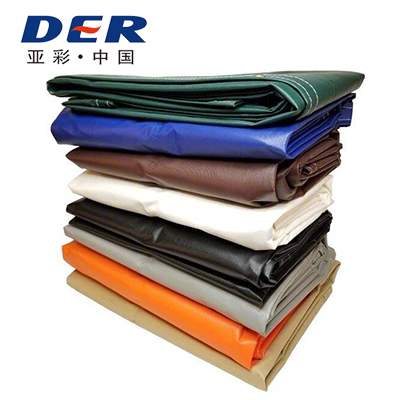
DERFLEX manufactures industrial tarps and PVC coated polyester tarp materials for buyers who need dependable waterproof protection, repeatable specifications and fabrication-ready construction. Source roll goods, cut panels or finished custom covers for trucking, construction, machinery, warehousing, agriculture, mining, waste transport and outdoor storage.
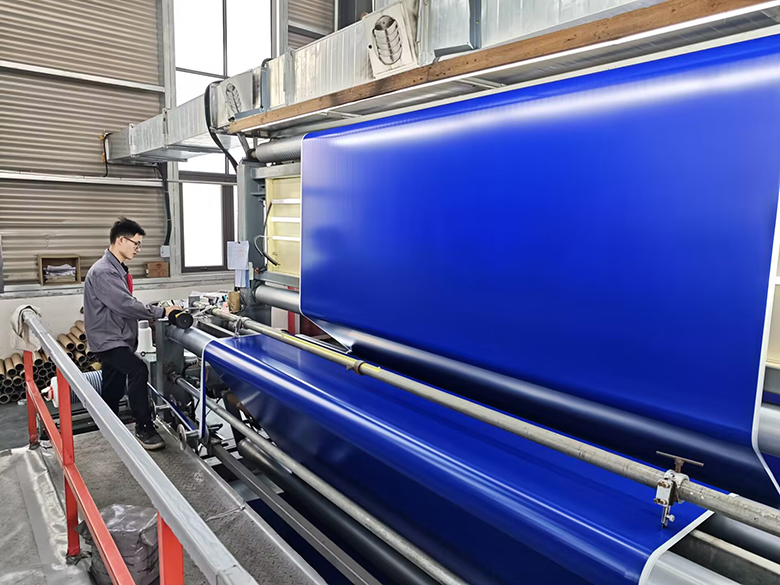
Industrial tarps are reinforced protective covers engineered for repeated commercial use. They protect cargo, machinery, building materials, stockpiles and outdoor assets from rain, sunlight, dust, abrasion and handling stress. For demanding waterproof applications, PVC coated polyester is a common industrial tarp construction because it combines a strong textile base with a weldable, weather-resistant coating. The correct tarp is selected by duty profile—not by color, thickness or GSM alone.
Industrial tarp performance is created by the interaction of the base fabric, PVC coating, surface treatment, seam design, reinforced edges and attachment hardware. A heavier tarp can still fail early when its tie-down geometry or high-abrasion zones are under-designed.
High-tenacity polyester scrim contributes tensile strength, tear resistance and dimensional stability. Yarn denier and fabric construction should reflect wind load, finished tarp size, repeated handling and tie-down stress.
The coating provides the waterproof surface and influences abrasion, UV resistance, cleaning, flexibility, weldability, color and weathering behavior. Surface finish is part of the performance specification.
Seams, hems, webbing, corner patches, grommets, D-rings and straps determine how working loads enter the tarp. These details deserve the same attention as GSM or thickness.
The ranges below are a sourcing framework based on DERFLEX's published industrial tarp options. Final construction, test values and production conditions should be confirmed against the approved quotation and sample.
| Specification | Typical DERFLEX Direction | Why It Matters in Industrial Use | What Buyer Should Confirm |
|---|---|---|---|
| Material | PVC coated polyester, PVC laminated tarpaulin, reinforced tarp constructions | Controls waterproofing, durability, fabrication and handling behavior. | Application, exposure, converter method and expected duty cycle. |
| Fabric Weight | 450, 550, 650, 750, 850, 900gsm and 1000gsm+ directions | Changes handling weight, coating reserve and overall duty level. | Do not specify GSM without also defining load and exposure. |
| Base Fabric | High-tenacity polyester; published industrial ranges include 500D, 840D, 1000D, 1100D and 1300D options | Strongly influences tensile load, tear propagation and dimensional stability. | Ask for construction matched to finished cover size and stress. |
| Width / Size | Roll goods, cut panels and custom finished cover dimensions | Width planning affects seam count, fabrication time, waste and water paths. | Provide finished size, panel plan or drawing when available. |
| Surface Finish | Glossy, semi-gloss, matte, embossed, lacquered, printable and project-specific finishes | Affects dirt pickup, cleaning, appearance, welding and print behavior. | Define appearance, branding and cleaning environment. |
| Performance Options | Waterproof, UV-resistant, flame-retardant, anti-cold, anti-mildew, low-wicking and abrasion-focused directions | Functional treatment should match climate, safety and service environment. | State the required test method or market requirement when one applies. |
| Finished Construction | Welded seams, hems, eyelets, webbing, D-rings, pockets, straps and reinforced corners | Moves load from the fixing point into a larger fabric area. | Provide fastening method, spacing, load direction and installation details. |
| Supply Format | Roll goods, cut panels, semi-finished components, finished tarps and OEM/private-label programs | Lets converters and distributors buy at the processing level they need. | Define local fabrication capability, packing and repeat-order model. |
Start with the job, then narrow the material. The ranges below are practical specification directions for discussion—not fixed rules.
Temporary or moderate commercial covers where handling weight and cost control matter.
Warehouse, machinery, logistics and outdoor covers installed and removed on a recurring cycle.
Wind, cargo movement, site abrasion and frequent tension place higher mechanical stress on the cover.
Mining, heavy equipment, stockpile, industrial containment or specialized project protection.
Many field problems begin with a purchase specification that only says “heavy duty, waterproof, blue.” A stronger RFQ names the likely failure modes and asks the tarp construction to address them.
| Field Risk | Typical Failure | Design Response to Discuss | RFQ Question |
|---|---|---|---|
| Wind & flapping | Edge tearing, hardware pull-out, seam fatigue | Higher-strength scrim, reinforcement, suitable tie-down spacing and controlled tension | How is the tarp restrained, and what wind exposure is expected? |
| Abrasion | Coating wear, pinholes, exposed yarns | Abrasion-focused coating, wear strips or local patches at contact zones | What surfaces rub against the tarp during use or transport? |
| Water ingress | Leaks through seams, punctures or poor drainage | Waterproof coated fabric, welded seam plan and installation that prevents pooling | Is the cover expected to shed rain or hold standing water? |
| Grommet pull-out | Hole elongation, hem tear, corner failure | Webbing reinforcement, patches, D-rings or revised fixing geometry | What load reaches each fastening point and how often is it retensioned? |
| Cold flexing | Stiff handling, surface cracking in low temperature service | Cold-resistant PVC formulation selected for the target climate | What is the lowest expected service and handling temperature? |
| UV exposure | Fading, embrittlement, coating aging | UV-stabilized formulation and suitable surface/colour direction | How many hours per day is the tarp exposed outdoors? |
| Fire safety requirement | Material fails project or facility compliance requirement | Specify the required flame-retardant standard and obtain applicable test documentation | Which standard, jurisdiction or project specification must be met? |
| Chemical contact | Swelling, staining, loss of coating properties | Confirm chemical compatibility rather than assuming generic PVC resistance | Which substances, concentrations and contact duration are expected? |
There is no universal tarp material for every industrial environment. PVC coated polyester is a strong direction for reusable waterproof covers and fabricated systems; PE is often selected for lighter, cost-sensitive temporary protection; canvas is useful when breathability matters; mesh is selected when airflow or load containment is more important than full weather sealing.
For buyers comparing long-life waterproof tarp programs, review DERFLEX PVC tarpaulin and match the material to the service environment before finalizing weight.
“Industrial tarps” is a broad category. The useful question is what the cover must survive in each application.
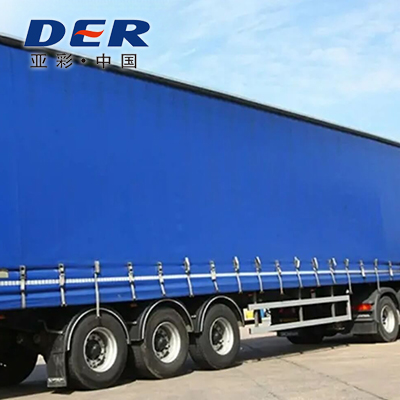
Truck, trailer, flatbed and cargo covers face wind pressure, tie-down tension, road spray, abrasion and frequent folding.
Focus: tear, weldability, reinforcement, UVWeather barriers, material covers and temporary enclosures must tolerate rough handling, site dirt and changing installation conditions.
Focus: waterproofing, abrasion, secure fixingCustom equipment covers may need fitted geometry, wear protection, access openings, straps and ventilation considerations.
Focus: fit, contact points, repeated removalProtection for pallets, raw materials and inventory should consider storage duration, drainage, UV exposure and handling frequency.
Focus: service duration, UV, easy handlingFarm covers for equipment, feed, grain and seasonal storage require weather protection balanced with handling and seasonal exposure.
Focus: UV, water, flexibility, sizeDust, sharp material, abrasion and outdoor exposure can justify stronger fabric and localized reinforcement.
Focus: abrasion, tear, severe-duty reinforcementDump and roll-off tarp systems can need load containment, repeated cycling, airflow control or waterproof construction depending on material hauled.
Focus: cycle life, attachment, mesh/PVC choiceIndustrial curtains, partitions and temporary shelters may require flame-retardant direction, visibility, cleanability or custom access features.
Focus: project requirement, FR, joining methodDERFLEX can discuss both roll-material supply and finished tarp fabrication, allowing the purchase specification to control more than a stock size.
A repeatable industrial tarp program should preserve the approved material, colour, fabrication and reinforcement details from sample to bulk order.
Industrial tarp quality should not be reduced to a single inspection point. Material selection, joining method, reinforcement geometry, hardware placement and packing all influence downstream performance.
Avoiding specification gaps is often more valuable than adding an arbitrary layer of weight or coating.
A higher weight does not automatically solve weak scrim, poor tie-down geometry, seam design or abrasion at contact points.
Specify whether dimensions are cut size or finished size, and account for hems, seam overlap and fitted-cover geometry.
Hardware should be supported by webbing, patches or a load-spreading construction where high pull forces are expected.
Waterproof fabric can still leak through seams, punctures or installation details. Finished-cover design matters.
UV exposure, cold flexing and heat can change the correct PVC formulation and handling expectations.
“Flame retardant” is incomplete procurement language. State the applicable test standard or project requirement.
Approved samples, colour references, construction details and packing standards should be recorded for future batches.
A complete RFQ reduces back-and-forth and helps the material recommendation reflect the real working conditions.
Use this structure when sending the first enquiry:
Application:
Finished size /,  roll size:
Quantity:
Outdoor exposure / climate:
Preferred material / GSM:
Colour / finish:
Seam method:
Hem / webbing / corner reinforcement:
Grommet or D-ring spacing:
Printing / label / packaging:
Required test or standard:
Destination:
Drawing / photo / current sample available: Yes / No
These pages narrow the buying decision by material, duty level, fabrication or safety requirement.
Direct answers to the questions procurement teams usually ask before samples and bulk quotation.
Industrial tarps are reinforced protective covers for repeated commercial use. They are used on cargo, machinery, building materials, construction areas, storage inventory, farm goods, stockpiles and industrial assets. Compared with light temporary covers, industrial tarps usually place more emphasis on fabric strength, weather resistance, seam construction, reinforcement and repeatable supply.
PVC coated polyester is a common choice because the woven polyester base provides mechanical strength while the PVC coating provides a waterproof, weather-resistant and weldable surface. The correct construction still depends on the duty profile, climate, abrasion and fabrication method.
There is no single correct GSM. DERFLEX publishes industrial directions from about 450gsm through 1000gsm+ depending on the project. A better selection starts with wind, abrasion, handling frequency, finished size, expected outdoor exposure and reinforcement design, then confirms the material weight.
PVC coated fabric can provide a waterproof surface, but the performance of the finished cover also depends on seams, punctures, drainage, fastening and installation. For rain protection, specify both the material and the finished seam/cover design.
Yes. DERFLEX can discuss custom size, colour, material weight, width, surface finish, welding, hems, webbing, grommets, D-rings, reinforcement, printing, labels, packing and roll-goods or finished-cover supply. Final options are confirmed according to the approved specification and order requirements.
Send the application, finished dimensions or roll size, quantity, operating environment, material or GSM direction, colour, reinforcement and hardware layout, printing/packing needs, required test standard if applicable, and destination. A drawing, photo or current sample is especially helpful for fitted or reinforced covers.
Flame-retardant PVC tarp directions are available for project requirements, but “FR” should not be treated as a universal claim. State the exact standard or project requirement in the RFQ and confirm the applicable test documentation before production.
Yes. Buyers can discuss PVC tarpaulin roll goods for local conversion, cut panels, semi-finished components, finished custom covers and private-label industrial tarp programs.
Send DERFLEX the working environment, dimensions, duty level and finishing requirements. The first goal is to define the right material and construction; the quotation comes after the specification is clear.