 News
News

Architectural Membrane | Tensile Fabric & Structural Membrane Manufacturer
Membrana arquitectónica para estructuras tensadas, cubiertas y fachadas
DERFLEX suministra tejidos de membrana arquitectónica de alto rendimiento para estructuras tensadas, cubiertas de estadios, terminales aeroportuarias, marquesinas comerciales, fachadas textiles, sombras para aparcamientos, pabellones de exposiciones y sistemas de cubierta estructural ligera.
Nuestras membranas arquitectónicas están diseñadas para ofrecer resistencia a la tracción, resistencia a la intemperie, comportamiento ignífugo, durabilidad superficial, flexibilidad de diseño y uso prolongado en exteriores.
- Opciones de PVC, PVDF, PTFE y recubrimientos personalizados
- Tejido base de poliéster de alta tenacidad o fibra de vidrio
- Opciones resistentes a los rayos UV, la intemperie, el fuego y el envejecimiento
- Estructura soldable y fácil de fabricar
- Personalización de translucidez, color y acabado superficial
- Suministro OEM para contratistas y fabricantes
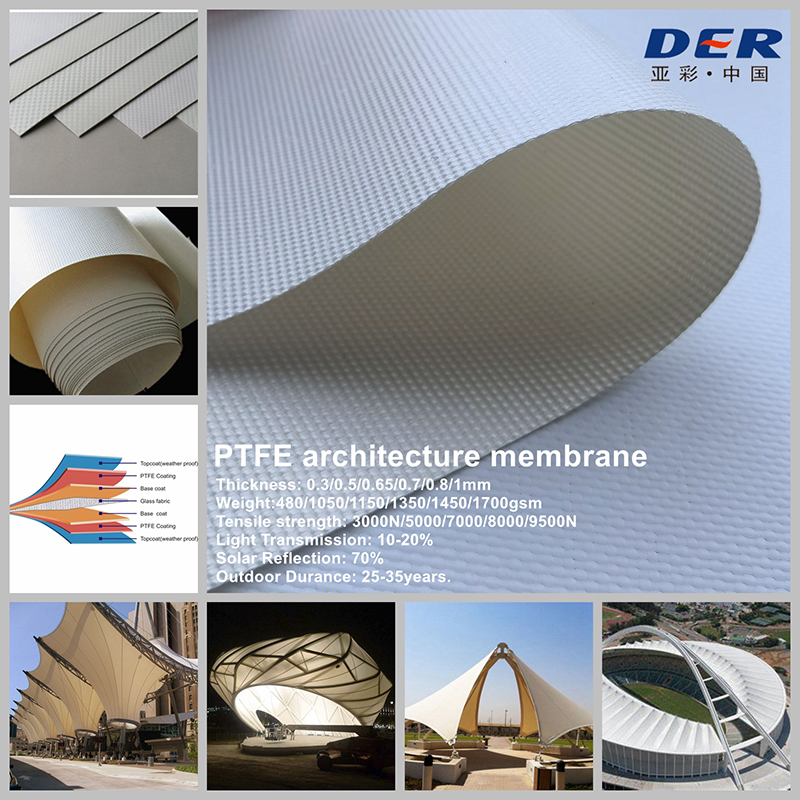

Sistema de tejido de membrana diseñado
Una membrana arquitectónica no es solo una cubierta. Es un sistema textil estructural diseñado en torno a la tensión, la transferencia de cargas, la translucidez, la seguridad contra incendios, la exposición a la intemperie y los detalles de fabricación.
¿Qué es una membrana arquitectónica?
Una membrana arquitectónica es un tejido recubierto o laminado de alto rendimiento que se utiliza como material estructural, de cubierta, fachada, sombreado o cerramiento en la arquitectura moderna. Se emplea ampliamente en estructuras de membrana tensada porque permite crear formas ligeras, expresivas y de gran luz que resultan difíciles de conseguir con materiales rígidos convencionales.
Significado correcto de membrana arquitectónica
El término anterior «architecture membrane» es menos preciso. Para búsquedas, páginas de producto y comunicación con compradores, la expresión comercial más adecuada es «architectural membrane» o «architectural membrane fabric». Describe membranas textiles técnicas utilizadas en edificios, no un concepto teórico general.
- Se utiliza como material de cubierta, marquesina, fachada o cerramiento
- Diseñada para trabajar a tracción con una estructura de soporte
- Combina prestaciones de ingeniería con estética arquitectónica
Por qué los arquitectos utilizan membranas
Las membranas arquitectónicas se eligen cuando un proyecto requiere una combinación de bajo peso, capacidad para grandes luces, transmisión de luz natural, formas curvas, instalación rápida, bajo mantenimiento y una identidad visual marcada.
- Grandes espacios sin columnas
- Diseño curvo y dinámico
- Difusión de luz natural y control del sombreado
- Menor carga estructural que los sistemas de cubierta pesados
Ventajas de rendimiento de la membrana arquitectónica DERFLEX
Una membrana arquitectónica de alta calidad debe responder a múltiples requisitos: resistencia, comportamiento frente a la intemperie, durabilidad superficial, seguridad contra incendios, soldabilidad, translucidez y apariencia del proyecto.
Alta resistencia a la tracción
El tejido base reforzado de poliéster o fibra de vidrio ayuda a aportar resistencia a la tracción, resistencia al desgarro y estabilidad dimensional a las estructuras tensadas.
Resistencia a la intemperie y a los rayos UV
Los materiales de membrana arquitectónica DERFLEX pueden desarrollarse con recubrimientos resistentes a los rayos UV, formulaciones antienvejecimiento y tratamientos superficiales resistentes a la intemperie para una exposición exterior prolongada.
Superficie autolimpiante de PVDF
Las opciones de acabado superior de PVDF o acrílico ayudan a facilitar la eliminación de suciedad, mejorar la limpieza superficial, conservar la apariencia y mantener el rendimiento de la membrana expuesta a largo plazo.
Opciones ignífugas
Pueden desarrollarse membranas arquitectónicas ignífugas conforme a normas internacionales de proyecto como B1, M2, NFPA 701 y requisitos relacionados con DIN.
Flexibilidad de diseño
Las estructuras de membrana permiten cubiertas curvas, conos, formas de silla de montar, ondas, fachadas, lucernarios, marquesinas y geometrías arquitectónicas emblemáticas.
Especificación personalizada para cada proyecto
DERFLEX puede personalizar el gramaje, el espesor, el tejido base, el acabado superficial, el color, la translucidez, el ancho del rollo, la estructura del recubrimiento y el embalaje OEM.
Orientación de datos técnicos para membranas arquitectónicas
Los valores finales deben confirmarse según el diseño del proyecto, el tipo de membrana, la luz estructural, la carga de viento, la carga de nieve, los requisitos de resistencia al fuego, el método de fabricación y el entorno de instalación.
| Elemento | Opciones personalizadas DERFLEX | Valor para el comprador |
|---|---|---|
| Nombre del producto | Membrana arquitectónica / tejido de membrana arquitectónica | Correspondencia clara con estructuras tensadas, cubiertas, fachadas y marquesinas |
| Opciones de material | Poliéster recubierto de PVC, membrana de PVC con PVDF, membrana de fibra de vidrio con PTFE y tejido recubierto personalizado | Diferentes estructuras para arquitectura temporal, semipermanente y permanente |
| Tejido base | Tejido de poliéster de alta tenacidad o fibra de vidrio | Aporta resistencia a la tracción, estabilidad dimensional y resistencia a las cargas |
| Rango de gramaje habitual | Aprox. 650–1500 g/m², personalizable según el proyecto | Selección flexible para marquesinas, cubiertas de estadios, fachadas y estructuras de altas prestaciones |
| Rango de espesor | Aprox. 0,60–1,20 mm o personalizado | Equilibra resistencia, flexibilidad, soldabilidad y control del peso |
| Tratamiento superficial | PVDF, laca acrílica, recubrimiento de PTFE, tratamiento antisuciedad, antienvejecimiento o autolimpiante | Mejora la apariencia exterior, la resistencia a la intemperie y la facilidad de limpieza |
| Comportamiento frente al fuego | Opciones B1, M2, NFPA 701 y relacionadas con DIN disponibles bajo solicitud del proyecto | Facilita la revisión de seguridad arquitectónica y el cumplimiento de las normativas locales |
| Color y translucidez | Blanco, blanco roto, gris, colores personalizados y diferentes niveles de transmisión de luz | Favorece el diseño con luz natural, el sombreado, la expresión de fachada y la identidad de marca |
| Método de fabricación | Soldadura de alta frecuencia, soldadura por aire caliente, soldadura por cuña caliente o costura, según el tipo de membrana | Facilita la fabricación de paneles de membrana y el flujo de trabajo de instalación |
| Aplicaciones | Estadios, aeropuertos, marquesinas, fachadas, pabellones de exposiciones, pasarelas, sombras para aparcamientos y espacios públicos | Una familia de materiales para múltiples aplicaciones de arquitectura ligera |
Nota: Los datos anteriores constituyen una orientación de especificaciones para la evaluación del comprador. Las normas de ensayo, tolerancias, clasificación al fuego y expectativas de vida útil finales deben ser confirmadas por DERFLEX según las condiciones del proyecto y la aprobación de muestras.
PVC, PVDF, PTFE y ETFE: elija el tipo de membrana arquitectónica adecuado
Los distintos proyectos arquitectónicos requieren diferentes sistemas de membrana. DERFLEX ayuda a contratistas, fabricantes y compradores a comparar costes, vida útil, translucidez, comportamiento frente al fuego, método de soldadura y mantenimiento a largo plazo antes de seleccionar el material definitivo.
Membrana de PVC / PVDF
Económica, flexible y soldable. Adecuada para marquesinas, sombras de aparcamiento, pasarelas, cubiertas comerciales y numerosas estructuras tensadas.
Membrana de fibra de vidrio con PTFE
Solución premium para membranas arquitectónicas permanentes, con excelente durabilidad, estabilidad dimensional, comportamiento frente al fuego y larga vida útil.
Sistema de película ETFE
Solución de película ultraligera y muy transparente para cubiertas de cojines, lucernarios, atrios y envolventes modernas con alta transmisión de luz.
Aplicaciones del tejido de membrana arquitectónica
Los materiales de membrana arquitectónica DERFLEX permiten tanto construcciones funcionales como diseños visuales emblemáticos.
Estructuras de cubierta tensada
Cubiertas ligeras de membrana para espacios públicos y comerciales de gran luz.
Estadios e instalaciones deportivas
Sistemas de cubierta de tejido arquitectónico para estadios, pabellones y recintos deportivos al aire libre.
Aeropuertos y centros de transporte
Sistemas de membrana para terminales, estaciones, pasarelas y refugios de transporte público.
Marquesinas comerciales
Tejido de membrana resistente a la intemperie para entradas, centros comerciales y espacios exteriores.
Fachadas textiles
Tejido de membrana para fachadas destinado al sombreado, la imagen de marca, la difusión de luz y la identidad arquitectónica.
Estructuras de sombra para aparcamientos
Membranas tensadas duraderas para cocheras, aparcamientos y estructuras de sombreado solar.
Pabellones de exposiciones
Membranas de gran superficie para cubiertas y fachadas de pabellones, salas y recintos para eventos.
Espacios públicos urbanos
Estructuras de membrana para plazas, parques, escuelas, edificios culturales y lugares emblemáticos.
Membrana arquitectónica frente a materiales de cubierta tradicionales
El material adecuado depende del objetivo de diseño, la estructura, el peso, el presupuesto, el método de instalación, el plan de mantenimiento y la vida útil prevista.
Cubierta tradicional de metal / hormigón
- Carga estructural elevada
- Menor libertad para geometrías curvas
- Ciclo de construcción más largo en muchos proyectos
- Translucidez normalmente menor
- Adecuada para envolventes rígidas
Membrana arquitectónica DERFLEX
- Material textil estructural ligero
- Excelente capacidad para grandes luces y formas curvas
- Opciones personalizadas de PVC, PVDF y PTFE
- Opciones de luz natural, sombreado y diseño estético
- Excelente equilibrio entre coste, rendimiento y libertad de diseño
Envolvente de vidrio / ETFE
- Alta transparencia
- Puede implicar mayores costes estructurales y de sistema
- Requiere detalles técnicos especializados
- Útil para atrios y sistemas de lucernarios
- Perfil de prestaciones diferente al de las membranas de tejido recubierto
¿Por qué elegir a DERFLEX como fabricante de membranas arquitectónicas?
DERFLEX apoya a arquitectos, contratistas, fabricantes de membranas, promotores de proyectos y distribuidores con materiales de membrana recubierta, asistencia técnica y flexibilidad de fabricación OEM.
Experiencia en la fabricación de tejidos recubiertos
DERFLEX se especializa en tejidos recubiertos de PVC, materiales con superficie de PVDF, soluciones de PTFE y textiles industriales para aplicaciones arquitectónicas y exteriores exigentes.
Selección de materiales según el proyecto
Ayudamos a los compradores a comparar opciones de PVC/PVDF, PTFE, ETFE y tejidos recubiertos personalizados según la estructura, el presupuesto, la vida útil y los requisitos normativos.
Capacidad de personalización OEM
DERFLEX puede personalizar el gramaje, el espesor, el color, el acabado superficial, la translucidez, el sistema de recubrimiento, el comportamiento ignífugo, el ancho del rollo y el embalaje.
Suministro adaptado a la fabricación
Los materiales de membrana pueden desarrollarse para los métodos de soldadura, corte, fabricación de paneles e instalación utilizados por contratistas profesionales de estructuras de membrana.
Control de calidad y ensayos
DERFLEX presta especial atención a la resistencia a la tracción, la resistencia al desgarro, la adherencia del recubrimiento, la resistencia al envejecimiento, el comportamiento frente al fuego, la calidad superficial y la uniformidad entre lotes.
Asistencia para exportación global
DERFLEX ayuda a compradores internacionales con recomendaciones de materiales, preparación de muestras, presupuestos, embalaje y coordinación del suministro a largo plazo.
Cómo elegir un tejido de membrana arquitectónica
Un pliego técnico claro ayuda a reducir el tiempo de muestreo y permite seleccionar el material con mayor precisión.
Definir la aplicación
Cubierta, marquesina, fachada, estadio, lucernario, cochera, pasarela o espacio público.
Confirmar el tipo de estructura
Estructura tensada, cubierta apoyada sobre bastidor, cubierta suspendida por cables, panel de fachada o sistema de cojines.
Establecer los requisitos de rendimiento
Resistencia UV, clasificación al fuego, translucidez, carga de nieve, carga de viento, limpieza superficial y vida útil prevista.
Adaptar la fabricación
Confirmar el método de soldadura, el tamaño de los paneles, el ancho del rollo, el plan de corte y los detalles de instalación.
Aprobar la especificación final
Confirmar el tipo de material, el color, el gramaje, el espesor, el recubrimiento, la norma de ensayo y el embalaje.
Proyecto de ejemplo: membrana arquitectónica personalizada para un contratista de marquesinas tensadas
Este ejemplo muestra cómo DERFLEX ayuda a un comprador a convertir una consulta general sobre membranas arquitectónicas en una especificación práctica del material.
Desafío del comprador
Un contratista necesitaba tejido de membrana para una marquesina tensada comercial. El proyecto exigía un aspecto blanco y limpio, exposición prolongada al exterior, paneles soldables, comportamiento ignífugo y un suministro estable de rollos.
Solución DERFLEX
DERFLEX recomendó una membrana arquitectónica de PVC/PVDF con tejido base de poliéster de alta tenacidad, superficie duradera, ancho personalizado, acabado blanco y aprobación de muestras antes de la producción.
Valor para la compra
El comprador obtuvo una estructura de material más clara, una planificación de fabricación más sencilla, un suministro uniforme de rollos y una base más sólida para futuros proyectos de marquesinas y arquitectura tensada.
Soluciones DERFLEX relacionadas con membranas arquitectónicas
Cree un sistema completo de compra de tejidos arquitectónicos con las páginas de materiales relacionados de DERFLEX.
Preguntas frecuentes sobre membranas arquitectónicas
Estas preguntas ayudan a compradores, arquitectos y contratistas a evaluar los materiales de membrana antes de solicitar muestras o un presupuesto.
¿Qué es una membrana arquitectónica?
Una membrana arquitectónica es un tejido recubierto o laminado utilizado en edificios y estructuras como material de cubierta, fachada, sombreado, marquesina o cerramiento. Se emplea habitualmente en estructuras de membrana tensada, donde el material trabaja a tracción.
¿«Architecture membrane» significa lo mismo que «architectural membrane»?
En las búsquedas comerciales y de materiales arquitectónicos, «architectural membrane» es el término más preciso y utilizado. «Architecture membrane» está menos estandarizado y debería optimizarse como «architectural membrane» o «architectural membrane fabric».
¿Qué materiales se utilizan en las membranas arquitectónicas?
Los materiales habituales para membranas arquitectónicas incluyen poliéster recubierto de PVC, tejido de membrana de PVC/PVDF, tejido de fibra de vidrio recubierto de PTFE y película ETFE. Cada material presenta diferencias de coste, vida útil, translucidez, comportamiento frente al fuego y requisitos de fabricación.
¿Dónde puede utilizarse el tejido de membrana arquitectónica?
Puede utilizarse en cubiertas tensadas, estadios, aeropuertos, marquesinas, fachadas textiles, pabellones de exposiciones, pasarelas, sombras para aparcamientos, lucernarios y espacios públicos urbanos.
¿Puede DERFLEX personalizar el tejido de membrana arquitectónica?
Sí. DERFLEX puede personalizar el gramaje, el espesor, el color, la translucidez, el acabado superficial, la estructura del recubrimiento, el tejido base, el comportamiento ignífugo, el ancho del rollo y el embalaje.
¿Cuál es la vida útil de los materiales de membrana arquitectónica?
La vida útil depende del tipo de material, el clima, la instalación y el mantenimiento. Las membranas arquitectónicas de PVC/PVDF suelen elegirse para usos rentables a medio y largo plazo, mientras que las membranas de fibra de vidrio con PTFE se seleccionan normalmente para estructuras permanentes premium de larga duración.
¿Qué información debo proporcionar para solicitar un presupuesto?
Indique la aplicación, el tipo de estructura, la ubicación del proyecto, la vida útil prevista, la clasificación al fuego, el color, la translucidez, el tipo de membrana, el ancho del rollo, la cantidad, el método de fabricación y los requisitos técnicos.
Obtenga una especificación personalizada de membrana arquitectónica de DERFLEX
Envíenos los requisitos de su proyecto de cubierta tensada, marquesina, fachada, estadio, aeropuerto o espacio público. DERFLEX le ayudará a recomendar una solución práctica de membrana arquitectónica para su proyecto.