


Membranes for Tensile Architecture
High-performance PVC coated polyester, PTFE coated fiberglass, and project-oriented architectural membrane materials for tensile roofs, facades, canopies, stadiums, transport hubs, and large-span lightweight structures.
DERFLEX helps architects, fabricators, contractors, and procurement teams select reliable membrane materials with the right balance of tensile strength, fire performance, UV resistance, weather durability, translucency, weldability, surface finish, and long-term maintenance value.
Project-Ready Architectural Membrane Fabric
Designed for long service life, clean appearance, stable tensioning, and consistent roll-to-roll quality.
Original DERFLEX Product Images, Clearer Display
The original page images are retained and presented once in a clean, non-cropped product module so buyers can clearly identify the membrane surface, color, and construction direction.
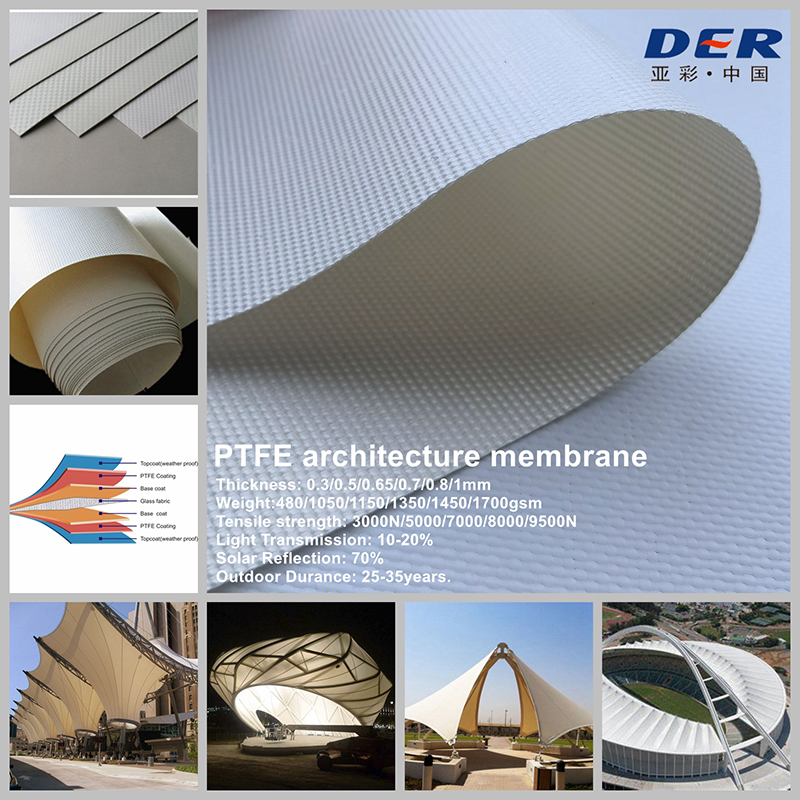
PTFE Architecture Membrane
Suitable for permanent tensile architecture where higher durability, dimensional stability, fire performance, and long-term weather resistance are required.
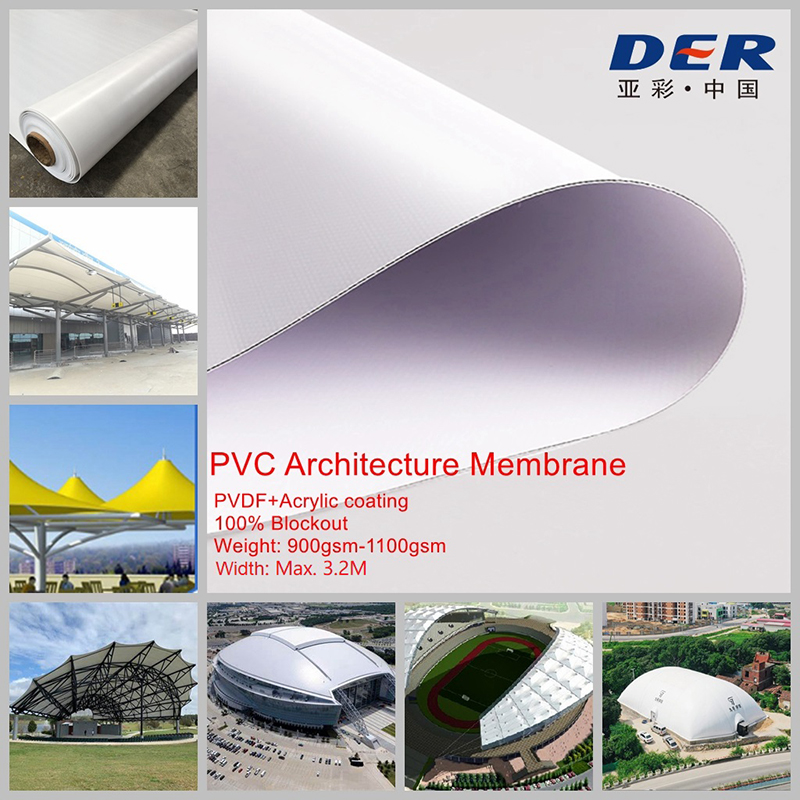
PVC Blockout / Architectural Membrane
A flexible and economical PVC coated polyester membrane option for roofs, canopies, shade structures, facades, and semi-permanent architectural projects.
What Are Membranes for Tensile Architecture?
Membranes for tensile architecture are engineered flexible materials used as the visible and functional skin of lightweight tensioned structures. Instead of relying only on heavy rigid materials, the membrane is tensioned across a steel, cable, mast, or frame system to create stable, flowing architectural forms.
In real projects, the membrane is not just a cover. It influences structural behavior, daylight transmission, thermal comfort, fire safety, weather durability, cleaning performance, maintenance cost, and the final architectural expression of the building.
- Creates lightweight roofs, canopies, facades, shades, and building envelopes.
- Supports large-span forms with lower dead load than many traditional systems.
- Can be specified for translucency, opacity, reflectivity, color, surface cleanability, and fire performance.
- Requires correct engineering, cutting pattern design, fabrication, welding, edge reinforcement, and installation tensioning.
Three Main Material Directions for Tensile Architecture
Architectural membrane selection normally starts from the project’s expected lifespan, budget, fire rating, daylight strategy, local climate, and visual requirements.
PVC Coated Polyester
The most widely used solution for cost-effective tensile roofs, canopies, walkway covers, commercial shades, and semi-permanent structures.
- High-tenacity polyester base fabric
- PVC coating with optional PVDF / acrylic surface lacquer
- Multiple colors, weights, and translucency levels
- Good weldability and fabrication flexibility
PTFE Coated Fiberglass
A premium membrane choice for long-term landmark structures, stadium roofs, airports, cultural buildings, and demanding permanent projects.
- Fiberglass base fabric with PTFE coating
- Excellent durability and chemical resistance
- Strong fire performance direction
- Long service-life potential for permanent buildings
ETFE Foil Direction
ETFE is used when high transparency, lightweight enclosure, cushion systems, or glass-alternative daylight architecture are required.
- Very light compared with glass systems
- High transparency and daylight performance
- Single-layer or cushion system possibilities
- Ideal for atriums, skylights, and expressive envelopes
Architectural Membrane Specification Reference
The following specification table helps buyers compare common membrane directions. Final data should be confirmed according to the actual DERFLEX product grade, project design load, fire standard, and fabricator requirements.
| Property | PVC Coated Polyester Membrane | PTFE Coated Fiberglass Membrane | ETFE Foil Direction |
|---|---|---|---|
| Core structure | High-tenacity polyester base fabric with PVC coating and optional PVDF / acrylic surface treatment. | Woven fiberglass base fabric coated with PTFE for premium permanent tensile structures. | Fluoropolymer foil used in single-layer or cushion-style transparent envelope systems. |
| Typical project use | Canopies, walkways, commercial roofs, shade structures, facades, and semi-permanent membrane systems. | Stadiums, transport hubs, landmark roofs, cultural buildings, airport terminals, and long-life projects. | Transparent roofs, atriums, skylights, botanical buildings, cushions, and lightweight daylight envelopes. |
| Weight direction | Approx. 650–1400 g/m² depending on base fabric and coating system. | Approx. 900–1500 g/m² depending on grade and reinforcement. | Foil thickness and cushion structure depend on engineering design. |
| Strength direction | Designed for strong tensile strength, tear resistance, and welding performance. | Designed for higher dimensional stability, tensile strength, and demanding permanent structures. | Lightweight but requires dedicated system design and connection details. |
| Surface performance | Optional PVDF, acrylic, blockout, translucent, matte, glossy, or color-customized finishes. | Excellent weathering, low surface energy, chemical resistance, and self-cleaning direction. | High transparency, lightweight, and low-maintenance direction. |
| Fire performance | B1 / M2 / NFPA 701 direction available depending on product grade and formulation. | Strong fire-resistance direction for permanent building applications. | Project-specific fire and building code confirmation required. |
| Service life direction | Commonly selected for 15–20+ year architectural use depending on climate, grade, and maintenance. | Often specified for 25–30+ year permanent applications depending on project conditions. | Long-term performance depends on foil system design, thickness, detailing, and local environment. |
What Makes a Good Tensile Architecture Membrane?
For architects and fabricators, performance is not defined by one number. A strong membrane must balance structure, weathering, safety, fabrication, appearance, and lifecycle cost.
Tensile Strength & Dimensional Stability
The membrane must withstand continuous tension and environmental loads while keeping its designed shape across roofs, facades, canopies, and large-span forms.
UV, Weather & Pollution Resistance
Outdoor architectural membranes face sunlight, rain, wind, pollution, cleaning cycles, temperature change, and sometimes coastal or industrial exposure.
Fire Retardancy & Building Safety
Membrane materials for public buildings often require project-specific fire testing direction, documentation, and compliance support for local codes.
Translucency & Daylight Control
Different membrane grades can create bright diffused daylight, full blockout privacy, reduced glare, or reflective surfaces that help regulate solar heat gain.
Weldability & Fabrication Quality
PVC architecture membranes must be suitable for high-frequency or hot-air welding, edge reinforcement, pattern cutting, and consistent seam performance.
Cleanability & Maintenance
PVDF, PTFE, and other surface directions can improve dirt resistance and cleaning performance, helping the structure maintain visual quality over time.
Where DERFLEX Membranes for Tensile Architecture Are Used
DERFLEX architectural membrane fabrics can be specified for many commercial, public, industrial, and urban infrastructure structures.
From Material Brief to Project-Ready Membrane Supply
DERFLEX supports B2B buyers by translating project requirements into practical membrane material specifications.
Why Choose DERFLEX for Tensile Architecture Membranes?
DERFLEX is positioned for professional procurement teams that need stable manufacturing, technical communication, and export-ready membrane material supply.
DERFLEX Manufacturing Partner
- Factory-oriented membrane material supply with coated fabric manufacturing experience.
- PVC coated polyester, PTFE direction, and custom architectural membrane support.
- OEM options for weight, color, surface finish, translucency, blockout, and FR direction.
- Better fit for fabricators, contractors, distributors, and long-term project material programs.
- Export packaging, roll consistency, sample support, and repeat-order communication.
Generic Material Supplier
- Often provides limited grade selection without deeper project requirement review.
- May focus on short-term quotation instead of long-term roll consistency.
- Less guidance on surface finish, translucency, weldability, and fire direction.
- Less suitable for custom OEM programs, distributors, and project-based procurement.
- Limited support for technical questions from architects, fabricators, and contractors.
Commercial Canopy & Walkway Roofing Material Program
A project buyer needs a membrane solution for multiple commercial walkway covers and entrance canopies. The structure requires a clean architectural look, stable weldability, UV resistance, moderate translucency, and a cost-effective specification suitable for repeat procurement.
DERFLEX can recommend a PVC coated polyester architectural membrane with appropriate surface treatment, color selection, roll width direction, FR requirement discussion, and packaging plan. For permanent landmark sections, PTFE coated fiberglass may be proposed where stronger long-term durability and higher fire-performance direction are required.
How to Choose the Right Membrane for a Tensile Architecture Project
Use this checklist before requesting a quote. The more accurate the project brief, the faster DERFLEX can match a suitable material direction.
Define the Structure Type
Roof, facade, canopy, shade, parking cover, stadium, atrium, or transport hub. Each structure has different tension, wind, drainage, and detailing needs.
Confirm Lifespan & Budget
PVC/PVDF often provides strong value for many projects, while PTFE is selected for more demanding permanent architecture.
Check Climate Exposure
UV intensity, pollution, coastal air, snow load, wind, temperature range, cleaning frequency, and chemical exposure should influence material grade.
Select Light Transmission
Choose blockout, semi-translucent, high-translucency, or transparent foil direction based on daylight, glare, privacy, and heat-gain goals.
Specify Fire Direction
Confirm whether the project needs B1, M2, NFPA 701, EN-related classification, or other local building code documentation.
Coordinate Fabrication
Share welding method, seam direction, cutting pattern, edge details, reinforcement design, roll width, and installation requirements.
Explore Related Architectural Membrane Materials
Use these internal links to strengthen topical relevance and guide buyers toward related DERFLEX material pages.
Frequently Asked Questions About Membranes for Tensile Architecture
These questions are written for both search visibility and real buyer decision-making.
What are membranes for tensile architecture?
Membranes for tensile architecture are flexible structural skin materials used in tensioned architectural systems such as roofs, facades, canopies, stadium covers, and lightweight building envelopes. They are tensioned across a support structure to create stable, large-span architectural forms.
Which membrane material is best for tensile architecture?
There is no single best material for every project. PVC coated polyester is often selected for cost-effective and versatile projects; PTFE coated fiberglass is used for higher-end permanent structures; ETFE foil is selected for transparent, lightweight daylight systems.
How long do tensile architecture membranes last?
Service life depends on material grade, climate, installation quality, structural design, maintenance, and exposure. PVC/PVDF membranes are often selected for 15–20+ year projects, while PTFE coated fiberglass can be specified for 25–30+ year permanent applications.
,Can DERFLEX customize membrane color, weight, and surface finish?
Yes. DERFLEX can support project-oriented customization such as membrane weight, base fabric direction, coating system, color, translucency, blockout effect, surface finish, roll width, and fire-retardant direction depending on order and technical requirements.
Are architectural membranes suitable for roofs and facades?
Yes. Architectural membranes can be used for roof structures, facade skins, exterior shading, canopy systems, atriums, walkways, transport hubs, parking shades, and many other lightweight architectural forms.
What information should I provide when requesting a quote?
Please provide project type, membrane application, expected lifespan, climate exposure, fire rating direction, color, translucency or blockout requirement, roll width, quantity, fabrication method, and any existing technical specification.
Does DERFLEX supply finished tensile structures or membrane materials?
DERFLEX focuses on high-performance membrane materials and coated fabric supply. For complete structure projects, DERFLEX can support material selection and cooperate with fabricators, contractors, or project partners according to the procurement model.
Need a Reliable Membrane for Tensile Architecture?
Send DERFLEX your project requirements. Our team can help match PVC, PTFE, or custom architectural membrane materials for your structure, budget, climate, and fabrication process.