Company News Industry News

What Is Tarpaulin Used For? 12 Uses & Material Guide | DERFLEX

Tarpaulin Use & Buyer Guide

What Is Tarpaulin Used For?

Tarpaulin is used to cover, shelter, contain, separate and protect cargo, equipment, building materials, farm products, work areas and outdoor assets from rain, dust, sunlight, road spray, debris and handling exposure.

Quick answer for search and AI summaries A tarp creates a flexible protective barrier. Common tarpaulin uses include truck cargo covers, construction-site protection, farm and hay covers, machinery covers, temporary roofing, outdoor storage, shelters, ground sheets, partitions, debris containment and made-to-measure industrial covers. The correct tarp depends on material, exposure time, wind, abrasion, handling frequency and fixing design.
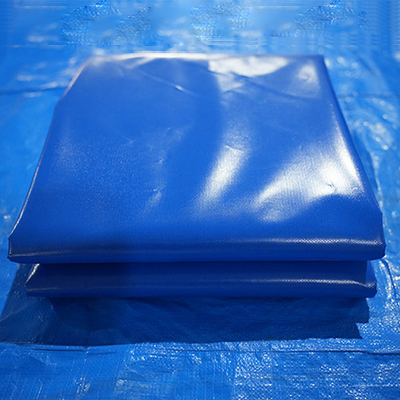
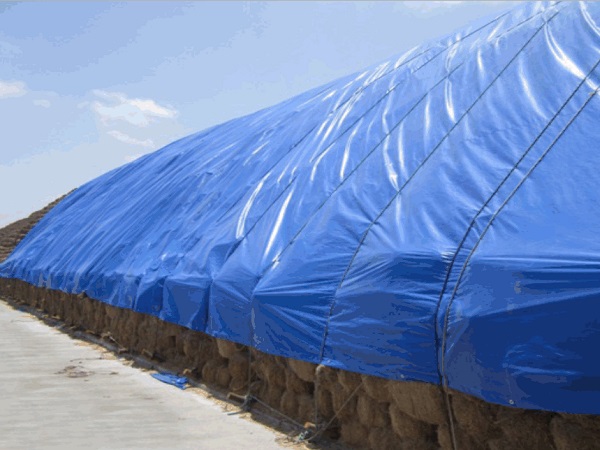
Blue heavy duty PVC tarpaulin used for waterproof protective cover applications
Heavy-duty PVC-coated tarpaulin is commonly selected for repeated outdoor and industrial protection where waterproofing, weldability and reinforcement matter.
Practical Definition

A Tarpaulin Is a Flexible Protection System

A tarpaulin, usually shortened to “tarp,” is a flexible sheet made to provide temporary or repeated protection. It can be draped over an object, tensioned over a frame, hung vertically, secured around cargo, placed on the ground, or fabricated into a fitted cover. DERFLEX groups tarp solutions around real applications through its tarp and tarpaulin product range.

Cover Shield cargo, machinery, stock or structures from weather and contamination.
Shelter Create temporary roof, sidewall, shade or work-area protection.
Contain Help keep debris, loose material, dust or selected bulk loads inside a defined zone.
Separate Divide warehouses, work zones, maintenance areas or temporary enclosures.
Protect Reduce exposure to rain, UV, dirt, abrasion, road spray and repeated handling.
Main Tarpaulin Applications

12 Common Uses of Tarpaulin

“What are tarps used for?” has no single answer. The same flexible-sheet concept serves very different jobs, but the material and finishing should change with the risk profile of each use.

01

Truck & Trailer Cargo Protection

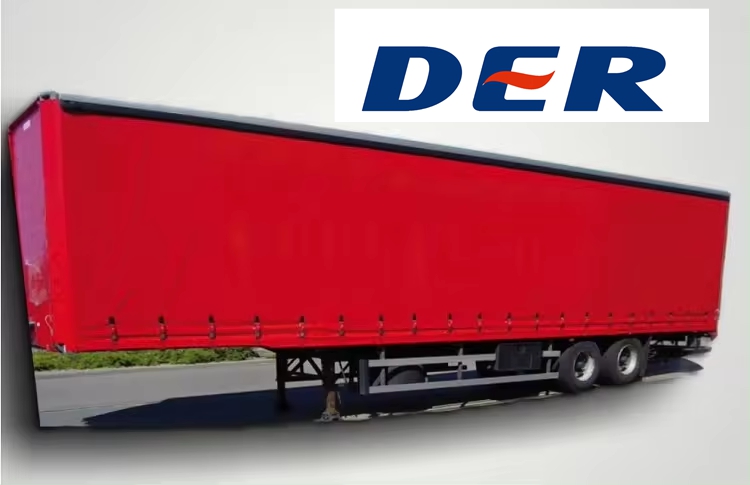
Truck tarps cover flatbed freight, trailers, machinery, lumber, steel and other open-deck loads exposed to rain, road spray, sunlight and dust.

Typical need: waterproof surface, reinforced tie-down zones, practical folding weight and strong seams.

Explore DERFLEX truck tarps →

02

Construction & Jobsite Protection

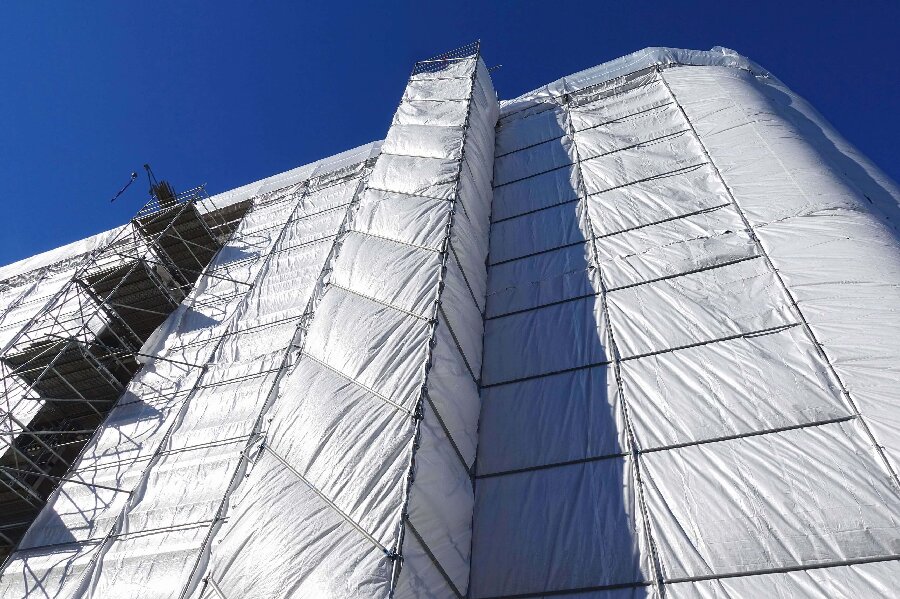
Tarpaulins cover building materials, scaffolding, unfinished roofs, tools, equipment and temporary work areas during construction, repair and maintenance.

Typical need: waterproofing, tear resistance, abrasion control, secure fixing and project-specific fire requirements.

See construction tarp applications →

03

Agriculture, Hay & Farm Storage

Farm tarps protect hay, straw, feed, machinery, crop inputs and seasonal stock where rain, UV exposure, soil contact and wind can damage stored materials.

Typical need: outdoor stability, practical anchoring, water shedding and a balance between sealed cover and ventilation.

View agricultural tarpaulin solutions →

04

Machinery & Equipment Covers

Fitted or draped tarpaulins protect generators, pumps, construction machinery, industrial equipment, vehicles and stored assets during downtime or transport.

Typical need: shaped dimensions, wear patches, vents where required and reinforcement around lifting or tie-down points.
05

Warehouse & Outdoor Storage

Tarps cover pallets, raw materials, fabricated components and temporary stock in yards, docks, warehouses and semi-outdoor storage areas.

Typical need: repeat handling, cleanable surface, weather protection and easy access to covered goods.

Review industrial tarp directions →

06

Temporary Roofing & Emergency Covering

After roof damage or during unfinished construction, a suitable tarp can provide temporary rain protection until a permanent repair is made.

Typical need: slope, secure anchoring, overlap, wind control and avoidance of water pooling. A tarp is not a substitute for a permanent engineered roof.
07

Tents, Shelters & Event Structures

Tarpaulins can form temporary roofs, walls, side curtains, work shelters, market covers and selected event enclosures.

Typical need: weather resistance, seam design, cleanability, appearance and any project-specific flame-retardant requirement.
08

Ground & Floor Protection

Tarps are laid beneath work areas, stored materials, tents, painting zones or maintenance projects to separate clean surfaces from mud, moisture and debris.

Typical need: puncture and abrasion resistance, slip considerations, edge control and ease of cleaning.
09

Dust, Debris & Work-Zone Separation

Solid or mesh tarp systems can separate renovation zones, reduce dust movement, screen scaffolding, create temporary partitions or help contain light debris.

Typical need: choose solid sheet for barrier performance or mesh where airflow and lower wind pressure are more important.
10

Marine, Boat & Outdoor Covers

Custom tarps can protect boats, marine equipment, outdoor furniture, recreational vehicles and seasonal assets during storage.

Typical need: drainage, controlled ventilation, UV exposure management and reinforcement at sharp contact points.
11

Shade, Privacy & Wind Reduction

Mesh tarps are commonly used where airflow, partial shade, visual screening or reduced wind pressure matters more than complete rain protection.

Typical need: mesh openness, edge reinforcement, fixing spacing and wind conditions.
12

OEM & Custom Protective Products

Distributors and fabricators use tarpaulin roll goods or custom finished covers for private-label products, fleet programs, equipment covers and regional industrial markets.

Typical need: repeatable specification, color, roll width, fabrication method, labeling, packaging and order consistency.
DERFLEX Image Pack

Real Tarpaulin Uses in Material, Transport, Construction & Agriculture

The image set below uses DERFLEX-hosted product, manufacturing and application photos with descriptive alt text for image search and buyer context.

Application Decision Matrix

Match the Tarp to the Main Risk

This table turns common tarpaulin applications into purchasing decisions. It is more useful than choosing by color, “heavy duty” wording or GSM alone.

Application Main Risks Practical Material Direction Finishing / Hardware to Check Common Buying Error
Truck cargo Rain, road spray, wind, abrasion, repeated folding PVC-coated polyester / vinyl tarp for repeated heavy-duty use Welded seams, webbing, D-rings, grommets, reinforced corners Choosing a cover by weight only without checking tie-down geometry
Construction site Weather, sharp edges, debris, pulling, project safety requirements PVC tarp for stronger repeated use; PE for lighter temporary coverage; mesh where airflow matters Reinforced hems, fixing spacing, patches, project-specific FR requirement Ignoring wind exposure or fixing-point loads on large sheets
Hay / farm storage UV, rain, wind lift, moisture, seasonal repositioning UV-resistant PVC for reusable covers; PE for economical seasonal coverage; mesh for shade Rope hem, webbing, eyelets, straps, controlled ventilation where needed Sealing moisture in or leaving a large cover loose in wind
Machinery cover Sharp corners, condensation, rain, dust, repeated removal Custom PVC-coated cover or other structure matched to equipment environment Wear patches, shaped corners, straps, vents, access flaps Ordering only the machine footprint instead of the finished cover geometry
Temporary roofing Rain, wind uplift, ponding, edge stress Waterproof PE or PVC depending duration and exposure Secure anchoring, overlap, support, drainage slope Allowing water to pool or treating the tarp as a permanent roof system
Shade / privacy Wind pressure, solar exposure, visibility Mesh tarp / shade fabric Edge webbing, grommet spacing, tension control Using a solid waterproof sheet where airflow is actually required
Warehouse partition Dust, splash, movement, frequent access PVC-coated fabric, clear PVC or mesh depending barrier requirement Tracks, hems, weighted edges, windows, overlap or access openings Focusing only on the sheet material and ignoring the curtain system
Buyer rule: tarp performance is a system result. Material + seams + edge reinforcement + fixing points + installation should be specified together.
Material Guide

Which Tarpaulin Material Is Used for Each Job?

The best tarp material depends on the working environment. Two tarps made from the same polymer can perform differently because of base fabric, weave density, coating weight, additives, seam construction and reinforcement.

PVC-Coated Polyester

Waterproof, weldable and available in reinforced structures for repeated industrial and outdoor fabrication.

Best fit: truck covers, industrial covers, construction, machinery, tents and long-service custom tarps.

PVC-coated tarp options →

PE Tarpaulin

Lightweight and economical, commonly used for temporary and general-purpose protection.

Best fit: short-term roof cover, basic storage, household, agriculture and light construction use.

Canvas

Textile-based material valued where breathability and traditional fabric handling are useful.

Best fit: selected equipment covers, drop cloths and situations where moisture release is preferred over a sealed waterproof sheet.

Mesh Tarp

Open structure allows airflow and reduces wind pressure compared with a solid sheet.

Best fit: shade, privacy, scaffold screening, landscape trailers and selected debris-control applications.

Clear PVC

Transparent flexible sheet used when visibility, splash protection and temporary separation are needed.

Best fit: weather curtains, inspection windows, enclosures and clear partitions.
Fast Selection Guide

Choose by Function Before Choosing by GSM

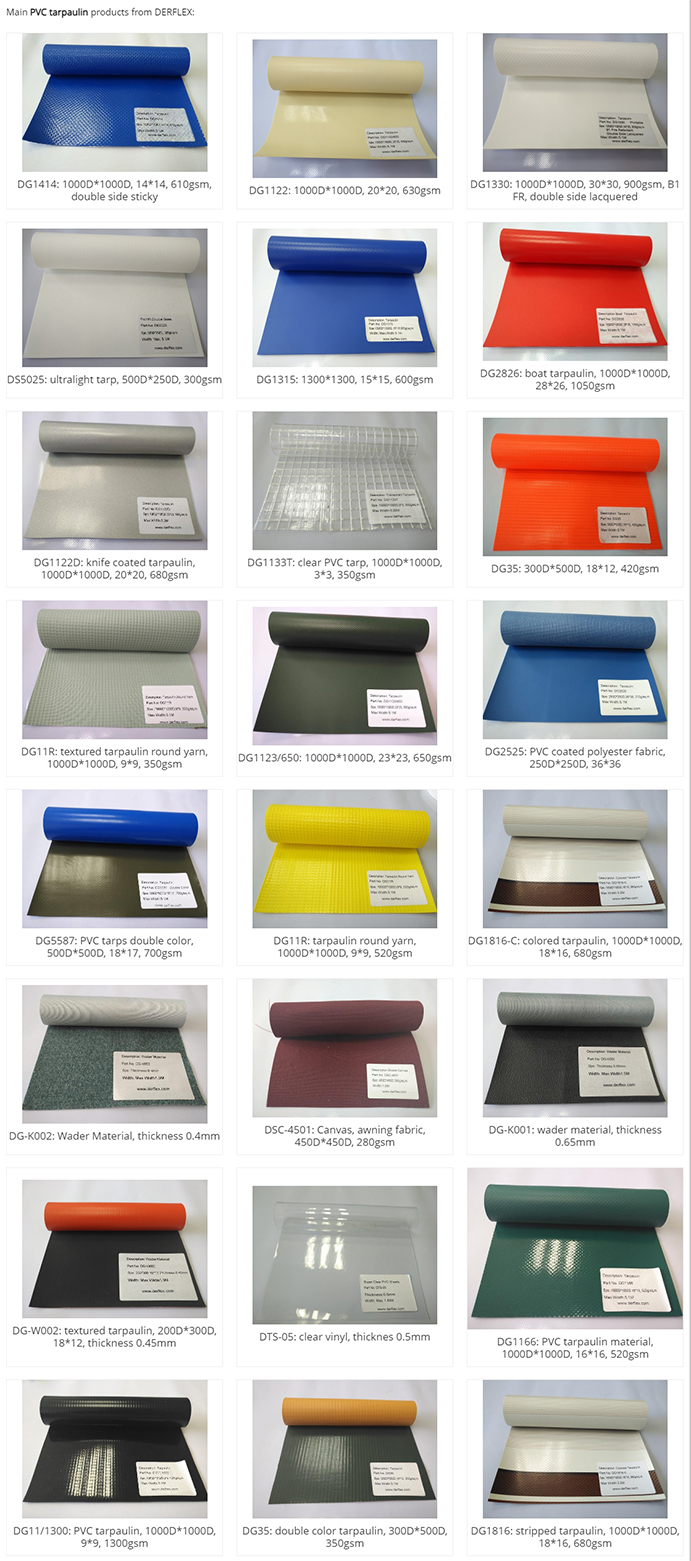
GSM and thickness matter, but the dominant use condition should determine the starting material direction. The current DERFLEX tarp range includes multiple structures and weights, with final specification confirmed by application.

Need waterproof repeated outdoor use?

Start with PVC-coated polyester or another durable waterproof structure. Then confirm UV exposure, abrasion, seam welding, reinforcement and handling frequency.

Need a temporary economical cover?

PE tarpaulin may be the practical direction where the stress level is moderate and replacement after shorter service is acceptable.

Need shade or lower wind pressure?

Use mesh rather than a solid waterproof sheet. Specify airflow / openness, edge loading and fixing design for the installation.

Need visibility through the barrier?

Clear PVC may fit weather-curtain or partition applications. Confirm thickness, low-temperature flexibility, edge reinforcement and cleaning requirements.

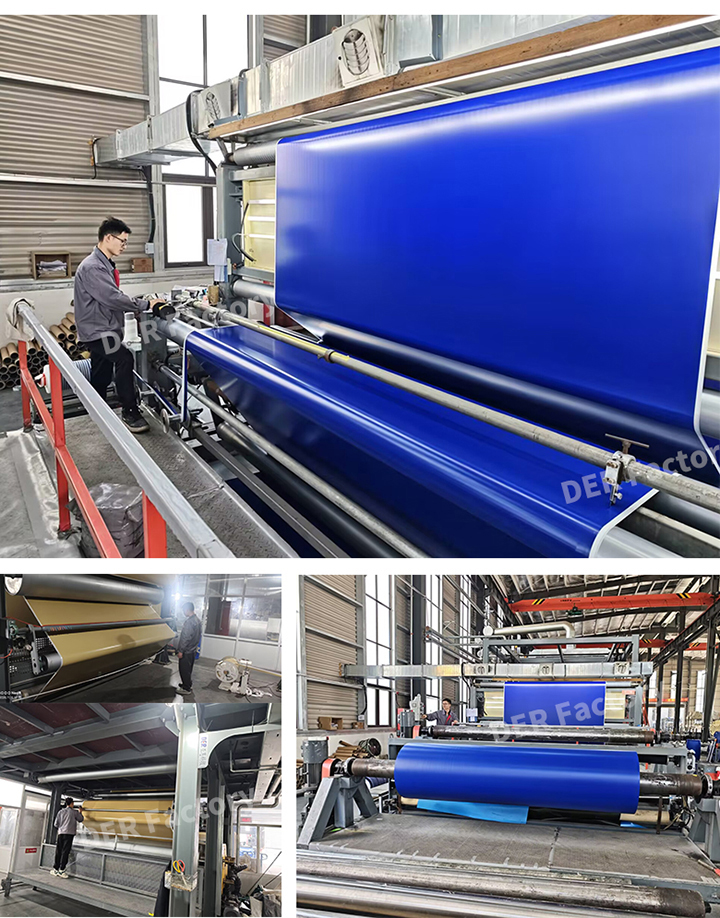
DERFLEX tarpaulin coating manufacturing process for custom PVC coated fabric
Engineering & Fabrication Notes

Why Tarps Fail Even When the Fabric Looks Heavy

Premature tarp failure often starts at seams, edges, corners and fixing points rather than in the middle of the sheet. A professional specification should describe how the cover will be moved and secured, not only what material it is made from.

Seam layout should avoid high-stress zones where possible. Large finished covers may require welded panel seams. Their placement should consider pulling direction, water drainage and abrasion.
Reinforcement should follow the load path. Webbing, patches, rope hems, D-rings and grommets work best when they spread load into the fabric rather than create isolated stress points.
Sharp corners need local protection. Pad metal edges or add wear patches where the tarp repeatedly rubs against corners, hardware or moving equipment.
Water needs a drainage path. Even a waterproof tarp should be installed with slope and support. Ponding creates concentrated load and can overstress seams and anchors.
Safety-related performance must be specified and verified. Flame, food-contact, chemical or regulated applications require confirmed material and test requirements; generic tarp claims are not enough.
Common Procurement Mistakes

Six Errors That Make a Tarp Underperform

Buying by color or “heavy duty” wording Marketing labels are not technical specifications. Confirm material structure, use conditions and finishing.
Choosing GSM without knowing the load Weight alone does not explain tear behavior, flexibility, coating quality, abrasion or tie-down strength.
Using solid tarp where airflow is needed Hay, livestock, shade and windy installations may need ventilation or mesh rather than sealed coverage.
Too few fixing points Large gaps between anchors concentrate force and can cause grommet or edge failure in wind.
Ignoring finished-cover geometry Allow for drop, overlap, hems, hardware and access. A fitted equipment cover usually needs a drawing, not only length × width.
Letting water pool Standing water can overload fabric, frames and anchor points even when the sheet itself is waterproof.
B2B Procurement Guide

What to Send Before Requesting a Tarpaulin Quote

A useful RFQ allows the supplier to recommend a structure around the actual job instead of quoting an unsuitable generic tarp.

Buyer Checklist

  1. Application: what is being covered, separated, sheltered or contained?
  2. Environment: indoor/outdoor, rain, UV, wind, dust, abrasion, cold, chemicals or repeated folding.
  3. Dimensions: finished cover size, roll width, shape drawing, drop height and overlap allowance.
  4. Material direction: PVC, PE, mesh, clear PVC, canvas or request for recommendation.
  5. Performance target: waterproofing, tear strength, UV resistance, FR requirement or other project criteria.
  6. Finishing: seams, hems, rope edges, webbing, grommets, D-rings, straps, pockets and wear patches.
  7. Branding: color, logo printing, labels or private-label packaging.
  8. Commercial details: quantity, order frequency, destination, packaging and sample needs.
  9. Documentation: state any required test method or compliance document before production.

Why Work with a Material Manufacturer for Custom Tarps?

A custom tarpaulin program often starts with coated fabric, not with a finished stock size. DERFLEX can discuss roll material, cut panels and finished-cover requirements according to the project.

Material matching Define base fabric, coating, weight, surface finish and functional options around the end use.
Fabrication planning Coordinate seams, edges, grommets, D-rings, webbing, straps, printing and packaging with the material choice.
Repeat-order control For distributors, fabricators and OEM brands, maintaining a defined specification matters more than buying a one-time generic sheet.

For industrial buyers, the goal is a repeatable tarp specification that fits the use—not simply the lowest-priced sheet.

Related Questions

Questions People Ask About Tarpaulin Uses

Short answer-first responses support quick buyer decisions, featured snippets and AI-readable extraction.

What is tarpaulin most commonly used for?

Tarpaulin is most commonly used as a flexible protective cover for cargo, construction materials, farm goods, machinery, outdoor storage and temporary shelters. It can also serve as a ground sheet, divider, shade screen, weather curtain or debris-control barrier.

What is the main purpose of a tarp?

The main purpose of a tarp is protection. It creates a flexible barrier between an object or work area and rain, sunlight, dust, dirt, road spray, debris or other temporary exposure. The correct material and fixing meth, od depend on the application.

What is the difference between a tarp and a tarpaulin?

There is no practical product difference: “tarp” is simply the common shortened form of “tarpaulin.” Buyers should instead compare the material and grade, such as PVC tarp, PE tarp, canvas tarp, mesh tarp or clear PVC tarp.

Which tarpaulin is best for long-term outdoor use?

PVC-coated polyester is often selected for repeated heavy-duty outdoor use because it can combine waterproofing, strength, weldability and custom reinforcement. The final grade should still be matched to UV exposure, wind, abrasion, climate, handling and expected service life.

Can a tarpaulin be used as a temporary roof?

Yes, a suitable waterproof tarp can be used for temporary roof protection when it is properly supported, sloped and secured. Avoid water pooling, account for wind uplift and do not treat a temporary tarp as a permanent engineered roofing system.

Are mesh tarps waterproof?

Mesh tarps are generally not chosen for full waterproof protection. Their advantage is airflow and reduced wind pressure, which makes them useful for shade, privacy, scaffolding screens, landscape trailers and selected debris-control jobs.

What tarp is used for truck cargo?

Heavy-duty PVC-coated polyester or vinyl tarp is commonly used for truck cargo where waterproofing, tear strength, UV resistance, weldability and reinforced tie-down points are required. The tarp design should match the cargo shape, handling frequency and vehicle system.

What information is needed for a custom tarpaulin quotation?

Provide the application, environment, dimensions or drawing, material direction, weight or performance target, color, quantity, seam and hem details, fixing hardware, printing, packaging, destination and any required test or compliance criteria.

Application-Based Quotation

Turn Your Tarpaulin Use into a Clear Product Specification

Send DERFLEX the object being covered, service environment, finished dimensions or roll requirement, material preference, reinforcement needs and order quantity. The team can review the project and discuss a suitable tarp direction.

Application · Dimensions · Material / GSM · Color · Seam & Edge Design · Hardware · Quantity · Destination
Copyright © 2015 DERFLEX ( PVC tarpaulin manufacturer )All Rights Reserved.