Company News Industry News

What Are Commercial Tarps? Materials, Uses & Buying Guide | DERFLEX

What Are Commercial Tarps? Materials, Uses & Buying Guide | DERFLEX
Commercial Tarp Guide · Business & Industrial Sourcing

What Are Commercial Tarps?

Commercial tarps are protective covers specified for repeated business use—such as fleets, construction sites, equipment, warehouses, agriculture, industrial maintenance and OEM distribution. They are selected not only by size or color, but by material structure, duty cycle, exposure, reinforcement, attachment design and repeat-order requirements.

For demanding waterproof applications, PVC coated polyester is a common commercial direction because it combines a reinforced textile core with a cleanable, weldable protective surface. PE, mesh and other structures can be more appropriate when lower weight, ventilation or temporary use is the priority.

Direct Answer

A commercial tarp is a cover built into a business process.

Its job is not merely to cover something once. It must be practical to deploy, secure, clean, store, repair and reorder under repeated commercial or industrial use.

Why the Definition Matters

“Commercial” Describes the Operating Requirement, Not One Fixed Fabric

A contractor covering building materials, a fleet securing cargo, a plant protecting machinery and a distributor selling private-label tarp SKUs can all need commercial tarps. Their covers may look similar, but the technical priorities are different.

The useful buying question is therefore not simply “What thickness is a commercial tarp?” It is: What must the cover survive, how often will it be handled, where will tension enter the tarp, and how consistently must the same specification be reordered?

This is why DERFLEX treats commercial tarp sourcing as a combination of material selection and cover engineering. Buyers can start from PVC coated tarp materials when waterproofing and weldability are important, or move to application-specific structures for other operating conditions.

Commercial vs General-Use Tarps

What Makes a Tarp “Commercial” in Real Procurement?

The difference is usually found in duty cycle, specification control and failure cost—not in a marketing label printed on the package.

Buying FactorGeneral / Occasional CoverCommercial Tarp ProgramWhy It Matters
Use frequencyOccasional or short-termRepeated deployment or longer exposureRepeated folding, pulling and storage create wear patterns that a one-time cover may never experience.
FitApproximate standard size can be acceptableFinished dimensions, drops, flaps or templates may be controlledBetter fit can reduce loose fabric, pooling water and awkward tie-down angles.
AttachmentGeneric grommet spacingGrommets, D-rings, webbing or straps planned around load pointsMany field failures begin where force enters the edge of the tarp.
Material choiceOften based on price, color or thicknessBase fabric, coating, GSM, surface, welding and exposure are reviewed togetherA heavier tarp is not automatically the best tarp.
Repeat ordersInterchangeability may be enoughMaterial code, color, dimensions, packing and QC references are retainedConsistency reduces branch-to-branch or batch-to-batch surprises.
Failure costReplacement cost of the tarp itselfMay also include labor, downtime, damaged cargo or emergency replacementTotal operating cost is often more useful than unit price alone.
Commercial buying principle: define the work routine before selecting the tarp grade. The same 18 oz or high-GSM material can perform very differently depending on seam layout, edge reinforcement, grommet spacing and contact points.
Material Map

Common Commercial Tarp Materials and Where They Fit

Commercial tarp is a use category. The material family should be matched to water exposure, handling, airflow, abrasion, fabrication and target operating cost.

01

PVC Coated Polyester

A reinforced polyester core with PVC coating is widely used for repeat-use waterproof covers, truck tarps and industrial fabrication.

  • Waterproof surface direction
  • Hot-air / HF weldable structures
  • Reinforcement and hardware friendly
  • Suitable for custom finished covers
02

PE / Laminated Tarpaulin

Useful where lighter handling, temporary coverage and cost sensitivity are more important than the heavier construction of many PVC tarp systems.

  • Lightweight handling
  • Useful for temporary project coverage
  • Broad general-use applications
  • Duty level should be defined carefully
03

Mesh Tarps

Selected when airflow, shade, debris control or lower wind loading is more important than a fully sealed waterproof barrier.

  • Airflow through the panel
  • Shade and privacy directions
  • Dump / debris containment uses
  • Not a substitute for full rain protection
04

Specialty Structures

Clear, cold-flexible, flame-retardant or application-specific coated fabrics may be required when the operating environment adds a special constraint.

  • Visibility requirements
  • Cold-weather handling
  • Project-defined FR direction
  • Special surface or fabrication needs
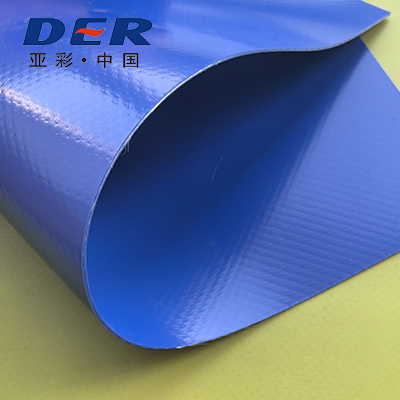
DERFLEX commercial tarp material range including PVC tarpaulin rolls
DERFLEX PVC tarpaulin material examples. Final coating structure, GSM, width, surface and functional options should be confirmed for the commercial application.
Material Selection Rule

Do not specify a commercial tarp by “mil” or “oz” alone.

Weight and thickness are useful descriptors, but field performance also depends on the reinforcement core, coating adhesion, weave density, seam method, perimeter reinforcement and hardware layout.

For more demanding industrial use, compare this guide with DERFLEX industrial tarp solutions, where the operating environment drives the material direction.

Selection Matrix

Choose the Commercial Tarp Duty Level by Exposure and Handling

Use the matrix as a quotation starting point, not as a universal grade standard. Final material must be confirmed against the actual job.

Operating ProfileTypical DirectionFabric / Finish PrioritiesReinforcement PrioritiesBuyer Questions
Light commercial
Temporary site or low-frequency use
PE or lighter laminated / coated direction may fitWeight, handling, basic weather protection, target costBasic hem and attachment layoutHow long is each deployment? Is the cover reused or treated as project consumable?
Routine commercial
Warehouses, contractors, recurring covers
Balanced PVC or laminated structureWater resistance, cleanability, flexibility, repeatabilityReinforced perimeter and practical hardware spacingHow often is the tarp installed, removed, folded and stored?
Heavy commercial
Fleet, construction, equipment, frequent handling
Heavier PVC coated polyester directionTear behavior, abrasion, welding, UV / weathering directionWebbing, corner patches, wear zones, D-rings or stronger grommet designWhere does the tarp rub or pull? What happens if a cover fails in service?
Specialized commercial
Airflow, visibility, cold or controlled-site needs
Mesh, clear, cold-flexible, FR or other project-specific structureSpecial function tied to operating requirementApplication-specific edge and installation designWhich standard, test method, temperature or visibility requirement must be met?

Current DERFLEX commercial tarp content lists a typical available range of approximately 350–1200gsm and selected roll widths up to 5.10m depending on construction. Final availability and performance must be confirmed during quotation and sample approval.

Failure-Mode Engineering

Specify the Tarp from the Likely Failure Point Backward

A commercial cover often fails at an edge, seam, hardware point or wear zone before the center sheet reaches the end of its usable life.

EDGE

Grommet Pull-Out

Review edge reinforcement, hole spacing, load direction and whether webbing, a rope hem or another load-spreading detail is appropriate.

RIP

Tear Propagation

Review base fabric, puncture sources, sharp edges, fabric density and whether local patches should protect known stress points.

SEAM

Seam Opening / Leakage

Review seam location, overlap width, weld method and whether the construction introduces water paths in a waterproof application.

WEAR

Abrasion Damage

Map truck corners, machine edges, dragging zones, fold lines and repeated contact points before deciding where wear strips are required.

UV

Outdoor Aging

Define climate, exposure duration, storage routine, color and UV performance direction instead of assuming all outdoor tarps age the same way.

COLD

Cold-Fold Cracking

If the tarp is folded or handled in low temperatures, confirm a suitable material formulation and realistic temperature requirement before production.

Application Decision Guide

Where Commercial Tarps Are Used

The same word “commercial tarp” can describe very different operating conditions. Each application should have its own protection logic.

01

Fleet & Logistics

Truck cargo covers, trailer tarps, flatbed protection and replacement programs face wind, vibration, tie-down loads and repeated handling.

For transport-specific details, see DERFLEX truck tarpaulin options.

02

Construction & Roofing

Material stacks, temporary roof protection, equipment shielding and site enclosures may prioritize rapid installation, weather protection and abrasion resistance.

03

Industrial Equipment

Machinery and process-zone covers often need custom shapes, planned access, wear patches and repeatable dimensions for maintenance teams.

04

Warehouse & Facility

Stock protection, dividers, splash barriers and loading-area covers need practical handling, identification and controlled sizes for recurring use.

05

Agriculture & Outdoor Storage

Hay, feed, machinery and seasonal storage covers should be selected around exposure duration, tie-down geometry, ventilation and repeated weather cycles.

06

Wholesale & OEM Programs

Distributors and brands need a repeatable size system, material specification, labels, packaging and approved reference sample—not just one workable prototype.

Blue DERFLEX commercial truck tarp used for fleet and logistics cargo protection
Commercial transport tarps experience road vibration, repeated tension and abrasion, so the edge and attachment system matter as much as the center fabric.
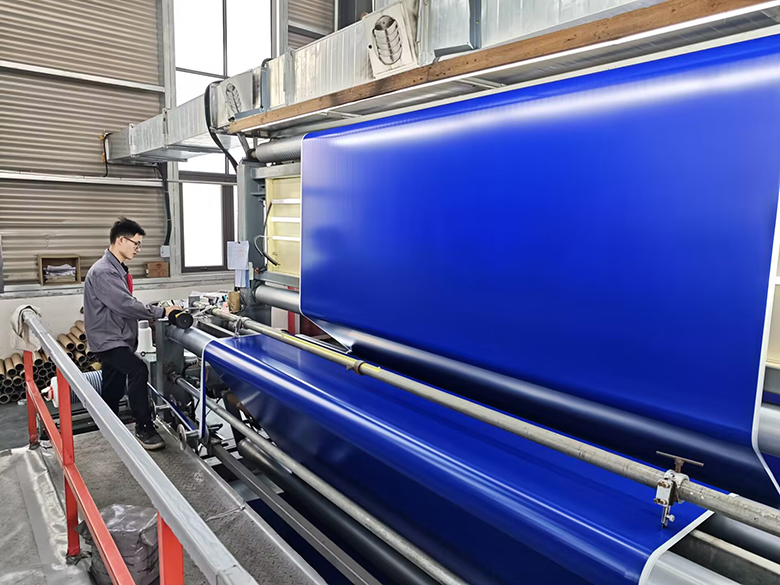
DERFLEX industrial tarp manufacturing and coated fabric production facility
Manufacturer-level sourcing is useful when the buyer needs material control, repeat-order specifications, custom fabrication or OEM supply planning.
Supply-Format Decision

Buy Roll Goods, Cut Panels or Finished Commercial Tarps?

The right supply stage depends on local fabrication capability, freight strategy, labor cost, lead-time needs and how much product control the buyer wants to keep in-house.

Roll Material

For tarp fabricators and converters that cut, weld, sew and install hardware locally.

  • Control local finished sizes
  • Efficient for multiple SKUs
  • Requires conversion equipment and skilled labor

Cut / Semi-Finished Panels

For buyers that want some factory conversion while retaining final assembly or hardware work locally.

  • Can reduce cutting waste or labor
  • Useful for repeat templates
  • Final assembly remains local

Finished Tarps

For distributors, fleets, contractors and OEM programs that need ready-to-deploy covers with defined reinforcement and packing.

  • Custom hems and hardware
  • Logo, labels and packaging
  • Finished dimensions must be controlled carefully
Made-to-measure projects can be developed through DERFLEX's custom heavy duty tarp and custom tarpaulin manufacturing pages, where shape, edge design and attachment details become part of the specification.
Commercial Tarp Anatomy

The Center Sheet Is Only One Part of the Product

For repeated commercial use, the finished cover should be reviewed as a complete load path.

Base Fabric

Polyester reinforcement, denier and weave density influence tensile behavior, tear propagation and dimensional stability.

Coating / Lamination

The surface system affects waterproofing direction, welding, cleanability, appearance, flexibility and weathering.

Seams & Hems

Hot-air welding, HF welding, sewing and mixed construction should be selected for the material, shape and waterproofing target.

Hardware & Wear Zones

Grommets, D-rings, straps, webbing and local patches should correspond to real tension and abrasion locations.

Specification Framework

Commercial Tarp Specifications DERFLEX Can Discuss

Use these items to structure a professional inquiry. They are sourcing categories, not universal product promises.

Specification AreaAvailable Direction / Discussion PointCommercial Buying Impact
MaterialPVC coated polyester, PVC laminated polyester, PE/HDPE woven tarpaulin, mesh and selected specialty structuresDetermines handling, waterproofing direction, fabrication route and cost profile.
Finished weightApprox. 350–1200gsm across current commercial tarp directions*Affects material mass and handling, but does not independently define durability.
Base fabricSelected polyester denier / weave structures according to applicationInfluences tensile, tear and dimensional behavior.
Roll widthSelected constructions up to approximately 5.10m*Wider rolls can reduce seam count or conversion labor for large covers.
SurfaceGlossy, matte, embossed, lacquered or selected printable / specialty finishesAffects appearance, friction, cleaning and branding.
Performance directionWaterproof, UV-stabilized, cold-flexible, anti-mildew, flame-retardant or other project-defined options where availableRequirements should be linked to a target test method or market requirement.
FabricationHot-air weld, HF weld, sewn construction, shaped panels, pockets and sleevesChanges waterproofing, shape control, repair approach and production method.
ReinforcementWebbing, corner patches, double hems, rope hems and abrasion patchesImportant where repeated pulling or localized friction is expected.
HardwareEyelets / grommets, D-rings, straps, buckles and project-defined spacingShould match the attachment geometry rather than follow an arbitrary spacing rule.
Branding & packingLogo, labels, SKU marking, bags, cartons, bales, pallets and export-oriented packingSupports distribution, fleet identification and OEM programs.

*Typical capability directions are taken from current DERFLEX commercial tarp content. Final material, dimensions, tolerance, physical performance and functional requirements must be confirmed in quotation, technical data, approved sample and purchase documents.

Lifecycle Buying

Compare Cost per Deployment, Not Only Price per Tarp

A commercial buyer may spend more on labor, emergency replacement and asset exposure than on the tarp itself.

A simple commercial evaluation:

Total Cover Cost ÷ Useful Deployments

Include fabric and fabrication cost, fitting labor, storage, repair, replacement frequency, downtime and the consequence of exposed cargo or equipment. A cover that is easier to fit and more consistent to reorder may be more economical even when its initial price is higher.

Buyer Checklist

What to Send Before Requesting a Commercial Tarp Quote

A complete inquiry reduces assumptions and makes material comparison more useful.

  • Application and covered asset
  • Finished dimensions, side drops, flaps or drawing
  • Indoor / outdoor environment and exposure duration
  • Expected handling or deployment frequency
  • Target material, GSM, thickness or old sample reference
  • Waterproofing, UV, cold, FR or other functional direction
  • Seam / welding requirement and panel layout if known
  • Hem, webbing, rope edge, patch and wear-zone design
  • Grommet, D-ring, strap or buckle locations
  • Color, print, logo, SKU marking and private label
  • Quantity, packing format and repeat-order plan
  • Destination market and required test / compliance documents
Replacement project tip: send photos of the old tarp, the damaged area, the attachment method and how the cover is handled. This can reveal whether the real problem is material choice, edge design, seam placement, abrasion or incorrect fastening geometry.
Manufacturer-Level Supply

When Does a Commercial Buyer Need More Than a Retail Tarp Store?

A standard retail tarp is efficient when a stock size and immediate checkout are the main priorities. A manufacturer-led supply model becomes more relevant when the specification itself needs to be controlled.

Custom Geometry

Finished size, drops, flaps, sleeves, pockets, shaped panels and planned attachment points around a real asset.

Material-to-Cover Control

Base fabric, coating, surface, welding, reinforcement and hardware can be reviewed as one system instead of separate catalog choices.

Repeat-Order Specification

Approved material, color, size list, labels and packing references can be retained for replenishment programs.

OEM / Private Label

Color, logo, SKU marking, bag, carton, pallet and export packing can be planned with the product.

Project Documentation

Requested data sheets, inspection points and third-party testing can be discussed according to order and destination requirements.

Supply-Stage Flexibility

Roll goods, panels or finished tarps can be selected according to local labor, conversion equipment and freight strategy.

Custom Commercial Tarp Workflow

From Work Condition to Repeatable Supply

A clear workflow helps prevent the common gap between “the sample looked fine” and “the cover is inconvenient in daily use.”

STEP 01

Map the Job

Asset, environment, handling frequency, cleaning, storage, tie-down and damage risks.

STEP 02

Define the Cover

Finished size, shape, drops, flaps, pockets, seam direction, attachment and tolerance.

STEP 03

Select Material

Structure, weight, base fabric, surface, color and agreed performance direction.

STEP 04

Approve Details

Sample, welds, reinforcement, hardware, print, labels and packing.

STEP 05

Control Reorders

Approved material code, size list, QC points and packing references for replenishment.

Buyer FAQ

Commercial Tarps Frequently Asked Questions

Short, direct answers to the questions buyers most often need before narrowing a specification.

What are commercial tarps?

Commercial tarps are protective covers used in business, industrial, transport, construction, agricultural, warehouse or distribution operations. Compared with a one-time household cover, a commercial tarp is usually evaluated by repeat handling, fit, attachment design, exposure, replacement cost and the abil, ity to reorder the same specification.

Are commercial tarps always heavy duty?

No. “Commercial” describes the use context, not one fixed weight. A temporary contractor cover may be relatively light, while fleet or industrial applications may require heavier PVC coated polyester and more substantial reinforcement. Duty level should match the operating profile.

What material is commonly used for heavy duty commercial tarps?

PVC coated polyester is a common direction for demanding repeated-use tarps because the woven reinforcement supports strength while the PVC surface provides waterproofing direction, cleanability and welding compatibility. PE or laminated structures may suit lighter or temporary use, while mesh is useful when airflow or lower wind load is needed.

What is the difference between a commercial tarp and an industrial tarp?

The terms overlap. “Commercial tarp” is broad and includes recurring business-use covers for fleets, contractors, warehouses, agriculture and distribution. “Industrial tarp” usually places more emphasis on demanding equipment, plant, construction or heavy-duty operating environments. The correct specification depends on the application, not the label.

Can DERFLEX make commercial tarps in custom sizes and shapes?

DERFLEX can discuss custom finished dimensions, shaped panels, drops, flaps, sleeves, reinforced hems, corner patches, webbing, eyelets, D-rings, straps, printing and packing. Drawings, photos or an existing sample help define irregular covers more accurately.

How do I choose the right GSM for a commercial tarp?

Do not choose GSM alone. Review base fabric, coating structure, cover size, tie-down method, wind, abrasion, folding frequency and expected service cycle together. A higher GSM adds material mass but does not correct weak edge design or poorly placed hardware.

Are waterproof, UV-resistant or flame-retardant commercial tarps available?

Waterproof PVC tarp structures and selected UV-stabilized, cold-flexible, anti-mildew or flame-retardant directions can be discussed. Buyers should state the destination market, test method or required standard before production because these terms do not represent one universal performance level.

What information should I provide for a commercial tarp quotation?

Provide the application, finished size or roll width, quantity, exposure conditions, target material or GSM, attachment method, reinforcement, grommet or D-ring layout, color, branding, packing and destination. For replacement projects, photos of the old tarp and failure points are especially useful.

Build a Better Inquiry

Turn “We Need Commercial Tarps” Into a Buildable Specification

Send DERFLEX the job conditions rather than only a size and color. The team can review a practical material and fabrication direction for quotation.

  • Application and operating environment
  • Finished dimensions or roll requirements
  • Target material / GSM / performance direction
  • Reinforcement and hardware layout
  • Quantity, branding, packing and destination

General selection information only. Final material, size, tolerance, physical performance, test reports, certification, installation suitability and commercial terms must be confirmed in the quotation, technical data, approved sample and purchase agreement.

Copyright © 2015 DERFLEX ( PVC tarpaulin manufacturer )All Rights Reserved.