Self-Adhesive Resurfacing
Use a pressure-sensitive structure when the film must be applied directly to a qualified finished surface. Adhesive behavior, release liner, edge wrapping and removal expectations become part of the specification.
 News
News

DERFLEX supplies and develops wood grain decorative film for furniture, cabinets, wardrobes, doors, wall panels, retail fixtures and interior refurbishment programs. Define the real substrate, converting route, grain reference, surface finish, roll format and adhesive requirement first—then approve the complete construction by sample before bulk production.
For self-adhesive resurfacing specifically, see DERFLEX's wood grain self-adhesive film guide.
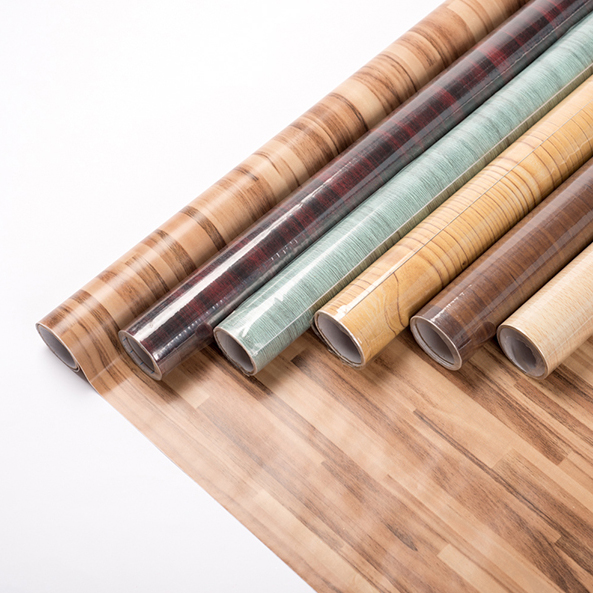
Wood grain decorative film is a thin polymer surface material printed and/or textured to reproduce a wood appearance on furniture, panels and interior components. Depending on the application, it may be supplied as a decorative film for lamination/forming or as a pressure-sensitive self-adhesive film with a release liner.
For professional purchasing, the important specification is not simply “oak film” or “wood vinyl.” Buyers should define the substrate, processing method, grain master, gloss or emboss level, thickness/width direction, adhesive requirement if any, edge geometry, and the sample-approval standard used for repeat orders.
The surface process determines what the film must do. A peel-and-stick renovation film, a flat furniture lamination film and a film intended for formed cabinet fronts should not be purchased from one generic specification.
Use a pressure-sensitive structure when the film must be applied directly to a qualified finished surface. Adhesive behavior, release liner, edge wrapping and removal expectations become part of the specification.
For flat panel decoration, focus on film appearance, thickness consistency, surface finish, substrate compatibility and the buyer's laminating process. Adhesive may be introduced downstream rather than supplied on the film.
For shaped fronts or formed decorative parts, flexibility and processing behavior matter alongside appearance. Provide the actual profile geometry and forming process so a suitable construction can be evaluated.
DERFLEX's existing kitchen decorative-film information identifies self-adhesive, flat decorative and vacuum-forming directions. Final material selection should still be confirmed against the actual process and substrate.
The following framework is designed for importers, furniture manufacturers, panel processors, distributors, renovation contractors and private-label buyers comparing a decorative film supplier.
| Specification Item | What to Confirm | Why It Matters |
|---|---|---|
| Face Material | PVC decorative film / vinyl direction; confirm the exact grade for the project. | Controls handling, flexibility, finish and downstream processing behavior. |
| Wood Grain Master | Physical sample, approved board, pattern code or controlled color/design reference. | Names such as “oak” and “walnut” are too broad for repeat purchasing. |
| Surface Finish | Matte, smooth, gloss, embossed or other project-specific texture. | Changes realism, light reflection, cleanability and how minor surface marks appear. |
| Thickness | Specify by converting route. DERFLEX has published furniture/kitchen decorative-film examples at 0.16, 0.35 and 0.40 mm; confirm the actual grade before ordering. | Thickness changes stiffness, edge handling, forming behavior and surface telegraphing. |
| Width | Plan around panel size and material yield. Published DERFLEX examples include 1250 mm and 1400 mm; final availability depends on the construction. | Correct width reduces joints, slitting and offcut waste. |
| Adhesive / Liner | Only for self-adhesive grades: define permanent/removable direction, substrate and liner/converting needs. | Adhesion problems often come from the wrong surface or edge geometry, not the wood pattern. |
| Roll Length & Core | Confirm according to processing equipment, handling, storage and shipment. | Large production programs need repeatable roll logistics, not only a decorative sample. |
| Performance Requirements | State scratch, stain, UV, temperature, chemical, flame-retardant or other requirements only when the project actually needs them. | These properties depend on the verified construction and should not be assumed from “PVC” alone. |
Published dimensions above are reference examples from an existing DERFLEX decorative kitchen-film page, not a universal range for every wood-grain construction. The selected grade, tolerance, MOQ and current availability should be reconfirmed with DERFLEX.
A buyer can receive two films both sold as oak and still see a large difference in warmth, pore detail, grain repeat, gloss and emboss depth. Pattern names are useful for discovery; physical approval is what protects a repeat program.
For a collection that must remain consistent across cabinets, doors or wall panels, define the approved master sample, grain direction and finish under the lighting in which the finished product will be judged.
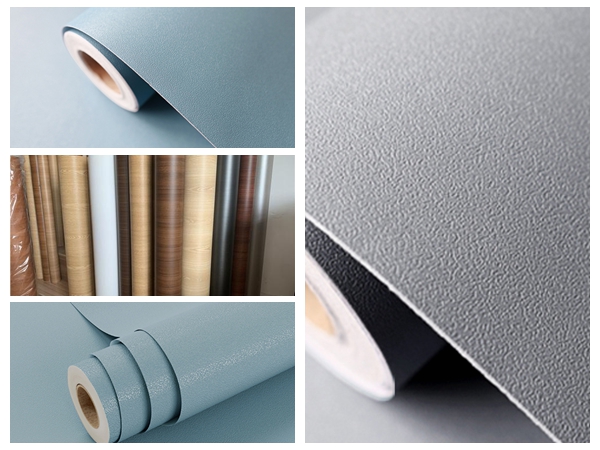
Applications that look similar in a brochure can place very different demands on the film during processing, installation and use.
| Application | Priorities | Buyer Guidance |
|---|---|---|
| Kitchen Cabinets | Stain/cleaning direction, edge finish, color consistency, profile geometry | Test the actual cabinet finish and edge condition. For self-adhesive renovation, qualify adhesion after cleaning and after a dwell period. |
| Wardrobes & Bedroom Furniture | Grain matching, low-glare finish, repeat appearance across many panels | Approve the pattern on multiple adjacent sample panels, not only one small swatch. |
| Interior Doors | Large-area appearance, width planning, edge or profile processing | Confirm film direction, door profile and whether the process is flat lamination, formed application or surface resurfacing. |
| Wall & Decorative Panels | Roll width, seam planning, batch consistency, visual repeat | Plan grain orientation across the room or panel system before cutting production material. |
| Retail Fixtures | Fast refurbishment, repeat color, clean trimming, future replacement plan | Where planned removal matters, test the adhesive construction on the actual painted or laminated fixture. |
| Hotel / Commercial Refurbishment | Collection consistency, field installation workflow, repair/replacement strategy | Keep approved sample masters and roll/batch records so later replacement work can be compared to the original finish. |
The most useful supplier conversation is a sequence: define the surface, approve the visual master, test the real process, document the final construction and only then scale the order.
A decorative-film complaint is often a system problem. Diagnose the symptom before assuming the film simply needs to be “thicker” or “stickier.”
Check substrate cleanliness, edge radius, surface energy, adhesive choice and whether the film was intended to wrap the edge. A stronger adhesive is not always the correct fix.
Check grain orientation, lighting, roll/batch identity, approved master and whether adjacent parts came from different pattern directions.
Review gloss level, emboss depth, grain scale and the substrate below the film. A natural-looking print can still look artificial if the surface finish is too reflective.
Inspect the substrate for dust, texture, porosity, coating defects or trapped contamination. Surface preparation and application method can matter more than film thickness.
Use retained master samples and agreed appearance controls for repeat supply. Do not rely on a screen image or a verbal color name as the production reference.
Recheck forming geometry, film flexibility and the buyer's process conditions. Flat-panel material should not be assumed suitable for deep profiles or demanding curves.
These images give search engines and buyers product, texture, application and factory context. Product selection should still be based on samples and specification data rather than photography alone.
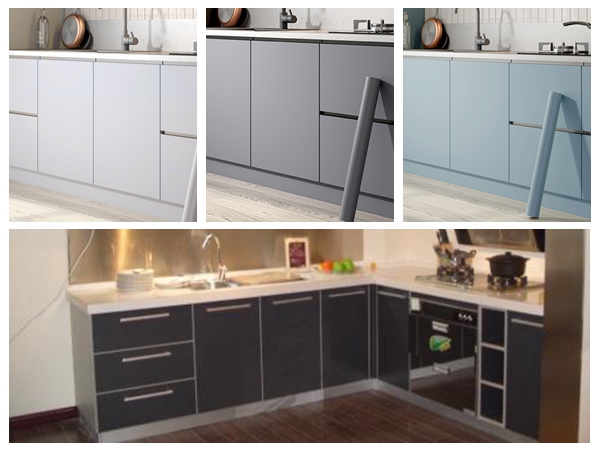
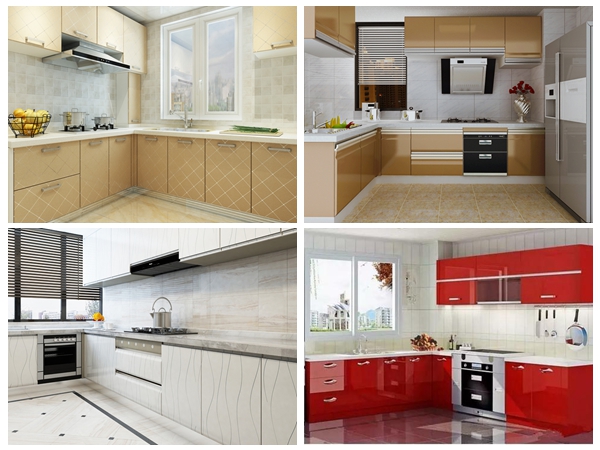
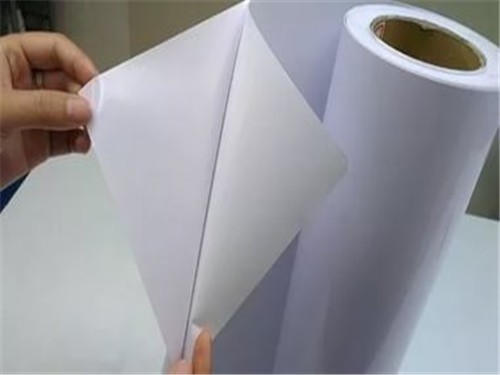
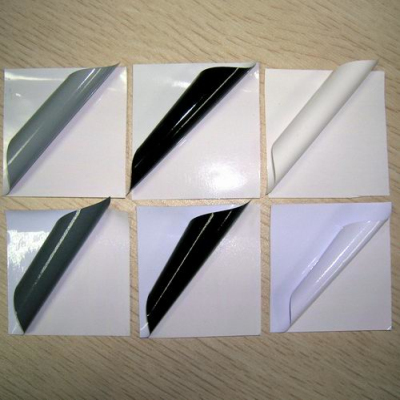
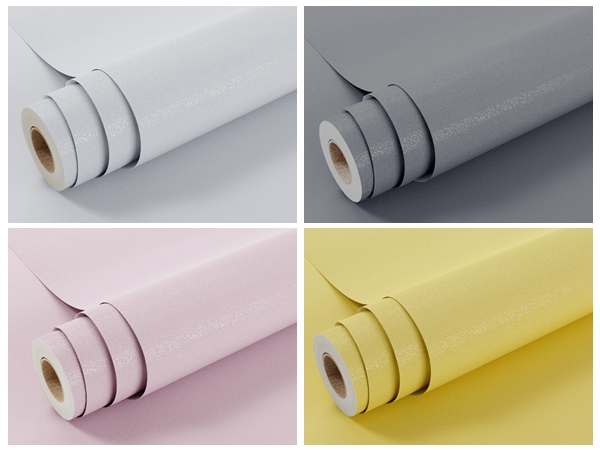
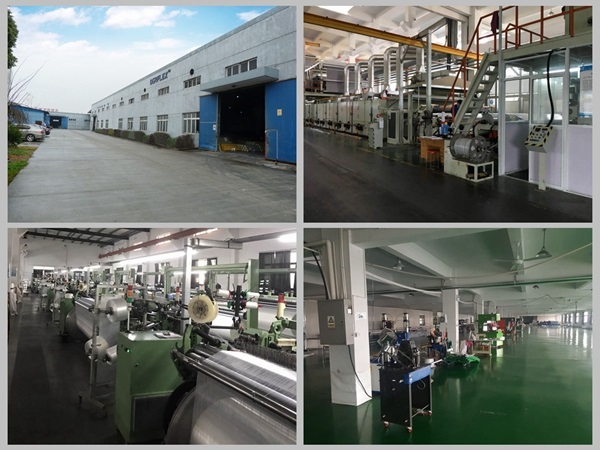
These materials can create a wood appearance, but they solve different manufacturing and refurbishment problems.
DERFLEX already publishes PVC film manufacturing and self-adhesive vinyl product families. For a wood-grain decorative program, that allows the discussion to move beyond a pattern catalog toward face-film structure, surface finish, adhesive/liner where required, roll planning, samples and repeat-order control.
The practical advantage for B2B buyers is specification discipline: the decorative appearance is approved together with the production or installation process rather than treated as a separate afterthought.
A complete RFQ reduces the risk of receiving a visually attractive sample that does not match the buyer's production process.
These verified DERFLEX pages support the broader topic cluster without forcing one landing page to duplicate every material and purchasing question.
Wood grain decorative film is the broader surface-decoration category. Some constructions are intended for lamination or forming during furniture/panel production, while self-adhesive film adds a pressure-sensitive adhesive and release liner so it can be applied directly to a qualified finished surface. The correct choice depends on the buyer's converting route.
Oak, walnut, ash, maple, teak, dark wood, grey wood and other design directions can be discussed. For repeat B2B orders, use a physical master sample or controlled pattern reference rather than relying on the species name alone.
There is no single finish that is always most realistic. The result depends on artwork, color, grain scale, gloss and texture together. Matte or embossed surfaces can reduce plastic-like reflection and add tactile depth, while smooth or gloss finishes can suit more contemporary designs. Approve the finish on the intended substrate under project lighting.
Yes, depending on the selected construction and process. For self-adhesive film, raw porous MDF is generally a poor direct application surface; a stable finished or sealed surface should be tested. For lamination/forming programs, provide the actual board finish and processing method so compatibility can be evaluated.
Choose thickness and width around the converting process, panel size and material yield. DERFLEX has published decorative-film reference examples at 0.16, 0.35 and 0.40 mm and 1250/1400 mm widths on an existing kitchen-film page, but those values should not be assumed for every wood-grain product. Confirm the selected grade and current production range.
Custom pattern/color references, finish, roll and packaging requirements can be discussed based on technical feasibility and order scope. Send the target sample, finished application, required dimensions, quantity and packaging requirements so the sampling route can be confirmed.
Approve the sample on the real substrate using the real lamination, forming or installation workflow. Evaluate color, grain direction, gloss/emboss, edges, adjacent-panel consistency and any removal expectation. Keep an approved master and construction record for repeat-order comparison.
Provide the end product, substrate, processing method, wood reference, finish, thickness/width target, roll requirement, quantity, adhesive/removability requirement where applicable, required testing/documentation, OEM packing and destination.
DERFLEX can review the application and help narrow the pattern, finish, film structure and sample route before a bulk decorative-film order. Final MOQ, lead time, availability and technical data should be confirmed for the selected construction.