1
Occasional / Seasonal Use
Consider reinforced PE when lower handling mass, foldability and budget are the primary drivers. Confirm seam sealing, edge reinforcement and UV direction for the expected exposure.



DERFLEX manufactures custom infield tarps and baseball infield covers for schools, clubs, stadium operators, distributors and OEM sports-cover programs.
Direct answer: an infield tarp is a large waterproof or water-shedding field cover placed over the baseball or softball infield before or during rain. The right specification balances coverage, material weight, seam construction, edge reinforcement, handles, anchoring and storage so the ground crew can deploy it safely and consistently.
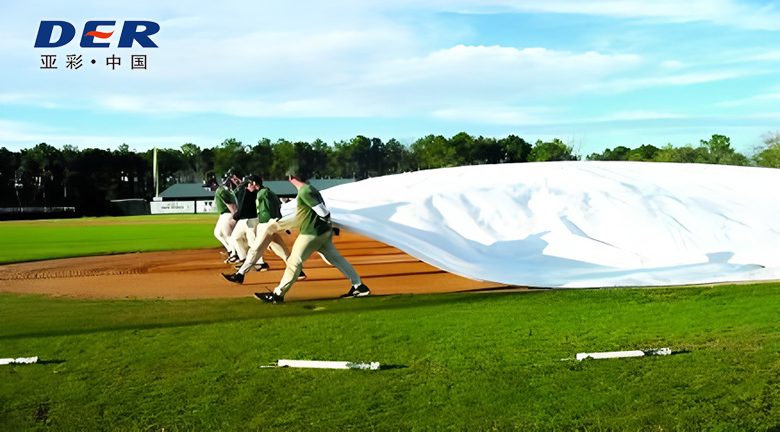
An infield tarp protects the skinned infield, base paths and nearby high-maintenance zones from rain and excess moisture. For occasional school or park use, reinforced PE can reduce handling weight and cost. For frequent deployment, custom fabrication and repeated reuse, PVC-coated polyester or vinyl can offer stronger abrasion resistance and weldable seams, but the added weight must fit the crew and storage system.
Measure the actual coverage zone, not only the official diamond dimensions. Include overlap, coach boxes or adjacent areas if they must stay dry, then confirm the finished size after hems and seams.
An infield tarp is a large baseball or softball field cover used to keep rain from saturating the infield skin and nearby playing areas.
Unlike a small mound cover or home-plate spot tarp, a full infield tarp may span tens of thousands of square feet. That changes the engineering problem: the tarp must be waterproof enough for the weather plan, yet manageable enough for the crew to move, roll, anchor and store repeatedly.
For B2B purchasing, the specification should therefore start with coverage area + crew handling method + storage method, then move to material weight, edge construction and hardware.
Baseball fields use infield tarps to keep the dirt or clay surface from becoming saturated during rain. A drier infield can reduce post-rain repair and drying work, but the tarp must be sized and handled correctly to avoid exposed areas, wind lift and excessive water load.
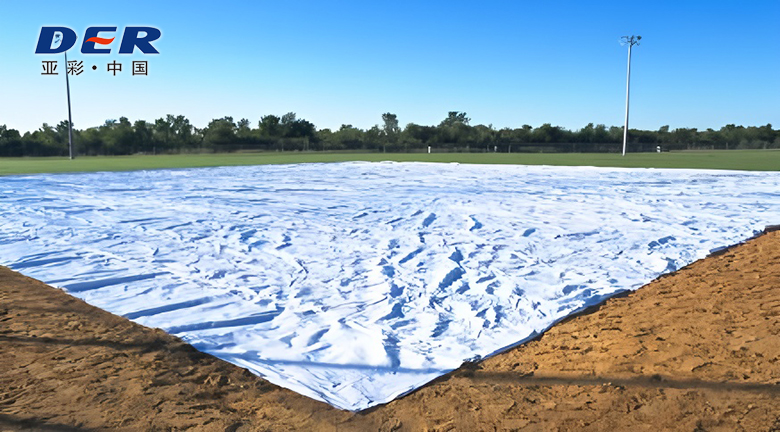
A heavier tarp may improve abrasion resistance, but extra material mass can make deployment slower and more labor-intensive. The better specification balances durability with field operations.
Consider reinforced PE when lower handling mass, foldability and budget are the primary drivers. Confirm seam sealing, edge reinforcement and UV direction for the expected exposure.
PVC-coated polyester or vinyl can be discussed when repeated abrasion, weldable seams and long-term reuse matter. Plan the crew, roller and tarp mass before selecting a heavier structure.
Use a lighter material direction, sectional coverage or smaller area tarps if a full heavy cover would be difficult to deploy safely. The operating plan should control the product design.
Large tarps become heavy very quickly. A simple weight estimate helps buyers compare material options before ordering.
| Market Reference Size | Area | Approx. Weight at 6 oz/yd² | Approx. Weight at 8 oz/yd² | Planning Note |
|---|---|---|---|---|
| 90' × 90' | 8,100 ft² / 900 yd² | ≈ 338 lb / 153 kg | ≈ 450 lb / 204 kg | Smaller-field reference; still requires a crew handling plan. |
| 120' × 120' | 14,400 ft² / 1,600 yd² | ≈ 600 lb / 272 kg | ≈ 800 lb / 363 kg | Common market reference for softball and compact field coverage. |
| 160' × 160' | 25,600 ft² / 2,844 yd² | ≈ 1,067 lb / 484 kg | ≈ 1,422 lb / 645 kg | Full-size baseball coverage can exceed half a ton before reinforcement. |
| 170' × 170' | 28,900 ft² / 3,211 yd² | ≈ 1,204 lb / 546 kg | ≈ 1,606 lb / 728 kg | Large professional-style coverage requires serious deployment planning. |
Illustrative calculation: area ÷ 9 × fabric weight (oz/yd²) ÷ 16. Finished tarp weight can be higher because of seam overlaps, hems, reinforcement, webbing, handles, grommets, printing and moisture. These are planning estimates, not DERFLEX guaranteed product weights.
Material, seams, edges, handles and anchors should work together. The tarp is only as practical as the way the crew can move and secure it.
Measure the field area that must remain protected and add the required overlap around the skin or adjacent zones.
Large covers require panel seams. Confirm welding or another suitable fabrication route and keep high-stress lines away from critical pull zones where practical.
Place handles, webbing or other grip points according to crew positions rather than using arbitrary spacing.
Match grommets, weighted edges, sandbag strategy or other restraint methods to the site's wind and operating plan.
Many commercial baseball field covers place pull handles at roughly 10–12 ft intervals. Treat that as a market reference—not a universal rule. A custom infield tarp can use a drawing-based handle map that follows crew count, pull direction and roller position.
Standing water adds major weight. Plan drainage and water-removal procedures before moving the cover. The specification should support the real rain-delay workflow, not only dry-weather handling.
| Decision Factor | Reinforced PE Infield Tarp | PVC-Coated Polyester / Vinyl Infield Tarp |
|---|---|---|
| Handling weight | Usually lower for comparable coverage, which can help schools, parks and smaller crews. | Usually higher; assess crew size and roller/storage system before increasing material weight. |
| Repeated abrasion | Suitable for many seasonal programs when handled carefully. | Can be specified for stronger abrasion resistance and frequent handling. |
| Seam fabrication | Heat-sealed construction can be used on suitable PE structures. | Weldable PVC-coated structures allow engineered large-panel seam construction. |
| Branding | Printing options depend on the selected PE structure and order program. | Logo and color programs can be discussed for suitable PVC constructions. |
| Best purchasing question | How light can the tarp be while still meeting the required reuse and weather plan? | How much durability is needed without creating a handling problem? |
| Coverage Type | Best Fit | Specification Priority | Reason |
|---|---|---|---|
| Full infield tarp | Rain-delay protection for the main infield area | Finished size, total weight, handles, seams, storage | Large area creates the greatest handling and water-load challenge. |
| Skin tarp | Protecting the infield dirt while limiting covered grass | Custom geometry and edge fit | Reduces unnecessary covered area and can reduce material mass. |
| Mound / home plate covers | Targeted moisture control | Weighted edge, handles, shape | Smaller covers are faster to deploy for localized protection. |
| Sectional infield covers | Facilities with limited crews or storage | Panel overlap, marking, handling sequence | Divides a very large cover into manageable sections. |
| OEM distributor program | Sports-equipment brands and importers | Repeat dimensions, material code, labels, packing | Consistency matters across multiple sizes and repeat orders. |
The images below are existing DERFLEX website assets and are arranged with descriptive alt text and captions for image-search relevance.
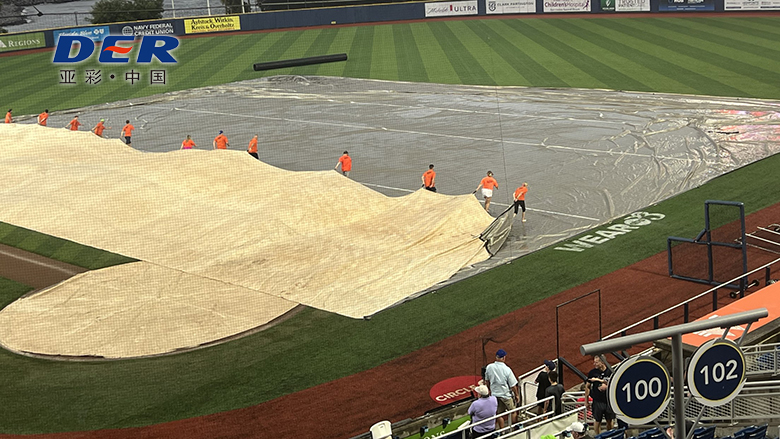
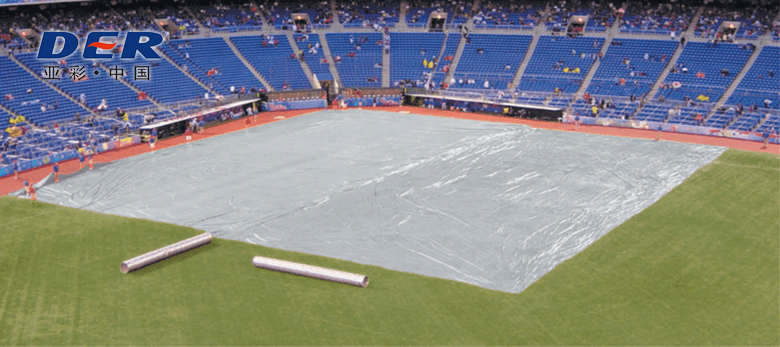
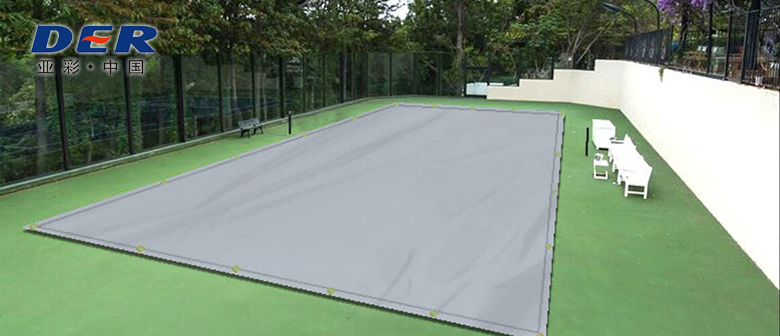
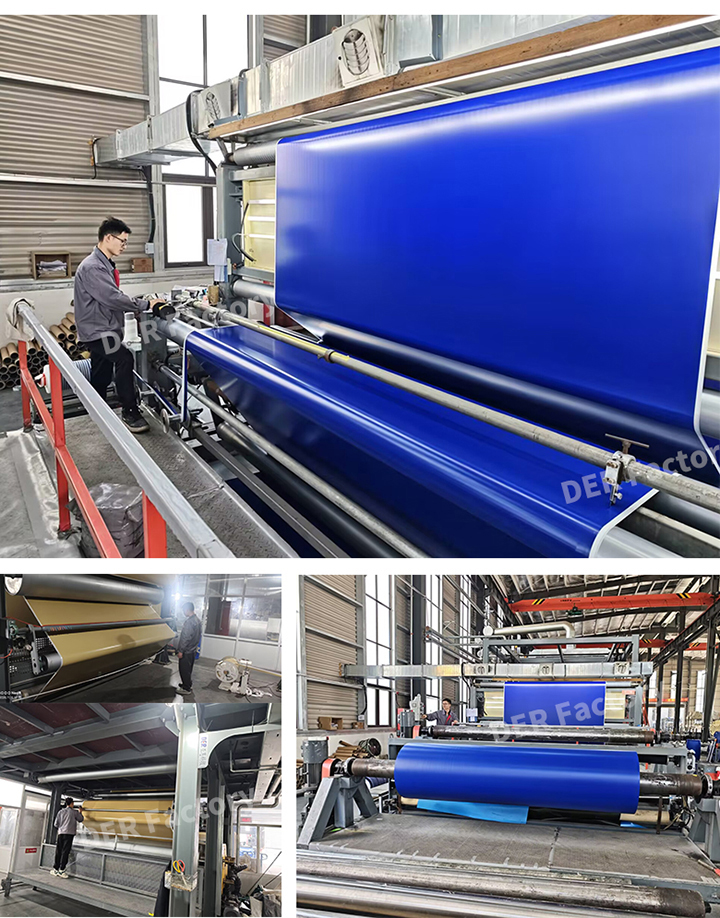
Full square/rectangular infield coverage, skin-style geometry, mound or spot covers, and drawing-based custom shapes.
Reinforced PE, PVC-coated polyester / vinyl, or another project-matched coated fabric subject to technical review.
Pull handles, webbing straps, reinforced corners, grommets, weighted-edge concepts and drawing-based placement.
Large-panel seam layout, welded or suitable fabricated seams, reinforced perimeter and local high-wear patches.
Project-defined color, logo printing, private labels and distributor packaging can be discussed for suitable programs.
Finished covers or roll material for qualified converters and OEM programs, depending on the agreed manufacturing route.
Measure the real protected zone and specify finished dimensions after hems and seams. A listed “cut size” is not always the same as finished coverage.
A heavier tarp can create a crew problem. Compare total dry weight, wet handling and storage before moving to a heavier fabric.
Map handles to the number of people, pull direction, roller position and corners that receive the most load.
Rainwater can add a large temporary load. Plan drainage, pumping or water-removal steps before the crew attempts to move the tarp.
Allow the tarp to dry before long-term rolling or storage when practical. Clean debris first and avoid repeated sharp creases.
Grommets transfer force into the hem and main fabric. Edge reinforcement and anchor geometry matter as much as eyelet spacing.
A complete RFQ reduces back-and-forth and helps the supplier quote the right material and finished construction.
DERFLEX's existing sports-field range includes baseball field tarps, athletic field covers and coated-fabric solutions. For infield tarp buyers, the manufacturing value is the ability to discuss material structure and finished fabrication together rather than choosing only a fixed retail SKU.
This is especially useful for distributors, sports-equipment brands and project buyers that need repeatable dimensions, custom reinforcement, logo programs or export packaging across multiple field-cover sizes.
Infield tarps are used to keep baseball or softball infield soil, clay and nearby playing areas from becoming saturated during rain. They can reduce post-rain drying and repair work when deployed before heavy precipitation.
Measure the actual area you want to keep dry and add the required overlap. Market reference sizes include 90' × 90', 120' × 120', 160' × 160' and 170' × 170', but field layouts vary, so custom finished dimensions are often more reliable than ordering by league label alone.
Weight depends on area and fabric weight. As a planning example, a 160' × 160' cover made from 6 oz/yd² material is roughly 1,067 lb before adding seams, hems, reinforcement, hardware or moisture. Use total mass—not only ounces per yard—to plan crew handling.
Neither is universally better. Reinforced PE can reduce handling weight and cost for seasonal use. PVC-coated polyester / vinyl can be specified for stronger abrasion resistance, weldable seams and repeated use, but it is usually heavier. The best choice depends on deployment frequency, crew size, storage and budget.
There is no universal crew count. The required crew depends on tarp size, dry weight, wind, surface condition, handle layout, roller equipment and site safety procedures. Large full infield covers can weigh hundreds of pounds or more, so deployment planning should be part of the specification.
Handles are useful for coordinated pulling and folding or rolling. Grommets or other perimeter fixing methods can help control the cover when secured correctly. Both should be reinforced and positioned around the real handling and anchoring plan rather than treated as decorative accessories.
Clean off dirt and debris, allow the tarp to dry when practical, and use a rolling or storage method that avoids repeated sharp creases. Keep the stored cover protected from unnecessary UV exposure, standing water and sharp objects.
DERFLEX can discuss custom finished size, material, color, reinforcement, handles, grommets, logo printing, private labels and export packaging for suitable baseball and softball field-cover programs. Final details should be confirmed in the quotation and approved sample.
Send DERFLEX the finished coverage dimensions, baseball or softball application, material direction, target weight, handle and grommet layout, storage method, quantity and destination. The team can review a practical custom specification for sampling or B2B production.