Company News Industry News

PVC vs PE vs Canvas vs Mesh Tarps | Material Comparison & Buyer Guide | DERFLEX

DERFLEX logo
Industrial Tarp Material GuideBuilt for B2B selection, specification and sourcing
PVC vs PE vs Canvas vs Mesh Tarps

Choose the Tarp by Failure Risk—not by Material Name Alone.

PVC, PE, canvas and mesh tarps solve different protection problems. The useful question is not “Which tarp is best?” but “What must this cover resist: rain, abrasion, condensation, wind load, repeated handling—or all of them?”

This DERFLEX comparison is designed for importers, distributors, tarp fabricators, fleet suppliers, contractors and industrial buyers who need a defensible material choice before sampling or bulk purchasing.

Water barrierPVC and laminated PE are the first candidates when rain exclusion is essential.
BreathabilityCanvas and mesh solve airflow problems that solid plastic-coated tarps cannot.
Repeated handlingReinforcement, abrasion exposure and tie-down design can matter more than thickness alone.
Cost per useInitial price and lifecycle cost are different procurement questions.
The Buying Reality

There Is No Universal Winner.

Each material becomes “better” only after the application defines what failure would look like.

The expensive mistake is often over-specifying one property and under-specifying another.

A heavy waterproof tarp can still fail if wind load, edge reinforcement or abrasion is ignored. A breathable cover can still be wrong when prolonged rain exclusion is the primary job.

  • Truck cargo: road wind + abrasion + repeated fastening
  • Construction: deployment speed + weather + anchoring
  • Equipment storage: rain protection + condensation management
  • Debris control: containment + wind relief + visibility

A better tarp material comparison starts with six questions.

Before deciding between a PVC tarp, PE tarp, canvas tarp or mesh tarp, define the operating conditions that will consume the material.

  • Must the cover block standing or wind-driven rain?
  • Will trapped moisture or condensation damage the goods?
  • Will the tarp rub against sharp, rough or moving surfaces?
  • How much wind pressure will a large panel experience?
  • How often will workers fold, drag, tension or reinstall it?
  • Will the finished tarp be welded, sewn, grommeted or reinforced?
Material Roles

Four Materials, Four Different Jobs.

These descriptions focus on procurement role rather than generic product definitions.

01

PVC / Vinyl Tarp

Typically a woven polyester reinforcement with a PVC-coated or laminated surface. Chosen for professional covers that need a continuous barrier and fabrication strength.

  • Best when: waterproofing, repeated use, welding and edge reinforcement matter.
  • Watch: handling weight, formulation, coating adhesion and cold flexibility.
  • Buyer clue: ask for base yarn, GSM, tear/tensile data and fabrication method.
02

PE / Poly Tarp

Usually woven polyethylene tape with laminated surfaces. Common where easy handling and economical temporary waterproof coverage are more important than premium repeat-use performance.

  • Best when: fast deployment, low weight and controlled initial spend matter.
  • Watch: puncture, flutter fatigue, UV exposure and edge quality.
  • Buyer clue: confirm weave, lamination, UV treatment and reinforced perimeter.
03

Canvas Tarp

Woven cotton or blended textile valued for breathability, surface feel and abrasion tolerance. Treated versions can resist light moisture but should not automatically be treated as a sealed waterproof system.

  • Best when: airflow and moisture vapor movement are important.
  • Watch: water absorption, mildew risk and treatment maintenance.
  • Buyer clue: confirm fiber blend, finished weight and water/mildew treatment.
04

Mesh Tarp

An open woven or knitted structure that deliberately passes air and some light. Selected to reduce wind pressure, create shade or contain larger debris while maintaining ventilation.

  • Best when: airflow, shade, privacy or debris containment are the task.
  • Watch: it is not a full rain barrier.
  • Buyer clue: ask for openness/shade factor, base fabric, coating and edge reinforcement.
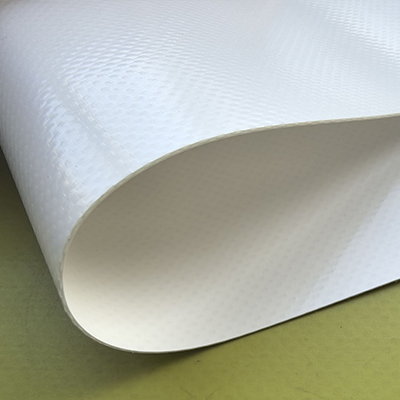
DERFLEX PVC tarpaulin material
DERFLEX PVC tarpaulin roll materials and finished tarp application examples. Product specifications vary by application and agreed production data.
What DERFLEX Actually Adds

Material choice becomes useful only when it can be converted into a workable specification.

DERFLEX focuses on PVC-coated polyester fabrics and custom tarp programs for buyers who need roll supply, welding compatibility, reinforced finishing and repeat-order specification control. For a comparison page like this, the useful role is not to declare PVC “best” for everything—it is to identify when PVC is justified and when another structure may fit the job better.

300–1200gsm directionCommon PVC tarp manufacturing range shown on DERFLEX product pages; final range depends on structure.
500D–2000D directionPolyester reinforcement options for different load levels.
Custom finishingWelding, hems, webbing, grommets, D-rings, logo and packing can be discussed.
Functional optionsUV, anti-mildew, FR, cold-resistant and other directions subject to project review.
Failure-Mode Method

Six Risks Decide More Than Color or Thickness.

This is the part many basic tarp comparisons miss: material performance changes when the real failure mechanism changes.

01

Water ingress

Solid coated or laminated sheets can block rain, but finished waterproofing also depends on seams, hems, holes, slope and installation.

02

Condensation

Non-breathable covers can trap moisture. Canvas or planned ventilation may matter more than a stronger water barrier for moisture-sensitive goods.

03

Wind pressure

A solid tarp can behave like a sail. Mesh can reduce pressure where full weather sealing is not required; solid covers need suitable anchoring and reinforcement.

04

Abrasion & puncture

Road transport, machinery and rough edges reward tougher reinforced structures and better contact-point design rather than simple sheet thickness.

05

Handling fatigue

Frequent folding, dragging, tensioning and reinstallation can wear coatings, hems and eyelet zones. Reuse frequency should be part of the specification.

06

Fabrication failure

Weldability, seam design, stitching compatibility, edge reinforcement and hardware layout can determine finished-tarp performance as much as the base material.

Side-by-Side Buyer Matrix

PVC vs PE vs Canvas vs Mesh Tarps

Use the matrix to shortlist a material. “Fit” means relative suitability for the stated requirement, not a universal laboratory ranking.

Decision factorPVC / Vinyl coated polyesterPE / Poly tarpCanvas tarpMesh tarp
Rain barrierVery high fit
Continuous coated surface; welded construction can support water-tight designs.
High fit
Laminated PE is widely used for waterproof temporary coverage.
Medium / limited
Treatment can improve water resistance, but breathability remains part of the value.
Low fit
Open structure intentionally allows air and water passage.
BreathabilityLowLowVery high fitVery high fit
Repeated heavy-duty handlingVery high fit
Especially with suitable scrim, coating and reinforced finishing.
Medium
Depends strongly on grade and edge construction.
High in suitable grades
Good textile abrasion feel; moisture exposure still matters.
Application-based
Strong for containment when designed for tension and wind.
Low handling weightMedium
Heavier structures can be more demanding to deploy.
Very high fitMediumHigh fit
Abrasion exposureVery high fit
Common choice for transport and industrial covers.
MediumHigh fit
Textile surface can suit some contact-sensitive uses.
Medium
Depends on yarn/coating and contact conditions.
Wind reliefLow without ventingLow without ventingMediumVery high fit
Open structure reduces pressure compared with a solid sheet.
Heat / hot-air weldingVery high fit
Common fabrication route for PVC-coated polyester.
Possible with suitable PE processesTypically sewnDepends on coating and construction
Temporary low-cost coverageCan be over-specifiedVery high fitMediumOnly when ventilation/shade is the goal
Shade / debris containmentSolid containmentSolid temporary barrierBreathable coverVery high fit
Professional custom fabricationVery high fit
Well suited to welded panels, hems, webbing and hardware systems.
High in appropriate gradesHigh for sewn coversHigh for reinforced screens/covers

Material behavior varies with fabric construction, coating or lamination, weight, UV package, finish, seam design, fastening, installation and service environment. Confirm samples and agreed test data before bulk production.

Application Routing

Which Tarp Material Fits Common B2B Applications?

Start with the job, then narrow the specification.

Starting routePVC

Truck, trailer & flatbed cargo

Repeated fastening, road wind, rain exposure and abrasion commonly push buyers toward reinforced PVC-coated polyester with welded seams and engineered attachment points.

Starting routePE

Short-term construction protection

When the cover is temporary, moved frequently and budget-sensitive, a suitable PE grade can be more efficient than specifying a heavier reusable system.

Starting routeCanvas

Breathable equipment or material cover

Canvas can be useful when condensation control and textile breathability are more important than a continuous waterproof membrane.

Starting routeMesh

Dump body, debris & shade control

Mesh is practical when airflow and lower wind pressure are important while containing larger debris or creating shade and privacy.

Starting routePVC / PE

Agricultural weather cover

PE may suit seasonal or economical cover needs. PVC can make more sense when the cover is large, reused, reinforced and exposed for longer periods.

Starting routePVC

Tent, shelter & industrial curtain

Color consistency, weldability, cleanable surfaces, large-panel fabrication and optional functional treatments often make coated polyester attractive for repeat programs.

Starting routeMesh / PVC

Scaffold or worksite enclosure

Use mesh when wind relief and ventilation dominate; use solid PVC when weather shielding or finer containment is the first objective. Hybrid layouts can solve both risks.

Starting routeRisk review

Long-term outdoor equipment storage

Waterproofing alone is not enough. Consider trapped moisture, abrasion points, tie-down geometry, UV exposure and service access before choosing a solid or breathable cover.

Procurement Economics

Compare Cost per Use—not Only Cost per Tarp.

A lower unit price can be the right answer for temporary use. For repeat-duty programs, replacement frequency and operational handling can change the economics.

When initial price should dominate

A lighter or lower-cost material can be rational when service is short, the cover is disposable or the loss consequence is limited.

Short service + low failure consequence + easy replacement → prioritize acquisition efficiency.
  • Emergency or temporary weather cover
  • Short-duration construction protection
  • Seasonal low-stress storage
  • Jobs where crews must carry large sheets manually

When lifecycle cost should dominate

Reusable transport and industrial covers can justify more attention to abrasion, repairability, reinforcement and specification consistency.

Purchase + replacement + downtime + labor + cargo/equipment risk = practical total cost.
  • Fleet and logistics programs
  • Repeated OEM tarp production
  • Large welded covers and shelters
  • Applications where failure can damage valuable goods
Hybrid Thinking

Sometimes the Best “Material” Is a Two-Layer or Zoned System.

One tarp does not need to solve every problem with one uniform sheet.

Solid + ventilated

PVC lower zone + mesh upper zone

Useful where rain/debris containment is needed close to the source but wind relief and airflow are needed on exposed elevations.

Weather + breathability

Outer rain cover + breathable inner protection

For moisture-sensitive equipment, a designed air gap or breathable inner layer can reduce the risks created by a fully sealed cover.

Temporary + reusable

PE for short phases + PVC for permanent duty

Project stages can justify different materials: economical temporary coverage early, then a reinforced reusable tarp for long-term service.

RFQ Quality

What to Specify Before Asking for a Tarp Price.

A useful quotation starts with operating conditions. “Blue waterproof tarp, heavy duty” is not enough for repeat procurement.

  1. 01

    Application & failure consequence

    Truck, machinery, agriculture, temporary roof, screen, tent, storage or OEM resale—and what happens if the cover leaks, tears or traps moisture.

  2. 02

    Exposure

    Rain, sunlight, temperature, wind, chemicals, dirt, mildew conditions and expected outdoor duration.

  3. 03

    Handling cycle

    How often the tarp is folded, dragged, removed, tensioned, rolled or transported.

  4. 04

    Size & geometry

    Finished dimensions, panel layout, slope, sharp edges, contact points, moving parts and drawing if available.

  5. 05

    Fabrication

    Hot-air or HF welding, sewing, hems, webbing, rope edge, D-rings, grommet spacing, corner patches and access openings.

  6. 06

    Commercial profile

    Roll material or finished tarp, annual volume, color, branding, packaging, destination market, sample plan and repeat-order requirements.

Supplier Questions by Material

Ask Different Questions for PVC, PE, Canvas and Mesh.

Material names are too broad. The specification variables that matter are different for each, construction.

PVC / Vinyl

  • Polyester denier and weave/density
  • Total GSM and coating route
  • Tensile and tear strength
  • Coating adhesion / surface finish
  • UV, FR, anti-mildew or cold-flex direction
  • Welding compatibility and seam construction

PE / Poly

  • HDPE tape weave / mesh count
  • Finished weight and lamination
  • UV treatment direction
  • Tear and puncture expectations
  • Edge rope / hem reinforcement
  • Eyelet spacing and corner reinforcement

Canvas

  • Cotton, polyester or blended fiber
  • Finished oz/yd² or GSM
  • Water-repellent treatment
  • Mildew treatment and care requirements
  • Shrinkage / dimensional behavior
  • Stitching, seams and hardware reinforcement

Mesh

  • Open area / shade factor
  • Yarn and base construction
  • Coating and UV direction
  • Tensile / tear data
  • Edge reinforcement for wind load
  • Panel size, tie spacing and attachment plan
Trust-building selection rule

“Choose PVC when its durability and fabrication advantages solve a real risk—not simply because it is the heaviest option.”

When PVC may not be the first choice.

DERFLEX’s core capability is PVC-coated industrial textile, but a technically credible comparison should also show where another material can be more practical.

  • Choose PE first when the job is genuinely short-term, low-stress and strongly price/weight sensitive.
  • Choose canvas first when breathability and soft textile contact matter more than a sealed waterproof barrier.
  • Choose mesh first when the cover must deliberately pass air and reduce wind pressure.
  • Review a hybrid design when the project needs both containment and ventilation.
DERFLEX for Industrial Buyers

From Material Decision to Repeatable PVC Tarp Program.

For applications that justify PVC-coated polyester, DERFLEX can discuss the material and finishing variables that turn a generic tarp into a controlled B2B specification.

Material structure

Base fabric + coating selection

Denier, total weight, surface finish and functional direction can be matched to the intended use and manufacturing feasibility.

Fabrication

Designed for conversion

Welding, reinforced hems, webbing, grommets, D-rings, patches, printing and finished sizes can be reviewed as one system.

Repeat supply

Specification continuity

Importers, distributors, tarp fabricators and OEM programs benefit from clear sample confirmation and repeat-order specifications.

Outdoor performance

Project-specific options

UV, anti-mildew, flame-retardant, cold-flex and other directions can be discussed where the destination market or application requires them.

Commercial support

Roll goods or finished tarps

Buyers can discuss coated fabric rolls for conversion or custom fabricated covers depending on their supply-chain model.

Risk control

Sample before bulk

Final recommendations should be confirmed through technical review, physical sample evaluation and agreed production data.

FAQ

PVC vs PE vs Canvas vs Mesh Tarp FAQs

Short answers for common procurement and material-selection questions.

Which tarp material is best: PVC, PE, canvas or mesh?

There is no universal best material. PVC-coated polyester is often considered for reusable waterproof industrial covers; PE is practical for lightweight temporary coverage; canvas is useful where breathability matters; and mesh is selected for shade, airflow or debris containment. The right choice depends on the failure risks in the application.

Is a PVC tarp the same as a vinyl tarp?

In common tarp-market language, “vinyl tarp” often refers to PVC-coated or PVC-laminated fabric. For purchasing, confirm the base fabric, coating or lamination method, total weight, finish and test data rather than relying on the name alone.

Are PE tarps waterproof?

Many laminated PE tarps are used as waterproof covers. Finished performance still depends on grade, seams, eyelets, damage, installation and how water is allowed to drain from the cover.

Why choose canvas instead of a waterproof plastic tarp?

Canvas may be preferable when airflow, moisture-vapor movement and textile surface contact matter more than complete rain sealing. Treated canvas can repel moisture, but it should not automatically be specified as equivalent to a welded solid coated cover.

Are mesh tarps waterproof?

No. Mesh tarps are intentionally open so air, some light and water can pass through. That makes them useful for shade, wind relief, privacy and debris control rather than full rain protection.

Is a heavier GSM tarp always better?

No. GSM describes total mass per area but does not by itself define tear strength, abrasion resistance, UV durability, coating adhesion, breathability or seam quality. A useful specification combines material weight with reinforcement, finish, test data and application conditions.

What tarp is better for trucks and repeated outdoor use?

Reinforced PVC-coated polyester is commonly considered for truck and repeated outdoor applications because it supports waterproof surfaces, strong textile reinforcement, welded fabrication and reinforced attachment details. The exact structure should still be matched to wind, abrasion, load geometry and handling frequency.

Can DERFLEX make custom tarp materials and finished covers?

DERFLEX can discuss custom PVC tarpaulin weight, polyester base structure, width, color, surface finish, functional options, welding, hems, webbing, grommets, D-rings, logo, labeling and packaging. Feasibility and final performance should be confirmed by technical review and sample approval.

Need to Choose a Tarp Material for a Real Project?

Send DERFLEX the application, dimensions, weather exposure, handling frequency, fastening method, expected service period, target quantity and destination market. The team can discuss whether a PVC-coated structure is appropriate and prepare a sampling / quotation direction.

Material performance depends on specification, fabrication, installation, exposure and maintenance. Confirm project requirements, samples and agreed test data before bulk production.
Copyright © 2015 DERFLEX ( PVC tarpaulin manufacturer )All Rights Reserved.