Company News Industry News

Dust Containment Curtains | Industrial & Construction Barriers | DERFLEX

Industrial Containment · Construction Barriers · Custom Fabrication

Dust Containment Curtains — Industrial & Construction Barrier Fabric

DERFLEX supplies reinforced PVC curtain fabric, clear viewing panels and custom fabricated barriers for factories, warehouses, renovation areas, grinding or cutting zones and temporary construction containment. The curtain is specified around dust behavior, airflow, access, cleaning, sealing and installation—not only around width and height.

  • Opaque, clear or mixed-panel layouts
  • Fixed, sliding or modular curtain directions
  • Welded seams, hems and perimeter reinforcement
  • Bottom weights, sweeps, overlaps and access openings
  • Roll goods or finished custom curtain panels
  • FR / anti-static / UV options discussed by exact requirement
Quick Answer for Buyers

What is a dust containment curtain?

A dust containment curtain is a flexible barrier used to reduce the migration of airborne dust, light debris and process contamination from one work zone into another. Industrial versions commonly use reinforced PVC-coated polyester for the main curtain body, with optional clear flexible PVC windows, modular joins, access openings, reinforced hanging zones and bottom-control details.

In a factory, the curtain may be fixed or suspended from a sliding track around grinding, cutting, packaging, maintenance or dusty production. On construction and renovation sites, temporary barrier panels can isolate work from occupied or cleaner areas. The fabric is only one part of the containment system: seams, ceiling interfaces, wall edges, floor gaps, doors and the planned airflow determine how effectively dust is controlled.
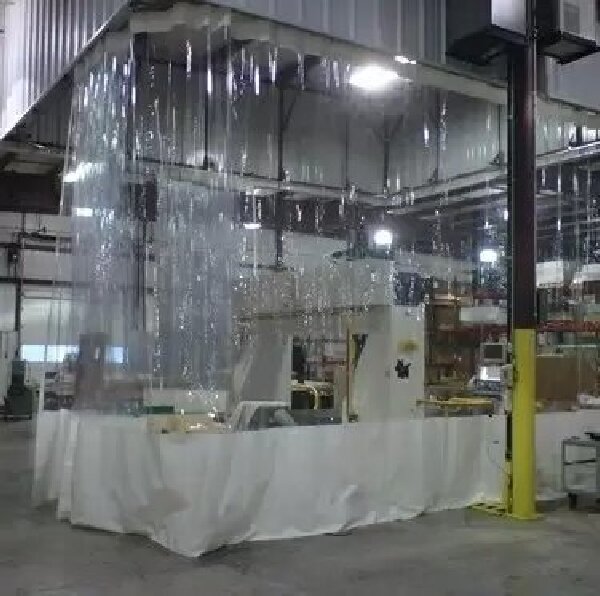
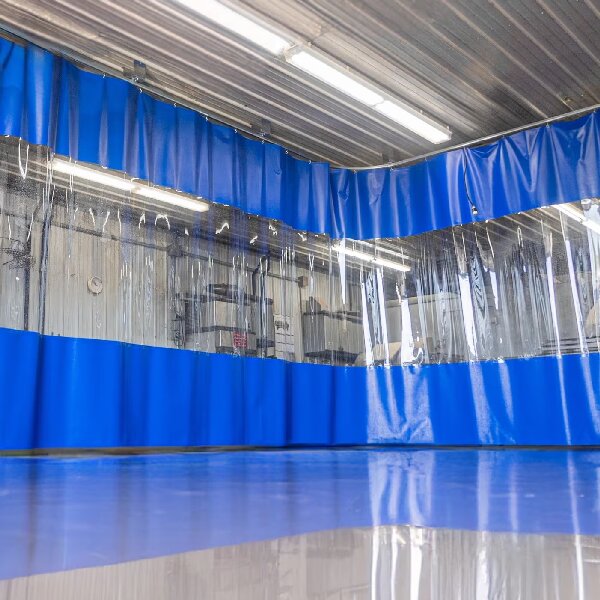
Practical distinction: a curtain can provide physical segregation and help define a controlled zone, but it should not be presented as a stand-alone substitute for source capture, exhaust ventilation, wet methods or a required exposure-control plan for hazardous dust.
Why Curtain Specifications Fail

Containment Performance Is Decided at the Interfaces

Competitor pages often emphasize “heavy-duty vinyl” and curtain dimensions. A better specification starts with the leakage paths and operational details that actually determine dust migration.

01

Top Edge & Ceiling

A curtain that stops below roof steel, services or the ceiling can allow dust-laden air to bypass the barrier. Define the suspension point, upper closure and unavoidable penetrations before panel production.

02

Floor Gap

Track clearance helps curtains move, but a large open gap can reduce containment. Bottom chain pockets, weighted pipes or replaceable sweeps can be considered where floor contact is appropriate.

03

Panel Joints

Overlap direction, hook-and-loop joins, welded modular panels or zipper connections should reflect whether the priority is quick access, reconfiguration or tighter separation.

04

Doorways & Traffic

Every frequent opening becomes a leakage path. Forklift lanes, personnel doors, strip sections and material pass-throughs should be planned into the curtain architecture rather than cut on site later.

05

Pressure & Airflow

A barrier changes the way air moves through a work zone. If the project relies on local exhaust or negative pressure, the curtain layout and make-up air path should be coordinated with that system.

06

Cleaning & Maintenance

Dust type, cleaning frequency, wash-down exposure and abrasion affect surface selection, window placement, seam design and whether individual sections should be replaceable.

Selection Matrix

Which Dust Containment Curtain Material Fits the Work Zone?

Start with the containment objective and operating environment. Weight or thickness should be selected after the layout, movement, cleaning and airflow strategy are understood.

Material DirectionBest FitWhy It Is UsedFabrication / Installation DirectionBuyer Check
Reinforced PVC-Coated PolyesterFactories, warehouses, workshops, repeated-use industrial partitionsStrong woven base, cleanable PVC surface, good compatibility with welded fabrication and reinforced edgesFixed panels, sliding track curtains, modular walls, welded seams, hems, webbing, eyelets, sleeves and access detailsPanel dimensions, movement frequency, abrasion, cleaning method, hanging capacity and required test documentation
Clear Flexible PVCViewing windows, supervision zones, transparent partitionsPreserves visibility and light while maintaining a physical barrierIntegrated window, full clear panel or selected transparent zone; joining method matched to surrounding curtain bodyClarity, scratch exposure, cold flexibility, window height and cleaning method
Mixed Opaque + Clear ConstructionProduction cells, maintenance bays, renovation zones requiring visibilityCombines durable lower/edge zones with a clear observation areaWelded or otherwise compatible mixed-panel assembly with reinforcement around transition zonesWindow location, equipment impact level, supervision line and panel replacement strategy
Temporary Reinforced SheetingShort-duration interior renovation or temporary construction segregationLower mass and easier handling can be useful when the barrier will not face long repeated industrial useFrame-, pole- or site-system mounting; seams and edges selected around expected service durationDuration, tear risk, floor/ceiling sealing, reuse expectation and waste/replacement plan
Mesh / Controlled-Permeability ScreenExterior construction screening or wind-sensitive perimeter applicationsAllows more airflow and can reduce pressure compared with solid sheetingReinforced perimeter and project-defined fixing zonesNot a tight dust barrier; confirm whether airflow is acceptable and review wind/structural implications
Special Functional GradeProjects with defined FR, anti-static, UV, cold-flex or other requirementsAdds a project-specific performance direction beyond basic containmentUse the exact approved grade and keep the tested construction traceable through fabricationState the required test method, report scope, destination market and acceptance criteria before ordering

Reference direction: DERFLEX's current factory-curtain material guidance lists reinforced PVC curtain programs across a broad project-selected weight range and notes that wider finished curtains can be assembled from coated-fabric widths by welding. Final material, width, tolerance and performance are confirmed for the actual order.

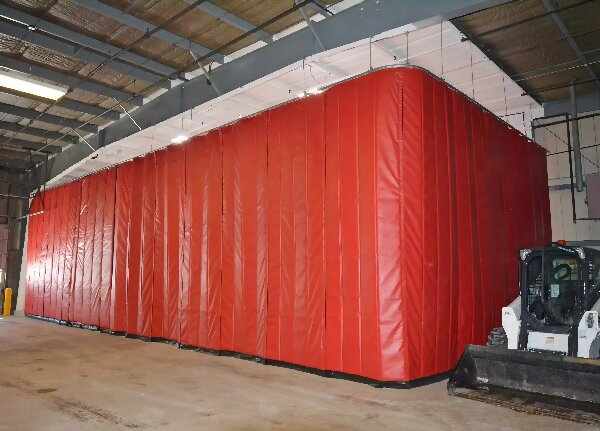
Clear PVC industrial dust containment curtain enclosure with opaque lower barrier section
Curtain Architecture

Build the Dust Curtain as a System, Not a Sheet

A reliable curtain program is created by coordinating the barrier body, observation zones, reinforcement, access and perimeter control. This is especially important for tall industrial curtains and temporary enclosures that are opened, moved or reconfigured during the job.

01
Barrier BodyReinforced PVC-coated polyester for repeated-use opaque sections, or project-selected temporary sheeting for short-duration construction segregation.
02
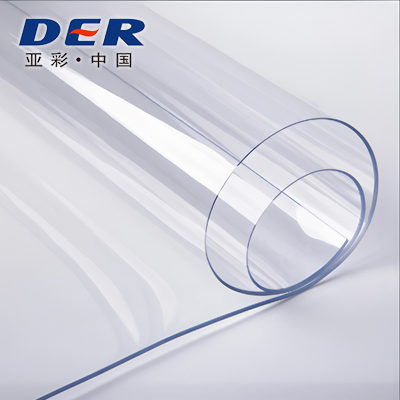
Viewing ZoneClear flexible PVC can be placed at supervision height or used for a larger transparent wall where visibility is essential.
03
Perimeter ReinforcementFolded hems, webbing and local patches help distribute loads around eyelets, rollers, hooks, sleeves and frequently pulled edges.
04
Access & Panel JoiningOverlaps, zippers, hook-and-loop connections, strip-door sections or track openings are selected according to traffic frequency and desired separation.
05
Bottom & Edge ControlWeighted pockets, floor sweeps, side returns and closure details help reduce uncontrolled gaps when the site layout permits them.
Quick Specification Overview

Dust Containment Curtain RFQ Specification Framework

Use this table to prepare a purchase specification without inventing performance values that have not yet been confirmed for the selected material grade.

ItemDERFLEX Supply DirectionWhat the Buyer Should Confirm
Product FormRoll goods, cut panels, replacement sections or finished dust-containment curtainsLocal fabrication or ready-to-install curtain supply
Body MaterialPVC-coated polyester, laminated PVC or project-selected barrier sheetingIndoor/outdoor use, duration, abrasion, cleaning and required reusability
Clear SectionClear flexible PVC viewing panel where requiredWindow size, height, clarity, scratch exposure and joining method
Finished SizeCustom width × height and modular panel layout according to drawingMounting level, floor clearance, corners, columns, ducts and service penetrations
InstallationFixed hanging, track-mounted sliding, retractable or modular connection directionSupport structure, movement frequency, roller/hook arrangement and parking position
ReinforcementHems, webbing, eyelets, D-rings, sleeves, stress patches and bottom pockets as requiredLoad points, hardware spacing, curtain mass, pull direction and local wear zones
Panel JoiningHeat/HF welding where suitable, sewing, overlap, zipper or hook-and-loop constructionContainment target, access frequency, replaceability and maintenance strategy
Functional OptionsFR, anti-static, UV, cold-resistant, cleanable or other project-specific directions may be discussedExact test standard, report requirement and approved material construction
AppearanceOpaque color, transparent section, mixed layout, logo or identification marking subject to material availabilityVisibility, zoning, branding and panel identification needs
PackagingPanel labels, roll packing, folded packs, cartons/pallets and export-oriented packing as agreedInstallation sequence, project phase, destination and repeat-order plan
Application Decision Guide

Industrial and Construction Dust Curtain Applications

The same curtain construction should not be copied across every dusty environment. The material and sealing logic should follow the process, traffic and required level of containment.

Grinding, Sanding & Cutting Cells

Use a durable reinforced curtain body around equipment or manual work zones where abrasive dust and repeated cleaning are expected. Clear viewing sections can support supervision without leaving the zone open.

Reinforced PVCClear WindowTrack or Fixed

Warehouse & Packaging Dust Segregation

Flexible partitions can separate dusty handling, bagging or packaging activities from cleaner storage and picking areas. Access lanes and floor gaps should be designed around forklift and pallet traffic.

Modular PanelsTraffic AccessCleanable Surface

Renovation Inside Occupied Buildings

Temporary construction dust barriers can isolate demolition, drilling or interior fit-out from adjacent occupied or finished areas. A tighter enclosure may also require planned exhaust/negative pressure according to the project exposure-control strategy.

Temporary BarrierEdge SealingAccess Door

Factory Maintenance & Shutdown Work

Portable or sliding curtains can create temporary work zones around equipment maintenance, coating removal, cutting or service work while keeping surrounding production better separated.

RetractableReplacement PanelsProject Documentation

Construction Scaffold & Facade Screening

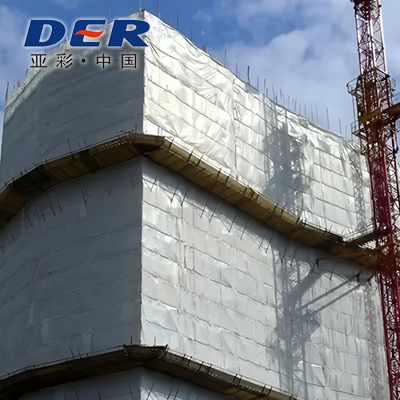
Exterior construction dust control may use solid sheeting or mesh depending on weather, dust, permeability and wind objectives. Scaffold enclosure should be reviewed as part of temporary works rather than treated as a free-standing curtain.

Solid / MeshWind ReviewReinforced Fixings

Food, Packaging & Clean-Side Separation

Where the objective is to reduce nuisance dust transfer toward cleaner work areas, smooth cleanable surfaces and controlled access are useful. Hygiene, food-contact, cleanroom or regulated claims require project-specific material review rather than assumption.

CleanableVisibilityControlled Access
Engineering & Fabrication Notes

Six Details That Matter More Than “Heavy Duty”

These decisions create information gain beyond a standard curtain sales page and give procurement teams a more buildable specification.

1. Map Airflow Before Closing the Space

A solid curtain changes pressure and airflow. Where extraction is part of the dust-control plan, define exhaust location, make-up air path and door-opening behavior before finalizing the barrier layout.

2. Put Seams Away from High-Stress Pull Zones

Large curtains may require welded panel assembly. Seam location should consider roller spacing, curtain folds, access openings and the direction in which operators pull the panel.

3. Reinforce Hardware as a Load Path

Eyelets or track points should not act as isolated holes in unsupported fabric. Webbing, folded hems and local reinforcement can spread force through the curtain structure.

4. Design a Replaceable High-Wear Zone

Forklifts, carts and tools often damage the lower curtain before the upper panel. Modular lower sections or replaceable clear/opaque panels can reduce the cost of future repairs.

5. Avoid Field-Cut Openings Where Possible

Doors, ducts, pipe penetrations and service access should be defined in the drawing. Unplanned site cuts can weaken reinforcement and create uncontrolled leakage paths.

6. Tie Safety Claims to the Exact Grade

“Flame retardant” or “anti-static” is not a complete specification. State the test method, sample construction, documentation scope and destination-market requirement so the selected material can be verified.

Important safety distinction for hazardous dust

For respirable crystalline silica and similar hazards, a curtain can help define or isolate a work zone, but exposure control may also require exhaust ventilation, wet methods, source capture, respiratory protection or a written control plan depending on the task and jurisdiction. OSHA's construction silica standard notes that indoor or enclosed tasks may require exhaust as needed to minimize visible airborne dust, and OSHA guidance recognizes temporary barriers as one possible way to restrict access around silica-generating work.

For combustible dust, do not treat a flexible curtain as explosion containment. Combustible-dust systems require dedicated hazard assessment and appropriate prevention, suppression, venting and housekeeping controls.

Reference: OSHA 1926.1153 — Respirable Crystalline Silica · OSHA Combustible Dust Guidance.

Custom Manufacturing

From Site Layout to Repeatable Curtain Supply

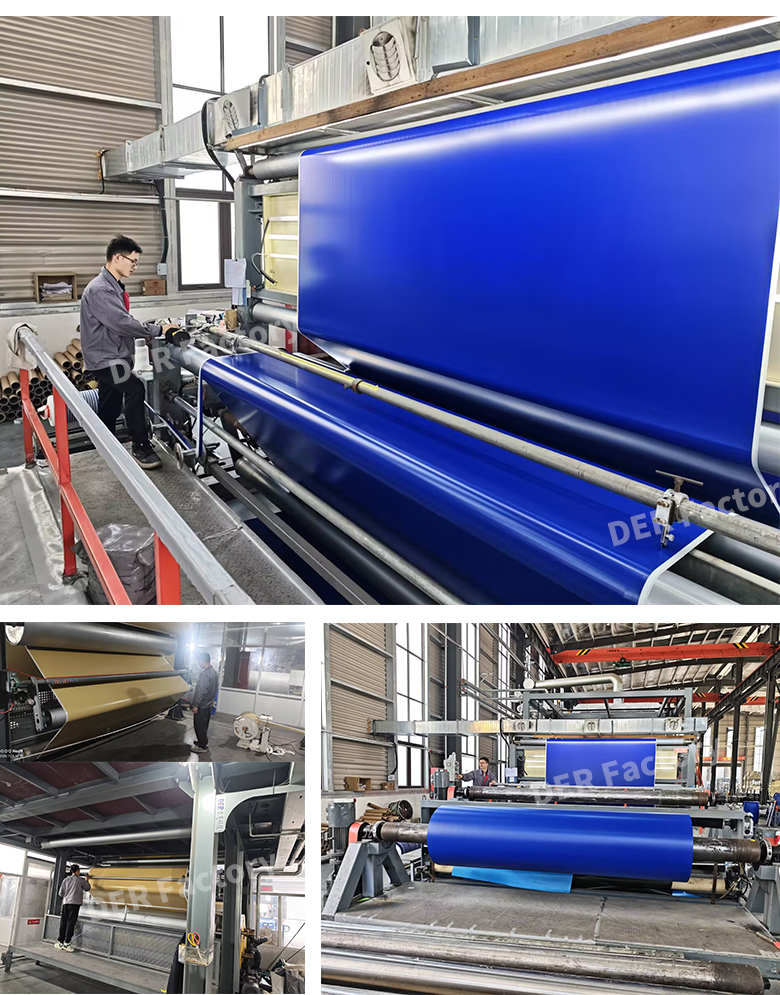
DERFLEX can discuss the project from coated-textile selection through panel geometry, clear-window integration, reinforcement, joining and packing.

1Application ReviewDust source, work zone, containment objective and required access.
2Layout FreezeDimensions, mounting level, corners, doors, ducts and floor condition.
3Material MatchOpaque body, clear PVC, temporary sheeting or special grade direction.
4Fabrication PlanSeams, reinforcement, hardware, overlaps, windows and panel identification.
5Production & PackingDimensional checks, panel labeling, packaging and repeat-order records as agreed.
DERFLEX Image Pack

Real Industrial Curtain, Barrier and Manufacturing Images

These images are hosted on DERFLEX and can support product, application and image-search relevance. The hero image loads immediately; supporting images use lazy loading.

Procurement Guide

Buyer Checklist & Common Specification Mistakes

A complete RFQ reduces assumptions and helps compare suppliers on the same technical basis.

Send These Details with Your RFQ

  • Work-zone type and dust-generating process.
  • Finished width × height or a layout drawing with panel divisions.
  • Ceiling / roof structure, wall edges, floor condition and known penetrations.
  • Fixed, sliding, retractable or modular curtain preference.
  • Opaque, clear or mixed-panel visibility requirement.
  • Pedestrian, forklift, conveyor or equipment access points.
  • Desired floor gap, sweep, chain/pipe pocket or bottom-weight direction.
  • Cleaning method, wash-down exposure and expected abrasion.
  • Indoor, semi-outdoor or exterior exposure and temperature range.
  • Exact FR / anti-static / other standard and documentation if required.
  • Quantity by size, packaging, destination and expected repeat-order program.

Five Mistakes to Avoid

  • Buying by GSM alone: heavier fabric cannot fix open edges, poor airflow control or weak hardware layout.
  • Ignoring air movement: a curtain can redirect dust if exhaust and make-up air are not considered.
  • Using one giant panel everywhere: modular panels can be easier to install, move and replace in large facilities.
  • Calling every barrier “dustproof”: the real containment level depends on joints, openings, perimeter sealing and pressure differential.
  • Assuming a generic safety claim: request the exact test evidence for the selected material rather than accepting an undefined “FR” or “anti-static” label.
Related Questions

Dust Containment Curtain FAQs

Direct answers to common questions from contractors, industrial buyers, facility managers and curtain fabricators.

Do dust containment curtains actually stop airborne dust?

They can reduce dust migration by physically separating the dust-generating zone from adjacent space, but the result depends on how tightly the enclosure is designed. Gaps at the ceiling, floor, sides, doors and panel joints can allow dust-laden air to bypass the curtain. For fine or hazardous dust, the barrier may need to work with source capture, exhaust or pressure control rather than acting alone.

What material is best for an industrial dust control curtain?

For repeated industrial use, reinforced PVC-coated polyester is a common direction because the woven base carries tensile and tear loads while the PVC surface is cleanable and compatible with welded fabrication. Clear flexible PVC can be added as a viewing section. The final grade should be selected around panel size, movement, cleaning, temperature, abrasion and any required safety documentation.

What is the difference between a dust curtain and a temporary plastic wall?

A temporary plastic wall is generally optimized for short-duration segregation and easy installation. An industrial dust curtain is more often designed for repeated use, movement, track suspension, cleaning and custom reinforcement. The right choice depends on project duration, reuse, traffic, abrasion and how tightly the area must be enclosed.

Can dust containment curtains be clear?

Yes. A curtain can use a clear PVC viewing window, a larger transparent section or a mostly clear construction. Many industrial buyers use mixed opaque-and-clear panels so the lower and perimeter zones can be reinforced while operators retain visibility into the enclosed area.

Should a dust curtain touch the floor?

Not always. Sliding curtains often need controlled clearance, while tighter c, ontainment may benefit from a floor sweep or weighted bottom detail. The correct bottom design depends on floor condition, curtain movement, trip risk, forklift traffic, cleaning and the required level of separation.

Can a dust curtain be used for construction silica control?

A temporary barrier can help restrict access and isolate the work zone, but it should not be assumed to be the complete silica-control solution. Depending on the task and jurisdiction, wet methods, exhaust, source capture, respiratory protection and a written exposure-control plan may also be required. The project safety team should define the complete control method.

Are dust curtains suitable for combustible dust?

A flexible curtain may be used for ordinary physical segregation only when the overall hazard assessment permits it, but it must not be represented as explosion containment. Combustible dust requires specialist hazard analysis and appropriate collection, housekeeping, ignition control, venting, suppression or other engineered safeguards.

What information does DERFLEX need to quote custom dust containment curtains?

Send the work-zone purpose, dust source, finished dimensions or drawing, ceiling and floor condition, fixed/sliding layout, clear-window requirement, access openings, reinforcement and hardware direction, required test method, quantity, packing and destination. Photos of the installation area are especially useful for custom projects.

Specify the Barrier Around the Dust Source, Airflow and Work Zone

Send DERFLEX a layout, dimensions and application details. The team can review a practical material and fabrication direction for sampling, project supply or repeat B2B curtain programs.

Dust sourceWidth × heightFixed / slidingClear / opaqueAccess openingsBottom sealingRequired test methodQuantity & destination
Copyright © 2015 DERFLEX ( PVC tarpaulin manufacturer )All Rights Reserved.