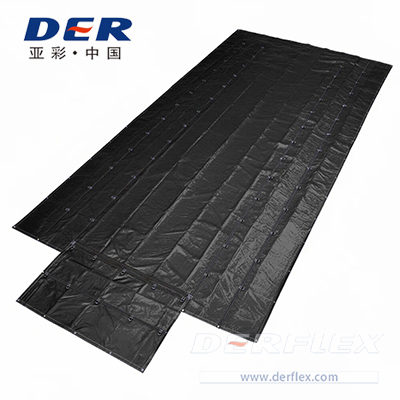
DERFLEX supplies custom scaffolding tarps and weatherproof construction enclosure tarps for scaffold wrapping, facade work, dust control and temporary weather protection. Compare PVC, PE and mesh options, reinforcement, fixing layouts and project requirements.
Construction Enclosure · Project-Specified Tarp Supply
Scaffolding Tarps for Weatherproof Construction Enclosures
DERFLEX supplies scaffolding tarps, scaffold sheeting and custom construction enclosure panels for facade work, renovation, dust control, rain shielding, temporary work zones and project-based weather protection. Choose the material, panel geometry, reinforcement and fixing layout around the actual scaffold and site conditions—not around a generic tarp size.
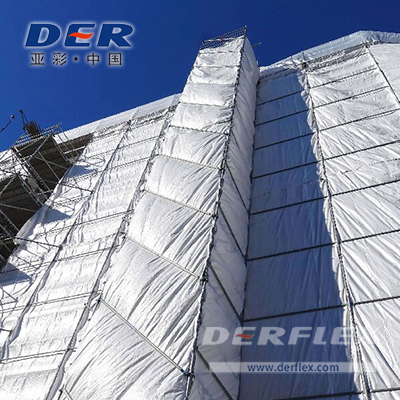
Scaffold & Facade Weather EnclosureSolid sheeting can reduce direct rain, wind and dust exposure around exterior work areas when the scaffold and attachment system are designed for the added loads.
Quick Answer
What Are Scaffolding Tarps?
Scaffolding tarps are reinforced sheet materials installed around scaffolding to create a temporary construction enclosure. They are used to reduce rain and wind exposure, contain dust and light debris, screen facade work, support temporary heating or climate control strategies, and protect renovation or maintenance zones from changing weather.
Solid PVC scaffold sheeting is usually selected when waterproofing, repeated use and welded fabrication matter. Reinforced PE sheeting is lighter and more economical for temporary enclosure. Scaffold mesh is preferred where airflow and reduced wind pressure are more important than full rain exclusion.
Match the material to exposure duration and enclosure objective.
Design reinforcement around actual fixing points, not only sheet edges.
Confirm wind, fire and scaffold-system requirements before production.
Buyer Decision Variables
Specify the Enclosure as a Temporary Building System
The tarp, seams, reinforced bands, eyelets, ties and scaffold structure work together. The best specification depends on how the enclosure will be installed, loaded and used.
01
Weather Objective
Define whether the priority is rain exclusion, wind reduction, dust containment, privacy, overspray control, temporary heating efficiency or a combination of these.
02
Exposure Duration
Short-term renovation, seasonal winter work and repeat-use project fleets place very different demands on UV stability, coating durability, flexibility and repairability.
03
Wind & Permeability
Solid sheets maximize enclosure but can increase wind loading. Mesh allows pressure relief and airflow but is not a full waterproof weather barrier.
04
Fixing Layout
Confirm scaffold bay spacing, attachment lines, tie method, access openings and edge transitions before defining eyelet or reinforced-band spacing.
05
Fire Requirement
Do not order a generic “FR tarp” without stating the project-required test method, documentation and destination-market acceptance criteria.
06
Supply Format
Choose roll goods for local conversion, modular sheets for repeated scaffold bays, or large fabricated panels when fewer joints and planned installation geometry are preferred.
Selection Matrix
Which Scaffolding Tarp Material Fits the Job?
Start with the enclosure function. Material weight matters, but it should not be the first decision.
Material Direction
Best Fit
Weather / Airflow
Fabrication Direction
Buyer Note
PVC Coated Polyester
Repeated-use or demanding weather enclosure
Strong rain barrier; low permeability when solid
Welded panels, hems, webbing, grommets, pockets and reinforced fixing zones
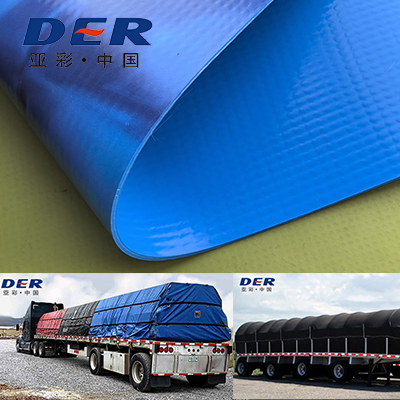
Useful where waterproofing, cleanability, repairability and custom panel fabrication matter. See DERFLEX PVC tarpaulin material options.
Reinforced PE Sheeting
Temporary enclosure and cost-sensitive work
Good rain screening; lower mass and easier handling
Reinforced strips/bands, preset fixing zones or project-defined edge reinforcement
Common for short-duration scaffold wrapping, restoration and temporary weather protection.
PVC / PE Mesh
Dust control, perimeter screening and wind-sensitive areas
Higher airflow; not a full waterproof barrier
Reinforced perimeter, eyelets, webbing or modular panels
Useful where pressure relief is more important than complete enclosure.
Insulated / Multi-Layer Cover
Cold-weather enclosure and temporary heating zones
Designed to reduce heat loss; final weather performance depends on skin and joints
Multi-layer panels, reinforced edges, controlled joining and access details
Consider for winter construction where thermal control is part of the enclosure plan.
Mixed Solid + Mesh Enclosure
Projects balancing weather protection with pressure relief
Variable by zone
Project-specific panel zoning and transitions
Can be useful on complex elevations where not every face needs the same level of enclosure.
Material selection should be confirmed against scaffold design, local wind conditions, installation method, required fire documentation and the actual work process.
Project Specification
Custom Scaffolding Tarp Specification Framework
DERFLEX can review roll goods, modular sheets and fabricated enclosure panels around a defined project requirement. Unverified dimensions or performance values should be confirmed during quotation and sample review.
MaterialPVC coated polyester, reinforced PE sheeting, mesh or project-defined enclosure material.
Weight / ThicknessSelected around handling, durability, exposure duration and enclosure type; confirm target with DERFLEX.
Finished SizeRoll width/length, modular bay sheets or custom fabricated panels according to scaffold geometry.
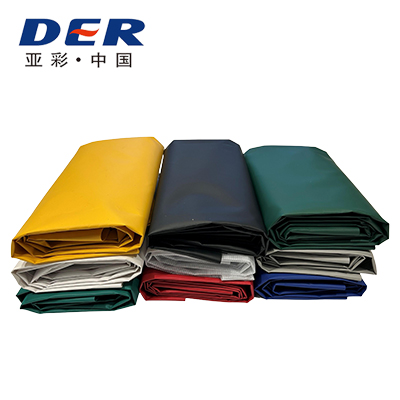
Color / LightWhite, clear/translucent direction, darker screening colors or custom project color subject to material availability.
Fixing HardwareGrommets, straps, loops, pockets or compatible fastening details selected around the installation method.
SeamsWelded or sewn construction depending on material, waterproofing objective and panel layout.
Performance OptionsUV, cold-flexibility, anti-mildew, cleanability and flame-retardant direction according to project needs.
Printing / IdentificationLogos, project identification, warning graphics, panel codes or private-label requirements can be discussed.
PackagingRoll packing, folded panel packs, labels, cartons, pallets or export-oriented packaging as required.
Engineering & Fabrication Notes
Details That Decide Whether the Enclosure Works on Site
Most scaffold tarp failures start at interfaces: fixings, corners, seams, openings, sharp contact points and uncontrolled wind movement.
1. Fixing Zones Need a Load Path
Do not rely on isolated eyelets in unsupported fabric. Reinforced bands, webbing or engineered edge structures can distribute pulling loads more effectively across the panel.
2. Panel Size Changes Installation Behavior
Very large sheets reduce joints but can be harder to handle and can present a larger wind-catching surface during installation. Modular bay-sized panels can simplify replacement and phased work.
3. Waterproofing Depends on Joints
A waterproof fabric alone does not guarantee a waterproof enclosure. Seam type, overlap direction, vertical joints, roof-to-wall transitions and drainage paths determine how water moves through the system.
4. Corners & Sharp Scaffold Contact Need Protection
Repeated rubbing against tubes, couplers, concrete edges or projecting steel can damage coatings. Use local reinforcement, padding or geometry changes where contact is unavoidable.
5. Access Openings Must Be Planned
Doors, material-loading points, zipper openings, clear windows and service penetrations should be defined before fabrication so field cutting does not weaken the enclosure unexpectedly.
6. Temporary Heating Changes the Requirement
Heated enclosures need controlled air movement, compatible materials and a fire-safety plan. The tarp specification should be coordinated with the temporary heating method and site safety requirements.
Application Decision Table
Match the Scaffolding Tarp to the Work Zone
Different faces and phases of the same project may require different enclosure strategies.
Heat retention, cold flexibility, sealed joints and planned ventilation
Temporary-heating and fire-safety requirements
Dust / Overspray Containment
Solid sheeting or controlled-permeability material
Containment, cleanability, joint continuity
Air handling and environmental-control plan
Wind-Sensitive Elevation
Mesh or mixed solid/mesh zones
Pressure relief, secure reinforcement and controlled coverage
Engineer/site approval for the selected permeability
Industrial Maintenance
PVC coated panel system
Repeated handling, abrasion, access doors and repairability
Hot-work / fire requirements where applicable
Short-Term Weather Screen
Reinforced PE sheeting
Fast handling, economical coverage and practical fixing layout
Expected wind exposure and project duration
DERFLEX Image Pack
Real Scaffold Enclosure & Manufacturing Images
The page uses existing DERFLEX website images with descriptive alt text and context. The hero image is loaded immediately; supporting images use lazy loading.
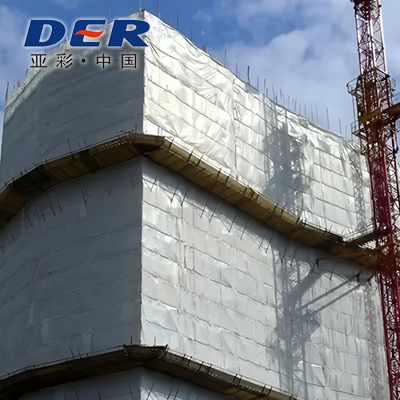
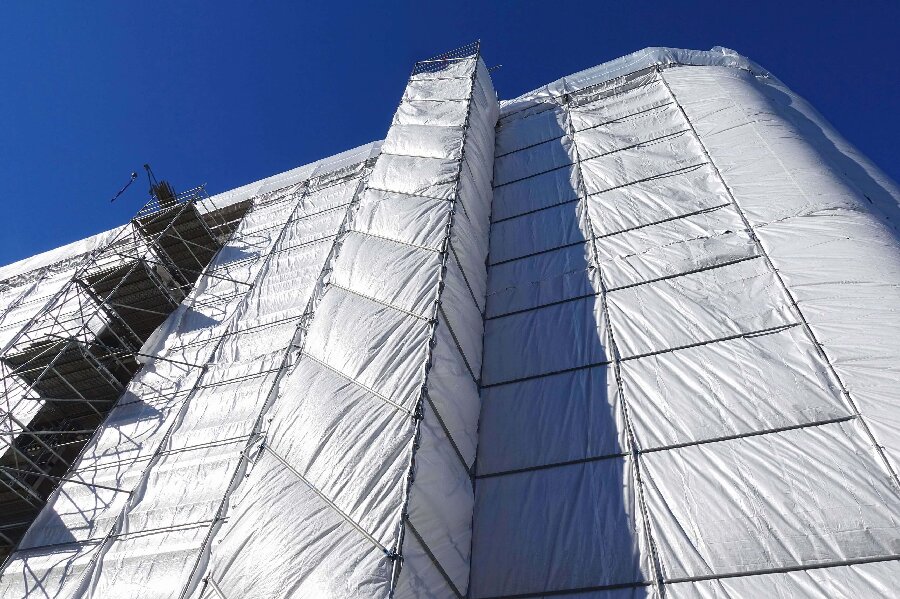
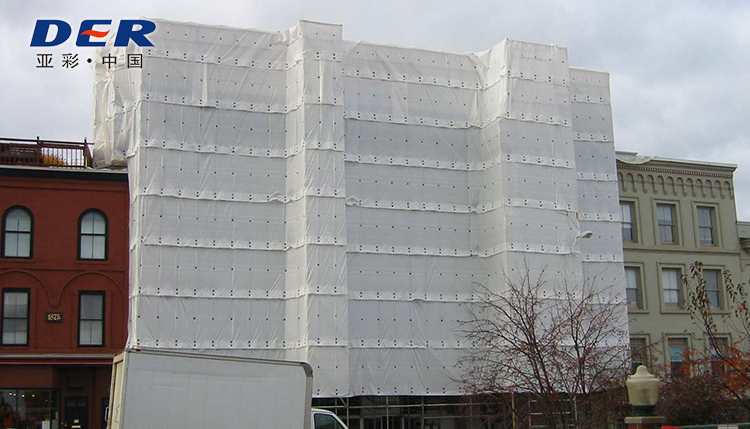
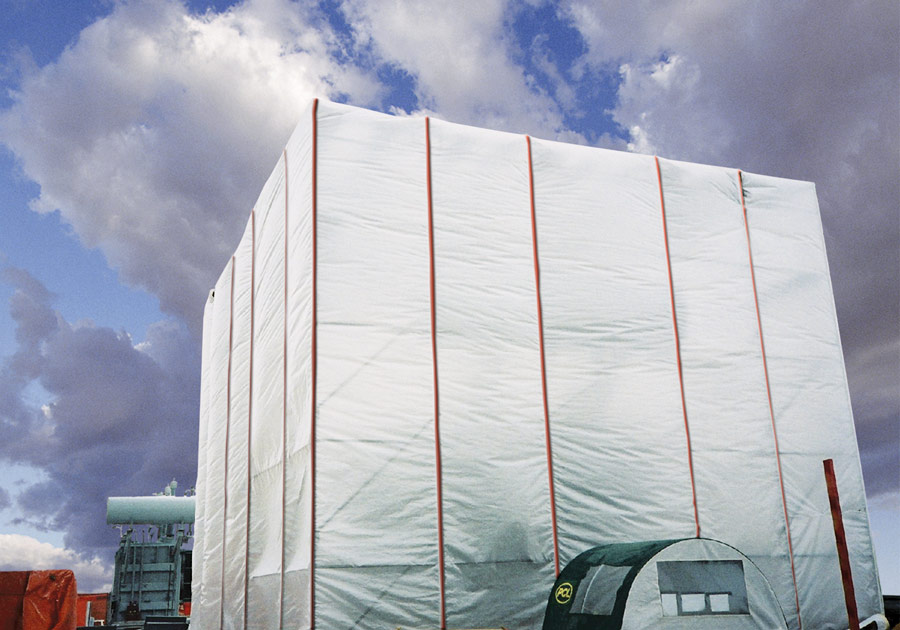
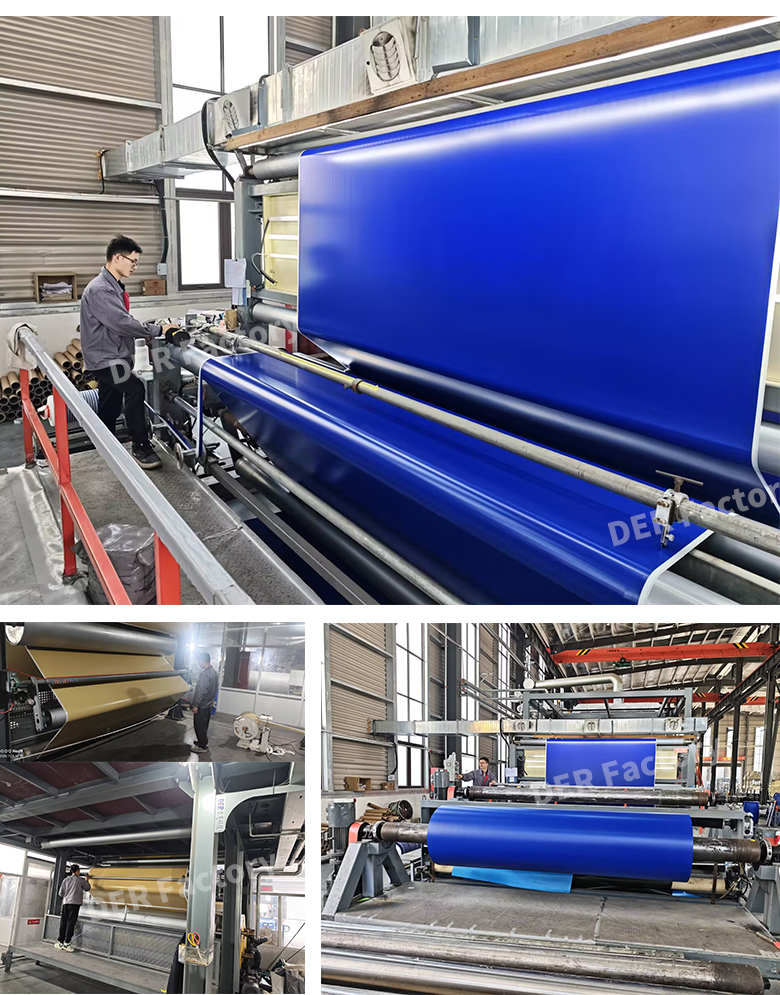
Full-Building Scaffold WrapWeather enclosure around a large facade with multiple scaffold levels and panel joints.Reinforced Scaffold SheetingRepeated fixing zones help distribute attachment points across a modular facade enclosure.Temporary Building EnclosureLarge-panel temporary enclosure for weather protection and controlled work areas.Weather Protection Scaffold TarpScaffold wrapping for exterior construction and renovation exposure control.PVC Coated Fabric ProductionManufacturing image supporting material and coating credibility for project tarp supply.
Project Workflow
From Scaffold Layout to a Buildable Tarp Specification
A better quote starts with the enclosure geometry and site conditions, not only a request for “heavy duty tarp”.
Define the Work Zone
Send scaffold elevation, bay sizes, overall coverage area, corners, roof interfaces, access points and photos/drawings.
Define Exposure
State rain, wind, dust, seasonal duration, temperature, temporary heating and expected reuse/handling cycle.
Freeze Material & Fixing
Select solid, mesh or mixed enclosure; then confirm weight direction, reinforcement, seam plan, eyelets/loops and opening details.
Approve Sample & Packing
Confirm appearance, fabrication quality, labels, fold/roll packing and any project-required testing before bulk production.
Common Procurement Mistakes
Four Mistakes That Cause Enclosure Problems
These issues are more important than simply ordering a thicker tarp.
Choosing Solid Sheeting Without Reviewing Wind
Solid enclosure can increase wind pressure on the scaffold. Confirm the structure, tie pattern, exposure and permitted enclosure area before installation.
Specifying Eyelet Spacing Before Scaffold Geometry
Generic fixing spacing may not match bay dimensions, braces, platforms or access areas. Map the fixing lines from the actual scaffold first.
Using “Flame Retardant” as the Entire Fire Specification
Fire requirements are test- and market-specific. State the required standard, test report expectations, specimen construction and acceptance criteria.
Assuming Waterproof Fabric Means Waterproof Enclosure
Leaks commonly occur at seams, overlaps, openings and roof-to-wall transitions. Plan water shedding, drainage and joint orientation with the panel layout.
Related DERFLEX Resources
Continue the Construction Tarp Topic Cluster
These verified DERFLEX pages help buyers compare materials, broader construction tarp use and application selection.
Frequently Asked Questions About Scaffolding Tarps
Direct answers to common contractor, distributor and procurement questions.
What are scaffolding tarps used for?
Scaffolding tarps are used to form temporary construction enclosures around scaffolded buildings or work zones. Typical purposes include rain and wind shielding, dust and overspray containment, facade screening, renovation protection, temporary heating support and controlled access around maintenance work.
What is the difference between scaffold sheeting and scaffold mesh?
Solid scaffold sheeting provides stronger weather exclusion and containment but allows less airflow and can increase wind loading. Scaffold mesh allows more airflow and pressure relief, making it useful for screening and debris/dust control when full waterproof enclosure is not required.
Is PVC scaffolding tarp waterproof?
PVC coated polyester can provide a strong waterproof material barrier, especially when panels use appropriate welded seams. The finished enclosure still depends on joint layout, overlaps, openings, drainage, attachment details and installation quality.
How do I choose the right weight or thickness for scaffold sheeting?
Choose weight or thickness after defining exposure duration, wind conditions, handling frequency, fixing layout, required permeability, reuse expectations and whether the project needs PE sheeting, solid PVC or mesh. A heavier material is not automatically the better enclosure.
Does scaffold sheeting increase wind load on scaffolding?
Solid sheeting can significantly change wind loading because it reduces the openness of the scaffold face. The scaffold designer, scaffold supplier and site team should confirm the enclosure area, ties, anchorage and attachment method for local conditions before installation.
Can scaffolding tarps be flame retardant?
Flame-retardant material directions can be discussed, but buyers should specify the exact project-required test method, documentation and acceptance standard before production. A generic “FR” description is not enough for regulated projects.
Can DERFLEX customize eyelet spacing and reinforced bands?
DERFLEX can discuss custom panels, reinforced hems or bands, webbing, eyelets, loops, pockets, printing and other fabrication details according to the scaffold layout and fixing method. Final feasibility should be confirmed during technical review.
What information should I send for a scaffolding tarp quotation?
Send the scaffold/application type, finished dimensions or elevation drawing, panel/roll preference, material direction, target weight or thickness if known, solid/mesh requirement, reinforcement and fixing layout, color, fire requirement, quantity, packing method and destination. Photos and installation drawings are especially useful.
Build the Scaffolding Tarp Around the Scaffold and Site Conditions
Send DERFLEX the scaffold elevation or finished coverage dimensions, enclosure objective, solid/mesh direction, material preference, reinforcement and fixing layout, fire requirement, quantity and destination. The team can review a practical material and fabrication direction for sampling or B2B production.
Technical note: Scaffold enclosure materials and attachments should be reviewed as part of the temporary works/scaffold design. DERFLEX material guidance does not replace structural engineering, scaffold manufacturer instructions or local construction safety requirements.