Containment Objective
Define whether the system is intended for dust, light debris, overspray, privacy, weather screening, temporary heating support or a combination.




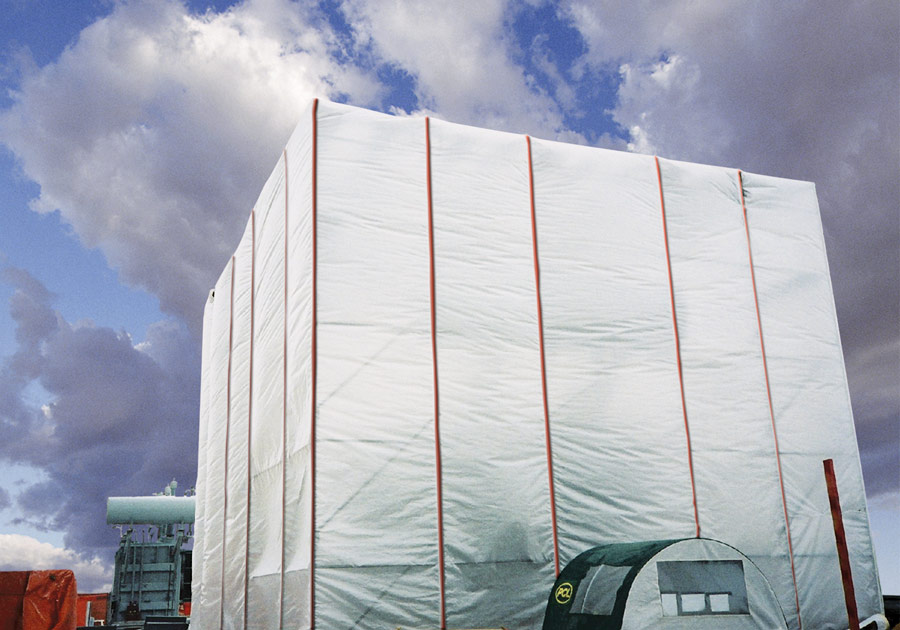
DERFLEX supplies debris containment tarps and construction safety covers for scaffold screening, facade renovation, demolition zones, dust and overspray control, temporary partitions and project enclosure. Choose breathable mesh when airflow and lower wind pressure matter, reinforced PE for temporary containment, or PVC-coated polyester when stronger weather resistance, cleanability and custom welded fabrication are priorities.
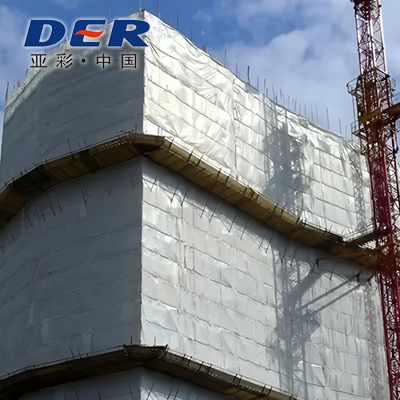
A debris containment tarp is a reinforced mesh or solid flexible sheet used around construction work zones to help limit the spread of dust, overspray, loose particles and light debris. It may be attached to scaffolding, temporary frames, perimeter systems or work-area partitions. Mesh is useful when airflow is needed; solid PVC or reinforced PE is used when stronger enclosure and weather shielding are required.
A containment tarp is not automatically a personnel fall-arrest system, guardrail system, or engineered heavy-debris catch net. Where the project involves worker fall protection or the arrest of substantial falling objects, the site team should use an appropriately engineered and approved system for the applicable jurisdiction and project specification.
Construction debris tarps are not one universal product. The specification should reflect particle size, dust/overspray behavior, permeability, wind exposure, installation geometry, handling cycle and project-required documentation.
Define whether the system is intended for dust, light debris, overspray, privacy, weather screening, temporary heating support or a combination.
Solid tarps provide stronger enclosure but reduce permeability. Mesh allows airflow and can reduce the sail effect on exposed scaffold or perimeter faces.
Hems, webbing, reinforced bands, grommets, loops and panel seams should transfer installation loads without concentrating stress into isolated fabric points.
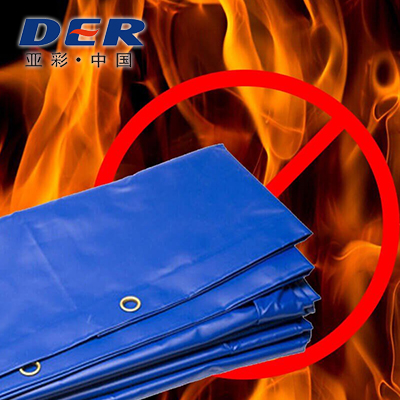
Confirm fire-performance documentation, temporary-works requirements, access openings, structural limits and the site’s approved installation method before production.
Choose the material direction by containment level, permeability and expected handling—not by a generic “heavy duty” label.
| Material Direction | Best Fit | Containment / Airflow | Fabrication Direction | Buyer Note |
|---|---|---|---|---|
| PVC-Coated Mesh | Scaffold screening, fence/perimeter covers, light debris and dust control | Breathable; useful where pressure relief matters | Reinforced hems, webbing, grommets, stitched or project-defined panel construction | Useful for exposed elevations where a fully closed surface may create excessive wind pressure. |
| Reinforced PE Sheeting | Short-term renovation, temporary dust/weather enclosure, budget-sensitive projects | More closed than mesh; lighter handling than many heavy PVC covers | Reinforced bands, hems, preset fixing zones or project-defined edge reinforcement | Common where temporary containment and quick handling matter more than repeat-use durability. |
| Solid PVC-Coated Polyester | Reusable enclosure, overspray separation, weather control, demanding project covers | Low permeability; stronger rain/dust barrier | Welded panels, hems, webbing, pockets, grommets, access details and reinforced zones | Useful when waterproofing, cleanability, welding and repairable fabrication are priorities. |
| Mixed Solid + Mesh Layout | Large or complex elevations balancing containment with wind relief | Variable by zone | Project-specific zoning, transitions, reinforced interfaces and access openings | Can separate high-containment areas from pressure-relief areas instead of forcing one material across the entire elevation. |
Higher weight does not automatically make a construction safety cover more suitable. Panel area, permeability, seam layout, attachment geometry, wind exposure and handling can matter as much as material mass.
Different work zones need different enclosure behavior. The table below keeps the page focused on containment rather than overlapping with general weather-tarp or waste-hauling intent.
| Application | Recommended Direction | Primary Selection Focus | Important Check |
|---|---|---|---|
| Facade Renovation & Restoration | Mesh, reinforced PE or solid PVC depending on weather and dust requirements | Fixing lines, access points, abrasion at scaffold tubes, visibility and permeability | Scaffold loading and attachment plan |
| Demolition & Selective Removal | Controlled-permeability mesh or solid containment sheet | Dust migration, light fragment containment, tear resistance and replaceable sections | Debris size/energy and whether engineered catch systems are separately required |
| Painting / Plaster / Stucco / Overspray | Solid or lower-permeability enclosure depending on ventilation plan | Overspray containment, cleanability, seam continuity and work-area airflow | Ventilation and fire/hot-work requirements |
| Perimeter Fence & Visual Screening | PVC mesh | Airflow, privacy, UV exposure, hem strength and attachment frequency | Wind load on fence or support structure |
| Industrial Maintenance Enclosure | Reusable PVC coated panel system | Abrasion, access doors, welding/repairability and repeat handling | Site-specific safety documentation and hot-work controls |
| Short-Term Dust Barrier / Work-Zone Partition | Reinforced PE or light project-defined containment sheet | Fast deployment, practical sealing, labels, clean separation and disposal/reuse plan | Interior ventilation and egress/access planning |
Where DERFLEX has not published a universal numeric value, the final requirement should be confirmed from the actual project rather than invented as a catalog standard.
| Material | PVC-coated polyester mesh, reinforced PE sheeting, solid PVC-coated polyester or another project-defined flexible containment material. |
|---|---|
| Weight / Thickness | Selected according to containment objective, handling frequency, wind/permeability needs, expected reuse and structural limitations. Confirm target with DERFLEX. |
| Finished Size | Roll goods, modular bay-size sheets, cut panels or large fabricated assemblies according to scaffold/perimeter geometry. |
| Color / Visibility | White, black, green, blue or project-defined color subject to material availability; printed identification or warning graphics can be discussed. |
| Reinforcement | Folded hems, webbing, reinforced bands, corner patches, rope edges, wear patches or localized fixing zones according to the installation method. |
| Fixing Details | Grommets, loops, straps, pockets or compatible fastening details developed around the approved support system. |
| Seams | Welded or sewn construction depending on the material, permeability target, waterproofing objective and panel layout. |
| Performance Options | UV, cold-flexibility, cleanability, anti-mildew or project-specific flame-retardant direction can be discussed; required test method/documentation should be stated before quotation. |
| Supply Format | Roll goods, fabricated tarps/panels, private-label packing, folded packs, labels, cartons or palletized export packaging depending on the program. |
The base fabric matters, but many field problems begin at fixings, corners, seams, panel transitions, access openings and sharp contact points.
Do not rely on isolated grommets in unsupported fabric. Reinforced bands, webbing or engineered edge structures can distribute pulling loads across a broader area.
Large sheets reduce seams but become harder to handle and can catch more wind. Modular panels can simplify installation, replacement and phased work.
Repeated contact with tubes, couplers, concrete edges or projecting steel can damage coatings and mesh. Add local reinforcement or change geometry where rubbing is expected.
Doors, zipper openings, material-loading points, windows and service penetrations should be defined before fabrication so field cutting does not weaken the containment boundary.
A more closed cover may improve dust or weather control while increasing wind pressure. Mesh may lower pressure but will not provide full rain or fine-particle isolation.
Do not order by the word “FR” alone. State the required test method, destination market, document format and acceptance criteria before sample or bulk production.
DERFLEX can discuss finished containment panels or material supply around the application rather than forcing every buyer into the same retail tarp format.
Finished dimensions, modular scaffold-bay panels, roll width/length, overlaps, transitions and openings can be developed from drawings or site measurements.
Hems, webbing, reinforced strips, grommet rows, loops, pockets, straps and local wear patches can be positioned around the attachment method.
Panel codes, project marks, orientation labels, warning graphics, distributor branding and private-label packaging can be discussed for repeat programs.
Different elevations or work zones can use different permeability directions when the project needs both stronger containment and selected wind relief.
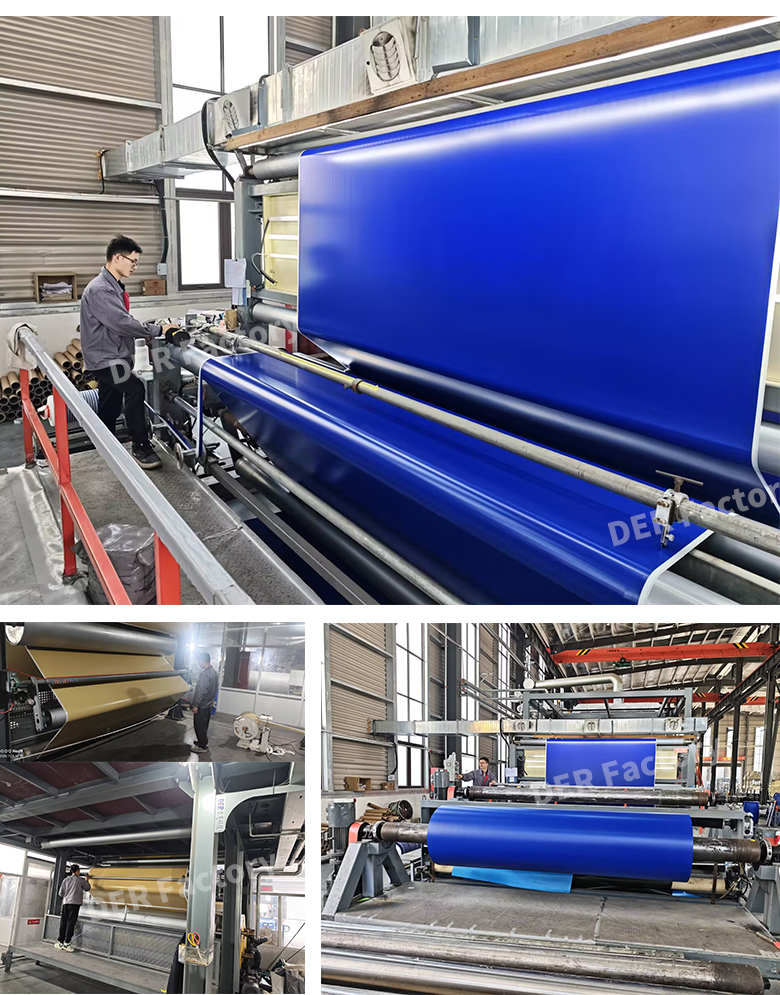
Fabrication method should follow the chosen material and containment objective. Solid PVC panels may use welding; mesh and PE structures may use sewing or other project-defined finishing.
Buyers can review material direction, dimensions, finishing, color, labels and packing before a repeat B2B production program is finalized.
Existing DERFLEX website images are used with descriptive alt text and supporting context. The hero image loads immediately; below-fold images use lazy loading.
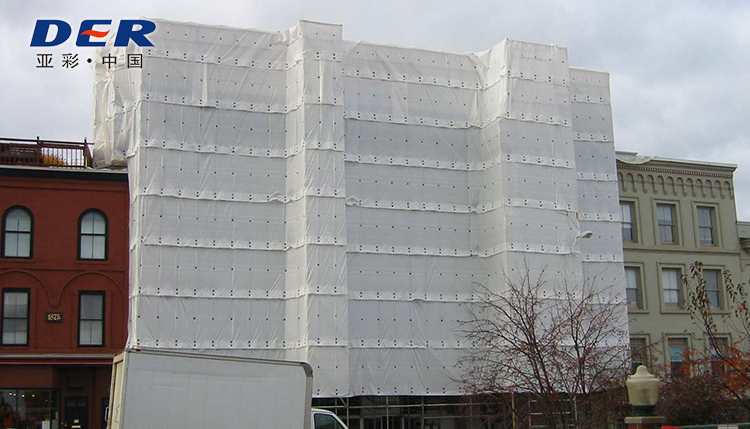
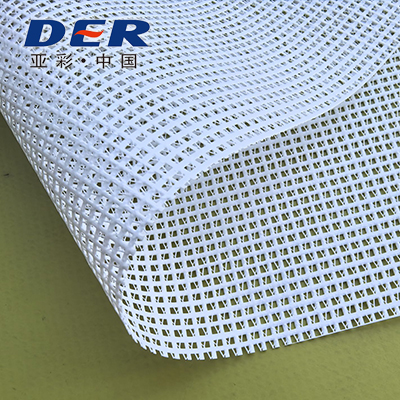
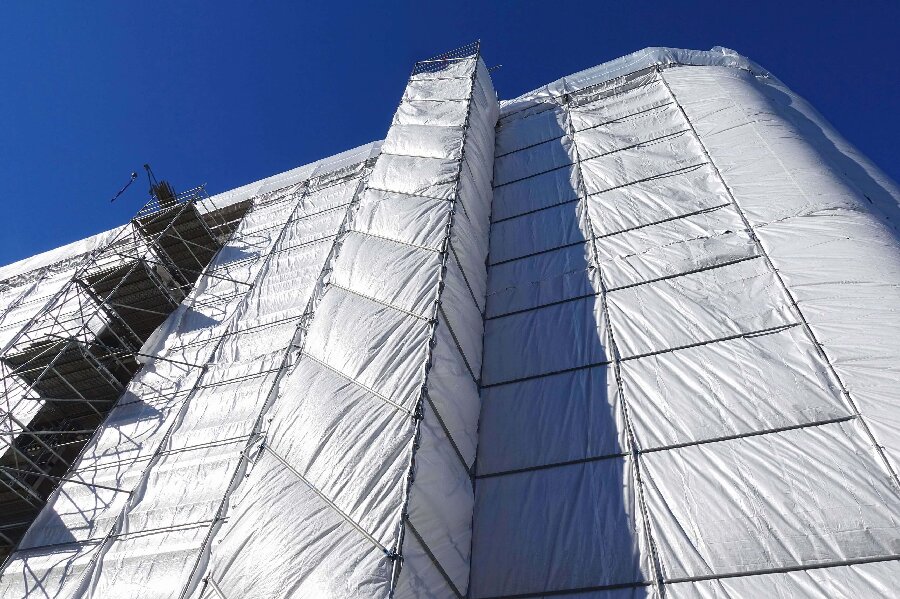
A useful quotation starts with containment conditions and installation geometry. This reduces back-and-forth and helps avoid the wrong material direction.
Most preventable failures begin before installation—during material choice, drawing review or specification.
Mesh, PE and solid PVC solve different problems. Define the containment level and permeability requirement first.
Closing a large scaffold or perimeter face can materially change wind loading. The support system and enclosure area should be reviewed by the responsible site/temporary-works team.
Generic spacing may not align with scaffold bays, posts, braces or openings. Fixing lines should follow the actual structure.
Fire-performance requirements depend on the test method and project. State the required documentation instead of accepting a generic FR label.
Dust/light-debris containment covers do not automatically perform the function of personnel safety nets or engineered heavy-debris arrest systems.
Oversized one-piece sheets can be difficult to install, inspect and replace. Modular zones may simplify maintenance and phased construction.
For contractors, distributors, scaffold suppliers and OEM buyers, the useful advantage is the ability to coordinate material, reinforcement, finishing and repeat-order specification instead of selecting only from generic retail sizes.
DERFLEX already supplies PVC-coated tarpaulins, mesh tarps and construction enclosure products, allowing the material direction to be matched to the balance of containment, airflow and weather protection.
Panel size, reinforcement, hems, webbing, eyelets/grommets, seams, access details, printing, identification and packaging can be reviewed around a defined project.
Buyers can compare scaffold enclosure, mesh and broader construction tarp routes before freezing the product specification, reducing the chance of purchasing the wrong cover type.
These six verified DERFLEX pages cover the adjacent material, enclosure and buying decisions without turning this page into a duplicate of the existing construction-tarp content.