 News
News

Salvage Covers | Custom Vinyl Tarp Covers | DERFLEX
Property protection / Custom cover programs
Salvage Tarp Covers for Fire Services and Facility Protection
Specify salvage covers around the property being protected, the way the sheet is handled and the evidence your purchasing team needs.
DERFLEX supports custom PVC tarpaulin cover development for fire-equipment distributors, OEM brands and facility buyers. Bring your finished dimensions, material requirements and reinforcement details for review. Plan water-shedding seams, manageable folded packs and clear identification before approving bulk production.
Custom sizes · Material review · Finished-cover samples · OEM requirements
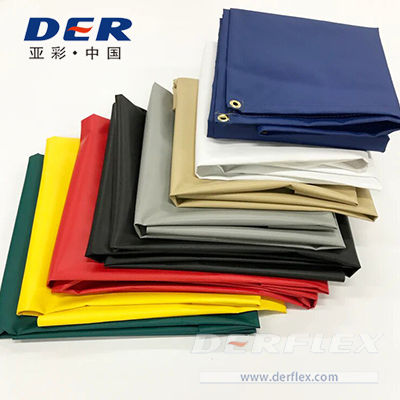
The product, explained
What is a salvage cover?
A salvage cover is a reusable protective sheet used to help shield furniture, equipment, stock and other property from water and loose debris. Fire-service salvage covers are commonly made from coated vinyl fabric or treated canvas; facility teams also use protective sheets during maintenance and temporary leak response.
Select the fabric together with its finished size, seam construction, edge reinforcement and folding method. A material swatch alone cannot show how the complete cover drains, packs or handles.
Match the cover to the protection task.
A fire-department salvage kit and a maintenance-room cover can need different constructions. Start with how the cover will be used and recovered.
| Protection task | Specification priorities | Approve on the sample |
|---|---|---|
| Fire-service property shielding | Documented material requirements, flexible handling, closed seams and size identification. | Deployed coverage, dry finished mass, folded dimensions and label readability. |
| Facility leak-response kits | Cover shape, drape allowance, water-shedding arrangement and clearly defined reuse conditions. | Coverage over the actual object and runoff direction. Keep water away from electrical hazards. |
| Planned equipment maintenance | Surface compatibility, clean inner face and reinforced contact zones where needed. | Contact-marking trial on an inconspicuous surface; prevent rubbing against sharp edges. |
| Distributor & OEM cover ranges | Consistent finished-size schedule, agreed material grade, labels, artwork and packing. | One approved reference for each construction; confirm repeat-order identification. |
For the underlying material platform, review DERFLEX PVC tarpaulin options. Salvage-cover approval still depends on the proposed finished construction.
Specify the finished sheet.
Then check its handling weight.
Use this as an RFQ schedule, rather than assuming every vinyl salvage cover has the same duty rating.
| Item | What the buyer should specify | Why it matters |
|---|---|---|
| Material construction | PVC coated polyester; proposed base fabric, coating and finish. | GSM alone does not establish tear resistance, flexibility or coating adhesion. |
| Weight & thickness | Required areal mass in g/m² and thickness where relevant; agreed tolerances. | Keep fabric weight separate from finished cover weight. Confirm whether oz means oz/yd². |
| Finished dimensions | Length × width after fabrication, units, tolerances and intended drape or overlap. | A cut-size panel may become smaller after hems and seams are formed. |
| Seams & edges | Panel layout, weld method, hem construction, corner reinforcement and eyelet map. | Joints and hardware penetrations affect water protection and folding bulk. |
| Fire-performance requirement | Required standard, edition, test method, conditioning and report scope. | Confirm documentation for the selected grade, color and construction. No blanket certification is implied. |
| Operating & cleaning conditions | Storage temperature, folding temperature, sunlight exposure and intended cleaning agents. | Request grade-specific suitability; chemical resistance and cold flexibility need confirmation. |
| Identification & packing | Size label, artwork, fold pattern, pack dimensions, quantity per carton and destination. | Support kit storage, stock control and repeat purchasing. |
For flame-retardant material selection, see the PVC tarpaulin material range with FR options. Request the supporting documents for your proposed specification.
Handling planning / Interactive estimate
How much fabric will this size contain?
Enter finished dimensions in metres and fabric mass in g/m². The estimate compares base sheet mass before fabrication allowances, reinforcement, fittings or retained water.
Confirm actual finished cover mass.
Planning formula: length (m) × width (m) × GSM ÷ 1,000 = base sheet mass (kg). Example only: 3.6 × 5.4 m at 610 g/m² ≈ 11.86 kg before added construction. This is not a product specification, handling limit or load rating.
Look at fabric, coating and fabrication together.
The polyester base contributes reinforcement; the PVC coating forms the closed surface. Review the proposed combination for tear strength, coating adhesion, repeated folding and cleaning.
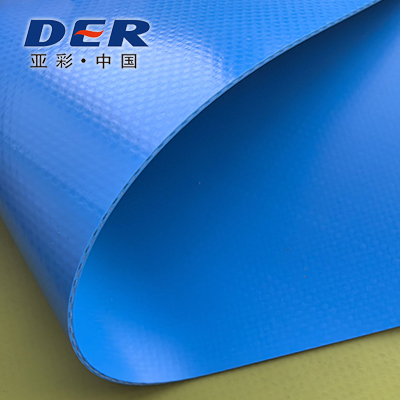
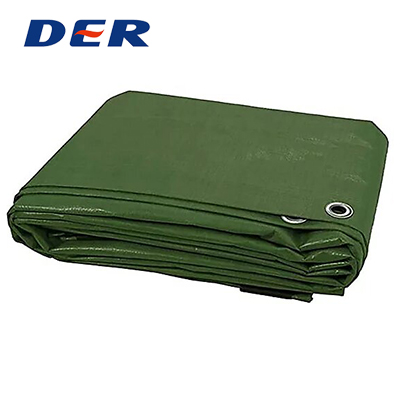
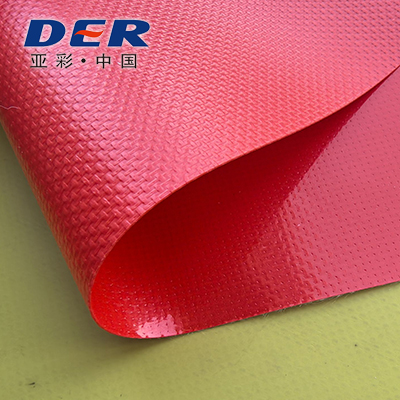
All photographs are existing DERFLEX material or tarp references, not photographs of an approved salvage-cover project. Explore PVC coated polyester construction when preparing the material brief.
Details that belong on the drawing.
A useful salvage-cover drawing records more than length and width. Resolve these points before the first finished sample is made.
- Size for the drape, not just the footprint.Add the required drop on both sides and allowance for projections. Specify finished dimensions and tolerances; do not use the object’s top dimensions as the cover size.
- Place seams with water paths in mind.Agree a panel layout and welding process compatible with the grade. Where sewing is used, specify whether and how needle holes are sealed. Check the complete joint under an agreed water test.
- Keep hardware out of sensitive contact zones.Map eyelets, corner patches and reinforcement. Metal fittings can mark surfaces, while unnecessary hardware increases folded bulk. Eyelets do not make a cover suitable for lifting.
- Make folding part of sample approval.Specify the fold pattern and target storage envelope. Check pack dimensions, finished mass and label visibility using the actual sample, including any wet-use recovery requirements.
See finished-dimension planning for made-to-measure tarpaulins when preparing your size schedule.
Measure the finished sample flat, using the agreed method and tolerance.
Check coating, joints and penetrations under an agreed test condition.
Weigh, fold and trial the pack in its intended storage space.
Match material identity, labels, report scope and the approved sample.
Review how to specify fire-test and material documentation. A report for a different grade or construction should not be assumed to cover your order.
Reuse & recovery
Plan the return to storage.
Reusable salvage tarps need an inspection and cleaning routine suited to their exposure. Confirm instructions for the selected material before use.
- Inspect folds, seams, corner patches and eyelet areas for damage.
- Confirm cleaner compatibility; dry fully before folding and packing.
- Segregate contaminated covers and follow the facility or department’s recovery procedure.
- Remove damaged or unverified covers from service pending assessment.
Procurement mistakes to avoid
Three shortcuts that create problems later
- Buying on GSM alone
- A heavier sheet can be harder to deploy and pack. Compare the complete fabric construction and finished mass, then trial a sample.
- Using one document for every variant
- Color, coating, substrate and finishing changes can affect the scope of supporting evidence. Agree which variants the documentation actually covers.
- Approving only a material swatch
- A swatch cannot demonstrate water-shedding joints, corner bulk or storage fit. Include a finished-cover approval stage.
Ask about the inspection scope described in DERFLEX quality control and agree the checks for your cover program.
Salvage cover questions, answered.
Practical answers for material selection, purchasing and custom cover development.
What are salvage covers used for in the fire service?
Salvage covers are reusable sheets placed over property to help shield it from water and loose debris during fire-service operations. Their use depends on incident conditions and department procedures. A property-protection cover does not provide personnel protection or fire suppression.
Are vinyl salvage covers waterproof?
A suitable intact PVC-coated fabric can provide a water barrier. The finished cover also needs appropriate seams, intact coating and a layout that sheds water. Needle holes, worn folds, open edges and pooling can compromise protection; assess the finished sample rather than the fabric alone.
Does NFPA 701 mean a salvage tarp is fireproof?
No. NFPA 701 concerns flame propagation of textiles and films under specified test conditions. It is not a declaration of fireproofing, a heat-exposure rating or approval for fire suppression. Confirm the required edition, method, material identity and report scope for the proposed grade before ordering.
How do I choose between canvas and vinyl salvage covers?
Compare the actual treated canvas or coated vinyl construction, finished mass, folding behavior, cleaning instructions and documented water and fire performance. PVC-coated polyester is a useful direction when a closed wipe-clean surface and welded panels are priorities. Canvas performance depends on its treatment and condition; approve a sample for the intended task.
Can DERFLEX make custom sizes, labels and OEM packing?
DERFLEX supports custom PVC tarpaulin and finished-cover projects. Send finished dimensions, reinforcement and eyelet drawings, color, label artwork and packing requirements for technical review. Confirm feasible details, the approved sample and the final order specification before bulk production.
What determines the price, MOQ and lead time?
Material grade, finished area, seam count, reinforcement, hardware, printing, testing, order quantity and packing affect the quotation. MOQ and lead time are confirmed for the proposed construction and production schedule. Include delivery destination, requested date and sample or documentation requirements in the RFQ.
Build a clear RFQ
Turn the protection task into a production brief.
DERFLEX combines PVC coated fabric supply with custom tarp fabrication support. For a salvage-cover program, start with the intended exposure and size schedule. Then align the material, seams, reinforcement and packing with an approved sample.
Send a drawing or existing-cover photographs, quantity, delivery destination and any required test documents. Material suitability, customization, MOQ, sample terms and lead time are confirmed during quotation.
Use the checklist alongside your drawing. Confirm the complete specification before placing a bulk order.