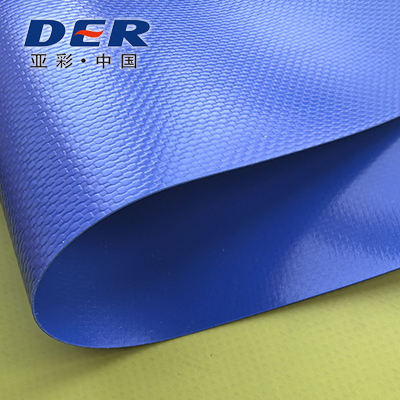
Reinforced panel body
PVC-coated polyester
The woven substrate carries panel loads; the coating forms the exposed surface. Discuss smooth, readily inspectable finishes and covered cut edges. Approve the complete formulation for the intended zone.
 News
News


Specify food processing curtains around what happens on each side of the panel. DERFLEX supplies PVC-coated fabrics and industrial curtain materials for custom partitions, with material, dimensions and fabrication details reviewed against your factory layout and cleaning conditions.
For plant engineering teams, curtain fabricators and OEM buyers. Start with zone duty, washdown chemistry and the required approval documents.
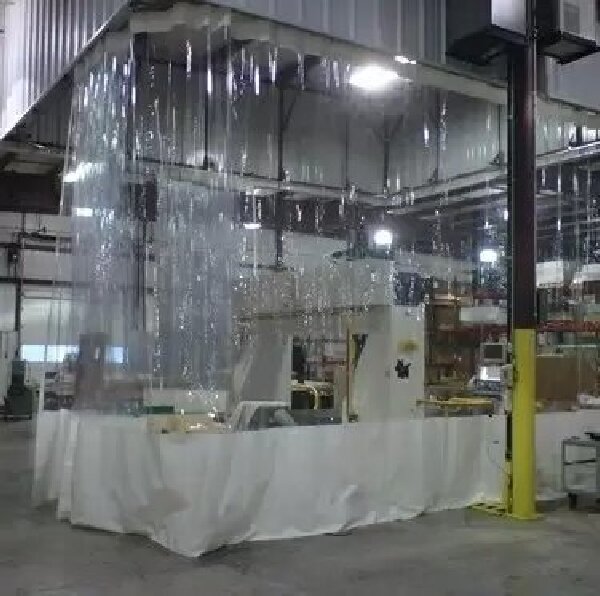
Food processing curtains are flexible partitions used to separate work areas, manage access and help contain local splashes in food factories. PVC panels may be fixed or retractable, with clear sections where observation is needed.
A useful starting point is the DERFLEX industrial curtain range. For a food plant, the specification must go further: define the hygiene zone, cleaning routine, exposure to food and complete installed assembly.
Choose the curtain arrangement by zone exposure and traffic. The table below is a planning guide; the plant’s food safety team should approve the final arrangement.
| Factory zone | Curtain direction to review | What the buyer must resolve |
|---|---|---|
| Dry packing & secondary packaging | Reinforced opaque PVC panels; a viewing band where staff need line of sight. | Dust removal method, access width, packaging exposure and cleaning access. For broader logistics separation, see warehouse partition planning. |
| Wet processing & equipment washdown | Smooth surfaces, accessible welded joints and removable sections where the layout allows. | Actual cleaners, rinse conditions, splash direction, runoff and drying. Confirm the assembly can be cleaned on both sides. |
| Chilled transfer points | A grade evaluated at the minimum service temperature; panel or strip layout chosen by traffic. | Cold flexing, condensation, openings and the existing door system. Review cold storage material selection for temperature-specific needs. |
| Exposed product, allergen or high-care boundary | Evaluate whether a flexible partition can meet the required boundary conditions before specifying fabric. | Food exposure, airborne transfer, personnel routes and verification of controls. A closed curtain alone does not establish a validated hygienic or allergen barrier. |
PVC-coated polyester provides a reinforced panel body. Clear flexible PVC is a separate material option for observation. Review both materials and their joint as one assembly.
The woven substrate carries panel loads; the coating forms the exposed surface. Discuss smooth, readily inspectable finishes and covered cut edges. Approve the complete formulation for the intended zone.
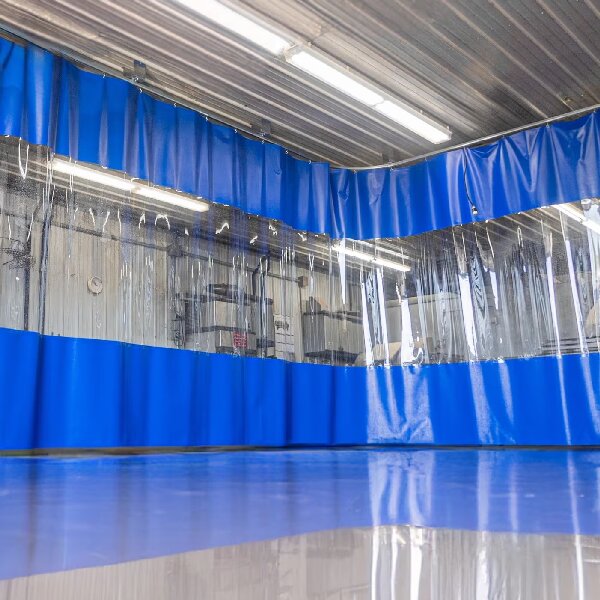
Position viewing areas around real sight lines. Specify transparency after cleaning, resistance to creasing and a weld-compatible joint to the opaque body. Confirm the clear and coated materials separately.
Images illustrate industrial materials and curtain layouts. They do not document an approved food-processing installation or establish a hygiene certification.
For access openings, compare the PVC door and curtain material options. Overlapping strips and full curtain panels serve different traffic and splash-control needs.
Seams, edges and suspension points determine how a curtain can be inspected and cleaned. Mark these details on the approved drawing before the order is released.
Prefer a continuous, inspectable joint where the material permits welding. Confirm the welding process on the actual material combination. Close exposed reinforcement and avoid inaccessible folds that retain soil or moisture.
Specify corrosion resistance for the actual wash chemicals. Keep suspension points accessible for cleaning and inspection; agree who supplies the track, hangers and structural supports.
Show floor slope, drains and the required lower clearance. Prevent fabric from dragging through standing water. A curtain is a splash partition, not a substitute for a designed drainage or liquid-containment system.
Mark panel overlaps, side returns, trolley routes and the storage position when open. Keep retracted folds and removable panels away from exposed product and clean surfaces.
Compatibility must be checked for the exact grade, chemical concentration, temperature and exposure time. “Waterproof” describes a barrier property; it does not establish resistance to every detergent, sanitizer or repeated hot wash.
Send cleaner product names and the sanitation schedule when asking about chemical resistance of PVC-coated fabric. Include rinsing and drying conditions, especially where panels are folded between shifts.
For mechanical wash-bay layout issues, see the pressure-washing curtain guide. Food-zone approval still requires its own review.
Use the table to agree the order basis. There is no universal food-processing curtain thickness or GSM: the final grade depends on the zone, panel loading, cleaning conditions and required evidence.
| Specification | What to put in the purchase brief |
|---|---|
| Material & surface | PVC-coated polyester body and/or clear PVC sections; approved formulation, color and surface finish. |
| Weight & thickness | Target mass per area for coated fabric, thickness for film, and agreed tolerances. Confirm each against the approved sample. |
| Panel dimensions | Finished panel width and drop, quantity, opening sizes, viewing band and drawing revision. Distinguish opening dimensions from finished fabric size. |
| Seams & edges | Joint method, overlap, reinforcement coverage, edge finishing and attachment locations. |
| Operating exposure | Lowest and highest service temperatures, wash conditions, chemicals, traffic and expected incidental contact. |
| Documentation | Intended use, destination-market requirements, exact test or declaration needed and applicable material grade. |
| Supply scope | Roll goods or fabricated-panel request; confirm conversion, hardware, installation responsibility, packing and identification. |
Food-zone documentation: FDA guidance explains that food-contact material status depends on its components and intended use. U.S. plant-design rules also address separation of operations alongside airflow and other controls. These references do not certify a DERFLEX product.
References: FDA food-contact material guidance · 21 CFR 117.20 — plant construction and design. Confirm the requirements for your market and application.
For wholesale material, repeat OEM supply or a factory partition project, send a short brief covering the six items shown here. A usable drawing and cleaning schedule help establish a comparable quotation.
MOQ, sample availability, lead time and price depend on the selected formulation, conversion work, quantity and destination. Request written confirmation for your project.
Resolve the material, plant layout and approval scope together. These answers address common selection issues for flexible factory partitions.
No. Suitability depends on the selected formulation, surface, construction, cleaning exposure and location in the plant. If food contact is expected, request documentation for the exact material and intended use before approval.
Full curtain panels divide larger zones and can retract for planned access. Strip curtains use overlapping narrow strips for frequent passage. Select the arrangement by traffic, cleaning access and the required separation; neither format is automatically a sealed hygienic boundary.
A curtain can form part of a separation plan, but a closed panel alone does not demonstrate allergen control. Air movement, openings, personnel and equipment routes, cleaning and site verification must be considered together.
There is no universal value. Specify the panel size, service temperature, handling loads, cleaning routine and material structure first. Agree thickness or GSM and tolerances against an approved sample; weight alone does not establish suitability.
Only within the confirmed limits of the selected material and assembly. Supply the chemical names, working concentrations, temperatures, contact times and cleaning frequency. Evaluate representative samples before approving repeated exposure.
Send the zone use, food exposure, drawing with finished dimensions, clear or opaque areas, cleaning conditions, required documents, quantity, destination and target date. Ask DERFLEX to confirm material availability, panel conversion, hardware scope, MOQ and lead time.
Share a layout, panel dimensions and cleaning conditions. Discuss the material route, fabrication details and available documents for your food processing curtain project.