Canvas fabric rolls
Specify roll width, usable width, treatment, weight, color, roll length and inspection criteria. The buyer controls the cutting layout and subsequent fabrication.
 News


Source canvas tarpaulin fabric by the roll with the specification clarity industrial converters need: fiber composition, treatment, usable width, roll length, joints, packaging and traceability.
Designed for cover fabricators, OEM industrial-cover producers and material importers evaluating bulk canvas tarp fabric. Material availability and roll parameters are confirmed against your actual project before quotation.
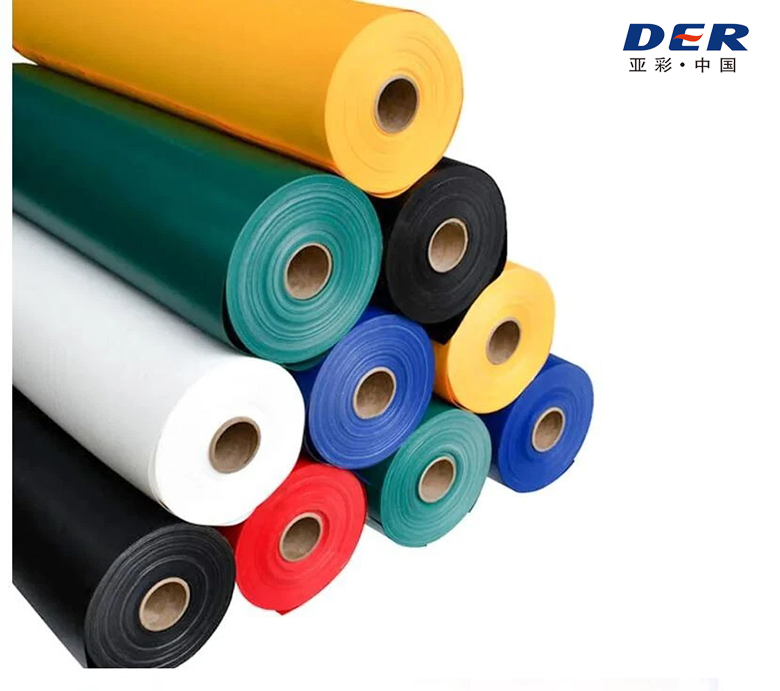
A canvas tarp fabric roll is an intermediate textile input for manufacturers who cut, sew, reinforce and assemble industrial covers. A finished tarp is a fabricated article supplied with defined dimensions and, where specified, hems, seams and attachment hardware.
Specify roll width, usable width, treatment, weight, color, roll length and inspection criteria. The buyer controls the cutting layout and subsequent fabrication.
Specify finished dimensions, edge reinforcement, seams, grommets, straps and fastening positions. Fabric usage includes fabrication waste and allowances.
Canvas is not interchangeable with PVC-coated tarpaulin, printable artist canvas or absorbent painter's drop cloth. Choose by end-use performance, not by the word “canvas” alone.
This page is for industrial-cover conversion. For interior painting protection, see canvas drop cloth fabric rolls; for coated waterproof technical fabrics, see PVC coated fabric.
Canvas performance begins with the actual fiber blend and weave. Cotton canvas, cotton-polyester blends and other constructions differ in hand feel, dimensional response, drying behavior and processing requirements. The proposed fiber content must be verified from the available product specification.
Buyers may request treated canvas fabric by the roll for water repellency, mildew-resistance evaluation, color or other functional needs. A treatment name alone does not prove waterproofness, flame performance or long-term outdoor durability; these claims require relevant test evidence for the offered grade.
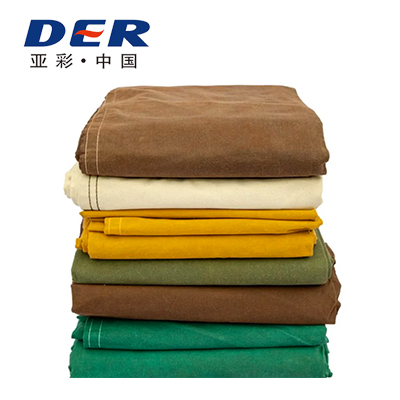
Nominal width and usable width are not always identical. Selvage exclusions, edge defects, directional pattern, shrinkage allowances and cutter layout can affect the net area that becomes a finished cover. Request a measured width record and plan your marker around the accepted usable width.
| Purchasing item | What to confirm in the approved offer | Why it matters |
|---|---|---|
| Fiber composition | Exact blend, weave and product grade — pending sales verification | Fabrication and service suitability |
| Nominal / usable width | Measured usable width in meters, excluding nonconforming edges — pending confirmation | Cutting yield and repeatability |
| Roll length | Standard and permissible length range per roll — pending confirmation | Production scheduling and transport |
| Joint / splice policy | Permitted joint count, minimum continuous length, joint marking and rejection criteria — pending confirmation | Panel continuity and waste |
| Mass and finish | GSM tolerance, color and treatment method with applicable reports | Weight, sewing and outdoor use |
| Packaging | Core, roll diameter, wrapping, palletization, labels and moisture protection | Handling and inbound quality |
| Traceability | Batch ID, roll ID, packing list and retained test record availability | Claims and repeat orders |
For a continuous roll, the theoretical usable area is usable width × usable length. This is a planning figure, not a guaranteed finished-cover yield. Subtract rejected lengths, splice allowances, cutting gaps and panel nesting waste.
Use the accepted usable width rather than the outer edge-to-edge nominal width.
Record joints, marked defects and minimum uninterrupted panel lengths before cutting.
Compare the proposed roll width against your cover drawings and seam layout to minimize offcuts.
These images are reused from existing DERFLEX website product pages. They illustrate canvas sample colors, coated industrial fabric rolls and related manufacturing context. They do not replace product-specific proof of cotton canvas roll ends, weave scale, or usable-width measurements; obtain approved photos and specifications before claiming those details.
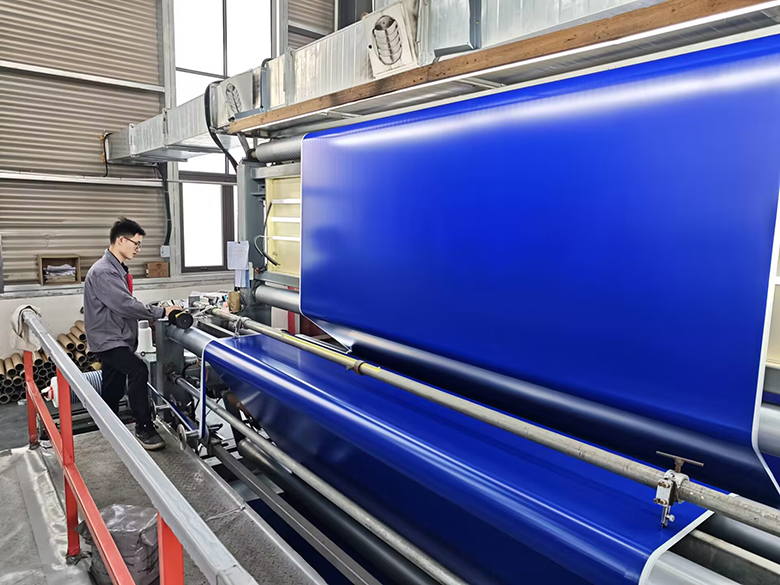
Bulk canvas tarp fabric quotes should identify the unit of sale and the measured dimensions behind that unit. A lower price per linear meter does not necessarily mean a lower cost per square meter when usable widths differ.
| Quotation unit | Calculation basis | Required disclosure |
|---|---|---|
| Per linear meter (m) | Price for one meter of roll length at the stated width | Nominal and usable width |
| Per square meter (m²) | Area-based unit price | Whether nominal or usable area is invoiced |
| Per roll | Price for one roll of specified length and width | Actual length tolerance, joints and roll count |
For comparison, price per m² = price per linear meter ÷ width in meters, provided the same width basis is used. Freight, taxes, packing and inspection terms must be stated separately.
Before placing a production order, match the candidate canvas to the actual cover pattern, seam design, handling cycle and exposure environment. A sample can reveal sewing behavior and appearance differences that a nominal specification cannot show.
Provide the industrial-cover use case, service environment, drawing or physical reference sample.
Agree fiber blend, construction, treatment and target performance tests.
Approve usable width, roll length, splice policy, packing and traceability needs.
Compare samples and a written quotation specifying quantity, unit, destination and terms.
Ask for a grade-specific technical data sheet, approved sample identification, inspection method and a documented approach to batch labeling. Confirm whether water-repellency, colorfastness, tensile strength or other properties have been tested on the actual offered material.
Roll-end images, width measurements and packing records are particularly valuable for importers who cannot inspect every roll before shipment.
A fabric suited to indoor equipment covers may not be suitable for prolonged outdoor exposure. Industrial canvas also differs from coated synthetic materials in moisture behavior, maintenance and joining. Compare the total fabrication and service requirements before choosing a material family.
DERFLEX can review your requested specification and confirm whether a matching canvas roll supply program is available.
Fabric rolls are inputs for converters who cut and sew covers. Finished tarps are fabricated to dimensions and may include seams, hems and attachment hardware.
Submit the required treatment and performance target. DERFLEX must confirm the available grade, treatment and supporting test evidence before offering it.
Current nominal width, usable width, roll length and tolerance are subject to product-specific written confirmation; no universal size is claimed.
Joint count, marking, minimum continuous length and acceptance rules should be agreed in the purchase specification before production.
Normalize quotations using the same usable-width and length assumptions, then compare packaging, freight and other commercial terms.
No. Fiber type alone does not establish waterproof performance. Ask for treatment details and test results appropriate to the intended exposure.
No. This page focuses on industrial-cover conversion. Absorbent painter's drop cloth fabric and printable canvas belong to separate product categories.
Send application, drawing or sample, material composition and treatment targets, usable width, roll requirements, quantity and destination.
Verify linked destination URLs against the live site before publication; related link targets are editorial suggestions.
Tell us what you manufacture and what the roll must deliver. Share your drawing or sample, target fiber blend and treatment, expected quantity and shipping destination. Our team can review the inquiry and confirm whether a suitable supply option is available.