

Heavy Duty Tarps for Industrial and OEM Supply
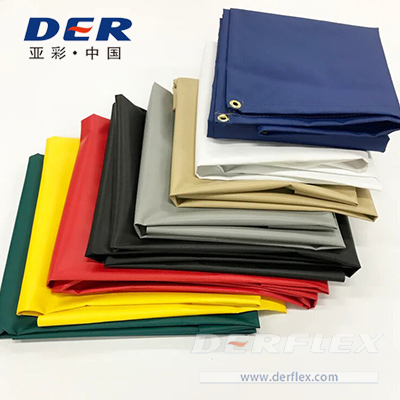
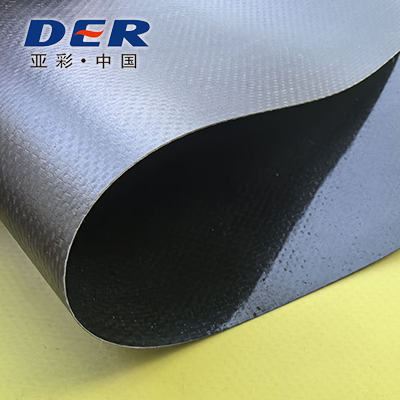
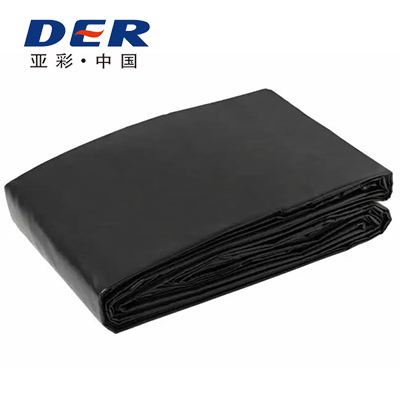
Source heavy duty tarps and heavy-duty tarpaulin material for transport, construction, equipment and outdoor storage. DERFLEX supports reinforced PVC coated polyester rolls, converted panels and custom finished tarp covers for importers, converters, fleet suppliers and private-label brands. Define the load conditions, required dimensions and attachment details first; then select a material and fabrication plan that can be sampled, approved and reproduced.
- Material rolls or finished covers
- Custom dimensions and panel layout
- Reinforced hems and attachment points
- OEM color, branding and packing
Bulk and made-to-order sourcing. Sizes, grades, testing, lead time and MOQ are confirmed for each program.
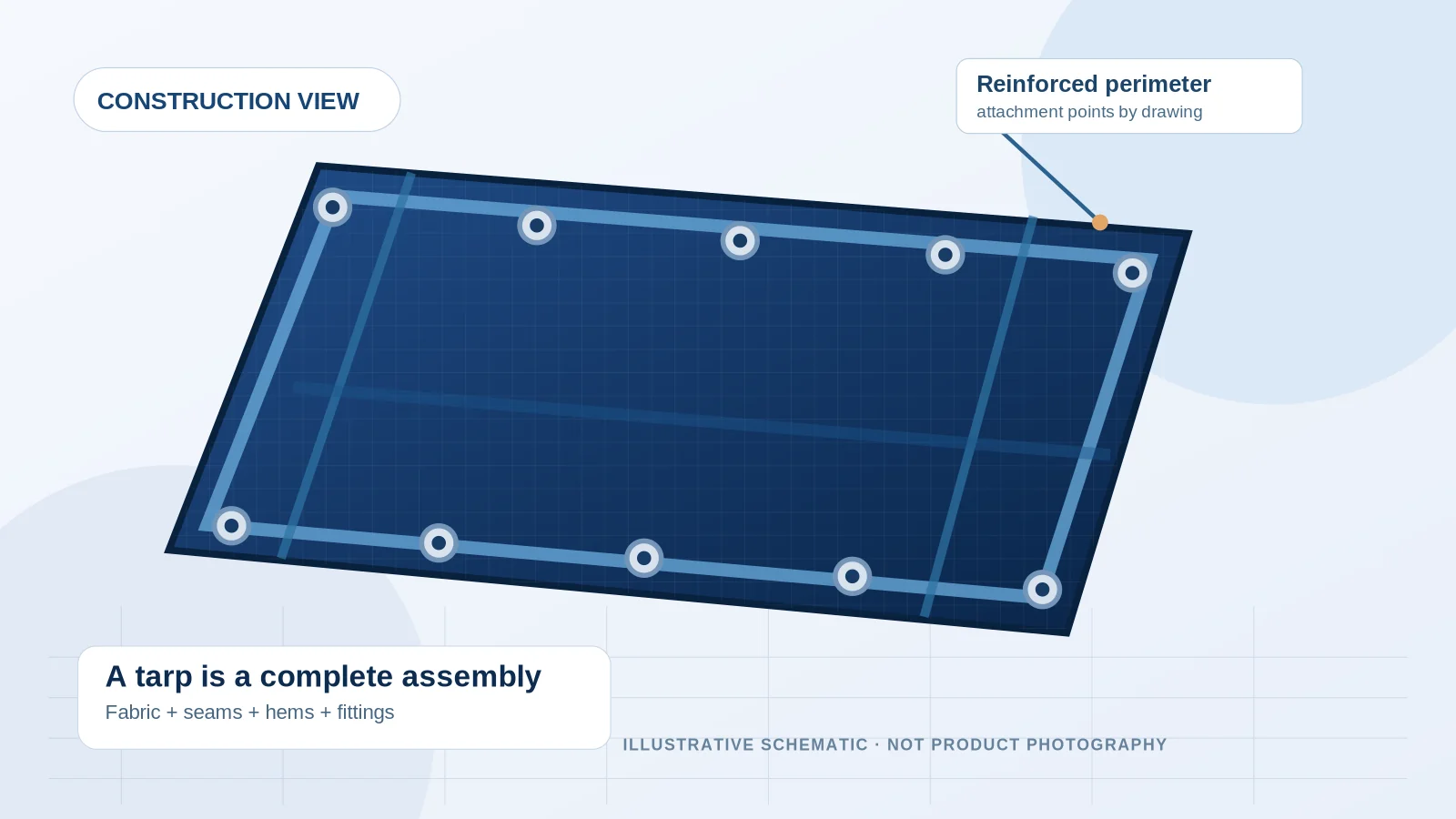
What makes a tarp heavy duty?
Compare the woven base fabric, protective coating, tensile and tear requirements, finished seams, edge reinforcement and tie-down layout against the actual weather, movement and abrasion conditions. A higher GSM alone does not prove a stronger completed cover.
Heavy duty tarps for sale online are usually presented by a standard size and an ounce-weight class. Those details are useful for ready-to-use retail stock, but they do not answer every industrial purchasing question. A large machine cover can fail where it rubs against a corner; a transport cover can fail around a D-ring; a warehouse tarp can leak where a flat surface collects water.
DERFLEX approaches a heavy duty tarp cover as a combined material-and-fabrication specification. The selection includes exposure, base fabric, coating, width utilization, panel seams, perimeter construction, fastening interface and planned handling cycles. Buyers can therefore compare finished-cover performance targets instead of treating one number as a universal quality grade.
For the underlying fabric family and coating routes, review DERFLEX PVC tarpaulin materials. For detailed made-to-drawing projects, see custom heavy duty tarp fabrication.
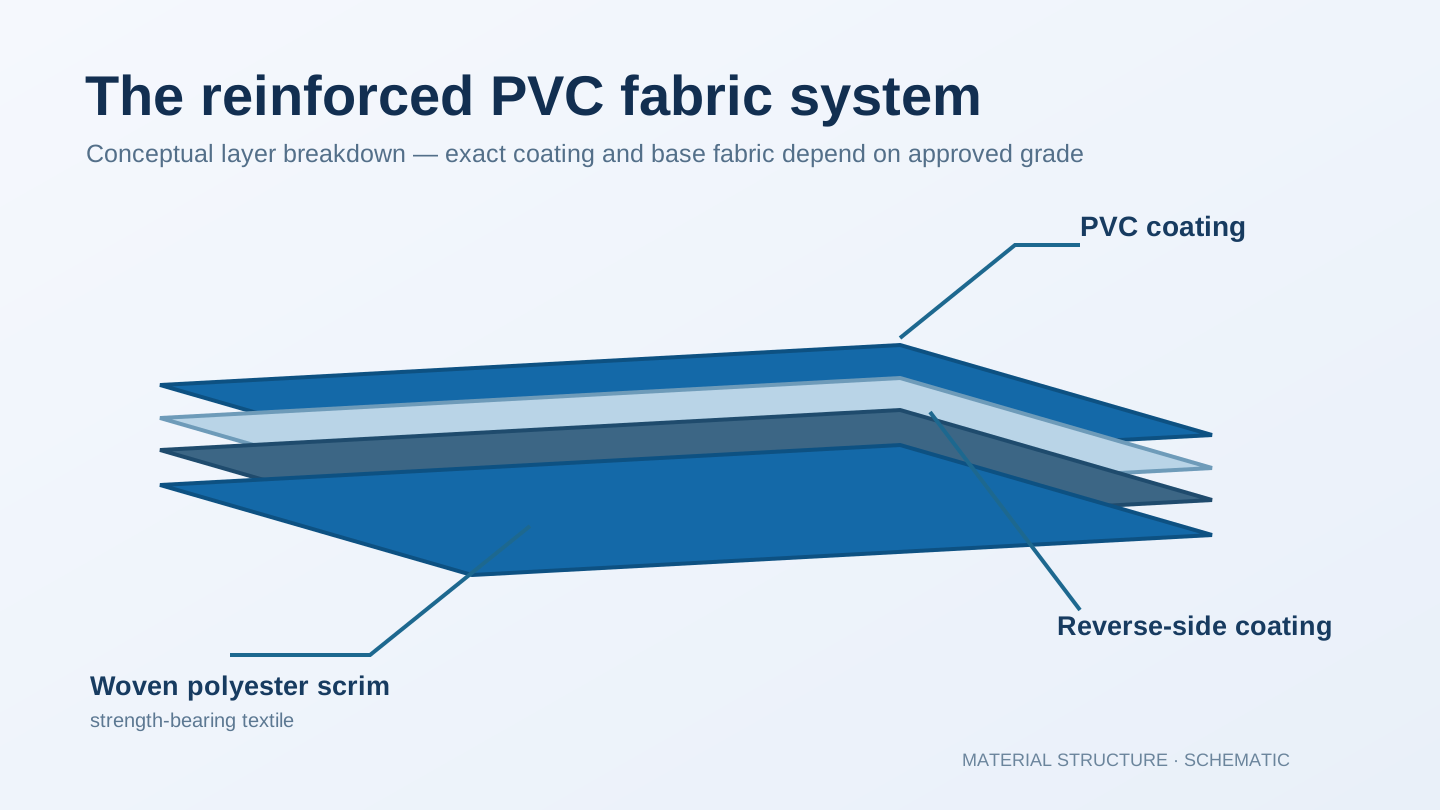
One material family. Three practical supply routes.
Choose the supply format according to who will cut, join, finish, install or resell the cover. Hardware and installation systems are not assumed to be included.
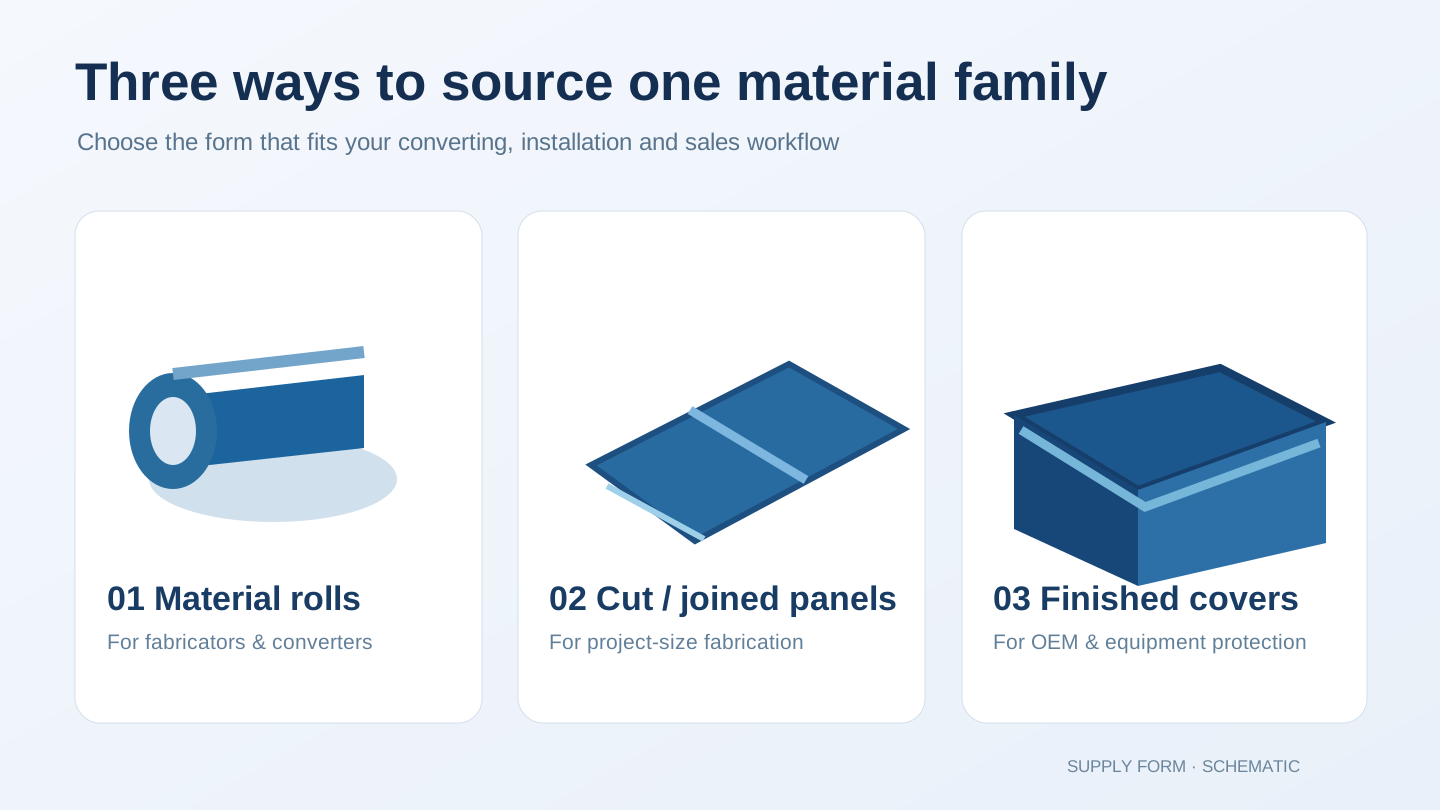
01 · Coated fabric rolls
For established converters who weld, sew, print or cut locally. Confirm roll width, length, weight, surface finish, packaging and fabric compatibility with your equipment.
02 · Cut or joined panels
For large-format fabricators or project customers who want reduced on-site joining. Confirm seam orientation, panel tolerance, transport and installation requirements.
03 · Finished tarp covers
For industrial use or distributor lines. Specify finished size, hems, corners, grommets or D-rings, reinforcement, flaps, pockets, straps and labeling as applicable.
04 · Private-label repeat programs
For OEM brands and importers. Approve one reference configuration with controlled colors, hardware layout, packing, carton labels and reorder records.
Choose the cover material around the job.
PVC coated polyester is the core reusable industrial direction on this page. Other tarp materials can be the better answer where breathability, airflow or short-term cost matters more.
| Material | Best fit | Important benefit | Trade-off / check |
|---|---|---|---|
| PVC coated polyester / vinyl tarp | Reusable waterproof industrial, cargo and equipment covers | Weldable coating, woven reinforcement, cleanable surface | Confirm weight, UV and cold flexibility, seams and tie-down design. |
| Woven PE / poly tarp | Short-cycle or price-sensitive general covering | Light handling and economical protection | Weave and laminate grade vary widely; not every PE tarp meets repeated heavy-duty needs. |
| Canvas tarp | Selected breathable equipment and dry-cover applications | Air exchange and traditional fabric handling | Water resistance depends on treatment and exposure; heavier when wet. |
| Mesh tarp | Shade, airflow and selected debris-control tasks | Ventilation and reduced wind pressure relative to solid sheets | Not a rainproof solid tarp; containment performance requires project checks. |
These are material-family comparisons, not a controlled laboratory ranking. Ask for test reports for the exact grade before comparing numerical claims.
Why an “18 oz tarp” is not a complete RFQ
An 18 oz/yd² fabric is about 610 g/m² because 1 oz/yd² ≈ 33.906 g/m². That describes area weight, not thickness. The 20–22 mil values seen in retail listings describe particular constructions and cannot be inferred from GSM alone. For B2B sourcing, specify the target grade and provide the relevant fabric test method, seam design and hardware requirements.
Heavy duty tarps by industrial application
A tarp should be approved for its exposure and installation—not simply for the category printed on its carton.
| Application | Priority risks | Specification priorities | Design details to confirm |
|---|---|---|---|
| Truck, trailer & cargo | Flapping, abrasion at corners, repeated folding | Tear and tensile data by direction, flexibility and weathering | Drop lengths, reinforcement map, D-rings, tie-down geometry |
| Construction & site protection | Sharp edges, temporary exposure, site handling | Water barrier, puncture/tear direction, optional project-specific fire tests | Anchoring, panel joints, drainage and safe handling |
| Equipment and machinery | Standing water, rubbing, difficult geometry | Fit, surface cleanability, weathering, flexible shaping | Vent locations, wear pads, access openings, edge support |
| Warehouse & outdoor storage | UV, repeated handling, pooling, edge wear | Waterproofing, handling weight, labeling and reusable design | Finished dimensions, access flaps, drainage slope, identification |
| Agricultural coverings | Seasonal UV, rain and mildew conditions | Outdoor formula, ease of cleaning, seasonal handling | Large-sheet joining, anchors, airflow and crop compatibility |
| OEM product ranges | Variation between batches and markets | Reference grade, documented tolerance and sample approval | Color, size set, marks, carton counts and repeat acceptance |
For construction-specific coverings, see construction tarps. For broader industrial categories, explore industrial tarps and custom protective covers. Fleet and product-development buyers can start from the tarp manufacturing overview.
What to put on a heavy duty tarp specification sheet
The table distinguishes material-family directions from order-specific dimensions and test requirements. It is designed to help teams request comparable quotations.
| Parameter | Specify for the RFQ | Why it matters |
|---|---|---|
| Material construction | PVC coated polyester; list alternative coating or laminate only if needed | Controls weldability, surface and performance route. |
| Fabric weight | Target GSM or oz/yd² plus approved tolerance; if unknown give the duty profile | Provides a comparable mass measure, not standalone strength. |
| Base fabric | Yarn, weave, density or required tensile/tear values with test methods | Connects load direction to tear and tensile behavior. |
| Width and length | Roll width/length, panel layout or final finished tarp size | Determines joint placement, handling and usable coverage. |
| Coating and finish | Color, gloss/matte direction, surface needs, application exposure | Influences cleanability, weathering and appearance. |
| Environmental targets | UV, cold flexibility, mildew, optional FR standard as needed | Requires a test method and project-appropriate grade. |
| Finished construction | Seam style, hems, reinforcement, eyelet spacing, webbing and D-ring layout | Controls the actual assembled cover and attachment load path. |
| Approval & delivery | Sample, quantity, packaging, destination, labeling, inspection checkpoints | Reduces ambiguity across production and repeat orders. |
DERFLEX publishes a broad PVC tarpaulin product family in multiple weights and constructions; no single weight, width or strength value applies to every heavy duty finished tarp. Confirm the actual grade, tolerance, test method and capability in the written quotation.
How heavy is a finished tarp?
For a preliminary estimate, multiply covered fabric area by specified area weight. This is a material-only estimate, useful when comparing handling burden. It does not include hem overlap, welded lap allowances, reinforcement, hardware, waste or packaging.
Illustrative calculation at 650 GSM, not a validated DERFLEX product weight or finished-cover quotation.
For precise size and quote requests, provide the finished width and length and indicate whether overlaps are required. A cut sheet can differ from its final finished dimensions after hemming and joining.
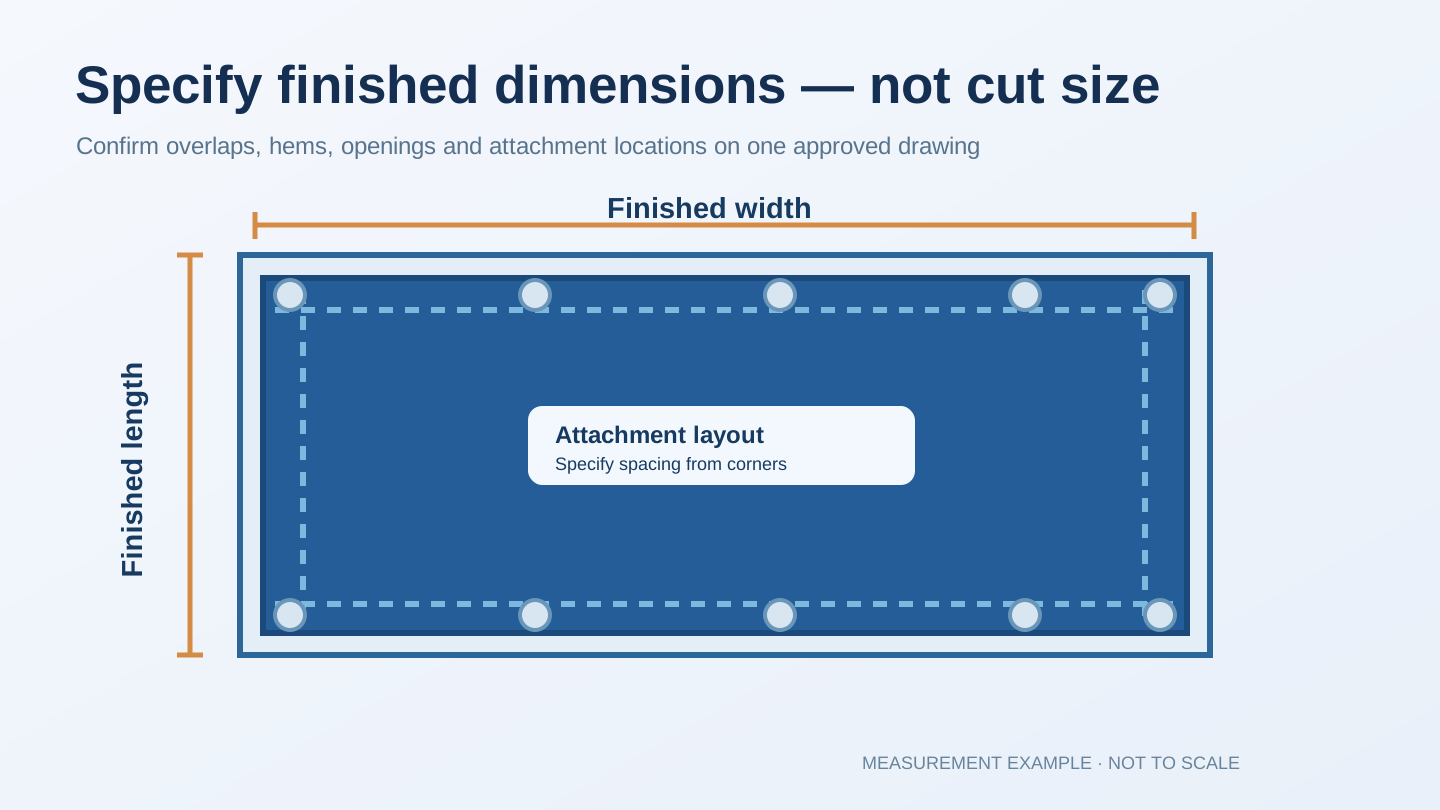
Seams, hems and fastening points decide field performance.
Material strength and finished-cover strength must be reviewed separately. A waterproof PVC sheet does not automatically create leak-free seams or openings.
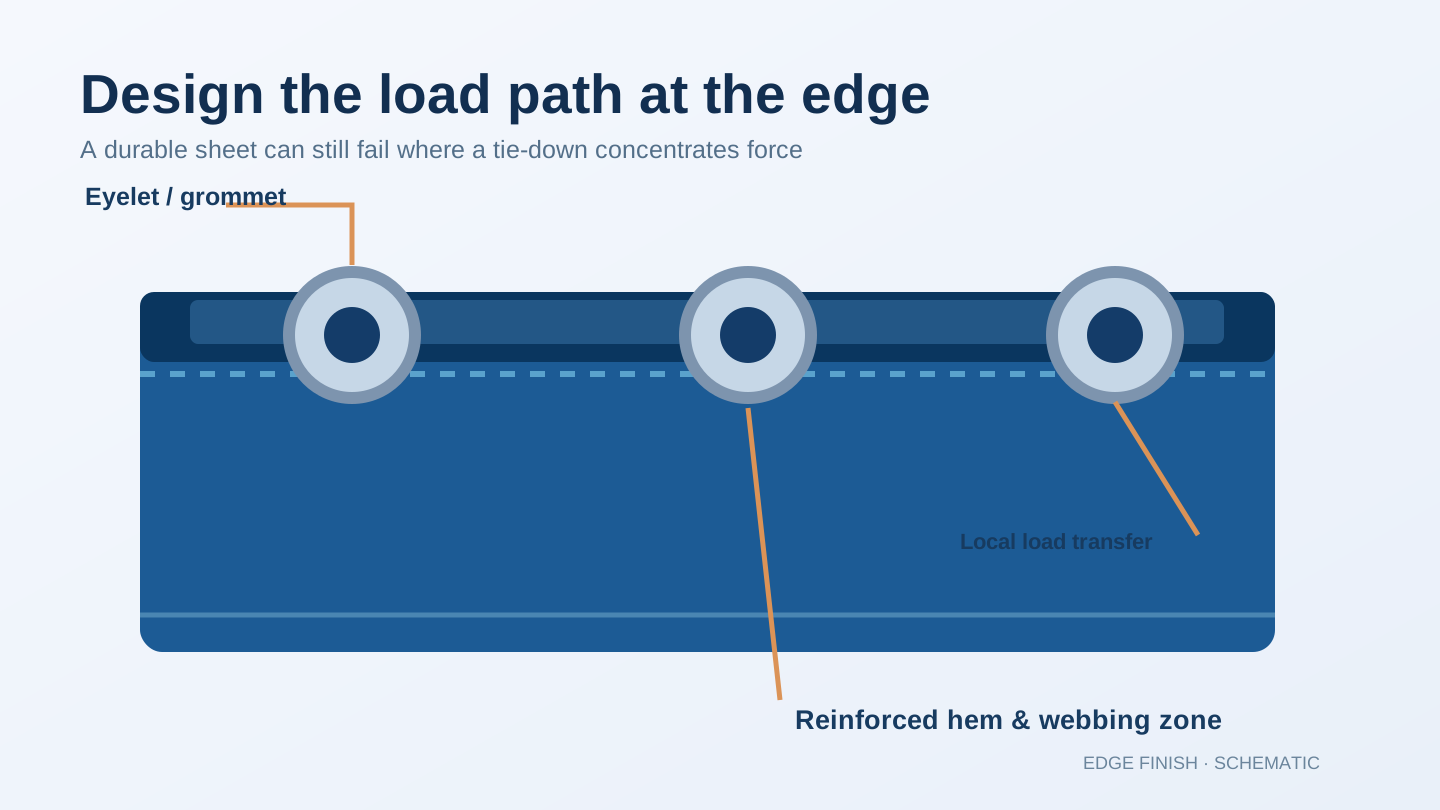
Seam orientation
Plan joins away from avoidable wear zones. Choose a compatible welding or sewing route, then assess the joint under relevant loading and waterproofing conditions.
Perimeter reinforcement
Define hem widths and reinforcement zones around the entire edge, particularly at corners and the points where a fastening system acts.
Grommets and D-rings
Confirm hardware size, spacing, material and location from the tie-down geometry, not from an unrelated stock pattern.
Wear pads and flaps
Add local reinforcement where equipment edges rub, and specify access panels or ventilation when a tight cover would trap moisture.
Compare material and cover design options with heavy duty vinyl tarps, or review an application-led guide to heavy duty tarps for different jobs.
Build a repeatable tarp program, not just a first shipment.
For distributors, converters and OEM brands, an acceptable first sample is only the start. The production reference must be specific enough to support repeat orders.
Lock the grade
Document the coated fabric type, chosen weight, color, finish, required test methods and tolerance expectations. A color sample alone is not a grade definition.
Approve the drawing
Record finished dimensions, seam placement, corners, grommets, D-rings, webbing, pockets and reinforcement zones with measurable locations.
Inspect critical details
Review panel geometry, seam quality, edge attachment, surface defects and packing against documented acceptance criteria.
Keep a reference
Approve physical samples where fit or hardware is critical. Retain a grade, drawing revision and color record for the next purchase order.
Organize private label
Coordinate labels, carton marks, item references, fold or roll packing and target destination before bulk production.
Control changes
Review substitutions in coating, hardware or panel design before they enter the next lot. Ask for the inspection record needed by your market.
When factory-oriented supply is the better model
Stock retail tarps are suitable for immediate small orders of standard sizes. OEM sourcing is more appropriate when a buyer needs repeatable material specifications, custom dimensions, planned reinforcement, branded packaging or bulk purchase terms. DERFLEX can discuss OEM tarp manufacturing and private-label supply for such programs.
Five checks that prevent an expensive wrong tarp.
Provide enough detail to engineer the cover
- Define exposure. Rain, UV, freezing temperatures, abrasion surfaces, folding cycles and expected reuse pattern.
- Measure final size. Specify the required finished dimensions plus drops, flaps, openings, overlap and fit clearances.
- Mark force points. Show every anchoring location and explain whether the load moves or vibrates.
- Check drainage and ventilation. Avoid pockets where water pools; consider condensation where equipment remains enclosed.
- Approve the sample and test scope. Seek a sample for fit-critical covers and grade-specific reports where strength, FR or weathering compliance matters.
What a usable quotation should make clear
- Material grade, weight and base fabric requirements.
- Cut or finished dimensions, tolerance and panel joining method.
- Hems, reinforcement, hardware and fabrication complexity.
- Order quantity and packing configuration.
- Which tests or supporting records are included in the commercial scope.
- MOQ, sampling, production schedule and shipping terms as confirmed, not assumed.
Heavy Duty Tarps — Frequently Asked Questions
What is considered a heavy duty tarp?
A heavy duty tarp is a reinforced protective cover selected for elevated handling, weather or mechanical stresses. Evaluate the textile base, coating, tear and tensile properties, seams, edges and attachment layout together; no universal GSM threshold defines every heavy-duty application.
Are heavy duty PVC tarps waterproof?
Continuous PVC coating can provide a waterproof fabric barrier. The completed cover must also manage welded or sewn seams, openings, water pooling and installation geometry. Request assembly-level verification where keeping water out is critical.
How do I choose between PVC, poly, canvas and mesh tarps?
Choose PVC coated polyester for reusable waterproof industrial covers requiring welding and reinforcement; PE for many short-term, budget-led jobs; canvas when breathability is useful; and mesh when airflow matters more than rain blocking. Verify the exact grade against site conditions.
Can DERFLEX supply custom sizes and finished covers?
DERFLEX discusses coated fabric rolls, panels and custom finished tarps. Depending on the program, finishing may include hems, welded seams, webbing, grommets, D-rings, straps, labels and packing. Supply scope, drawing, sample and quantity must be confirmed before ordering.
Is GSM the same as tarp thickness?
No. GSM is grams per square meter, a measure of fabric mass per area. Thickness is measured in millimeters or mil. An 18 oz/yd² fabric is approximately 610 GSM, but GSM cannot be converted into thickness without information about the material construction.
What should I send to request pricing for heavy duty tarps?
Share the application, finished dimensions or drawing, weather and abrasion conditions, fixing locations, quantity, desired color, material or performance requirements, destination, packaging and any test documents needed. A photograph and basic dimensions are enough to begin a specification discussion.