New Products
Hay Tarp
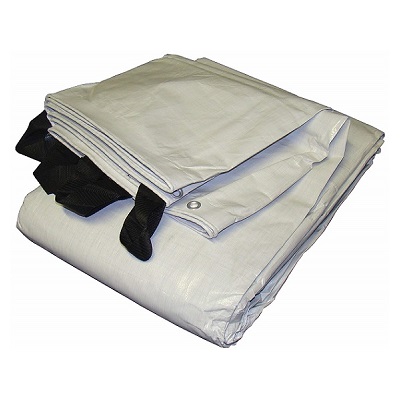
Hay Tarp is a PE tarp with grey color, it is used as hay covers. With our hay storage tarps your hay will look as good as the day it was brought in from the field.
Description
Skip to content
Agricultural covers · Custom & OEM supply

Hay Bale Tarps
for Round & Square Bale Storage

A hay bale tarp is a weather cover for dry round bales, square bale stacks and long hay rows. It sheds rain while the storage layout allows moisture to escape. DERFLEX supplies PE hay covers and PVC coated options for hay producers, agricultural dealers and OEM cover programs.

Build the specification around your actual stack profile, storage period and fastening layout. Custom dimensions, color, reinforced edges and attachment details can be reviewed together. Send a stack sketch, quantity and destination to start your quotation.

DERFLEX silver hay bale tarp covering the top of a large square bale stack outdoors
Cover the stack. Plan the airflow.DERFLEX hay-cover application image
PE & PVC optionsSelect by exposure and handling
Measured to fitRound rows and square stacks
Reinforced constructionSpecify hems and attachment zones
Bulk & private labelFarm dealers · fabricators · OEM
The short answer

Can you cover hay bales with a tarp?

Yes—use a rain-shedding cover over properly dried hay, with a drained storage base and a layout that allows air movement. A hay storage tarp reduces direct weather exposure. It cannot dry damp hay, prevent ground moisture by itself or guarantee mold-free feed. Cover design and storage practice have to work together.

For a broader farm cover program, explore DERFLEX agricultural cover options.

01 / Material selection

Choose for the season.
Specify for the workload.

PE hay tarps are a practical starting point where handling weight and cost matter. PVC coated polyester is worth reviewing for repeated handling and fabricated covers. Compare the actual grade, reinforcement and test evidence—not the material name alone.

Your storage programMaterial to reviewSpecification prioritiesBuyer trade-off
Seasonal cover, large stack, limited handling crewWoven PE tarpaulin with a suitable laminated barrierFinished weight, UV requirement, seam quality and reinforced hemsLower handling weight can be useful; a thin general-purpose sheet may underperform a purpose-made hay cover.
Frequent removal, refitting or repairPVC coated polyester / vinyl tarp constructionTear and abrasion behavior, weld integrity, fold handling and attachment reinforcementCompare carrying weight and material cost against reuse and fabrication needs.
Exposed site or long cover spansPE or PVC, selected as a complete cover systemDistributed fastening, corner reinforcement, stack geometry and site anchoringA heavier sheet alone does not establish a safe wind rating.
Moisture escape is the main concernReview the storage layout; consider a dedicated breathable hay-cover product only with supporting dataAir movement, drainage and verified vapor behaviorOpen mesh is not a rain barrier. Standard PE and PVC weather covers should not be assumed breathable.

Review the material construction in our PVC coated tarp guide. Compare barrier and seam requirements for waterproof tarp applications.

02 / Stack measurement

What size hay bale tarp do you need?

Measure over the actual stack from one intended finished edge to the other, then measure the row length and desired end coverage. A ground footprint or bale count alone misses the curved profile, stack height and side drop.

Round bale rows

Round bale over-top measurementMeasure along the curve over a round bale from the planned tarp edge on one side to the planned edge on the other.OVER-TOP MEASURED SPANAirflowAirflow
Trace the curve. Measure the real covered profile. For multiple tiers, measure the completed stack rather than multiplying a single bale diameter.

Square bale stacks

Square bale stack over-top measurementMeasure from the intended lower edge up one side, across the stack top and down the other side.SIDE DROP + TOP + SIDE DROPAirflowAirflow
Include the side drops. Define how far the cover should extend and where ties will connect. Plan runoff before approving the dimensions.

Measurement concepts only. The diagrams do not specify a safe stack, roof support, ventilation gap or anchor design.

1. Mark the finished edges

Choose the lower cover edges and end drops. Keep the drainage route and access needs in view.

2. Measure the actual profile

Record the over-top span, row length and stack changes. Add a simple end-view sketch and photos.

3. Confirm finished size

Agree whether the quoted dimensions are finished dimensions or cut dimensions before hems, pockets and seams.

Hay cover size planner

Estimate a rectangular cover and its body-fabric weight. Use your measured over-top span, including both side drops. Default entries are examples.

Illustrative rectangular cover6.00 × 13.50 m

19.69 × 44.29 ft · 81.00 m²

Body fabric only: 24.30 kg

Width = measured over-top span.
Length = stack length + 2 × end drop.
Weight = area × GSM ÷ 1,000.
Excludes hems, seams, overlap, pockets and hardware. Confirm the final drawing and finished weight with DERFLEX.

Email this brief

Need a shaped end, an access flap or a different fastening layout? Review custom tarp manufacturing options.

03 / Fabrication details

The edges deserve as much
attention as the fabric.

A large bale stack cover transfers wind and handling forces into a small number of attachment points. Specify the complete load path: sheet, seam, hem, reinforcement, hardware, tie and anchor.

DETAIL / 01

Distribute the tie loads

Review reinforced hems, webbing loops, grommets or pockets against the actual tie direction. A hole through the main sheet creates a concentrated stress point.

  • Show tie locations on the drawing.
  • Reinforce corners and access openings.
  • Confirm whether ropes and anchors are included.
DETAIL / 02

Match seams to the material

PVC coated fabric and PE laminates need different joining settings. Approve the seam construction for the selected material and review joins where water may collect.

  • Confirm joined-panel and seam layout.
  • Review waterproofing at sewn attachments.
  • Request a representative finished sample.
DETAIL / 03

Plan for movement and runoff

Stacks settle and covers relax. The attachment system should allow inspection and adjustment without pulling the cover into sharp bale corners or hardware.

  • Avoid folds that form water pockets.
  • Protect abrasion zones with compatible patches.
  • Agree on repair materials for the exact grade.

Cover shape, drainage and site conditions also matter in outdoor storage tarp planning.

04 / Purchase specification

A quotation starts with
a clear cover specification.

DERFLEX hay cover programs can be reviewed around PE or PVC construction, custom size, reinforcement and OEM needs. The items below are quotation variables, rather than a single fixed stock grade.

ItemOptions / information to confirmApproval point
Material constructionPE laminated woven fabric or PVC coated polyester, according to the projectApprove the actual grade and material sample.
GSM & thicknessSpecify finished fabric mass in g/m² and thickness separately.Confirm target values and tolerances; do not infer thickness directly from GSM.
Finished dimensionsOver-top span, row length, side drops, end coverage and any shaped panelsApprove a finished-size drawing with seam and hem allowances accounted for.
Color & surfaceGrey / silver examples shown; other colors and finishes subject to material selectionConfirm sample color, outer face and surface finish.
Outdoor exposureStorage location, solar exposure, season, expected reuse and cold-weather handlingRequest UV and temperature evidence relevant to the selected grade; agree on any warranty in writing.
Edges & attachmentsReinforced hems, loops, grommets, rope hems or pockets as agreedSpecify spacing, orientation, corner build-up and included accessories.
Supply formatFinished hay covers; material or panel supply where suitable for a fabricatorConfirm what is fabricated, packed and supplied with each unit.
OEM & packagingBranding, labels, fold orientation, unit packing and export packing requirementsApprove artwork, packing details and identification of the outer face.
Sample, MOQ & lead timeConfirm with DERFLEX after material, size, quantity and customization review.Agree on sample scope, order minimum, production schedule and delivery terms in the quotation.

What should you check before a bulk order?

Check a sample of the proposed cover construction, not only a small swatch. Agree on the inspection criteria before production.

  • Finished dimensions and agreed tolerance
  • Seam integrity and any required water test
  • Reinforcement, attachment position and workmanship
  • Material weight, handling and packing configuration

What drives hay tarp price?

Finished area, fabric construction, GSM, joining work, reinforced edges, hardware, order quantity and packing affect the quotation. Compare the same finished specification and delivery basis across suppliers.

Ask for test methods and results for the actual quoted fabric when comparing tensile, tear, UV or attachment performance. A general brochure claim is not a grade-specific acceptance criterion.

Materials & applications

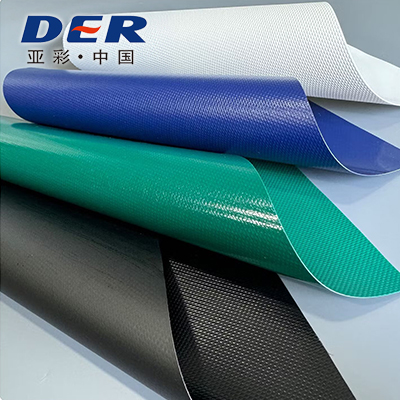
DERFLEX product and application photographs show finished PE cover details, outdoor hay storage and PVC coated material options. Confirm your own product against its approved sample and drawing.

Storage practice

Rain protection
needs a sound
storage layout.

Covering and keeping bales away from ground moisture both help protect dry hay. University extension guidance stresses the storage base, drainage and air movement. A waterproof sheet addresses only part of that system.

  1. Start with hay suitable for dry storage

    Verify moisture for the forage, bale size and density with local forage guidance. Do not use a tarp as a drying system for damp or freshly baled hay.

  2. Reduce contact with ground moisture

    Use a well-drained site and an appropriate raised or drained base. Keep surface water from collecting under the bottom layer.

  3. Keep a route for air and runoff

    Plan row spacing, lower edges and access openings so the cover does not seal moisture into the stack. Shape the covering to drain away from the hay and storage base.

  4. Secure the reinforced attachment points

    Use the agreed tie layout and suitable site anchors. Distribute loads and protect contact points; do not rely on one corner or use the cover to stabilize an unsafe stack.

  5. Recheck after movement or weather

    Inspect for slack, tears, ponding, displaced ties and damp contact zones after stack settlement, bale removal or a storm. Adjust the covering before loose fabric starts to flap.

Buyer questions

Practical answers
before you order.

Material selection, fit and storage conditions decide how a hay cover performs. Use these questions to prepare a more precise inquiry.

What is the best tarp material for hay bales?

Choose the actual grade around the storage period, exposure and handling. PE is a practical option for seasonal hay covers where weight and cost matter. PVC coated polyester is worth reviewing for repeated handling and custom fabrication. Compare UV evidence, seams, reinforcement and finished weight before approving either material.

Are hay bale tarps breathable?

Standard PE laminated and PVC coated weather covers should not be assumed breathable. Plan air movement through the storage layout rather than sealing the stack. If you need a breathable hay cover, request measured water-vapor and rain-resistance data for that specific product.

How do I measure a tarp for round or square hay bales?

Measure the actual covered profile from one planned finished edge to the other, including side drops, and record the stack or row length plus end coverage. For round or multi-tier stacks, measure over the curved profile. Send a sketch and confirm finished dimensions rather than ordering from the ground footprint alone.

How do I keep a hay tarp from blowing off?

Use a cover with suitable reinforced attachment zones and a distributed tie layout matched to the site. Specify grommet, loop or pocket placement, protect abrasion points and review anchor requirements. Recheck tension after wind or stack settlement. Fabric weight alone does not define a wind rating.

Will a waterproof hay tarp prevent mold?

A waterproof cover can reduce direct rain exposure, but it cannot guarantee mold-free hay. Moist hay, ground moisture, poor drainage, condensation and inadequate air movement can still cause spoilage. Use properly dried hay, a suitable base and an appropriate storage layout.

Can I tarp damp or freshly baled hay?

A weather tarp is not a hay-drying system. Confirm that the hay is suitable for dry storage using guidance for your forage and bale type. Excess moisture can cause heating and spoilage. Baleage uses a separate controlled wrapping process and should not be confused with a dry-hay storage cover.

Can DERFLEX supply custom hay tarps, and what are the MOQ and lead time?

DERFLEX supports custom hay cover specifications, including dimensions, material, color, reinforced edges and OEM requirements. Send the stack layout, intended storage period, quantity and destination. Sample availability, MOQ, production lead time and delivery terms must be confirmed for the actual order.

Start your hay cover project

Send the stack details.
Get a specification
you can compare.

Source hay bale covers for farm use, wholesale distribution or a private-label product range. Ask DERFLEX to review the material, finished size and reinforcement together.

sales@derflex.com  ·  +86-021-54361792

  • 01 / Bale layoutRound or square bales, number of tiers, stack photos and a dimensioned sketch.
  • 02 / Finished dimensionsOver-top span, row length, side drops, end coverage and access details.
  • 03 / Storage conditionsLocation, season, storage duration, wind exposure and handling frequency.
  • 04 / Material & fasteningPE or PVC preference, target GSM, reinforcement, hardware and tie layout.
  • 05 / Purchase programQuantity by size, sample needs, branding and required test documentation.
  • 06 / Delivery & packingDestination, required arrival date, unit packing and unloading constraints.
DERFLEX · Hay bale tarps & agricultural cover materialsFinal specifications, sample approval and delivery terms are confirmed by quotation.
Copyright © 2015 DERFLEX ( PVC tarpaulin manufacturer )All Rights Reserved.