


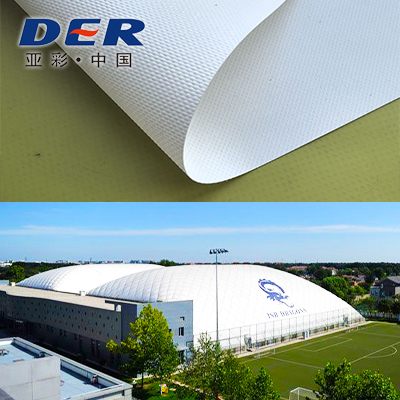
Inflatable Dome Building for Large Clear Span Space, Faster Project Delivery, and Custom Membrane Structure Performance
DERFLEX supplies inflatable dome building and air supported structure solutions for buyers who need large unobstructed interior space, faster installation logic, flexible project customization, and a more efficient path to enclosed area coverage than many conventional building methods. Whether the requirement is a sports dome, warehouse dome building, industrial air dome, temporary membrane facility, or a custom project for logistics, storage, recreation, maintenance, or operational protection, the value of an air supported dome begins with one central advantage: it encloses big space with a lighter overall system concept.
For project owners, distributors, contractors, and developers, an inflatable dome manufacturer is not just supplying membrane material. The right partner helps turn a performance goal into a workable building solution that balances structure type, membrane direction, operational needs, project timeline, access systems, environmental expectations, and long-term commercial value. This page is built to help serious buyers understand how a custom inflatable dome building can serve sports, warehousing, industrial, agricultural, emergency, and event-related applications while supporting OEM-style project customization, lead-time control, quality communication, and project-based documentation alignment.
- Large Clear Span Coverage
- Custom Dome Design Support
- Sports / Warehouse / Industrial Use
- OEM / Project-Based Development
- Quality & Documentation Coordination
- Lead Time & Delivery Focus
Large Span Efficiency
Designed for big interior volume with minimal visual interruption and strong space utilization value.
Application Flexibility
Suitable for sports, storage, logistics, industry, temporary shelter, and multi-use enclosed environments.
Custom Project Logic
Can be developed around size, openings, usage flow, environmental needs, and project identity.
Commercially Strong Option
Supports buyers looking for a faster, lighter, and more distinctive dome building solution.
What Is an Inflatable Dome Building?
An inflatable dome building, often also called an air dome, air supported dome, or air supported structure, is a membrane-based building solution that uses controlled internal air pressure to maintain the architectural form of the envelope and create a large enclosed space. Instead of relying in the same way on a dense forest of interior columns or a heavy conventional frame across the whole span, the building envelope and pressure system work together to create a stable, high-volume enclosure. This gives the project a distinctly different construction logic from many traditional buildings and makes it especially attractive where clear span space, fast deployment, and strong spatial efficiency are priorities.
For buyers comparing different large-area enclosure solutions, the real commercial value of an air dome is not only that it looks modern or technically interesting. The value is that it can solve space problems in a practical way. Sports operators need uninterrupted playing areas. Warehouse users want large flexible floors without intrusive columns blocking storage and handling routes. Industrial operators need enclosure over equipment, materials, or production-related processes without creating unnecessary structural interference. Event and temporary facility buyers often need large covered volume quickly and efficiently. In all of these cases, the inflatable dome building provides a compelling path because it merges membrane technology, air support, access systems, and mechanical coordination into one operating concept.
An air supported dome building is particularly attractive when buyers want more than a conventional building. Many project teams are no longer asking only, “What is the cheapest box?” They are asking, “What structure best fits how this space will actually be used?” If the goal is to create a bright, open, large-span environment with rapid deployment logic and strong visual impact, a membrane dome building often rises to the top of the shortlist. It is also attractive for phased or evolving operations, because it can align well with temporary, seasonal, or transitional space needs where permanent heavy construction may not be the only strategic answer.
In practical sourcing language, buyers may also search for terms such as inflatable sports dome, warehouse air dome, air supported building manufacturer, membrane dome supplier, custom dome building, or air dome structure manufacturer. Although the wording varies, the core buyer need is usually similar: they need a structure that encloses large space efficiently, can be customized around real use conditions, and is backed by a supplier who understands both the membrane aspect and the project delivery aspect.
The dome is not just a fabric shell. It is a building system. Successful projects depend on how well the membrane solution, blower concept, door and access strategy, anchoring direction, interior layout logic, ventilation and temperature control, and operational workflow all fit together. This is why working with a professional inflatable dome building manufacturer matters. A commodity view of the project often leads to oversimplification. A system view leads to better performance, clearer expectations, and a better match between the owner’s goals and the finished facility.
Another major reason buyers choose an inflatable dome building is schedule pressure. Conventional construction can be slow, disruptive, or overbuilt for the actual use case. In contrast, an air supported dome is frequently evaluated because it offers a faster path to enclosed area, especially when the buyer’s priority is operational readiness rather than prestige through heavy structural mass. This does not mean every project is “temporary” or “low commitment.” On the contrary, many serious owners choose dome systems because they are strategic, efficient, scalable, and commercially sensible for the space they need to create.
From a user perspective, the dome can create a comfortable and visually impressive interior. From a supplier perspective, it is a technically coordinated membrane project. From a commercial perspective, it is often one of the strongest ways to create a large span environment without copying the logic of a standard steel shed or conventional hall. That combination of technical uniqueness and real-world practicality is exactly why inflatable dome buildings continue to gain attention across sports, storage, industrial, logistics, agricultural, and temporary project markets.
DERFLEX positions this solution for buyers who want a practical, customizable, and commercially credible air dome supply path. The objective is not to sell a generic “bubble,” but to help build a dome solution that supports long-term use, project efficiency, and clear buyer confidence from quotation through project coordination.
Need a custom inflatable dome building for your project?
Send your target size, application, location, door needs, interior use plan, and expected timeline. DERFLEX can help turn a general idea into a workable air dome solution.
Key Features Buyers Expect from a Competitive Inflatable Dome Building
1. Large Clear Span Interior Space
One of the main reasons buyers choose an inflatable dome building is the ability to enclose a large usable area with far less interior obstruction than many conventional buildings. This is especially valuable in sports, warehouse, and industrial projects where columns or intrusive framing can reduce layout flexibility, interrupt traffic flow, or limit space utilization. A well-designed air dome gives owners more freedom in how they plan courts, fields, storage lanes, machinery zones, maintenance areas, or temporary operations. Clear span value is not simply an architectural benefit; it is a direct operational and financial advantage because it lets the customer use more of the enclosed area effectively.
2. Faster Path to Enclosed Operational Space
Schedule pressure is one of the strongest drivers in modern dome procurement. Buyers often need space quickly for seasonal sports, warehouse expansion, industrial overflow, logistics staging, emergency deployment, or transitional facilities. An air supported structure is often evaluated precisely because it can support a quicker route to an enclosed environment compared with more traditional heavy-build methods. This does not eliminate design and coordination requirements, but it changes the project rhythm in a way that many owners find commercially attractive. For businesses where delayed occupancy means lost revenue or disrupted operations, project speed matters.
3. Strong Customization Potential
Serious buyers are rarely looking for a one-size-fits-all dome. They want the building to fit their land, their use case, their traffic pattern, their equipment, and their business model. A professional inflatable dome manufacturer should be able to discuss custom dimensions, door and access strategy, internal layout planning, branding, membrane direction, lighting coordination, HVAC coordination, and project-specific priorities. Customization is not a luxury in this category. It is one of the central reasons the dome solution is commercially strong, because it allows the structure to serve the operation rather than forcing the operation to adapt to a generic shell.
4. Efficient Enclosure for Diverse Applications
An air dome is highly versatile. It can serve sports venues, training halls, tennis and football domes, warehouse expansion, industrial shelters, bulk storage, logistics hubs, maintenance depots, temporary workspaces, exhibition halls, and many other uses. That versatility makes the category attractive not only for direct project owners but also for integrators, developers, distributors, and regional partners. It is one of the rare building formats that can combine large span efficiency with a broad market range.
5. Distinctive Architectural and Commercial Identity
Buyers sometimes underestimate the value of a building that looks different. An air supported dome building has a modern, clean, high-impact visual presence. This can be a strategic advantage for sports centers, event operators, entertainment venues, commercial developments, branded facilities, and innovation-led industrial projects. A distinctive building can improve perception, enhance marketability, and support stronger customer attention. In competitive environments, the building itself can become part of the business proposition.
6. Membrane-Based Performance Direction
The dome envelope is more than a covering. It is a core performance element. Membrane selection affects light behavior, thermal direction, durability, visual appearance, maintenance rhythm, and overall system value. Buyers working with a knowledgeable membrane dome supplier gain an advantage because the membrane is discussed as part of the operating solution rather than as an afterthought. This is especially important for owners who care about daylight quality, energy direction, image, or long-term operational consistency.
7. Application-Specific Access and Openings
A dome project only works well if people, equipment, goods, and vehicles can move through it efficiently. That is why access planning is so important. Sports domes may need controlled player and visitor access. Warehouse domes may need forklift movement and loading routes. Industrial dome buildings may need service openings or large equipment doors. Custom openings, airlock strategy, pedestrian and vehicle flow, and layout coordination all influence project success. A supplier who understands these operational details adds real value beyond the membrane itself.
8. Scalability for Project Growth
Some buyers start with one dome and later expand. Others use a dome as part of a phased site strategy. This makes scalability important. A well-positioned custom dome solution can support project evolution more effectively than a rigid conventional format when the owner’s needs are changing or when land use, seasonal demand, or operational planning may shift over time. That flexibility is commercially meaningful for many businesses.
9. Better Use of Temporary or Transitional Opportunities
There are many situations in which the buyer needs space now but does not want to follow the full logic of a traditional permanent building immediately. This can include temporary logistics hubs, seasonal sports operations, construction-phase enclosures, interim industrial storage, emergency response support, or event-related applications. In these cases, a custom air dome building offers a powerful middle path: more capable than a basic tent solution, yet often more agile than full conventional building construction.
10. OEM / Project Branding Potential
The dome category is also attractive for branded projects and special-purpose deployments because the building can be closely aligned with project identity. Exterior visual presence, membrane color strategy, entrance treatment, and internal use organization can all contribute to a more recognizable facility. This is useful for sports operators, event venues, commercial developers, and regional solution partners who want the project to stand out rather than disappear into generic industrial architecture.
11. Quality and Documentation Coordination
In serious projects, buyers need more than a concept rendering. They need clarity on solution direction, membrane quality logic, system coordination, and project documentation flow. A professional dome building supplier should be able to discuss not only the building form but also quality expectations, documentation alignment, and how project requirements relate to membrane selection, usage, access, and coordination with mechanical or operational systems. This reduces uncertainty and supports better planning from the start.
12. Strong Value in Space-Creation Economics
The biggest financial advantage of a dome is often not a single material price point. It is the broader economics of space creation. When the owner needs a large covered volume with flexible interior use, quicker deployment logic, and a compelling visual identity, a membrane dome building can offer very strong value. Buyers increasingly compare options not just on structural cost, but on time-to-use, flexibility, customer experience, and operational efficiency. On those terms, the air dome can be a highly competitive choice.
Why These Features Matter in Real Procurement
The strongest dome projects are never sold only on appearance. They are sold because the building format solves a real business problem. A sports operator needs year-round capacity. A warehouse business needs faster expansion space. A logistics company needs protected operating area. An industrial user needs enclosure over a process or asset. A municipality needs an efficient public-use structure. A developer needs a building that differentiates the site. Once the buyer frames the decision this way, the air dome becomes much easier to evaluate.
This is also why the best air supported structure manufacturer does not talk only about membrane. They talk about business use, layout logic, project timing, access design, environmental priorities, documentation expectations, and long-term usability. That broader conversation is what turns a dome from a novel concept into a credible investment decision.
Technical Specifications for Inflatable Dome Building Projects
Every successful air dome project begins with correct technical framing. Many buyers initially ask simple questions such as: How large can it be? What membrane is used? Can it handle our climate? How are doors arranged? Can it be insulated? These are all useful questions, but the most important issue is whether the system is aligned with the project’s actual purpose. A sports dome, a warehouse dome, and an industrial air supported building may share a similar structural language, but their technical priorities can be very different.
The following table presents a commercial reference framework for discussing an inflatable dome building supplier or air dome manufacturer. Final project design should always be discussed around location, use case, span, opening requirements, local conditions, and operational needs.
| Structure Type | Air supported membrane structure using controlled internal air pressure to maintain dome form and create large clear span enclosure. |
|---|---|
| Typical Applications | Sports domes, warehouse domes, industrial enclosure, logistics and storage facilities, temporary buildings, maintenance shelters, event spaces, and custom large-span membrane architecture. |
| Project Span Direction | Custom project dimensions developed according to site requirement, use case, interior layout, and operational flow. Span and height are discussed case by case. |
| Membrane Direction | High-performance membrane structure materials selected according to durability, light management, operational intent, climate direction, and project image. |
| Envelope Configuration | Single or multi-layer project direction depending on performance intent, system strategy, and operational expectations. |
| Access System | Pedestrian airlock entries, service openings, large doors, vehicle access integration, and project-specific movement strategy can be discussed according to usage pattern. |
| Anchoring / Base Coordination | Anchoring and perimeter coordination depend on site condition, foundation strategy, dome geometry, and engineering direction for the project. |
| Climate / Mechanical Coordination | Air supply, pressure support, ventilation, heating, cooling, and other system coordination can be aligned with local climate and interior use requirements. |
| Lighting Coordination | Daylight direction, interior lighting strategy, and project-specific visibility requirements can be integrated into the overall dome solution concept. |
| Branding / OEM Direction | Custom identity, visual concept, color direction, entry emphasis, and project-specific presentation can be discussed for branded deployments. |
| Quality Communication | Specification clarity, membrane direction, access details, project coordination, and documentation alignment are discussed based on buyer requirement and end-use expectations. |
| Documentation / Certification Coordination | Project documentation and certification-related expectations can be reviewed early based on destination market, use category, and owner requirements. |
| Lead Time Factors | Lead time depends on project size, customization level, opening systems, documentation needs, and production planning. Early design clarity usually improves schedule control. |
How Buyers Should Read the Technical Offer
A technical proposal for an inflatable dome building should be treated as a project solution, not a simple material list. The building form, membrane direction, access systems, environmental support, and interior use pattern all interact. This is why two domes of similar size can be commercially very different. One may be optimized for public sports use, another for industrial machinery, and another for clean warehouse circulation. If the use case is misunderstood, even a technically impressive dome can become the wrong building.
Buyers should therefore include practical project information at RFQ stage. What will happen inside the dome? Will it host public traffic, athletes, vehicles, goods, equipment, or stored materials? How often will doors open? Is the interior climate sensitive? Does the project need a premium architectural image or a more purely functional layout? Are there site or documentation constraints? These questions shape the right specification much more than a generic conversation about membrane thickness alone.
For this reason, sourcing from a professional air supported building supplier provides a major advantage. The supplier can help connect membrane choices, access planning, schedule logic, and owner priorities in a way that supports clearer project development. That creates better outcomes than treating the dome as just another roof covering.
Looking for a dome solution built around your exact span, access, and use case?
Share project dimensions, intended function, climate, and access requirements. DERFLEX can help structure a practical dome quotation around your real operating needs.
Applications for Inflatable Dome Building Across Sports, Storage, Industry, and Specialized Projects
One of the biggest strengths of the inflatable dome building category is that it is not limited to one market. The same structural idea can serve very different operational models, which makes it attractive to project owners, public institutions, private operators, and commercial developers alike. Below are some of the most common application directions where a custom air dome building creates strong value.
Sports and Recreation Domes
Sports facilities are among the most established uses for air supported dome buildings. Tennis, football, padel, training areas, community recreation, and multi-sport facilities all benefit from large clear span space, good player movement freedom, and weather-independent operation. For commercial sports operators, the dome can create additional revenue capacity by extending usable seasons or enabling full-year programming.
Warehouse Expansion
Many warehouse operators need enclosed area faster than conventional expansion can deliver. A warehouse air dome can provide a practical way to create bulk storage, overflow capacity, staging space, or operational protection while maintaining a large open floor area for goods movement and internal organization.
Industrial Enclosure
Industrial buyers use domes for equipment coverage, material protection, maintenance environments, process-related enclosure, and operational shelter where large span and flexible layout matter. In many cases the dome becomes a highly efficient alternative to heavier building types when the main goal is protected usable volume.
Logistics and Distribution Space
Logistics businesses often need fast space creation for sorting, loading support, temporary warehousing, seasonal handling peaks, or hub expansion. A membrane dome building can support these needs by adding protected area while keeping movement patterns practical for goods and personnel.
Bulk Storage and Material Coverage
Large-span air dome solutions are attractive for raw materials, packaged inventory, agricultural goods, recyclables, industrial stock, and other storage uses where a wide, unobstructed footprint is important. The dome format is particularly useful when internal maneuverability and efficient volume enclosure are priorities.
Temporary or Transitional Facilities
Some projects need space for a defined period or during a transitional phase. Construction programs, emergency operations, temporary campuses, interim production, and seasonal demand facilities can all benefit from a dome system that is more capable and architecturally stronger than a simple temporary shelter.
Event and Exhibition Use
Event buyers value the dome for its visual impact, interior openness, and ability to create a memorable venue environment. Exhibition halls, branded activations, entertainment events, and semi-permanent event spaces can all benefit from the distinctive presence of an inflatable dome building.
Public and Community Projects
Municipalities, schools, and community operators often need efficient enclosed space for recreation, training, operations, or public programming. A custom air dome can be a compelling solution when budget sensitivity, speed, and space flexibility must all be balanced.
Maintenance and Service Facilities
Vehicle fleets, service operations, infrastructure maintenance teams, and specialized equipment users may need protected work area without investing immediately in full conventional halls. Dome buildings can provide functional coverage that supports maintenance and service workflows while keeping the interior arrangement flexible.
Industrial Yard Weather Protection
For some industrial operations, the dome works as a way to protect yard-based activities, loading areas, sorting zones, or sensitive equipment from environmental exposure. In these uses, the dome contributes not only to protection but also to cleaner, more controlled workflow.
Commercial Branded Architecture
Businesses looking for a more differentiated built environment may choose an inflatable dome building because it has stronger identity than a conventional rectangular shell. This can be valuable where the structure itself becomes part of customer perception, market visibility, or project storytelling.
Special-Purpose Project Development
Some buyers approach the dome category because their use case does not fit standard building typologies cleanly. These buyers often need a project partner who is comfortable with non-standard spans, hybrid operating conditions, and customized layout requirements. This is where a professional air dome supplier becomes especially valuable.
Why Application Matching Is So Important
Not all dome projects should be specified the same way. A sports dome prioritizes user experience and playing space. A warehouse dome prioritizes storage and handling efficiency. An industrial dome may prioritize doors, service access, and operational durability. An event dome may prioritize visual impact and audience flow. These differences mean buyers should always begin with the application and only then refine the structure direction.
That is also why the best inflatable dome supplier does not lead with one universal standard product. The best supplier leads with the project question: what must this dome actually do? Once that is clear, the design and commercial path becomes much stronger.
OEM and Custom Inflatable Dome Building Programs with Lead Time, Quality, and Certification-Focused Coordination
Buyers in the dome category rarely want a purely generic solution. The project usually has a site-specific dimension, an operational requirement, or a commercial identity that requires customization. That is why OEM-style project development and custom coordination are central to this market. A serious inflatable dome building manufacturer should be prepared to discuss not only membrane direction, but also building use, entry conditions, equipment movement, climate, branding, and the practical path from quotation to installation planning.
DERFLEX supports dome projects where customization is part of the value proposition. Some customers need sports-focused space planning. Others need industrial-scale openings. Some need temporary project deployment. Others want a highly visible branded facility. Many need the dome to fit around a workflow rather than simply sit on a site. This is why custom development is commercially powerful in this sector: it turns the building into a business tool rather than a generic shell.
Common Customization Areas
- Project Size and Geometry: custom span, height, footprint, and internal area planning according to use, land condition, and circulation needs.
- Access Design: pedestrian airlocks, service access, large door systems, vehicle entry, and operational movement planning.
- Interior Use Orientation: sports layout, warehousing pattern, storage plan, industrial process flow, or multi-purpose arrangement.
- Membrane Direction: envelope strategy aligned with durability, light behavior, appearance, and environmental priorities.
- Brand / Visual Identity: color direction, exterior impression, entrance treatment, project presentation, and commercial identity.
- Mechanical Coordination: pressure support, ventilation, heating, cooling, and related system alignment with usage and climate goals.
- Documentation Path: project communication, specification clarity, documentation alignment, and certification-related coordination based on market requirement.
Why Lead Time Is a Strategic Issue
Dome buyers are often time-sensitive. Sports operators may want facilities ready before a season. Warehouse users may need immediate expansion capacity. Industrial owners may need faster enclosure for ongoing operations. Event and temporary buyers may face fixed launch dates. In all of these cases, lead time becomes a strategic issue rather than a purchasing detail. The best way to control lead time is to clarify the project early: what size is needed, what access systems are required, what the interior is for, and what documentation or certification-related expectations may apply.
When project details are vague, the timeline becomes harder to control. When the project is clearly defined, quotation becomes more precise and production planning becomes smoother. This is one of the reasons working with a capable air dome manufacturer adds value: it reduces the hidden delay that comes from ambiguity.
Quality Means More Than Membrane Supply
Quality in an inflatable dome project should be understood as suitability plus consistency. The membrane matters, but so do system thinking, access details, project coordination, and communication quality. Does the proposed solution fit the use? Are the openings right? Is the interior volume aligned with actual activity? Are the owner’s expectations clear? Is the supplier helping reduce downstream confusion? These are quality questions too.
DERFLEX approaches dome quality as part of the whole project conversation. The aim is not merely to provide a product label, but to help buyers develop a clearer and more workable dome path. This is particularly important for customers who are new to membrane dome buildings and need confidence that the solution has been thought through in a commercially serious way.
Documentation and Certification-Related Coordination
Large-span building projects often involve stronger expectations around documentation, planning clarity, and certification-related discussion than standard product purchases. Different markets and project types may require different levels of technical communication and project support. For this reason, certification-related expectations, fire-performance discussions, membrane documentation expectations, or other compliance-oriented requirements should be raised early in the quoting stage.
DERFLEX can discuss documentation and certification-focused coordination according to destination market and project context. This early-stage alignment helps buyers avoid late-stage friction and supports a smoother project path. It also makes commercial comparison between suppliers more meaningful, because the buyer is evaluating not just headline claims, but how responsibly the project will be handled.
Why OEM Thinking Improves Dome Value
OEM in the dome world is not only about private label. It is about ownership of the project definition. A buyer who specifies correctly, defines priorities clearly, and works with a supplier on custom scope usually ends up with a better building. That building performs better because it reflects actual use, and it delivers stronger long-term value because the structure is tailored rather than improvised. This is why custom dome development is not a premium add-on; it is often the smartest way to protect project value.
Need an air dome solution with custom openings, layout logic, and project documentation support?
We can discuss size, access, intended use, climate direction, branding, delivery timing, and certification-related expectations for your dome project.
Inflatable Dome Building Comparison vs Other Large-Space Building Approaches
| Comparison Item | Inflatable Dome Building | Conventional Steel Building | Frame-Supported Membrane Hall | Simple Tent Structure | Traditional Concrete Hall |
|---|---|---|---|---|---|
| Clear Span Efficiency | Very strong for large unobstructed interior space | Good, but design logic may vary with structural scheme | Good depending on frame direction | More limited in premium large-space use | Can be strong, but often heavier and more complex |
| Project Speed Potential | Often attractive for faster enclosed-space creation | Usually slower than dome-based deployment logic | Project dependent | Fast, but usually lower in building performance class | Generally slower and more construction-intensive |
| Visual Impact | High, modern, distinctive architectural identity | Conventional industrial appearance | Modern but more frame-defined | Functional and temporary-looking | Conventional permanent-building image |
| Customization | High for project-specific span, access, and use case | High but often with heavier construction logic | High depending on structural system | Moderate | High, but with greater time and cost implications |
| Space Creation Economics | Often strong where large covered area and speed are priorities | Varies by structure and project scope | Varies | May be low-cost initially but limited in capability | Often higher capital intensity |
| Best Fit | Sports, storage, industrial, logistics, temporary and special-purpose large spaces | Long-term conventional buildings | Hybrid membrane projects | Short-term light-duty shelter | Heavy permanent building needs |
Why Buyers Often Shortlist the Air Dome
When buyers compare large-space solutions, they are increasingly evaluating not just initial structure type, but total project intent. If the goal is to create space quickly, efficiently, and with a modern, flexible enclosure concept, the air dome becomes very attractive. It is especially strong for users who need large, open interior volume without wanting to follow the full logic of a heavy conventional building.
The dome also occupies a unique middle ground. It is far more architecturally and operationally capable than a simple tent solution, yet it can remain more agile and project-efficient than full conventional construction in the right application. This is why many buyers now compare inflatable dome building directly against steel halls, frame-supported membrane buildings, and other enclosure systems rather than treating it as a niche product.
The right answer depends on project goals. But where clear span, speed, brand presence, and use flexibility are central, the air supported structure often performs very well as a strategic choice.
Representative Project Case: Custom Inflatable Dome Building for Multi-Use Sports and Event Operation
The following case is presented as a representative project scenario to show how a serious buyer may evaluate and implement an inflatable dome building. It reflects the type of commercial reasoning often seen in real dome projects and illustrates why system-level thinking matters so much.
Project Background
A regional sports and leisure operator had outgrown its seasonal outdoor model. The site hosted football training, recreational programs, youth events, and community rentals, but winter weather and rain reduced usable operating days. Conventional permanent expansion had been considered, but the ownership team was concerned about timeline, cost concentration, and whether a conventional hall would fit the site’s immediate business goals. What they needed most was a large enclosed area that could support multiple revenue programs quickly while preserving layout flexibility.
The buyer began evaluating several large-space options: a conventional steel sports hall, a frame-supported membrane building, and an air supported dome. After reviewing how each option aligned with the business model, the dome gained traction because it offered strong clear span value, faster project logic, and a visually distinctive identity that matched the operator’s market positioning.
Main Challenges
- Need for a large uninterrupted playing area
- Strong urgency to open before the next booking cycle
- Need for a solution that could support community use, rentals, and coaching programs
- Concern that conventional construction would be slower and operationally less agile
- Requirement for clean access planning and good interior flow
- Desire for a building that felt modern and commercially attractive
Solution Direction
The operator shifted toward a custom inflatable sports dome solution. Rather than simply ordering a standard enclosure, the project team worked to define actual usage patterns: athlete circulation, visitor entry, service access, lighting expectations, training-zone flexibility, and seasonal operating rhythm. This is where working with a dome-focused supplier created value. The dome was developed as a use-driven facility rather than as a generic cover.
The access strategy was carefully reviewed because the building had to support both controlled public entry and internal operational movement. Branding and exterior impression were also important because the structure would be visible from surrounding roads and become a landmark for the site. The operator wanted the building to signal quality and professionalism, not just function as an oversized shelter.
Commercial Outcome
Once the project was properly framed, the operator could see a clearer business case. The dome would allow expanded program scheduling, more dependable weather-independent bookings, and a stronger premium perception in the local market. It also created additional value for off-season activities and event-type use, improving the return on the enclosed area.
Compared with the steel-building alternative, the air dome aligned better with the owner’s priorities: faster usable space, strong internal openness, and a more distinct brand presence. Compared with a simpler temporary structure, the dome offered a far more serious facility image and more appropriate long-term operational performance.
Project Lessons for Buyers
The most important lesson from the case is that the best dome projects are defined by business logic first. The owner did not choose the dome because it was unusual. The owner chose it because it solved a real market problem. It created more bookable time, more usable space, better customer perception, and a stronger platform for multi-program operation.
This same logic applies far beyond sports. Warehouse operators, industrial users, public facilities, and logistics businesses often arrive at a similar conclusion when they compare building formats in terms of speed, span efficiency, flexibility, and project impact. The air dome becomes compelling when it aligns with the economics of the operation.
Why Choose DERFLEX as Your Inflatable Dome Building Manufacturer or Supplier
Project-Oriented Dome Thinking
DERFLEX approaches the dome as a project solution rather than a generic envelope. This helps buyers align structure type, membrane direction, and operating logic from the beginning.
Custom Development Capability
Size, access, layout orientation, visual direction, and project-based customization can be discussed according to sports, warehouse, industrial, or special-purpose requirements.
Commercial Focus on Real Use Cases
The aim is not to sell a dome in isolation, but to support buyers who need clear span space, faster project logic, and a building that actually fits the business model.
Lead Time Awareness
Many dome projects are time-sensitive. DERFLEX encourages early clarity on use, access, and documentation needs so quotation and project planning can move more efficiently.
Quality Discussion Beyond Basic Product Claims
Quality is treated as system suitability and project consistency, not just as a generic material statement. This reduces mismatch and supports better buyer confidence.
Documentation and Certification-Related Coordination
When the market or project requires clearer documentation or certification-related discussion, those expectations can be reviewed during the quotation stage to support a smoother project path.
Strong Fit for Multiple Sectors
DERFLEX dome solutions can support sports, storage, industrial, logistics, temporary, and branded architectural applications, giving buyers a wider range of project possibilities.
Supplier Mindset Built Around Long-Term Value
The best project outcome is not the one with the lowest headline number; it is the one with the right building logic, clearer coordination, and stronger operational value over time.
A More Credible Way to Source a Dome Project
Many buyers enter this category with curiosity but also uncertainty. That is understandable. An inflatable dome building is not a commodity item, and serious project owners want confidence that the supplier understands both the membrane side and the business side. DERFLEX addresses this by treating the quotation stage as part of project definition. This helps buyers compare more intelligently and reduces the risk of choosing a solution that looks good in presentation but fits poorly in practice.
In short, DERFLEX is positioned for buyers who want a commercially serious, customizable, and project-aware air dome supply path. That is the foundation for stronger decision-making and better long-term project value.
Ready to discuss your dome building project in detail?
Share your application, span, access requirements, location, schedule target, and any certification-related expectations. We will help you structure a more practical dome RFQ.
Frequently Asked Questions About Inflatable Dome Building
1. What is an inflatable dome building?
An inflatable dome building is an air supported membrane structure that uses controlled internal air pressure to maintain its architectural form and create a large enclosed space with strong clear span potential.
2. What is the difference between an air dome and a conventional steel building?
The biggest difference is structural logic and space-creation strategy. An air dome uses membrane and pressure support to create a large-span enclosure, while a conventional steel building follows a more traditional framed construction method. Buyers often compare them in terms of speed, clear span use, appearance, and project economics.
3. What applications are suitable for inflatable dome buildings?
Common applications include sports facilities, warehouses, industrial enclosures, logistics centers, temporary buildings, event spaces, maintenance shelters, and custom large-space project uses.
4. Can DERFLEX provide custom dome building solutions?
Yes. DERFLEX can discuss custom span, access systems, openings, membrane direction, branding, layout logic, and project coordination according to your specific use case.
5. What information should buyers prepare for a quote?
Buyers should prepare the intended use, approximate span and footprint, location, climate conditions, interior function, access and door needs, expected schedule, and any documentation or certification-related requirements.
6. Is an inflatable dome building only for temporary use?
Not necessarily. Buyers may choose air supported structures for temporary, seasonal, transitional, or longer-term operational needs depending on the project strategy and building purpose.
7. Why is clear span important in a dome building?
Clear span improves usable area, traffic flow, layout freedom, and interior flexibility. It is especially valuable in sports, warehousing, industrial handling, and event applications where internal obstructions reduce operational efficiency.
8. Can the dome be adapted for sports and warehouse use?
Yes. Sports and warehouse are two of the most common dome applications. The configuration, openings, interior organization, and system direction should be adapted to the specific operating model.
9. How should buyers compare dome suppliers?
Buyers should compare not only price, but also how clearly the supplier understands the application, how well the proposal reflects access and use requirements, how customization is handled, and how documentation or certification-related needs are addressed.
10. Why work with a professional inflatable dome manufacturer?
A professional manufacturer helps align the membrane building concept with the actual project need. This usually improves technical clarity, schedule planning, and long-term commercial suitability compared with buying only on entry price.
Final Buying Perspective
The best inflatable dome building is not the one with the most impressive generic claim. It is the one that fits your actual site, actual use, and actual business objective. Buyers who approach the dome as a full project solution rather than a simple enclosure usually make better decisions and achieve stronger results.
DERFLEX supports that kind of decision-making. Whether your need is sports, warehouse, industrial, logistics, temporary use, or a branded custom project, the next step is to define the operating goal and build the dome solution around it.
Related Membrane Structure and Industrial Fabric Solutions
The following internal links are reserved for pages closely related to inflatable dome building and membrane-structure projects. If your live site uses different URLs, replace the links below with your actual internal pages while keeping the anchor logic relevant.
Tell us your dome size, use case, and project timeline
Whether you need an air supported structure manufacturer for a sports dome, warehouse dome, industrial dome, or special custom project, DERFLEX is ready to discuss the right solution path.