


Biogas Membrane Supplier for Digester Roofs, Gas Holders, and Custom Flexible Gas Storage Systems
DERFLEX is a professional biogas membrane supplier and biogas membrane manufacturer serving agriculture, wastewater treatment, industrial organic waste, and renewable energy projects worldwide. We provide engineered membrane materials and custom fabricated solutions for biogas digester membrane, gas holder membrane, double membrane biogas storage, biogas dome membrane, and flexible gas storage membrane systems.
In modern biogas projects, the membrane is not a secondary accessory. It is one of the most important functional components in the overall system. It affects gas tightness, weather protection, structural stability, operational safety, maintenance intervals, installation efficiency, and total lifecycle value. Whether the requirement is a membrane roof for an anaerobic digester, an outer membrane for a double membrane biogas storage system, or a custom gas holder cover designed for specific climate conditions, buyers need a supplier who understands both material performance and project realities.
If you are looking for a dependable custom biogas membrane partner with OEM capability, production consistency, commercial support, and export-ready communication, DERFLEX offers a practical and scalable solution for distributors, EPC contractors, biogas system builders, engineering firms, and long-term project buyers.
- Gas-tight membrane solutions for biogas containment and digester systems
- OEM / Custom thickness, structure, size, color, and fabrication support
- Suitable for agricultural waste, manure digestion, wastewater sludge, and industrial organics
- Factory-direct supply with stable quality, lead time planning, and project cooperation
Who This Biogas Membrane Solution Is For
DERFLEX biogas membrane products are designed for professional buyers who need stronger technical matching, dependable delivery, and practical customization support.
- Biogas plant builders and anaerobic digestion system integrators
- Agricultural biogas project contractors and engineering firms
- Wastewater treatment plant upgrade and gas capture projects
- Distributors looking for a reliable biogas membrane supplier
- Energy project buyers seeking a biogas membrane manufacturer for repeat orders
- OEM buyers requiring custom fabricated membrane structures and export packaging
What Is a Biogas Membrane?
A biogas membrane is a high-performance flexible barrier material used to contain, separate, protect, or stabilize gas and liquid zones within biogas generation and storage systems.
A Practical Definition for Engineering and Procurement Teams
A biogas membrane is a specialized flexible material designed for use in anaerobic digestion and gas storage systems where gas containment, pressure stability, weather resistance, and structural reliability are essential. It may serve as an inner membrane, outer membrane, intermediate partition, digester roof cover, gas holder dome, bottom sealing layer, or customized enclosure component depending on the design of the biogas plant.
In a typical project, the membrane must do far more than simply cover an opening. It may need to separate biogas from external air, resist humidity and chemical exposure, remain flexible under changing temperatures, tolerate wind and rain, support dynamic pressure conditions, and maintain gas tightness over long service periods. For this reason, the choice of a biogas digester membrane or gas holder membrane should never be based on price alone.
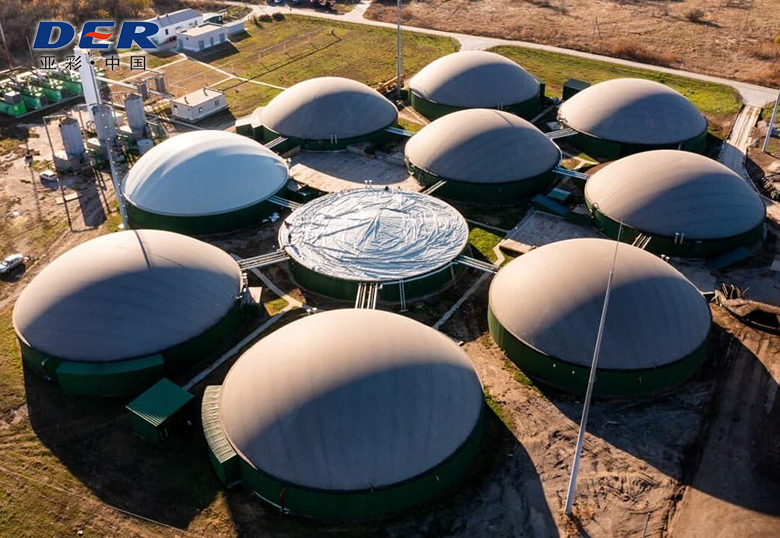
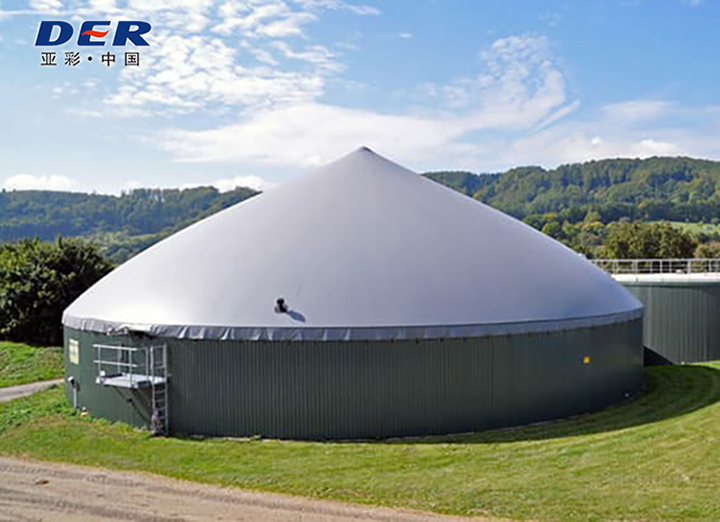
In modern renewable energy projects, flexible membrane systems are widely used because they offer strong adaptability, practical installation, and efficient use of space compared with some rigid storage concepts. A double membrane biogas storage structure, for example, uses an inner membrane for gas containment and an outer membrane for shape stability and weather protection. Between these functional layers, system performance depends heavily on the quality and engineering suitability of the membrane material itself.
Whether the application is a farm digester, wastewater sludge digestion project, food waste biogas plant, brewery waste system, livestock manure digester, or industrial organic waste facility, a dependable anaerobic digester membrane is a core part of project stability and long-term operating value.
Need a Custom Biogas Membrane for Your Project?
Send your digester type, storage volume, membrane structure needs, environmental conditions, and quantity. DERFLEX can recommend a suitable custom membrane solution.
Key Features of DERFLEX Biogas Membrane Solutions
Biogas projects operate in demanding environments. The membrane must perform consistently under chemical, thermal, mechanical, and climatic stress while supporting safe and efficient gas handling.
1. Reliable Gas Tightness
One of the most important functions of a gas holder membrane or biogas storage membrane is gas containment. A properly engineered membrane system helps reduce leakage risk, improve operational reliability, and support stable plant performance. In renewable energy projects, gas tightness is directly linked to efficiency and safety.
2. Weather and Outdoor Durability
Many biogas membrane systems are installed outdoors and remain exposed for long periods. Sunlight, rain, wind, humidity, temperature fluctuation, and seasonal conditions all place stress on the material. DERFLEX membrane solutions are designed with outdoor-use logic in mind so buyers can match structure and surface performance to actual site conditions.
3. Mechanical Strength and Dimensional Stability
A membrane roof or storage dome may experience movement caused by gas volume variation, wind load, fastening stress, internal pressure, and installation handling. Reinforced structures help improve tensile strength, tear resistance, and dimensional stability, which are critical for long-term use.
4. Chemical and Humidity Resistance
Biogas systems frequently involve humid, condensate-rich, and chemically challenging environments. Depending on the project design, the membrane may need strong resistance to moisture, organic compounds, and surrounding environmental factors. Proper material design helps improve durability and operational predictability.
5. OEM / Custom Fabrication Support
Every digester is different. Diameter, height, roof shape, anchoring system, reinforcement requirements, ports, welding layout, and installation method can vary significantly. DERFLEX supports OEM biogas membrane and custom biogas membrane cooperation to help buyers source project-fit solutions rather than off-the-shelf compromises.
6. Strong Commercial Value for B2B Buyers
Working with a real biogas membrane supplier can improve communication speed, repeat-order stability, customization control, and lifecycle value. This is particularly important for EPC contractors, distributors, and system integrators who require dependable long-term cooperation.
Technical Specifications of Biogas Membrane
The exact configuration depends on digester type, gas storage design, site climate, structural method, pressure requirements, and service-life expectations.
| Product Name | Biogas Membrane / Biogas Digester Membrane / Gas Holder Membrane / Flexible Gas Storage Membrane |
|---|---|
| Main Material Structure | Reinforced technical textile with specialized coating system for gas containment and environmental durability |
| Typical Fabric Base | High-strength polyester reinforcement or project-oriented equivalent structure |
| Weight Range | Custom according to inner membrane, outer membrane, roof membrane, or storage structure requirement |
| Thickness Range | Customized according to application, environmental stress, and mechanical performance target |
| Gas Tightness | Designed for reliable gas containment in biogas storage and digestion systems |
| Weather Resistance | Outdoor-use oriented; can be matched for UV, rain, wind, and temperature exposure |
| Mechanical Properties | Reinforced strength, tear resistance, dimensional stability, flexible handling |
| Color Options | Project-based custom color discussion available for inner and outer membrane roles |
| Fabrication Options | Welding, edge reinforcement, custom openings, sleeves, flange coordination, anchoring adaptation |
| Application Types | Digester roofs, gas holders, double membrane domes, wastewater treatment gas capture, agricultural biogas systems |
| Customization | OEM size, shape, membrane role, packaging, marking, and project-specific fabrication support |
| Documentation Support | Project communication, technical discussion, and specification matching support based on buyer requirements |
| Supply Type | Manufacturer / Supplier / OEM / Project supply / Long-term cooperation |
This table is a commercial reference format. You can later enrich it with exact tensile values, gas permeability data, coating chemistry, temperature ranges, or project-specific technical test data if needed.
Main Applications of Biogas Membrane
A professional biogas membrane page should cover the full range of realistic project scenarios. This improves relevance for buyers and supports stronger topical authority across multiple high-intent queries.
Agricultural Biogas Plants
Agricultural digesters processing manure, crop residues, silage, and organic farm waste commonly use membrane roofs and gas storage domes to support renewable energy generation. In this context, a durable biogas dome membrane helps improve gas containment, weather protection, and operational continuity.
Wastewater Treatment Facilities
In municipal and industrial wastewater treatment plants, biogas membranes are used for sludge digestion, gas capture, and storage applications. A wastewater treatment biogas membrane must support humid, chemically challenging, and often continuous-duty environments.
Food Waste and Organic Waste Digestion
Food processing plants, catering waste projects, and organic recycling systems often rely on anaerobic digestion. Membranes in these systems must combine gas tightness, durability, and practical fabrication compatibility with digester structures and storage needs.
Industrial Byproduct Energy Recovery
Breweries, distilleries, pulp facilities, and food manufacturing plants may recover energy from organic byproducts. A dependable methane storage membrane or flexible gas storage membrane supports capture and controlled handling of gas generated during the process.
Double Membrane Gas Holder Systems
Double membrane biogas storage systems use an inner membrane for gas containment and an outer membrane for form stability and protection. This structure is widely used where efficient, flexible storage and controlled dome shape are priorities.
Retrofit and Replacement Projects
Membrane replacement demand is significant in the real market. Existing digesters often need upgraded covers or replacement gas storage domes due to aging, damage, or changes in project scale. Buyers in this segment typically need accurate custom sizing and dependable delivery.
Understanding the Functional Layers in Biogas Membrane Systems
Many buyers search for biogas membrane without yet deciding whether they need an inner membrane, outer membrane, roof membrane, or full custom assembly. This section helps clarify the structure.
Inner Membrane
In a double membrane system, the inner membrane directly contains gas. It is one of the most performance-sensitive components in the structure because it must maintain gas tightness while adapting to pressure and volume changes during operation. Inner membrane selection should focus on containment reliability, flexibility, fabrication quality, and long-term operational suitability.
Outer Membrane
The outer membrane provides external weather protection and helps maintain the overall shape of the dome. It is exposed to wind, rain, UV, temperature changes, and environmental aging. Because it is visible and structurally important, it must balance appearance, weather resistance, and mechanical stability.
Bottom or Peripheral Sealing Components
Some systems also include perimeter sealing layers, anchoring interfaces, or support membranes that work together with the gas holder assembly. These components must be coordinated accurately during custom fabrication.
Digester Roof Membranes
Some anaerobic digester designs use a membrane roof integrated into the digester structure rather than a separate external gas holder. In such projects, the membrane may serve as both an enclosure and a gas handling interface, making structural matching especially important.
Fabricated Openings and Functional Details
Ports, inspection points, connection sleeves, pressure control interfaces, fastening areas, and specialized attachment details all affect the final membrane design. A professional biogas membrane manufacturer should be able to coordinate these requirements clearly rather than only offering a generic sheet material.
Why Layer Understanding Matters for Buyers
The strongest purchasing results come when buyers define the functional role of the membrane before confirming the material. Different roles often require different priorities in terms of coating, reinforcement, flexibility, UV performance, or fabrication method.
Planning a New Digester Roof or Gas Holder Membrane?
Share your application, geometry, volume target, and membrane role. DERFLEX can support custom engineering discussion and manufacturing coordination.
Why Choose DERFLEX as Your Biogas Membrane Supplier?
For project buyers, the membrane supplier is part of the project outcome. Material quality, fabrication precision, communication clarity, and lead time control all affect the final result.
Manufacturer Mindset for Project Supply
DERFLEX approaches technical membrane products from a manufacturing perspective rather than only from a resale perspective. That matters in biogas projects because buyers often need specific dimensions, detailed fabrication, reinforcement matching, and accurate project communication. Working with a real biogas membrane manufacturer typically gives buyers better control over the final product.
For EPC contractors, project integrators, and biogas equipment brands, this helps reduce uncertainty in planning and improves repeat-order consistency over time.
OEM / Custom Capability
Biogas membrane demand is highly customized. Diameter, dome geometry, anchoring layout, fabrication details, storage role, outer cover requirements, and climate conditions all vary by project. DERFLEX supports OEM and custom cooperation so the final membrane matches the system instead of forcing the system to adapt to a standard stock product.
Stable Quality for Long-Term Cooperation
A membrane project is too important for uncontrolled variability. Commercial buyers need confidence that their next order will match the last one in structure, fabrication quality, and performance logic. Stable quality is essential not only for the first installation but for long-term supply relationships and replacement projects.
Lead Time Awareness and Export Support
Biogas projects are schedule-sensitive. Installation windows, construction sequencing, site readiness, and commissioning plans all make lead time an important commercial factor. DERFLEX can support project-oriented communication around production timing, packaging, and supply coordination for international buyers.
Quality Documentation Mindset
Although documentation needs differ by market and project, serious buyers often evaluate suppliers based on their ability to communicate clearly about material structure, fabrication quality, and applicable performance considerations. DERFLEX is well positioned for such B2B discussions.
Growth Potential Beyond a Single Project
Many buyers start with one biogas membrane project and later expand into replacement supply, regional distribution, related tank covers, gas storage systems, or broader industrial membrane needs. Working with a capable factory partner makes that growth path easier to manage.
Biogas Membrane Comparison: DERFLEX Solution vs Other Common Material Approaches
Buyers often compare membrane options not only by price, but also by gas tightness, durability, fabrication adaptability, weather performance, and lifecycle economics.
| Comparison Item | DERFLEX Reinforced Biogas Membrane | Generic Thin Film Sheet | Standard Non-Reinforced Flexible Cover | Rigid Steel Storage Concept |
|---|---|---|---|---|
| Gas Containment Suitability | Strong, project-oriented containment logic | Weak for demanding long-term use | Limited depending on grade | Possible but high structural complexity |
| Mechanical Strength | Good to strong depending on structure | Low | Moderate | High but with heavy infrastructure cost |
| Weather Resistance | Designed for outdoor use | Often weak | Variable | Depends on coating and maintenance system |
| Customization Potential | Strong OEM / custom capability | Very limited | Limited | Low product flexibility |
| Installation Adaptability | Practical for many membrane systems | Basic | Moderate | Complex civil and structural requirements |
| Replacement / Retrofit Suitability | Excellent for project replacement work | Poor | Moderate | Not ideal for simple retrofit replacement |
| Lifecycle Value | Balanced performance and long-term value | Often poor due to replacement risk | Depends on actual environment | High capital commitment |
How to Choose the Right Biogas Membrane for Your Project
This section is essential for real buyers because many inquiries begin with a keyword, not a finalized specification. Strong supplier guidance can significantly improve project matching.
1. Start with the Functional Role
Is the membrane intended as an inner gas storage membrane, an outer weather membrane, a digester roof cover, a replacement gas holder, or a component in a wastewater treatment gas capture system? The functional role determines the real performance priorities. A membrane cannot be selected correctly without first understanding what it must do in the system.
2. Review Project Geometry Carefully
Diameter, height, curvature, edge design, anchoring system, inflation method, support conditions, and connection points all affect membrane fabrication and installation. In replacement projects, precise measurement is especially important to avoid costly mismatch.
3. Evaluate Environmental Conditions
Will the membrane face strong UV, heavy rainfall, wind exposure, high humidity, cold winters, or hot summers? Outdoor environmental exposure affects service life and surface performance. A membrane for mild conditions may not be suitable for an exposed project site.
4. Consider Gas and Process Conditions
Gas composition, condensate presence, process temperature, and operational cycling can influence how the membrane performs over time. Buyers should discuss real operating conditions rather than requesting material based only on general product names.
5. Define Lifespan and Maintenance Expectations
Some buyers focus on minimizing initial cost. Others focus on dependable long-term operation with fewer replacements and lower maintenance disruption. Clarifying the expected service life early helps determine whether a higher-spec membrane will provide better overall value.
6. Confirm Fabrication and Installation Details
Ports, anchors, weld lines, access points, sleeve connections, reinforcement areas, and packaging requirements should be discussed in advance. For project supply, detailed coordination is often more important than raw material cost alone.
7. Match Budget to Total Lifecycle Value
Membrane failure, premature aging, or inaccurate fabrication can create much greater cost than the difference between two material grades. Project buyers increasingly evaluate total lifecycle value rather than only initial unit price.
8. Choose a Supplier Capable of Repeat Cooperation
Biogas systems often require replacement membranes, expansion work, or parallel future projects. Buyers benefit from working with a biogas membrane supplier that can support long-term business continuity and consistent specification control.
Procurement Priorities for EPC Contractors, System Integrators, and Distributors
A strong commercial page should speak directly to how professional buyers actually make decisions. This section is written for that purpose.
Specification Clarity
Buyers value suppliers who can clearly translate project drawings and practical requirements into membrane fabrication language.
Repeat-Order Stability
Consistency across multiple projects protects engineering reputation and reduces procurement risk for long-term cooperation.
Lead Time Reliability
Project delays can be expensive. Delivery predictability matters, especially when site teams and installation windows are already scheduled.
Custom Fabrication
Most biogas membranes are not bought as standard rolls. Buyers often need finished or semi-finished project-specific fabrication.
Export Packaging
Large membrane systems require practical packing logic to reduce transport risk and support efficient site handling.
Commercial Communication
A supplier that responds clearly and accurately reduces internal decision friction and helps buyers move faster from inquiry to execution.
Looking for a Long-Term Biogas Membrane Manufacturer?
DERFLEX supports OEM cooperation, repeat project supply, replacement membrane orders, and customized gas holder solutions for global buyers.
Case Study: Custom Biogas Membrane for an Agricultural Digester Upgrade
Case-style content helps buyers understand how membrane sourcing works in real projects, not just in product catalogs.
Project Background
A regional agricultural renewable energy operator planned to upgrade an existing digester system serving livestock waste and crop residue feedstock. The original membrane assembly had reached the point where performance stability, long-term weather exposure, and replacement risk were becoming serious concerns. The operator needed a new membrane solution that would fit the existing structure while improving reliability and supporting continued energy generation.
The buyer was searching not only for a membrane product, but for a biogas membrane supplier able to communicate clearly about custom dimensions, project scheduling, and fabrication details. The project involved a real operational facility, so installation timing and replacement accuracy were important.
Buyer Requirements
The customer required dependable gas containment logic, strong outdoor durability, practical fabrication coordination, and packaging suitable for site delivery. In addition, the buyer wanted confidence that future replacement or expansion work could be supported by the same manufacturer.
DERFLEX Solution
DERFLEX recommended a reinforced membrane system matched to the project’s storage and roof role requirements. The solution focused on mechanical stability, weather performance, and custom fabrication accuracy. Technical communication centered on practical fit, project conditions, and long-term commercial usability rather than just generic material description.
Project Outcome
After installation, the upgraded membrane system contributed to improved operational confidence and better alignment with the site’s long-term performance expectations. The buyer valued not only the material itself, but also the ability to work with a biogas membrane manufacturer that understood project execution and future cooperation needs.
Commercial Takeaway
In real renewable energy projects, the strongest value often comes from combining product fit, fabrication quality, schedule awareness, and dependable supplier communication. That is why serious buyers increasingly prefer manufacturer-oriented partners instead of generic sources.
Frequently Asked Questions About Biogas Membrane
This FAQ block supports both buyer education and stronger search presentation through structured data.
1. What is a biogas membrane used for?
A biogas membrane is used for gas containment, storage, separation, or protective enclosure within anaerobic digestion and biogas handling systems. Common uses include digester roofs, gas holders, double membrane storage domes, and wastewater treatment gas capture structures.
2. What is the difference between inner membrane and outer membrane in a double membrane system?
The inner membrane primarily contains the gas, while the outer membrane helps maintain shape and provides external weather protection. Both layers are important, but they may have different performance priorities depending on the design.
3. Can DERFLEX provide custom biogas membrane sizes and fabricated structures?
Yes. DERFLEX supports custom membrane production and project-oriented fabrication according to application, geometry, anchoring method, openings, and installation requirements.
4. Is biogas membrane suitable for wastewater treatment applications?
Yes. Biogas membranes are widely used in wastewater treatment projects for sludge digestion, gas capture, and flexible storage applications where humidity and process exposure are significant factors.
5. How do I choose the right biogas membrane for a digester project?
The right membrane depends on functional role, project size, climate, process conditions, expected service life, fabrication details, and budget. Buyers should provide real project information so the supplier can recommend a suitable structure.
6. Can DERFLEX support OEM and long-term cooperation?
Yes. DERFLEX supports OEM, custom, repeat-order, replacement, and long-term supply cooperation for distributors, system builders, EPC contractors, and renewable energy project buyers.
7. What projects commonly use a double membrane biogas storage system?
Agricultural digesters, wastewater treatment facilities, food waste digestion plants, and industrial organic waste projects commonly use double membrane gas storage systems for flexible and efficient biogas handling.
8. Is replacement membrane supply possible for existing installations?
Yes. Many projects require replacement membranes due to aging, damage, or system upgrades. Accurate project measurement and fabrication coordination are especially important in replacement work.
9. What information should I send for an accurate quote?
You should ideally provide application type, membrane role, project size, drawings if available, environmental conditions, quantity, destination country, and any customization or packaging needs.
10. How can I get a quote for biogas membrane?
You can send your project details through the DERFLEX inquiry page. The more complete your technical and commercial information, the more accurately we can recommend a suitable membrane solution.
Inquiry Guide: What to Send for Faster and More Accurate Quotation
Clear inquiry inputs help shorten communication time and improve matching accuracy for biogas membrane projects.
Application Type
Farm digester, wastewater treatment, food waste plant, industrial organic waste digestion, replacement gas holder, or other project type.
Membrane Role
Inner membrane, outer membrane, full dome assembly, digester roof membrane, or project-specific functional component.
Project Dimensions
Diameter, height, roof geometry, fixing method, and any site or structural constraints relevant to fabrication.
Drawings or Photos
Technical drawings, old membrane photos, and site images can significantly improve communication speed and fabrication accuracy.
Quantity and Timeline
One project, repeat schedule, annual demand, or urgent replacement timeline all affect quotation and planning logic.
Destination Market
Country or region information helps align packaging, transport planning, and commercial support.
Ready to Source Biogas Membrane from DERFLEX?
Contact us for custom gas holder membrane, anaerobic digester membrane, biogas storage dome, and project-oriented flexible gas storage solutions.
Internal Link Placeholder for Future Topic Expansion
This block is intentionally reserved so you can later strengthen related product clusters and project topic authority inside your site.
Suggested Internal Link Targets
- Biogas Digester Membrane
- Gas Holder Membrane
- Flexible Gas Storage Membrane
- Wastewater Treatment Covers
- Industrial Membrane Solutions
You can also add future content links such as “How to Choose an Inner and Outer Membrane,” “Biogas Membrane Replacement Guide,” “Double Membrane Gas Holder Structure Explained,” “Wastewater Treatment Biogas Capture Membrane Selection,” and “Agricultural Digester Roof Membrane Buying Guide.” These supporting pages can help reinforce the full topic cluster around biogas containment and renewable gas storage.