Weather Face
PVC coated polyester, reinforced PE or a reflective-facing direction can be selected around rain, snow, abrasion, cleaning and outdoor exposure.
 News
News

 Thermal cover systems for B2B projects
Custom insulated tarps built as complete assemblies—outer skin, insulation core, finished dimensions, reinforcement and fastening layout matched to the actual temperature-control task.
DERFLEX supports contractors, distributors, industrial buyers and private-label programs that need more than a stock blanket. Tell us the climate, coverage area, handling cycle and required documentation; the final construction can then be reviewed around the job rather than selected by thickness alone.
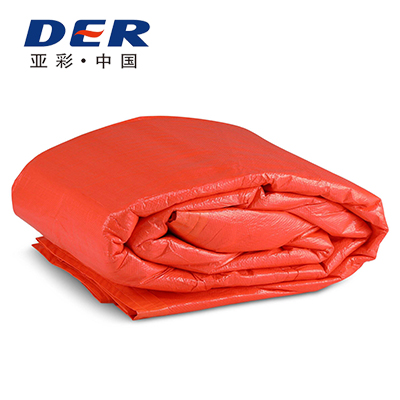
Insulated tarps are flexible multi-layer covers used to slow heat transfer while shielding a work area, material or asset from wind, moisture, dirt and direct weather exposure. They normally combine a protective outer face with a thermal core and a second face, then add reinforced edges and attachment points for installation.
They are commonly specified as concrete curing blankets, winter construction tarps, insulated enclosure panels, equipment covers or passive thermal cargo covers. An insulated tarp retains or buffers existing heat; it does not generate heat like an electric heating blanket.
Extra fabric weight does not create meaningful insulation by itself. The thermal core and the complete layer construction are what matter.
Different foams, facings, compression levels and test methods can produce different thermal results at the same nominal thickness.
A useful jobsite blanket must balance insulation with water resistance, cold flexibility, abrasion, seams and edge security.
Overlap, wind exposure, panel size, penetrations and fixing method can influence field performance as much as the sheet itself.
For professional procurement, treat the tarp as an assembly. Each layer solves a different part of the problem and should be confirmed together before production.
PVC coated polyester, reinforced PE or a reflective-facing direction can be selected around rain, snow, abrasion, cleaning and outdoor exposure.
Closed-cell foam, multi-layer foam, bubble insulation, felt or another agreed composite can be reviewed against thermal target, weight and fold cycle.
The inner skin protects the core and can be selected for cleanability, surface contact, marking risk, abrasion and repeated handling.
Webbing, folded or welded hems, corner patches, grommets, D-rings, straps, handles and joining flaps transfer the installed loads.
The same search term covers several very different applications. Starting with the job condition helps avoid an underbuilt blanket, unnecessary bulk or an awkward installation layout.
| Application | What the tarp must do | Useful construction direction | What the buyer should confirm |
|---|---|---|---|
| Concrete curing | Slow heat loss and reduce direct exposure to cold air, wind and precipitation during the approved curing period. | Weather-resistant faces with a closed-cell or multi-layer thermal core; modular panels are often easier to place on larger pours. | Lowest ambient temperature, concrete element, coverage duration, overlap method, handling limits and required thermal test basis. |
| Winter enclosure / hoarding | Reduce heat leakage and wind infiltration around temporary heated work zones. | Flexible insulated panels with reinforced perimeter, joining flaps, access details and attachment spacing matched to the frame. | Panel height, wind exposure, scaffold/frame geometry, openings, heater layout and any fire-performance requirement. |
| Equipment & maintenance | Buffer machinery, tanks, valves or process areas from seasonal cold, radiant heat or rapid temperature swings. | Fitted blankets or removable jackets with straps, buckles, hook-and-loop closures, access cut-outs and repairable faces. | Equipment geometry, hot/cold surface conditions, removal frequency, contamination, cleaning and maintenance access. |
| Storage & logistics | Provide a passive thermal barrier around selected goods during staging, warehouse movement or transport. | Light-to-medium insulated covers with secure closure, manageable folded volume and identification labels. | Required temperature buffer, trip duration, ventilation, condensation risk, cargo sensitivity and whether active refrigeration is still required. |
Insulated tarps work in rough, temporary environments. Thermal performance matters, but field handling and installation details often determine whether the product remains practical after repeated use.
Core type, layer count, compression, seams and installed gaps all influence how effectively the cover slows heat movement.
Coated or laminated faces can be configured for rain and snow exposure; seam and edge construction should match the intended weather duty.
The face material should remain workable at the project temperature rather than becoming unnecessarily stiff during folding and installation.
Outer skins, local patches and controlled load paths help resist jobsite dragging, corners, hardware pull and repeated seasonal deployment.
Grommet spacing, webbing, straps, D-rings and joining flaps should match pull direction, support spacing and the way crews actually install the tarp.
Panel size, surface cleanability, drainage, drying and fold method affect whether a blanket can be reused efficiently across projects or seasons.
The table below is a quotation framework, not a universal performance claim. Final construction should be tied to the approved sample, drawing, bill of materials and buyer-agreed test or inspection basis.
| Product Formats | Insulated tarps, concrete curing blankets, winter enclosure panels, thermal curtains, fitted equipment covers and passive thermal cargo covers. |
| Outer / Inner Face | PVC coated polyester, reinforced polyethylene, reflective film facing or other project-matched coated textile. |
| Insulation Core | Closed-cell foam, multi-layer foam, bubble insulation, felt or selected composite system according to the duty cycle. |
| Finished Weight | Selected insulated systems can be discussed around approximately 400–1500 gsm; other constructions can be reviewed by application. |
| Core / Build Thickness | Project-specific. Confirm thickness together with the target thermal result and the relevant test basis when performance values are required. |
| Finished Dimensions | Standard modules or custom sizes based on material width, installed coverage, transport volume, crew handling and joining method. |
| Edge Reinforcement | Folded or welded hems, webbing, rope edge, doubled perimeter, localized patches or drawing-specified reinforcement. |
| Fastening | Grommets, D-rings, straps, buckles, hook-and-loop flaps, rope loops, bungee points, handles and custom hardware layouts. |
| Functional Options | Cold-flex formulation, UV resistance, anti-mildew direction, reflective surface, selected flame-performance route, printing and identification labels. |
| Supply Format | Finished tarps, modular joined panels, fitted covers, semi-finished components, distributor SKUs or private-label programs. |
Use the application to define the structure, not the other way around. Different environments can require different faces, thermal cores, attachment layouts and panel sizes even when all products are sold under the same “insulated tarp” name.
Cover slabs, walls, footings, forms or precast elements to slow heat loss and reduce direct exposure to winter conditions. Modular blanket sizes can simplify placement and repositioning.
Build removable wall or scaffold panels around work areas where wind control and heat retention are needed for winter trades, repairs or finishing operations.
Develop removable covers around machinery, valves, tanks, piping or service areas when seasonal temperature protection and maintenance access both matter.
Add a passive thermal buffer around selected goods during staging, loading or temporary storage, while keeping active cooling or heating requirements separate where needed.
Use insulated curtains or blankets to divide work areas, protect components and support temporary environmental control during industrial maintenance.
Insulated cover systems may be considered for temporary partitions, selected storage or service areas where heat retention must be balanced with ventilation and moisture control.
A custom insulated tarp should start with the thermal job, installed geometry and handling plan. DERFLEX can then align material, insulation, seams, hardware, labeling and packaging around one controlled specification for project or repeat supply.
Confirm what must be protected, expected ambient conditions, coverage duration, installation method, reuse cycle and required documents.
Review outer face, thermal core, inner face, target weight, flexibility and finish around the actual duty instead of using a one-size-fits-all blanket.
Plan finished dimensions, seams, overlaps, openings, handles, grommets, straps, D-rings, webbing and reinforced load areas from drawings or field dimensions.
Where required, align appearance, thickness, dimensions, hardware and packing details before bulk production. Thermal data can be tied to the agreed final assembly when specified.
Use the approved BOM, seam route, hardware spacing, label information and inspection items as the reference for project batches, distributor programs and repeat orders.
Clear RFQ information reduces rework and helps the supplier compare thermal, handling and fabrication needs before price is fixed.
These related pages help buyers compare curing, winter construction, thermal materials, heavy-duty cover structures and custom fabrication before finalizing an insulated tarp specification.
Practical answers for construction, industrial, wholesale and OEM buyers comparing insulated tarps, curing blankets and winter enclosure systems.
Not always. A concrete curing blanket is one common type of insulated tarp, but insulated tarps can also be made as temporary enclosure panels, industrial equipment covers or passive thermal cargo covers. For concrete work, the curing plan and project specification should determine the required thermal construction and installation method.
The required value depends on the application, temperature conditions, exposure time and applicable project standard. Compare R-values only when the final assembly and test conditions are clear. Nominal foam thickness alone is not a reliable cross-product comparison.
The outer face can be selected for waterproof or water-resistant protection, but overall field performance also depends on seams, penetrations, edge finishing, overlaps and installation. If water-tightness is a contract requirement, define the accepted construction and test basis in the RFQ.
Yes. Custom finished dimensions, modular panel layouts, seams, webbing, grommets, D-rings, straps, handles, joining flaps, labels and packaging can be discussed from drawings or application requirements. Final details are confirmed against the approved specification.
Selected material routes can be reviewed where flame performance is required. The buyer should identify the applicable standard, end-use classification and required supporting documentation before material approval. The final product claim should follow the actual tested construction and documents.
Remove loose dirt, allow the covers to dry, avoid trapping standing water or contamination inside folds, and store them away from sharp edges and unnecessary heat exposure. Folding method and storage volume should be considered when panel sizes are specified.
DERFLEX can review a practical insulated tarp construction for project supply, custom fabrication, wholesale programs or private-label orders.