News
Company News

Concrete Curing Tarp Manufacturer | Custom Waterproof & Heavy Duty Covers | DERFLEX

Update:2026/8/23 17:15:21 Views:
DERFLEX logo Coated fabric · custom fabrication · project supply
Concrete Curing Covers for B2B Projects

Concrete Curing Tarp Manufacturer for Moisture, Weather & Cold-Weather Protection

DERFLEX manufactures custom concrete curing tarp systems for contractors, precast plants, distributors and private-label programs—configured around the curing objective, climate, slab geometry, handling cycle and required project documentation.

Choose a moisture-control cover, an insulated curing blanket, a form-fitted panel or a winter enclosure system. Waterproof outer skins, reinforced hems, custom fastening, thermal cores and finished dimensions can be matched to the approved application rather than sold as one generic tarp.

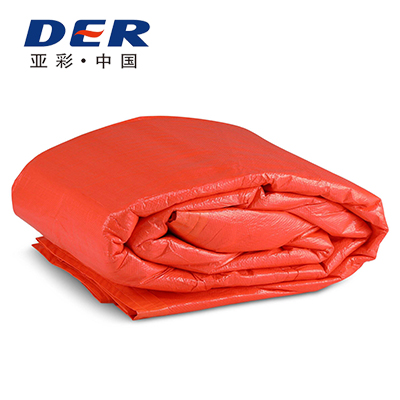
Orange DERFLEX concrete curing tarp and insulated curing blanket
DERFLEX Insulated Curing Tarp Final skin, core, dimensions and hardware are confirmed by project specification.
CUSTOM BUILD
20+ YearsExperience in coated fabrics and tarpaulin manufacturing
Custom FabricationSizes, seams, hems, straps, handles, grommets and labels
Wholesale / OEMProject quantities, distributor SKUs and private-label programs
Specification ReviewMaterial construction can be aligned with drawings and acceptance requirements
Quick Buyer Answer

What is a concrete curing tarp?

A concrete curing tarp is a flexible cover used over freshly placed concrete or around a curing work zone to help manage moisture loss, weather exposure or heat loss during the curing period.

The important purchasing point is that the phrase does not describe one single construction. A waterproof concrete curing tarp used mainly to reduce surface evaporation is different from an insulated blanket used to slow heat loss in cold weather. A wall, column or precast bed may also need a shaped cover with straps, reinforced attachment points or joining flaps.

NRMCA describes curing as maintaining adequate moisture and temperature in early-age concrete so the mixture can develop the intended properties. That makes the cover selection a jobsite-control decision—not simply a choice between colors or GSM.

For project procurement, DERFLEX recommends starting with the curing method, lowest expected temperature, exposure to wind or precipitation, required coverage period and installation geometry. Material weight and price should come after those conditions are clear.

Choose by Function

Four Concrete Curing Tarp Constructions Buyers Commonly Need

The correct construction depends on what the tarp must control. Separating these use cases reduces overspecification, performance gaps and confusion during quotation.

Moisture Control

Moisture-Retaining Cover

For slabs, paving and selected flatwork where the curing method calls for a sheet or coated cover that helps limit evaporation. Seam continuity, overlap, contact surface and perimeter sealing matter more than insulation thickness.

Cold Weather

Insulated Curing Blanket

A multi-layer assembly with a weather-resistant skin and thermal core. It passively slows heat loss from the concrete; the required thermal performance should be tied to the final assembly and test basis rather than inferred from thickness alone.

Formed Elements

Fitted Wall & Column Cover

Custom panels for vertical or irregular geometry can use straps, D-rings, grommets, handles, overlap flaps and reinforced load paths. This is useful for walls, columns, footings, beam ends and precast components.

Winter Enclosure

Insulated Enclosure Panel

For temporary heated work zones, curing tents or perimeter hoarding. Panel joints, openings, wind loads, fire-performance requirements and worker access should be coordinated with the enclosure plan.

Configurable Product Range

Concrete Curing Tarp Specifications for Project & Wholesale Orders

The table below is a quotation framework rather than a universal product claim. Final construction is confirmed against the approved sample, BOM, drawing and required test or inspection basis.

Specification Item DERFLEX Configurable Direction What the Buyer Should Confirm
Product Format Moisture cover, insulated curing tarp, fitted blanket, precast cover, enclosure curtain or project kit Horizontal, vertical, wrapped, suspended or enclosure use
Outer / Contact Skin PVC coated polyester, reinforced PE, reflective facing or project-matched coated textile Weather side, surface marking risk, cleanability, abrasion, UV and cold-flex needs
Insulation Core Closed-cell foam, multi-layer foam, bubble insulation, felt or agreed composite system Thermal target, compressed thickness, water exposure, fold cycle and test method
Finished Weight Selected insulated systems can be discussed around approximately 400–1500 gsm; other builds by review Crew lifting limits, panel dimensions, transport volume and storage method
Thermal Performance Project-specific; values should be stated for the final assembly with an identified test basis when required Do not compare R-values unless construction and test conditions are comparable
Finished Size Standard modules or drawing-based custom dimensions; joined panels available Effective coverage after overlaps, edge drape, penetrations and handling limits
Edge Reinforcement Folded or welded hems, webbing, double-layer perimeter, corner patches or replaceable attachment strips Wind exposure, reuse cycle, fastening load and repair plan
Hardware Grommets, D-rings, straps, buckles, rope loops, handles, bungee points or hook-and-loop flaps Attachment surface, pull direction, corrosion exposure and worker access
Optional Treatments UV stabilization, cold-flex formulation, reflective surface, anti-mildew direction, selected FR route, printing and labels Destination market, required documentation and end-use classification
Supply Model Project orders, wholesale concrete curing tarp programs, OEM / private label, replacement panels and repeat SKUs Quantity, pack format, carton marks, pallet plan and replenishment schedule
Standards note: ASTM C171 covers specified sheet materials used to inhibit moisture loss during concrete curing. An insulated blanket has additional thermal characteristics that are not automatically covered by that product name. If your project cites ASTM C171, ACI guidance, AASHTO requirements or a local specification, send the exact acceptance clauses with the RFQ so the relevant layer, test evidence and finished-product scope can be reviewed.
Selection Logic

How to Choose a Heavy Duty Concrete Curing Tarp Without Overbuying

“Heavy duty” should describe the complete working system—base fabric, coating, seam design, edge reinforcement, hardware and reuse cycle—not only a higher material weight.

Start With These 6 Project Inputs

  • Curing objective: moisture retention, passive insulation, weather shielding, enclosure control, or a combination.
  • Climate window: expected low/high temperature, wind, precipitation, sun exposure and protection duration.
  • Placement geometry: slab, wall, column, footing, bridge deck, precast bed, repair zone or irregular form.
  • Handling cycle: single project, seasonal reuse, rental fleet, repeated precast station use or distributor resale.
  • Attachment method: ballast, form fixing, grommets, straps, joining flaps, hooks or enclosure framing.
  • Acceptance basis: project standard, thermal target, color requirement, inspection checklist or approved competitor sample.

What “Waterproof” Does—and Does Not—Tell You

A waterproof concrete curing tarp can be useful for blocking rain, surface contamination and wind-driven moisture. For moisture-retention applications, the full sheet system also needs practical overlaps and continuity so evaporation is not simply escaping through open joints or exposed edges.

For cold-weather curing, a waterproof skin is only the outside part of the solution. The system also needs a defined insulation core and installation that limits gaps, compressed areas and wind displacement. A standard waterproof construction tarp should not be represented as an insulated blanket unless the thermal construction is actually present and supported by the agreed data.

For hot or sunny conditions, a white or reflective direction may be considered when the curing plan calls for reduced solar heat gain. Surface-contact requirements should also be reviewed where architectural appearance is important.

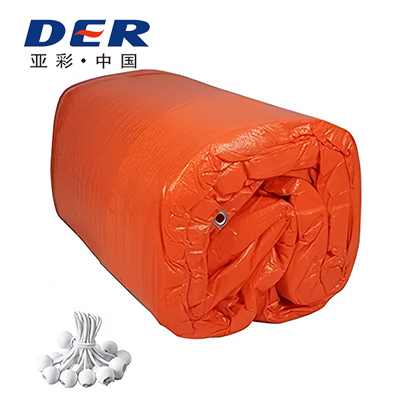
DERFLEX waterproof concrete curing tarp with reinforced grommet
Custom Manufacturing Detail

Build the Tarp Around the Crew, Not Just the Concrete Area

One oversized blanket may look efficient on a drawing but become difficult to place, fold, store and reposition. For larger pours, modular finished panels can reduce crew lifting demand while still providing continuous coverage through planned overlaps and joining details.

DERFLEX can develop custom concrete curing tarp layouts from dimensions or drawings, including perimeter drape, reinforced corners, handles, straps, grommet spacing, hook-and-loop joints, labels and pack identification. For repeat orders, the approved layer structure and fabrication details can be recorded as one controlled specification.

Finished DimensionsQuote by usable panel size, not only cut size.
Reinforced Load PathsHardware placement should match pull direction and fixing method.
Handling FeaturesHandles, modular panels and labels can simplify deployment and storage.
Repeat-Order ControlBOM, seam route, packing and SKU identification can be standardized.
Applications

Where Concrete Curing Tarps Are Used

Different work sequences need different panel proportions and fastening. DERFLEX can supply material or finished covers according to the way crews actually deploy them.

Slabs & Industrial Floors

Moisture-control or insulated covers for large flat areas, with planned overlap and edge control to avoid uncovered strips.

Bridge Decks & Pavements

Modular heavy duty tarp systems for civil work where wind exposure, long runs and field handling make reinforcement important.

Foundations & Footings

Panels sized around edges, steps, embedded details and temporary access; useful for cold-weather protection and weather shielding.

Walls & Columns

Fitted covers with straps, D-rings, grommets or overlap flaps for vertical work and form attachment.

Precast & Prestressed Work

Repeatable cover sets labeled by mold, bed or production station, designed for frequent handling and orderly storage.

Winter Enclosures

Insulated curtains and temporary panels around heated work zones, coordinated with openings, connections and enclosure safety requirements.

Supplier Capability

Why Buyers Source Concrete Curing Tarps from DERFLEX

For project and wholesale supply, repeatability matters as much as the first sample. DERFLEX combines coated-fabric manufacturing with custom tarp fabrication and export-oriented order control.

1

Application Review

Review curing objective, climate, dimensions, installation and documentation before selecting the structure.

2

Material Build

Match outer skin, contact face, insulation core and optional treatments to the approved use case.

3

Drawing & Sample

Confirm finished size, seams, hardware, labels and packing details before bulk production when required.

4

Fabrication Control

Use agreed welding or sewing routes, reinforced hems and project-matched attachment details.

5

Inspection & Repeat

Align appearance, dimensions, layer construction, hardware placement and buyer-agreed documents for repeat orders.

For Contractors & Project Procurement

  • Drawing-based panel sizing for real placement geometry
  • Custom reinforcement for wind and handling conditions
  • Project-specific packaging and location labels
  • Replacement panels and phased delivery discussions

For Distributors, Rental Fleets & Private Labels

  • Concrete curing tarp wholesale programs with standard SKU families
  • Custom colors, printed identification, labels and cartons
  • Defined BOM and repeat-order references
  • Mix of standard modules and custom sizes for regional demand
  • OEM packaging and replenishment planning for ongoing sales
Procurement Checklist

What to Send a Concrete Curing Tarp Supplier for a Useful Quote

A detailed RFQ reduces unnecessary back-and-forth and makes supplier quotations easier to compare on the same technical basis.

Minimum RFQ Information

  • Placement: slab, wall, precast, foundation, bridge deck or enclosure
  • Finished dimensions: length × width, quantity and any irregular shapes
  • Curing purpose: moisture retention, insulation, weather protection or combined function
  • Climate: expected temperatures, wind and precipitation during use
  • Installation: ballast, ties, straps, grommets, joining flaps or frame attachment
  • Standards / data: required ASTM, ACI, AASHTO or project-specific clauses and test evidence

Information That Improves OEM Pricing

  • Annual or project quantity and expected reorder frequency
  • Preferred pack size, folding method, carton mark and pallet requirement
  • Private-label needs such as logo, SKU, barcode, warning or installation label
  • Target material route if you already use PVC, reinforced PE or a benchmark sample
  • Handling target such as maximum panel mass or crew size
  • Destination market so cold-flex, UV, FR or documentation needs can be discussed early
FAQ

Concrete Curing Tarp FAQ

Common questions from contractors, distributors and procurement teams comparing custom, heavy duty and waterproof curing covers.

Are concrete curing tarps the same as insulated concrete blankets?

Not always. “Concrete curing tarp” is a broad purchasing term. A moisture-retaining cover may primarily limit evaporation and weather exposure, while an insulated concrete blanket includes a thermal core intended to slow heat loss. The right product should be selected from the curing objective and project specification.

Can DERFLEX manufacture custom concrete curing tarp sizes?

Yes. DERFLEX can discuss custom finished dimensions, modular panel layouts, joined blankets, fitted wall or column covers, enclosure curtains, reinforced edges, straps, handles, grommets, joining flaps, labels and export packaging. Final details are confirmed against the approved specification or drawing.

What makes a heavy duty concrete curing tarp different from a standard tarp?

Heavy duty performance usually comes from the complete construction: stronger base fabric, durable outer skin, suitable insulation when needed, robust seams, reinforced perimeter and hardware that matches the installation loads. Higher GSM alone does not guarantee better field performance.

Is a waterproof concrete curing tarp enough for cold weather?

A waterproof skin can block precipitation and wind-driven moisture, but cold-weather curing may also require thermal insulation, enclosure control or other measures defined by the project curing plan. Passive insulated tarps retain heat; they do not generate heat by themselves.

What R-value should I specify for an insulated curing tarp?

There is no single R-value suitable for every placement. Concrete temperature, ambient low, wind, member thickness, heat of hydration, protection time and whether heaters or enclosures are used all affect the required thermal protection. Compare R-values only when the finished assembly and test method are clearly stated.

Can a concrete curing tarp supplier provide wholesale or private-label programs?

DERFLEX supports project quantities, distributor and rental-fleet programs, concrete curing tarp wholesale supply and OEM/private-label orders. Buyers can discuss standard SKU families, colors, printed identification, packaging, pallet plans and repeat-order controls.

Build a Quotation-Ready Specification

Tell DERFLEX What the Concrete Must Be Protected From

Send your placement type, dimensions, climate, curing objective, quantity and required standard or drawing. DERFLEX can review a practical concrete curing tarp construction for project, wholesale or OEM supply.

Consulting Services
+86-021-54361792 / 54361798
Email
sales@derflex.com