Company News Industry News

Cold Storage Door Fabric for Flexible Industrial Doors | DERFLEX

Industrial door OEMs · Cold-chain access

PVC Coated Fabric for Flexible Industrial Doors

Specify cold storage door fabric around the way your curtain moves. DERFLEX supplies reinforced PVC coated polyester roll material for flexible industrial door panels, refrigerated access curtains and the outer faces of insulated door assemblies.

For freezer curtain fabric, the purchasing brief should connect the minimum operating temperature with rolling or folding, weld construction, guide contact and cleaning. Discuss custom weight, width, color, surface and cold-resistant formulation, then evaluate a sample in your door design.

Reinforced textile constructionCold-resistant grade reviewOEM roll supply
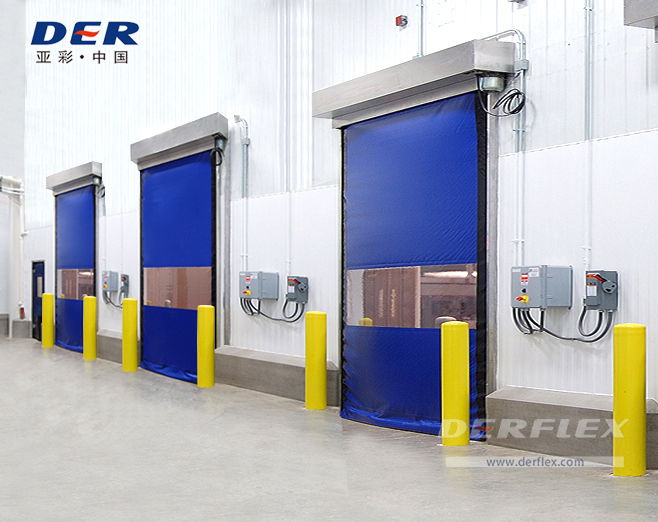
Blue flexible cold-storage door curtains with clear viewing bands and protective bollards
Flexible door configuration shown on the DERFLEX website. Material suitability must be confirmed for the operating temperature and finished curtain design.
Door manufacturersMaterial matched to curtain geometry
Curtain fabricatorsWelding, reinforcement and window review
Industrial distributorsCustom rolls for repeat supply programs
01 / Material structure

What is cold storage door fabric?

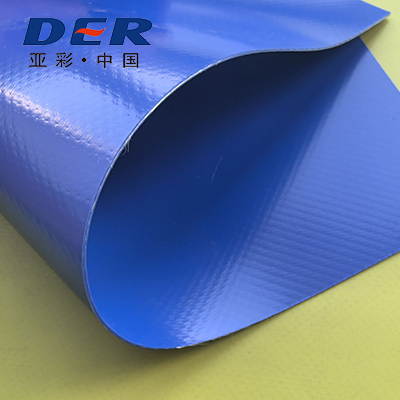
Cold storage door fabric is flexible curtain material selected for refrigerated or freezer access openings. Reinforced PVC coated polyester is used for moving door panels and insulated curtain facings. Transparent PVC strip curtains use a different, generally unreinforced construction; the two materials should be specified separately.

A woven polyester base supports the panel in tension. The PVC coating creates a continuous surface for moisture protection and fabrication. Its formulation and finish affect how the curtain bends, cleans and joins to other components.

For the broader material platform, see DERFLEX PVC coated fabrics. This page concentrates on cold-service curtain selection and conversion.

02 / Application-to-material matrix

Start with the door construction.
Then select the fabric.

A clear strip barrier, a reinforced roll-up curtain and an insulated freezer door perform different jobs. Use the construction to set the material brief.

Selection directions for sampling; final suitability depends on the complete door design.
Opening or application Material direction What the buyer should validate
Refrigerated transfer doorway Cold-resistant reinforced PVC coated polyester for a moving curtain. Flexibility at the lowest curtain temperature, roll-up behavior, seal contact and resistance to the cleaning process.
Freezer access with frequent cycling Project-specific cold-service textile grade; review insulated construction with the door OEM where required. Dynamic flex after cold conditioning, window joints, edge retention and recovery after defrost or temperature changes.
Insulated flexible door leaf PVC coated fabric as outer facing, combined with the OEM's specified insulation and edge design. The complete assembly's thermal performance, flex radius, seam thickness, sealing and moisture behavior.
Pass-through strip barrier Low-temperature transparent PVC strips, specified independently of reinforced textile. Strip flexibility, clarity, overlap, hanging arrangement and traffic visibility. See flexible door curtain materials.
Exterior industrial opening Reinforced curtain grade reviewed for weather exposure as well as cold operation. Curtain and edge loads, UV exposure, guide friction and door system compatibility. Consult the fast door fabric range.

On smaller screens, swipe the table horizontally to compare all three columns.

Specify the temperature at the curtain. Include cold-side and warm-side conditions, shutdown exposure, defrost cycles and whether the material moves while cold.

Discuss your door application
03 / Procurement specification

A useful specification goes beyond GSM.

Weight is only one variable. A heavier curtain changes the moving mass and roll build-up; a similar weight can conceal a different reinforcement, coating distribution or flex behavior.

Custom specification brief — values are agreed for the selected grade after technical review.
Item What to specify to DERFLEX
Construction Reinforced PVC coated polyester; required coating on each face, opacity and surface finish. Confirm the proposed grade and construction.
Weight & thickness Target mass in g/m², thickness in mm, and agreed tolerances. Select them together with the roll diameter, drive load and curtain design.
Usable roll width Finished panel width plus cutting, joining and edge allowances. Agree usable width, roll length, core and winding direction.
Temperature & movement Minimum and maximum operating temperatures, cold-conditioning duration, rolling or folding method and expected operating cycles.
Mechanical requirements Warp and weft tensile, tear and elongation requirements; coating adhesion; agreed test method, specimen direction and acceptance limits.
Joining & windows HF or hot-air process, weld geometry, reinforcing components and vision-panel material. Evaluate the assembled joint.
Color & finish Physical reference or color target, glossy or matte appearance, opacity and cleaning requirements. Confirm functional finishes by grade.
Compliance & supply Any required fire, chemical or regulatory documentation for the selected grade; sample quantity, bulk volume and destination.
04 / Validate the operating conditions

Cold-crack resistance is one check.
Moving while cold needs another.

A result from a defined low-temperature test does not establish every operating condition of a freezer door. For a moving curtain, agree how the fabric and fabricated joints will be evaluated at the project temperature.

CHECK 01

The fabric body

Condition the proposed sample at the required temperature before assessing the intended movement. Record any cracking, whitening, stiffness change or coating separation.

  • Minimum temperature and conditioning time
  • Actual rolling or folding geometry
  • Comparison before and after exposure
CHECK 02

The fabricated joint

Include the main seam, clear window, edge attachment and bottom detail. A flexible fabric body can still be paired with a stiff or weak joint.

  • Approved component combination
  • Joint performance after cold exposure
  • Bulky welds and repeated bending points
CHECK 03

The door prototype

Evaluate movement and sealing in the intended door configuration. Monitor tracking, rubbing, curtain recovery and changes during cleaning or defrost.

  • Start-up and repeated operating cycles
  • Guides, seals and window alignment
  • Cold-to-warm transitions and moisture
05 / Curtain conversion

Design the joints as carefully as the panel.

Cold-service curtains must flex through the joined areas. Review the full bill of materials before committing the fabric grade to bulk production.

  1. Approve a process window for welding

    Trial the selected coating and finish using your actual equipment, tooling and seam design. Agree an acceptable range of settings and inspect joint quality after cooling and cold conditioning. The PVC seam welding guide explains general process controls; door joints also need application-specific validation.

  2. Check the clear window separately

    Match the window's low-temperature flexibility and weld compatibility to the curtain body. Avoid approving a window only for clarity at room temperature. Review transparent PVC vision-panel film and test the complete joint.

  3. Control orientation, seams and usable width

    State the warp and weft directions on the cutting plan. Match the seam position to rolling and guiding. Compare fewer panel joints with roll-width availability and cutting yield rather than selecting nominal width alone.

  4. Review edges, coatings and cleaning together

    Confirm whether retention beads, zippers, reinforcements or bottom components are supplied by the converter. Trial the intended cleaner, concentration, dwell time and rinse procedure. A cleanable PVC face alone does not establish food-contact or hygiene certification.

  5. Evaluate another polymer when the brief calls for it

    Where the project needs a different balance of flex, abrasion or processing behavior, compare the proposed PVC grade with TPU coated fabric for flexible doors. Select by grade-level data and prototype results rather than assuming one polymer is always preferable.

06 / Working with DERFLEX

Translate the operating brief
into an OEM roll specification.

DERFLEX's door-material range includes reinforced coated textiles, cold-resistant formulation options and custom roll requirements. Discuss the material, conversion process and acceptance criteria together.

Material selection

Review the reinforcement, coating construction, weight, surface and color against the curtain application. Functional requirements are confirmed for the chosen grade.

Sample evaluation

Request material for your welding and cold-service trials. Preserve an approved sample and an agreed specification before arranging repeat bulk supply.

Roll configuration

Discuss width, roll length, core, winding, identification and OEM packaging to suit cutting and handling. Agree supply details during quotation.

07 / Buyer checklist

Send the conditions.
Get a focused quotation.

Give DERFLEX enough detail to distinguish a cold-room curtain from a dynamically operated freezer-door panel.

  1. Application & temperatures

    Cooler, freezer or industrial doorway; cold-side and warm-side conditions; minimum temperature during movement.

  2. Door geometry & motion

    Opening and curtain dimensions, rolling or folding method, guide arrangement and expected operating frequency.

  3. Material & components

    Target GSM, thickness, color, finish, window zones, seams, edges and insulation-facing requirements.

  4. Fabrication process

    Welding method, tooling, cutting plan and any existing fabric or joint sample available for comparison.

  5. Acceptance requirements

    Temperature, flex, joint and mechanical evaluation; required documents and any specified test standard.

  6. Order & delivery brief

    Sample needs, bulk quantity, roll format, destination, requested delivery timing and OEM packing.

What affects price, MOQ and lead time? Coating formulation, reinforcement, finish, custom color, usable width, roll format, documentation and order volume can affect the quotation. Ask for grade-specific MOQ, sample arrangements and production timing; these are confirmed during review.

08 / Material questions

Freezer curtain fabric: questions before you buy.

Answers for OEM door manufacturers, curtain converters and industrial purchasing teams.

What fabric is used for cold storage doors?

Reinforced PVC coated polyester can be used for flexible industrial door panels and the outer faces of insulated cold-storage curtains. Transparent pass-through strip curtains generally use unreinforced flexible PVC. Select the construction around temperature, door movement, visibility and the finished assembly.

Can ordinary PVC tarpaulin be used as freezer curtain fabric?

Suitability should not be assumed from appearance or GSM. A freezer curtain may need low-temperature flexibility, repeated bending, stable tracking and compatible joints. Confirm a proposed grade with material data and sample trials under the intended operating conditions before bulk purchase.

What temperature rating should I request for the fabric?

Specify the lowest temperature the curtain reaches while moving, together with cold-conditioning time, rolling or folding geometry and operating cycles. Ask which test supports the proposed grade. A cold-crack test result alone does not establish dynamic performance of the complete door.

Is PVC coated door fabric thermally insulated?

A single coated textile should not be treated as an insulated freezer-door assembly. It can serve as a flexible barrier or outer facing. Where thermal insulation is required, the complete door construction, including its core, seams, seals and operating behavior, must be assessed.

Can a transparent window be welded into a cold-storage door curtain?

A compatible clear PVC panel can be incorporated into a suitable PVC coated textile curtain. Confirm the window grade, coating finish, welding process and low-temperature requirements. Evaluate the fabricated joint after cold conditioning and bending rather than approving the components separately.

Does DERFLEX supply custom rolls for industrial door manufacturers?

DERFLEX supports OEM door-material inquiries for custom weight, width, color, finish, roll length and packaging. Cold-resistant and other functional requirements are reviewed for the selected grade. Provide the door application, temperature, dimensions, fabrication method, quantity and destination for a quotation.

Specify the curtain your door needs to move.

Send your door drawing, temperature range and roll requirements. Discuss a PVC coated fabric sample and a quotation matched to your industrial door program.

Copyright © 2015 DERFLEX ( PVC tarpaulin manufacturer )All Rights Reserved.