What is the load shape?
Low, tall, rectangular, cylindrical, irregular or mixed-height cargo determines drop depth, flap shape and the number of tarp sections.
 News
News

DERFLEX supplies custom cargo tarps and PVC coated polyester tarp materials for flatbed trucks, trailers, lumber, steel, machinery, mixed freight and logistics programs. Specify the coverage geometry, handling priority, reinforcement and hardware—not only a catalog size.
A cargo tarp is a flexible protective cover used over freight carried on open trucks, trailers, platforms or temporary transport systems. It helps limit exposure to rain, road spray, dust, sunlight and wind-driven debris while creating a cleaner, more controlled outer surface around the load.
In commercial transport, “cargo tarps” is a broad category. A low steel load, a tall lumber stack and an irregular machine may all need different panel shapes, drops, overlaps and reinforcement. The best purchasing decision therefore starts with load geometry and operating conditions rather than choosing the heaviest available sheet.
Chains, straps, binders, blocking and other approved securement equipment control the cargo. The tarp is an environmental and surface-protection component. Its attachment layout should work with the securement plan without being expected to carry the load itself.
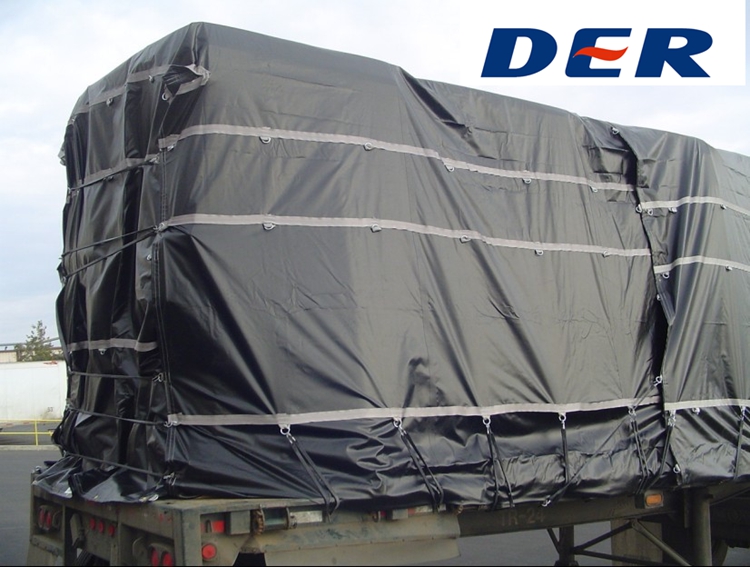
A useful quotation should translate real transport conditions into material, dimensions and fabrication details.
Low, tall, rectangular, cylindrical, irregular or mixed-height cargo determines drop depth, flap shape and the number of tarp sections.
Rain sealing, UV exposure, dust control, road spray or airflow needs determine whether solid PVC, mesh or a combination structure is appropriate.
Top corners, front-facing edges, straps, hooks and folding lines should guide webbing, patches and local reinforcement placement.
Daily manual tarping may favor lower handling weight, while severe abrasion zones may still require heavier or layered construction.
D-ring rows, grommet spacing, webbing loops, pockets and system interfaces must match the truck, trailer and operating method.
DERFLEX can develop material and finished-tarp directions around the application rather than forcing every load into one standard format.
Versatile rectangular covers for palletized goods, equipment, fabricated components and mixed freight.
Deeper side drops and rear flap coverage for lumber, wallboard, insulation and tall stacked freight.
Shorter-drop configurations for metal products, pipe, plate, rebar and selected cylindrical loads.
Broad flexible panels for equipment, industrial assemblies and loads with changing height or footprint.
Solid PVC or breathable mesh directions for aggregates, waste, landscaping material and bulk hauling systems.
Custom panels and curtain-style materials for logistics trailers, fleet branding and repeated opening cycles.
The ranges below are starting points for discussion. Confirm the final data sheet, test method, finished dimensions and approved sample before production.
| Item | Common DERFLEX Options | Procurement Considerations |
|---|---|---|
| Material structure | PVC coated polyester, PVC laminated polyester, vinyl-coated mesh or combination construction | Choose by waterproofing, airflow, flexibility, abrasion, welding method and cost target. |
| Fabric weight | Approx. 450–1100 gsm; lighter or heavier custom structures can be discussed | Higher weight can support wear resistance but increases lifting, folding and transport weight. |
| US weight reference | 14 oz ≈ 475 gsm; 16 oz ≈ 542 gsm; 18 oz ≈ 610 gsm | Use approximate conversion only. Compare actual finished-fabric technical data. |
| Base fabric | High-tenacity woven polyester in selected denier and density structures | Yarn and weave affect tensile strength, tear behavior, dimensional stability and flexibility. |
| Finished dimensions | Standard market sizes or made-to-order width, length, drops and flaps | State “finished size” clearly and include tolerance, overlap and any expected shrinkage allowance. |
| Edge construction | Folded hems, webbing reinforcement, rope-in-hem, double-layer perimeter or custom pocket | Match the edge to hooks, bungees, straps, roller systems and expected tension direction. |
| Attachment hardware | D-rings, brass or stainless grommets, webbing loops, buckles and custom fittings | Provide quantity, rows, spacing, orientation and required hardware material. |
| Seam method | Hot-air welding, high-frequency welding, sewing or combined construction | Seam choice affects water control, appearance, repair method and local fabrication compatibility. |
| Surface options | Glossy, matte, lacquered, printable, anti-slip or selected textured finishes | Consider cleanability, friction, branding, folding and abrasion behavior. |
| Functional options | UV resistance, anti-mildew, cold-flexible, flame-retardant, anti-static or oil-resistant formulations | Required standards and test methods should be agreed before sampling; options vary by construction. |
| Branding & packing | Custom color, printed logo, labels, barcodes, cartons, pallets and private-label presentation | Confirm artwork, color standard, label content, packing count and destination requirements. |
| Supply format | Coated fabric rolls, cut panels, semi-finished components, complete tarps or replacement programs | Select by local conversion capability, freight economics, inventory and after-sales needs. |
All values are general commercial guidance rather than a universal performance claim. Final suitability depends on the confirmed material structure, fabrication, cargo, route, climate, maintenance and use method.
Select the material by the protection requirement and daily handling cycle, not by product name alone.
A strong all-around direction for commercial cargo tarps that require a waterproof surface, weldability, repeatable dimensions and reinforced fabrication.
An open-weave option that reduces wind pressure and handling weight where full rain sealing is not required.
Different weights or structures can be placed in different zones, such as a heavier top and front with lighter side drops.
A heavy fabric can still fail early if the load corners, seam direction, hardware layout or tension paths are not addressed.
Webbing or multilayer hems distribute tie-down loads and help protect the outer edge from repeated pulling.
Extra material can be placed around predictable cargo corners, strap lines, front edges and folding zones.
Multiple rows support different load heights and reduce the need to overstretch one attachment level.
Panel orientation and welding method influence water control, fold behavior and load distribution.
Rear flaps, overlaps and corner closure details reduce open gaps around tall or sectional freight.
Material and hardware choices can be aligned with the repair capability available in the target market.
DERFLEX can support both material buyers and companies that need a more complete finished-tarp program.
Standardized tarp sets, color coding, replacement specifications and repeat-order support for multiple vehicle types.
Private-label dimensions, market-ready packaging, common weight options and product-family planning.
Roll goods, wide-width material, cut panels and structures selected for welding or sewing processes.
System-specific pockets, edge interfaces, hardware compatibility and repeatable production drawings.
General freight, lumber, steel, machinery and trailer-cover ranges aligned with regional demand.
Custom color, logo, labels, barcodes, cartons and controlled specifications for branded sales programs.
Temporary transport covers, equipment protection and custom shapes supported by drawings and samples.
Documented size, hardware and material references that help maintain consistent replacement inventory.
A structured development path reduces assumptions and makes future replacement orders easier to manage.
Review cargo profile, route, climate, handling and vehicle system.
Select structure, weight, surface, color and functional options.
Document finished size, drops, flap, seams, hardware and patches.
Evaluate fit, handling and fabrication before repeat production where needed.
Coordinate inspection, labels, packing and controlled reorder specifications.
DERFLEX works from the coated-fabric structure outward. That makes it possible to discuss yarn, coating, weight, width, surface finish and welding behavior together with finished size, reinforcement, hardware and packaging.
For B2B buyers, this approach supports better specification control across samples, bulk production and future replacement orders. DERFLEX also publishes its quality-control and R&D processes for coated fabrics and tarpaulin materials used in transport and industrial applications.
These six pages connect cargo tarp selection with specific truck systems, materials and load types.
PVC coated polyester, also called vinyl-coated polyester, is commonly selected for heavy-duty weather protection because it combines a waterproof surface, tensile reinforcement, weldability and custom fabrication options. Mesh is often preferred where airflow and lower wind pressure matter more than rain sealing.
Solid PVC coated or laminated cargo tarp materials can provide a waterproof surface. The water performance of the finished cover also depends on seam design, welding, hems, openings, overlap and installation. A mesh tarp is not intended to provide full rain protection.
Many commercial cargo tarp programs use material in the approximate 450–1100 gsm range. Around 610 gsm is often referred to as 18 oz vinyl. Heavier is not automatically better: the final choice should balance abrasion, route exposure, handling frequency, folding effort and cargo-edge protection.
Cargo tarp is a broad term for covers used over transported freight. A lumber tarp is a specific flatbed style with deep side drops and usually a rear flap, developed for tall rectangular loads such as lumber, panels and building materials.
Yes. DERFLEX can discuss custom finished dimensions, drops, flaps, material weight, color, D-ring rows, grommet spacing, webbing, wear patches, seams, logos, labels and export packaging. Production should follow an approved drawing, specification or sample.
Supply options can include PVC coated fabric rolls, mesh rolls, cut panels, semi-finished components, complete cargo tarps and private-label programs. The best format depends on the buyer's local fabrication capability and supply-chain plan.
Use suitable edge protectors between sharp or abrasive cargo points and the tarp. Reinforced wear patches can also be added at predictable contact zones, but a flexible tarp should not be expected to resist repeated cutting action from unprotected sharp edges.
Send the truck or trailer type, finished dimensions, cargo profile, drops and flap size, target material weight, solid or mesh preference, hardware layout, reinforcement map, color, logo, packing, quantity and destination. Photos, drawings or a current sample are especially useful.
Send DERFLEX the load dimensions, tarp style, target material, reinforcement, hardware, order quantity and destination. The team can review the application and prepare a material or finished-tarp quotation.