Old-Tarp Match
Lay the existing tarp flat and record its finished dimensions, pocket widths, seams, spline or attachment edge, rear bar construction, grommets, cutouts and reinforcement. Photos of worn areas are especially useful.



DERFLEX develops replacement mesh tarps around the system you already have: finished width and length, roller or spline pocket, rear pull-bar layout, reinforced hems, wear zones, attachment details and the load being hauled. The goal is not to guess a catalog size—it is to reproduce a fit that can become a controlled, reorderable replacement specification.
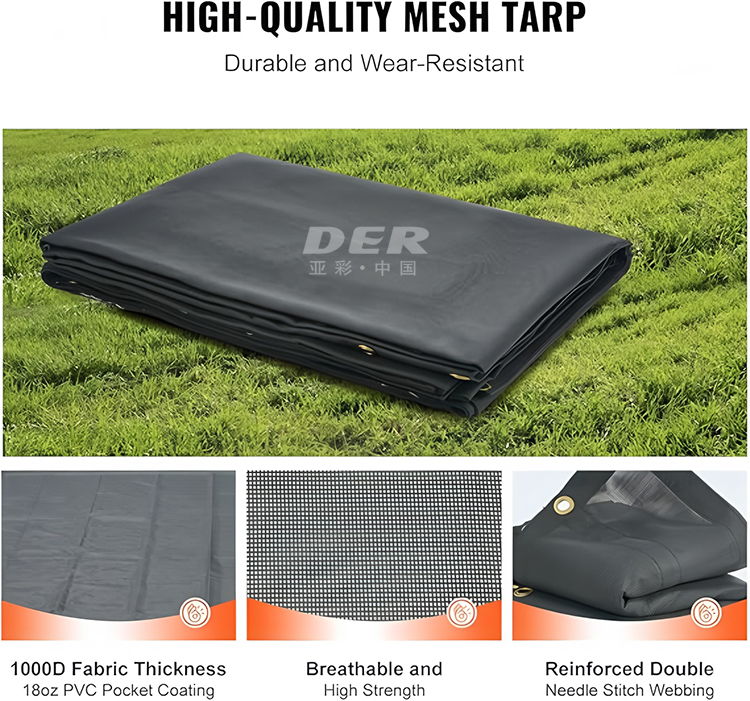
A mesh dump truck replacement tarp is a breathable load-covering panel made to replace the worn fabric component of an existing dump truck, dump trailer or related tarp system. The correct replacement is specified from the actual working coverage, pocket or spline geometry, pull-bar details, reinforcement and system travel—not from truck-bed length alone. Mesh is used when airflow and loose-load containment are more important than full waterproofing.
Most replacement buyers already own the truck and tarping mechanism. The practical task is to reproduce the fabric component accurately, correct known wear problems where appropriate and document the approved construction for future reorders.
Lay the existing tarp flat and record its finished dimensions, pocket widths, seams, spline or attachment edge, rear bar construction, grommets, cutouts and reinforcement. Photos of worn areas are especially useful.
Confirm roller width, tarp travel, arm or guide clearance, body opening, pull-bar diameter and overhang. A worn tarp may have stretched or may never have fit correctly, so the truck should also be measured.
Once a sample or pilot fit is approved, the finished size, pocket geometry, mesh direction, reinforcement, labels and packing can be documented as a repeatable fleet or dealer replacement specification.
These are sourcing directions, not blanket performance promises. Final values should be confirmed against the actual truck, system, cargo and duty cycle.
| Specification Item | DERFLEX Available Direction | Why It Matters for Replacement |
|---|---|---|
| Product Type | Mesh dump truck replacement tarp, dump trailer mesh tarp, roll tarp replacement cover, semi-finished panel or mesh roll supply | Keeps the project focused on the fabric component and the buyer's conversion capability. |
| Mesh Structure | High-strength transport mesh; related DERFLEX mesh programs commonly discuss approximately 200–420 GSM directions, with project-specific structures available | Weight, openness and coating influence airflow, handling, containment and wear. |
| Finished Size | Made to verified dimensions, drawing, approved sample or replacement SKU specification | A correct replacement follows working coverage and system travel rather than nominal body size. |
| Front / Roller Edge | Roller pocket, sleeve, spline direction or project-defined insertion / attachment construction | This edge controls installation, rolling behavior and recurring abrasion. |
| Rear / Pull-Bar Edge | Pull-bar pocket, reinforced sleeve, webbing, chain edge or custom attachment layout | The rear working edge repeatedly carries tension during deployment. |
| Side Edges | Reinforced hems, webbing, PVC reinforcement strips, stitched or welded constructions depending on design | Side edges can rub rails, bows, load surfaces and tarp arms. |
| Attachment Details | Grommets, D-rings, straps, labels and selected project-defined hardware-ready details | Placement should follow the actual load path and existing system rather than a generic spacing pattern. |
| Wear-Zone Reinforcement | Double layers, local patches, webbing, pocket-mouth reinforcement and edge strengthening | Targets recurring failure locations without making the whole tarp unnecessarily heavy. |
| OEM Identification | Color direction, size code, part number, label, carton mark, private-label packaging | Helps distributors and fleets control replacement inventory and reorder the correct version. |
| Supply Form | Finished tarp, cut panel, semi-finished cover or mesh roll depending on buyer requirement | Supports fleet maintenance, local fabricators, equipment dealers and OEM distribution models. |
Do not order from truck-bed length alone. Combine the old tarp, system photos and actual working measurements so the replacement can roll, travel, tension and retract through the full operating path.
| Measurement | What to Record | Why It Matters |
|---|---|---|
| Finished tarp width | Measure the old tarp flat and relaxed; also confirm the system's actual width limits. | Too wide can rub arms or rails; too narrow can reduce coverage. |
| Finished tarp length | Measure actual tarp travel plus required front/rear engagement or overhang. | Determines full deployed coverage and how much material remains on the roller. |
| Roller / front pocket | Flat pocket width or circumference, bar diameter, insertion direction, spline or retention detail. | Pocket fit affects installation, winding and repeated abrasion. |
| Rear pull-bar pocket | Pocket size, bar diameter, stitching/welding direction and local reinforcement. | This zone sees repeated pulling tension and is a common wear location. |
| Grommets / straps | Count, spacing, edge distance and backing/reinforcement around each point. | Attachment geometry should match the actual force direction. |
| Special geometry | Notches, flaps, taper, chain edge, cutouts, bonnet sections or asymmetrical details. | These details can determine whether the replacement installs at all. |
“Heavy duty” is not a complete specification. Cargo particle size, protruding edges, wind exposure, operating frequency and the need for rain protection should all influence the replacement tarp direction.
| Hauling Application | Practical Cover Direction | Replacement Priority |
|---|---|---|
| Gravel / aggregate / stone | Heavy-duty coated mesh is a common starting direction | Strong yarn, edge abrasion control, pocket durability and protection from exposed sharp material. |
| Construction debris | Reinforced mesh or project-specific heavy-duty construction | Tear risk, irregular edges, local reinforcement and disciplined loading profile. |
| Mulch / landscape / yard material | Breathable mesh is often practical | Airflow, lighter handling, reduced billowing and repeat cycling. |
| Waste / recycling | Mesh or solid tarp depending on the waste stream | Containment, abrasion, replacement frequency, SKU identification and fleet standardization. |
| Fine or rain-sensitive material | Consider solid PVC/vinyl rather than open mesh | Closed-surface weather shielding and containment of smaller particles. |
| Hot or elevated-temperature loads | Application-specific material review is required | Confirm actual tarp-contact temperature, exposure time and verified material capability before specification. |
For broader system and load-selection guidance, see DERFLEX truck tarp systems and dump truck tarp resources.
A heavier mesh does not automatically solve a system problem. Premature failures often begin at concentrated motion and contact zones.
Repeated wrapping and tube contact can abrade the pocket entrance. Fit and reinforcement should be treated as functional dimensions.
The rear sleeve or bar connection repeatedly carries deployment tension. Local reinforcement can be more valuable than adding weight everywhere.
Edges can rub body rails, bows, guides or load surfaces. Correct finished width and controlled edge build help reduce recurring abrasion.
Changes between pocket, hem and open mesh can concentrate stress. Reinforcement geometry should distribute load rather than create a rigid tear point.
For dealers, distributors, truck-body builders, tarp-system companies and large fleets, the commercial value is not only producing one cover. It is documenting approved versions so replacement inventory becomes easier to control.
For broader custom fabrication options, compare DERFLEX custom replacement tarps, heavy-duty mesh truck tarps and roll tarps for dump trucks.
The cover must match working travel, roller engagement, overhang and pocket geometry. Nominal dump-body length does not describe the whole tarp.
An old tarp may be stretched, damaged or originally undersized. Verify the system as well as the old finished dimensions.
If every tarp fails in the same place, duplicating the same reinforcement can reproduce the same failure pattern.
Open mesh allows water and very fine material to pass. Use a solid PVC/vinyl direction when closed-surface protection is required.
For fleets and dealers, approved measurements, pocket details, reinforcement and labeling should be recorded so the next replacement does not start from zero.
Roller pocket, spline, clamp, pull bar, chain edge and side-roll arrangements differ. The attachment interface must be identified before production.
The images below connect the replacement-tarp discussion with actual mesh construction, finished-cover details and coated-fabric manufacturing capability.
Breathable truck-tarp structure with reinforced edge treatment for transport-cover applications.
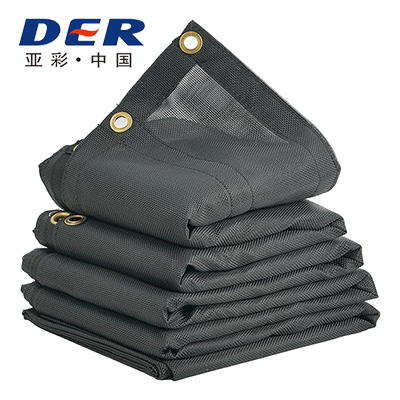
Representative finished tarp construction with reinforced perimeter and grommet-ready edge details.
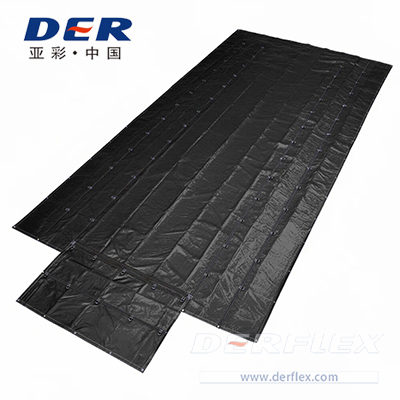
Finished tarp geometry can be reproduced from a verified sample, drawing or measured replacement specification.
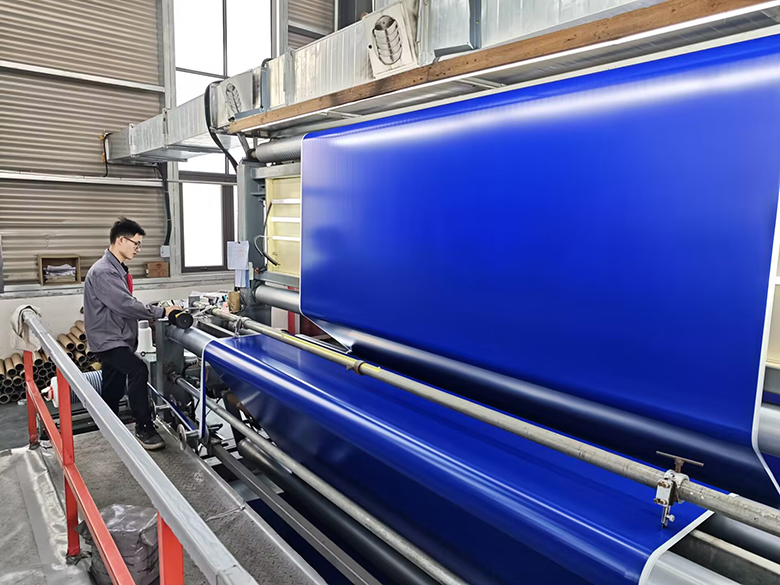
Material manufacturing support helps connect mesh/PVC fabric selection with finished tarp conversion and repeat OEM supply.
These verified DERFLEX pages cover adjacent system, material and replacement intent while keeping this page focused on mesh dump truck replacement fit and custom OEM sizing.
Short, direct answers for fleets, dealers, equipment suppliers, tarp-system companies and OEM replacement programs.
Yes. Send the old tarp, finished width and length, roller or spline pocket dimensions, rear pull-bar construction, system photos, load type and required quantity. A drawing or physical sample can reduce assumptions and improve fit accuracy.
Measure the actual working tarp coverage and the old finished tarp, then document both end pockets, attachment details and system clearances. Do not rely on truck-bed length alone because roller engagement, overhang and pocket construction also affect the finished size.
No. Mesh tarps are open and breathable, so water and very fine material can pass through. They are selected for airflow and loose-load containment. Use a solid PVC/vinyl tarp direction when waterproof surface protection is required.
Yes. These details can be built around the existing system when accurate measurements, photos, a drawing or an approved sample are provided. Final compatibility should be confirmed against the actual hardware and operating geometry.
Yes. Approved finished dimensions, mesh structure, pocket construction, reinforcement, part-number labeling and packaging can be documented as repeatable replacement SKUs for dealer, fleet or OEM programs.
If known, provide current mesh type or sample, approximate weight or openness, color, reinforcement method and any performance requirement. If the existing specification is unknown, send clear photos and describe the cargo, route, duty cycle and current failure problems.
DERFLEX can develop covers for manual and electric tarp applications, including front-to-back and selected roll configurations. The finished tarp must still be checked against the specific roller, arms, pull bar, travel path and system clearances.
Send the old tarp or drawing, finished size, truck/body type, tarp-system type, both pocket details, grommet or attachment layout, typical cargo, known wear locations, quantity, packaging preference, destination and clear system photos.
Send DERFLEX the old tarp, truck/system photos, finished measurements, pocket details, cargo, quantity and destination. The team can review a practical mesh construction and finishing direction for a sample, fleet replacement, dealer SKU or OEM program.