News
Company News

Lumber Tarps for Flatbed Trucks | Custom PVC Tarps | DERFLEX

Update:2026/7/10 19:21:55 Views:
Application: Flatbed freight protection Supply: Material, panels or finished tarps
Custom Flatbed Cargo Protection

Lumber Tarps for Flatbed Trucks

Reinforced PVC lumber tarps developed around load height, drop length, highway exposure, handling weight and repeat-use requirements.

DERFLEX supports importers, tarp converters, trucking suppliers, fleets and private-label brands with PVC coated fabric rolls, cut panels, semi-finished components and made-to-order lumber tarp programs.

550–1100gsm Common PVC coated fabric range
4–10 ft+ Drop options by cargo profile
Up to 5.1m Wide-width material capability
OEM Ready Color, hardware, labels and packing

Product Overview

What Is a Lumber Tarp?

A lumber tarp is a high-coverage flatbed truck tarp designed for tall, rectangular or stacked cargo. Compared with a typical steel tarp, it normally has deeper side drops and a rear flap so the load can be enclosed around the sides, rear and top. It is commonly used for dimensional lumber, plywood, wallboard, insulation, palletized building materials and other freight that should remain protected from rain, road spray, dust and wind-driven debris.

The name describes the original hauling application, but the product is not limited to timber. Many fleets use the same tarp geometry for bulky freight where a short-drop cover would leave the lower sides exposed. The practical design question is therefore not simply “lumber or steel,” but how much vertical coverage, overlap and tie-down flexibility the actual load requires.

For procurement teams, a lumber tarp should be treated as a working cargo-protection system. Fabric weight, finished size, drop depth, flap dimensions, D-ring rows, webbing placement, corner reinforcement and seam method all affect field performance and driver handling.

Procurement note: confirm the finished dimensions, not only the cut dimensions. Seaming, hems and fabrication can reduce the final usable size if the specification is not written clearly.
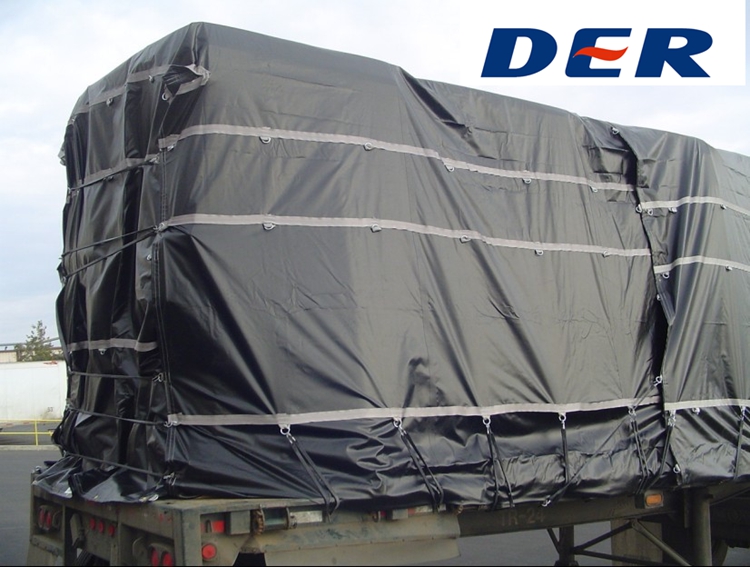
Heavy duty lumber tarp style cover on a tall flatbed truck load
Full-coverage flatbed tarp concept Deep side coverage, multiple tie-down rows and reinforced load protection for tall cargo.
Engineered Construction

Built Around the Areas That Wear First

A durable lumber tarp is not defined by fabric weight alone. Its service behavior depends on how the material, seams, tie-down points and wear zones work together under highway wind, repeated folding and cargo-edge contact.

01

PVC Coated Polyester Body

High-strength polyester provides the load-bearing base, while the PVC coating supports water resistance, weldability, cleanability and outdoor durability. Weight and yarn structure can be adjusted for handling and service targets.

02

Deep Side Drops and Tail Flap

Common 4 ft, 6 ft and 8 ft drops cover different load heights. A rear flap helps close the back corners and reduce direct exposure to rain, spray and turbulent airflow.

03

Reinforced Tie-Down Rows

D-rings, webbing and grommets are positioned to give drivers multiple tensioning levels as the load height changes. Hardware spacing should match the preferred bungee or strap pattern.

04

Wear Patches and Corner Protection

Extra layers can be added where sharp edges, top corners, straps and repeated folding create concentrated abrasion. Patch layout can be based on a drawing or an existing field sample.

05

Welded or Sewn Fabrication

Hot-air, high-frequency or sewn construction can be selected according to material, factory process and performance target. Exposed stitching can be protected or sealed where required.

06

OEM Identification and Packing

Custom colors, printed marks, woven labels, cartons, pallet plans and replacement-part references can be aligned for distributors and private-label programs.

Technical Direction

Custom Lumber Tarp Specification Guide

The table below is a practical starting point. Final construction should be confirmed against load geometry, route conditions, handling frequency, target market and any customer-specific compliance requirements.

Item Typical DERFLEX Options Buyer Considerations
Base material PVC coated polyester, vinyl coated polyester, PVC laminated fabric or combination structures Choose by strength, flexibility, welding method, climate and handling preference.
Fabric weight Approx. 550, 610, 650, 750, 900 or 1100gsm; custom structures available Higher weight may improve wear resistance but increases the lifting and folding burden for the driver.
US weight reference 14 oz ≈ 475gsm; 16 oz ≈ 542gsm; 18 oz ≈ 610gsm Use approximate conversion only; compare finished fabric data sheets rather than relying on a name alone.
Common width / length 16–24 ft widths and 18–28 ft lengths are common; custom finished dimensions supported Specify whether dimensions are finished size or cut size and include the tolerance.
Drop depth 4 ft, 6 ft, 8 ft, 10 ft or custom Match the vertical drop to the loaded height, deck width and desired lower-edge overlap.
Rear flap Integrated tail flap or separate end piece; custom width and height Confirm the closure method at the rear corners and the overlap between sections.
Tie-down system Two or three D-ring rows, webbing loops, brass or stainless grommets, custom spacing Hardware layout should support low, medium and tall loads without excessive loose fabric.
Reinforcement Perimeter webbing, double hems, corner patches, center seam reinforcement, wear pads Add reinforcement where the tarp contacts load corners, strap lines, hooks or trailer hardware.
Performance options UV resistance, anti-mildew, cold flexibility, flame-retardant formulation, anti-static or oil-resistant options Testing and declarations should be agreed before sampling when they are required for a project or market.
Supply format Roll material, cut panels, semi-finished components, finished tarps or private-label kits Select the format that matches local conversion capability, freight economics and after-sales needs.

Values are general product-development references, not a universal performance guarantee. A confirmed sample and written specification should control production.

Drop Selection

Choose Coverage by Load Profile, Not by Habit

The correct drop leaves enough material to cover the load sides and create usable tie-down tension without carrying unnecessary weight on every trip.

4 ft Drop Lower-profile palletized cargo, compact stacks and applications where a steel-tarp-style depth is nearly sufficient.
6 ft Drop Medium-height lumber, plywood and building-material loads that need more side coverage without an 8 ft curtain.
8 ft Drop Common for tall stacked loads and full-height flatbed freight where the lower sides must remain covered.
10 ft+ Custom Oversized, unusual or market-specific load profiles requiring deeper panels, special overlap or sectional construction.

How many lumber tarps are needed for a 48 ft or 53 ft flatbed?

Two full-size lumber tarps are commonly used for a standard flatbed load, but this is not a fixed rule. Long loads, multiple height changes, sharp transitions or requirements for generous overlap may justify a three-piece set. The safest purchasing method is to map the total covered length, the overlap between sections and the front/rear closure before selecting the set.

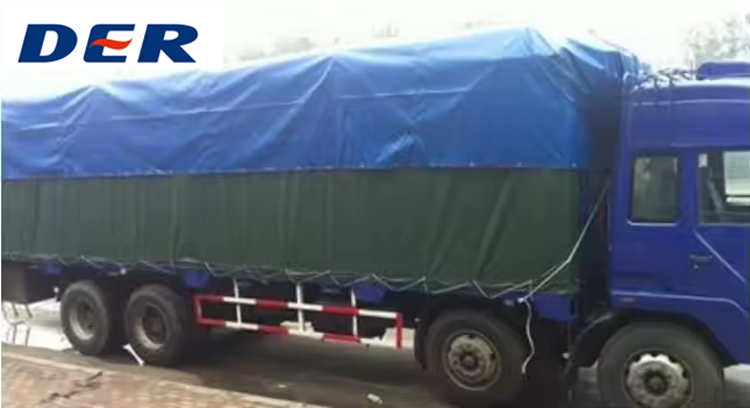
Blue PVC truck tarp covering cargo on a transport truck
Coverage is only one part of the design Handling weight, tie-down access and reinforcement placement should be considered at the same time.
Buyer Checklist

Information to Send Before Quotation

A useful lumber tarp quotation depends on more than width and length. Providing the details below reduces assumptions, shortens sampling time and helps compare offers on the same basis.

  • Finished width, length and tolerance
  • Drop height and rear flap size
  • Single tarp, two-piece or three-piece set
  • Target fabric weight in gsm or oz/yd²
  • Heavy-duty or lightweight handling priority
  • D-ring quantity, rows and spacing
  • Grommet material and edge spacing
  • Webbing, corner patches and wear zones
  • Color, print, label and private packaging
  • Order quantity and destination market
Tarp Comparison

Lumber Tarp vs Steel Tarp vs Machinery Tarp

These flatbed tarp categories overlap, but their normal shapes and coverage priorities are different. Matching the tarp to the load reduces unnecessary material and simplifies securement.

Lumber Tarp

Typical profile: tall and rectangular.

Coverage: deep side drops with rear flap.

Common cargo: lumber, plywood, drywall, insulation and stacked pallets.

Steel Tarp

Typical profile: lower and denser.

Coverage: shorter drops and compact handling.

Common cargo: plate, pipe, rebar, cable and lower-profile palletized freight.

Machinery Tarp

Typical profile: irregular or oversized.

Coverage: broad square or rectangular panels with flexible drape.

Common cargo: equipment, machinery, fabricated assemblies and unusual shapes.

Application Coverage

Loads That Benefit from Deep-Drop Tarps

Lumber tarps are useful whenever tall side coverage and adaptable tie-down rows matter. The final tarp should still be checked against sharp edges, moisture sensitivity and route conditions.

01

Lumber and Timber Products

Dimensional lumber, treated timber, bundled boards and engineered wood products transported on open-deck trailers.

02

Plywood, OSB and Panels

Sheet products that require broad top protection and side coverage from precipitation, road spray and dust.

03

Drywall and Wallboard

Moisture-sensitive construction panels where sufficient overlap and careful corner protection are important.

04

Tall Palletized Freight

Bagged goods, cartons, insulation, building products and other stacked cargo that exceeds short-drop tarp coverage.

05

Fleet and Distributor Programs

Standardized tarp sets, replacement covers and private-label inventory for trucking suppliers and regional distributors.

06

Custom Industrial Loads

Large crates, fabricated assemblies and mixed-height loads requiring custom drop, flap, seam or reinforcement layouts.

Manufacturing Support

Why Source Lumber Tarps from DERFLEX?

DERFLEX combines PVC coated fabric production knowledge with tarp conversion and export-oriented customization. This supports buyers who need repeatable specifications rather than one-time retail sizes.

Step 01 Application Review

Truck type, load profile, route, climate, handling and target market are reviewed.

Step 02 Material Matching

Fabric weight, yarn structure, coating finish and functional options are proposed.

Step 03 Layout Confirmation

Finished size, drop, flap, D-ring rows, grommets, webbing and patches are documented.

Step 04 Sample or Pilot

A sample, prototype or first-production inspection can be arranged before repeat orders.

Step 05 Bulk Supply

Rolls, panels, finished tarps, labels and export packing are coordinated to the order plan.

Material producer and finished-tarp partner in one supply chain

Buyers can source conversion-ready PVC coated fabric, semi-finished panels or complete lumber tarps from the same manufacturing group. This can simplify color matching, batch control, replacement specifications and future product development.

Frequently Asked Questions

Lumber Tarp Buyer Questions

Practical answers for fleets, importers, distributors, tarp fabricators and OEM buyers.

What are lumber tarps used for?

Lumber tarps are used to cover tall or stacked freight on flatbed trucks and trailers. Common loads include lumber, plywood, drywall, insulation, building materials and palletized cargo. Their deep side drops and rear flap provide more coverage than a typical short-drop steel tarp.

What is the difference between a lumber tarp and a flatbed tarp?

“Flatbed tarp” is a broad category. A lumber tarp is a specific flatbed tarp style with deeper side drops and usually a tail flap for tall loads. Steel tarps, machinery tarps, coil tarps and smoke tarps are other flatbed tarp types.

Should I choose an 18 oz or lightweight lumber tarp?

An 18 oz vinyl tarp, approximately 610gsm, is commonly selected for demanding use and repeated abrasion. A lighter structure can reduce lifting and folding effort. The better choice depends on route, handling frequency, cargo edges, expected service conditions and driver preference. Combination tarps can use heavier material in the top or front wear zone and lighter material on the drops.

Is an 8 ft drop lumber tarp always necessary?

No. An 8 ft drop is common for tall loads, but lower cargo may only require 4 ft or 6 ft. Excess material adds weight and can be harder to tension. Measure the loaded height from the trailer deck and confirm the desired overlap below the cargo before choosing the drop.

Can DERFLEX make custom lumber tarp sizes?

Yes. DERFLEX can customize finished width, length, drop, flap, fabric weight, color, D-ring layout, grommet spacing, webbing, patches, seam construction, labels and export packaging. Production should be based on an approved drawing or confirmed sample.

Does DERFLEX supply only finished tarps?

No. Supply formats can include PVC coated fabric rolls, cut panels, semi-finished tarp components, finished lumber tarps and private-label sets. The appropriate format depends on the buyer's local fabrication capability and logistics plan.

How can sharp lumber corners be managed?

Edge protectors should be used between sharp cargo corners and the tarp. Reinforced wear patches can also be positioned at known contact points. A tarp alone should not be expected to resist repeated cutting action from unprotected sharp edges.

What information is needed for a lumber tarp quotation?

Send the finished dimensions, drop and flap size, fabric weight, number of tarp sections, hardware layout, reinforcement details, color, branding, quantity and dest, ination. Photos or drawings of the load and an existing tarp are helpful for custom programs.

Build a Lumber Tarp Specification for Your Market

Send DERFLEX your target size, drop, fabric weight, hardware layout, reinforcement plan, quantity and destination. The team can review the application and prepare a material or finished-tarp quotation.

Useful quotation details Finished size · drop · flap · gsm/oz · D-ring rows · grommets · reinforcement · color · logo · packing · quantity
Consulting Services
+86-021-54361792 / 54361798
Email
sales@derflex.com