How to Calculate Tarp Fabric Consumption for a Custom Cover
Do not estimate a fitted tarp from outside surface area alone. Convert the cover into cut panels, add the real seam and hem allowances, test each panel against the usable roll width, and only then calculate the linear meters to purchase.
This guide is intended for tarp converters, equipment manufacturers, truck-body builders, industrial buyers, distributors and OEM programs planning PVC tarpaulin rolls, cut panels or finished covers.
A useful quotation separates what the customer sees from what the factory cuts and what the purchasing team buys. Confusing these three values is a common reason for underestimating a custom tarp project.
Start with a panel schedule
List the roof, sides, ends, flaps, skirts, sleeves, windows and reinforcement patches as separate pieces. Give every piece a finished dimension, edge treatment and quantity.
Hardware, webbing, rope, labels and packaging must be added separately to estimate finished shipment weight.
Control point
Replace estimates with a marker
Bulk planning value = approved CAD marker or production cut plan
The calculator below is a planning tool. Irregular curves and mixed-panel nesting require drawing review.
Interactive tool
Custom cover roll-yield planner
Select a common cover geometry and enter finished dimensions. The tool builds a cut-panel schedule, groups identical panels across the roll, and reports a conservative linear-meter estimate.
Planning result
Cut-panel area—
Grouped roll length—
Recommended roll length—
Estimated fabric weight—
Panel
Cut size
Qty
Roll plan
Planning estimate only. The grouped method calculates each panel family separately and may not capture mixed-part nesting. Final consumption should be confirmed from an approved drawing, usable roll width and production marker.
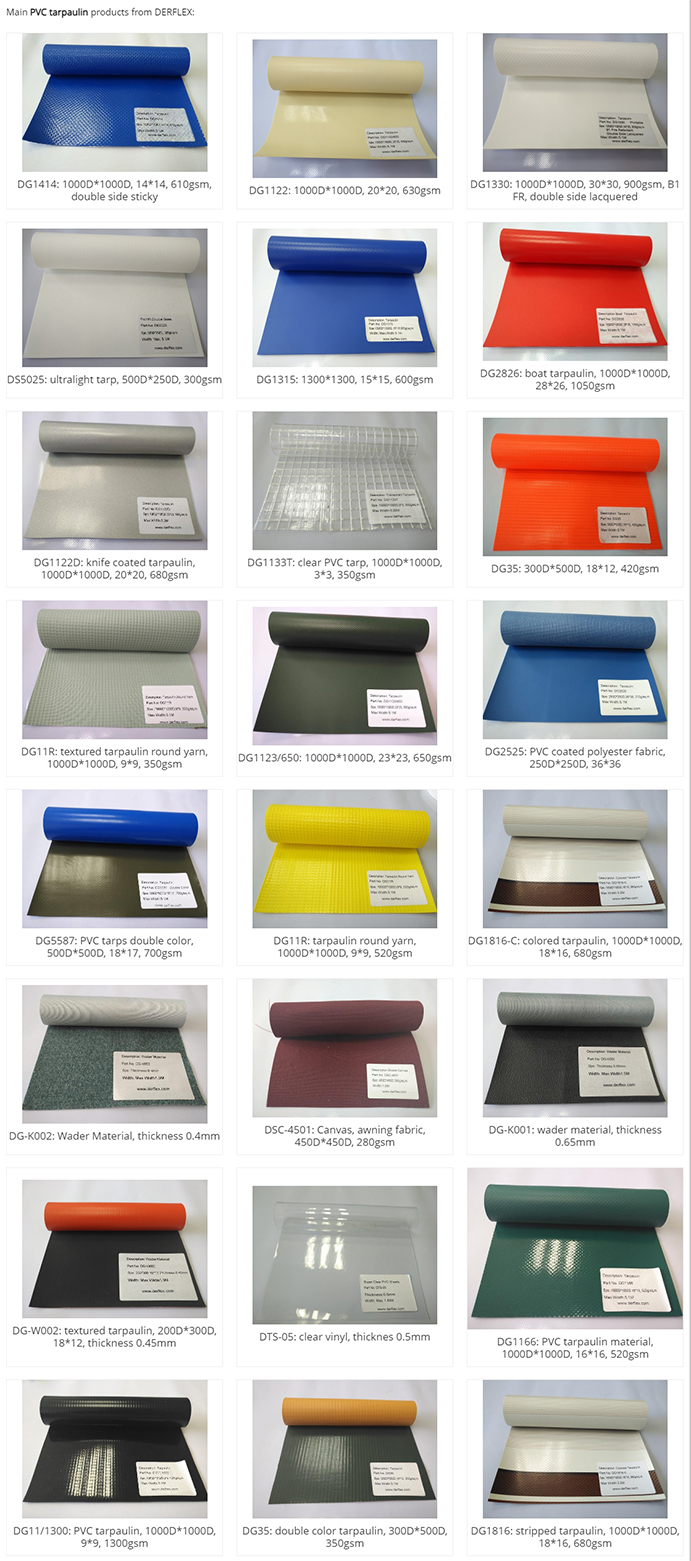
Product image display
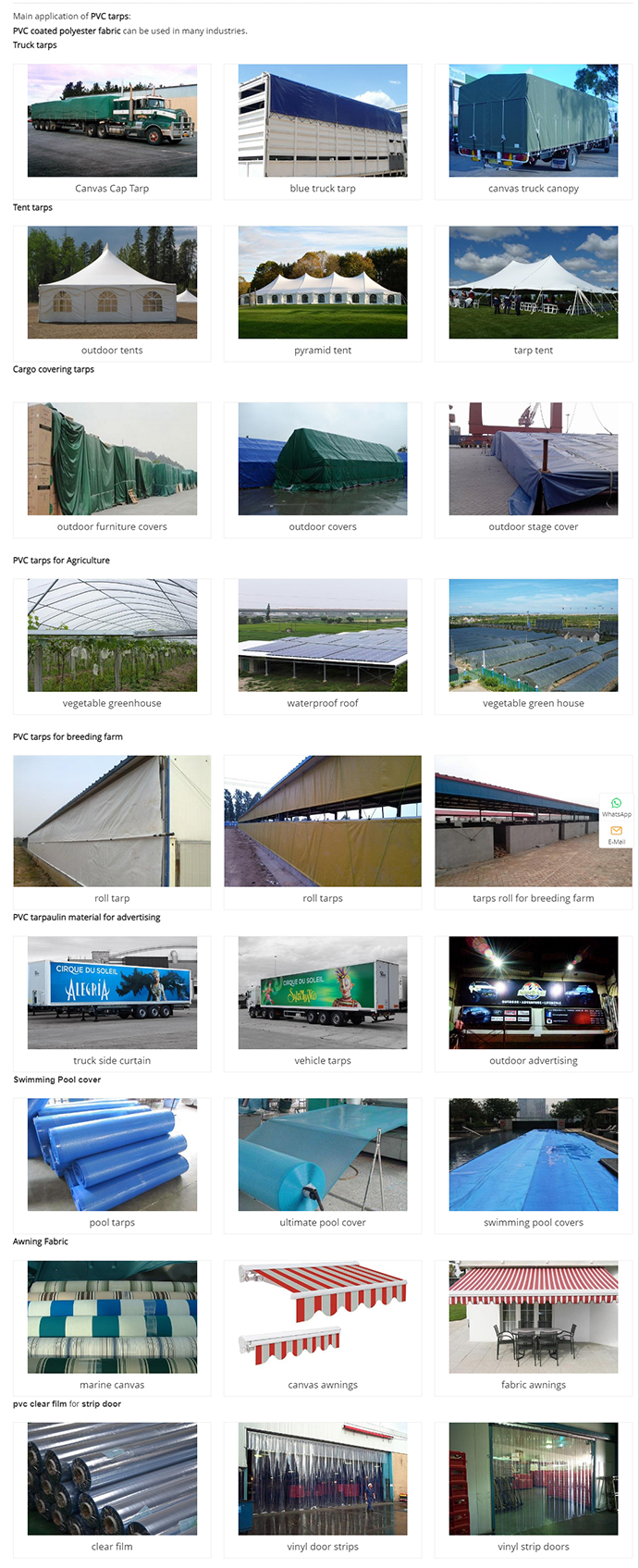
PVC tarpaulin roll goods and cover applications
Fabric consumption depends on more than geometry. The selected PVC coated polyester structure, roll width, surface direction and fabrication method must be reviewed together.
PVC tarpaulin roll materials
Roll supply can be discussed by application, fabric weight, width, color, surface finish and fabrication route. Confirm the usable width rather than relying only on nominal roll width.
Custom cover and tarp applications
Truck covers, tents, agricultural covers, equipment protection and industrial enclosures use different panel layouts, seam positions and edge details.
Worked example
Why roll width can matter more than a small change in GSM
Consider a cargo cover for a 6.0 m long × 2.4 m wide load with 1.2 m coverage at both sides and both ends. The finished wrap is approximately 8.4 m × 4.8 m. After adding a 50 mm perimeter hem, the field panel is 8.5 m × 4.9 m before any extra overlap required for a split construction.
Usable roll width scenario
Field construction
Base linear length
Purchased roll area
Planning implication
2.5 m
Two longitudinal strips
17.0 linear m
42.5 m²
Efficient when the two strip widths are planned to use most of the roll.
3.2 m
Two longitudinal strips
17.0 linear m
54.4 m²
The wider roll does not automatically improve yield; a large offcut may remain unless it can be reused.
5.0 m
One field strip
8.5 linear m
42.5 m²
Removes the center seam, subject to material availability, handling and fabrication equipment.
The lowest linear-meter number is not always the lowest project cost
A narrow roll may require more seams but waste less area.
A wider roll may reduce seams but leave a wide offcut.
A batch marker can reuse offcuts across repeated covers, flaps and reinforcement patches.
A
Check usable width
Exclude edge trim or material outside the agreed usable-quality zone.
B
Choose seam position
A seam should not be placed only for yield if it creates a water-pooling, abrasion or tension concern.
C
Calculate by production batch
Repeated panels can often be nested more efficiently than a single first article.
D
Separate fabric from accessories
Webbing, rope, grommets, D-rings, zippers, labels and packaging require their own bill of materials.
Cost and yield controls
Items that change custom tarp fabric consumption
A single general waste percentage can hide important design decisions. Record these items separately whenever they are material to the project.
Welded overlaps
Every longitudinal or transverse join adds cut width. Overlap value should match the chosen material and welding process.
Folded hems and rope edges
Turn-back hems, rope pockets, elastic channels and keder sleeves add material around exposed edges.
Corner and wear patches
Sharp corners, tie-down zones, roof peaks and contact points often need separate reinforcement pieces.
Access and ventilation details
Zipper doors, inspection flaps, clear windows, vents and removable panels require additional fabric and local reinforcement.
Directional surface or printing
Logo orientation, stripe direction, gloss consistency or fabric warp direction may prevent panel rotation.
First-article and setup use
Sample cutting, welding trials, color approval and machine setup may consume material outside the sellable order quantity.
Finished-size tolerance
Weld shrinkage, folded edges and fabrication tolerance affect the relationship between cut dimensions and measured finished size.
Roll defects and edge exclusion
Visual standards, coating marks or damaged edges can reduce the width and length available for acceptable panels.
Batch quantity and offcut reuse
Large batches can improve marker efficiency when smaller parts and reinforcements are cut from leftover spaces.
DERFLEX project workflow
From dimensions to a controlled roll plan
DERFLEX supports PVC coated polyester tarp materials, fabric rolls, cut panels and finished custom tarp fabrication. Project discussions can include 350–1200 GSM material directions, custom size and color, welded or sewn construction, hems, grommets, webbing, logo and OEM packaging.
01 · Requirement map
Define the cover path
Confirm object dimensions, drop, access, handling, exposure and fixing method.
02 · Panel schedule
Flatten the geometry
List every field panel, flap, skirt, pocket and reinforcement part with finished dimensions.
03 · Roll comparison
Test widths and seams
Compare strip count, panel orientation, offcut and seam placement against available material widths.
04 · Sample control
Approve fit and finish
Review usable dimensions, welds or stitching, hems, hardware positions and reinforcement zones.
05 · Batch marker
Lock repeat consumption
Use the approved drawing and production layout to allocate rolls and control repeat orders.
Prepare a useful inquiry
What to send for a custom cover material estimate
A dimensioned drawing or clear sketch produces a more useful review than a request based only on overall length and width.
Geometry package
Maximum object dimensions, required drop, slopes, protrusions, openings, photos and CAD or hand drawings.
Frequently asked questions about tarp fabric consumption
What is the basic formula for custom tarp fabric consumption?
Add the cut area of every panel after seam and hem allowances. Then arrange each panel type across the usable roll width, count the cutting rows and add a documented planning reserve. The final production value should come from the approved marker or cut plan.
Why can I not divide total cover area by roll width?
Area division assumes perfect use of every part of the roll. Real panels may not fit side by side, may require a fixed direction, or may be wider than the roll and need welded strips. These constraints can increase linear consumption.
How much extra fabric should be added for waste?
There is no single percentage that fits every cover. A flat rectangle may cut efficiently, while a shaped cover with windows, flaps, directional printing and many reinforcement parts can create more offcut. Use a transparent assumption for estimating, then confirm it with a batch marker.
How does roll width affect custom tarp cost?
Roll width affects strip count, seam length, offcut and handling. A wider roll can remove a seam, but it can also create a wider unused strip. Compare purchased area and fabrication work rather than comparing linear meters alone.
How do I calculate PVC tarp fabric weight?
Multiply the purchased fabric area in square meters by the selected GSM and divide by 1,000. Add webbing, rope, hardware, labels and packaging separately when estimating total finished weight.
Can DERFLEX review a drawing and estimate roll consumption?
DERFLEX can review project dimensions, panel layout, material direction, seam design, reinforcement and quantity to discuss a practical route for fabric rolls, cut panels or finished custom covers. Final values depend on the approved specification, sample and production layout.
Send the cut problem—not only the outside dimensions
Share the object drawing, cover style, target PVC tarp material, roll-width preference, seam and reinforcement details, quantity, color and destination. DERFLEX can review a suitable quotation route for roll goods, cut panels or finished custom covers.
Calculation outputs are planning estimates. Material consumption, finished dimensions, seam performance and application suitability should be confirmed through the agreed drawing, specification, sample, production marker and inspection method.