Flat coverage
Add overhang to the measured length and width so edges can be protected or secured.



Measure the coverage path—not only the footprint. Then add the drop, overlap and fastening allowance your installation actually needs.
Use the calculator below for a practical starting size, compare common applications, and prepare a finished-dimension request for truck covers, equipment covers, construction storage and custom PVC tarps.
A flat floor, a box-shaped machine, a peaked shelter and a loaded trailer can have the same footprint but require very different tarp dimensions.
Add overhang to the measured length and width so edges can be protected or secured.
Add the required front, back, left and right drops to the top dimensions.
Measure the load profile, not only the deck. Allow for end coverage and tie-down direction.
Use a drawing with finished dimensions, reinforcement zones and hardware positions.
This estimator converts object dimensions and the required side allowance into a suggested finished tarp size. It is a planning tool rather than a production drawing.
Use separate allowances for each edge when the object is asymmetrical or when one side needs more overlap than another.
For a floor, roof patch, material top, pool edge area or ground cover.
Example: a 12 × 8 ft area with 1 ft on every edge needs a planning size of 14 × 10 ft.
For machinery, furniture, generators, pallets and box-shaped outdoor equipment.
Example: a 6 × 4 ft machine requiring a 3 ft drop on every side needs about 12 × 10 ft before special shaping.
For flatbeds, trailers, bulk loads and cargo where the cover must pass over a raised profile.
Measure the real loaded shape. Rounded, peaked or irregular cargo can use more fabric than a rectangular estimate suggests.
“Bigger” is not always safer. Too little material exposes the item and strains attachment points; too much material can flap, drag, pool water or interfere with moving parts. The useful target is controlled coverage.
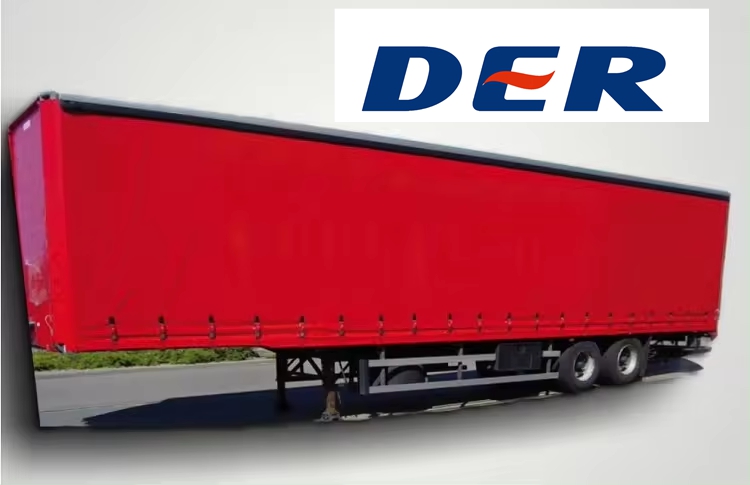
The table gives measurement priorities rather than one-size-fits-all dimensions. Final size should reflect the actual object, exposure and fastening arrangement.
| Application | Measure first | Allowance direction | Practical buying note |
|---|---|---|---|
| Small furniture or tools | Longest, widest and highest points | Add the required drop to all four sides | Keep the lower edge off wet ground where possible and secure against wind. |
| Generator or industrial machine | Body, guards, exhaust, handles and access panels | Add side drop and clearance for ventilation | Do not cover hot equipment without checking operating and cooling requirements. |
| Pallet or material stack | Maximum loaded dimensions, not pallet base alone | Add overlap below the top edge and enough material for strapping | Round or pad sharp corners before tensioning the tarp. |
| Car, SUV or work vehicle | Overall length, roof width, height and mirror profile | Follow the body contour and add secure lower overlap | A generic rectangular tarp will not fit like a patterned vehicle cover. |
| Flatbed or trailer cargo | Load length, top width, load height, front and rear profile | Add side drops and end coverage for the actual tie-down system | Highway use may require application-specific construction and securement practices. |
| Hay, lumber or farm storage | Stack size, peak shape, side protection and anchoring zone | Add enough side material for rain shedding and anchoring | Ventilation and condensation control can be as important as waterproofing. |
| Construction material pile | Footprint, height, irregular corners and wind exposure | Allow for overlap, ballast or tie-down points | Abrasion zones and reinforced corners should be identified before fabrication. |
| Canopy or shelter roof | Actual roof surface, pitch, ridge, eaves and attachment line | Measure along the slope rather than using floor footprint only | Confirm pockets, keder, rope edges, lacing or grommet rows with the frame drawing. |
Most sizing errors come from missing geometry or unclear order language rather than from arithmetic.
A 10 × 8 ft object is not covered by a 10 × 8 ft tarp when the sheet must also travel down the sides.
Stacked cargo, peaked loads and roof ridges increase the path length across the top surface.
Suppliers may describe cut size or finished size differently. Confirm the actual usable dimensions.
Uncontrolled extra fabric can flap, pool water, rub against surfaces and concentrate load at grommets.
Straps, D-rings, pockets, ropes and grommet rows need positions that match the supporting structure.
For OEM or fleet programs, a signed drawing or approved sample reduces variation between order cycles.
A useful inquiry combines size, material duty and fabrication details. This helps the supplier quote the same product you intend to approve.
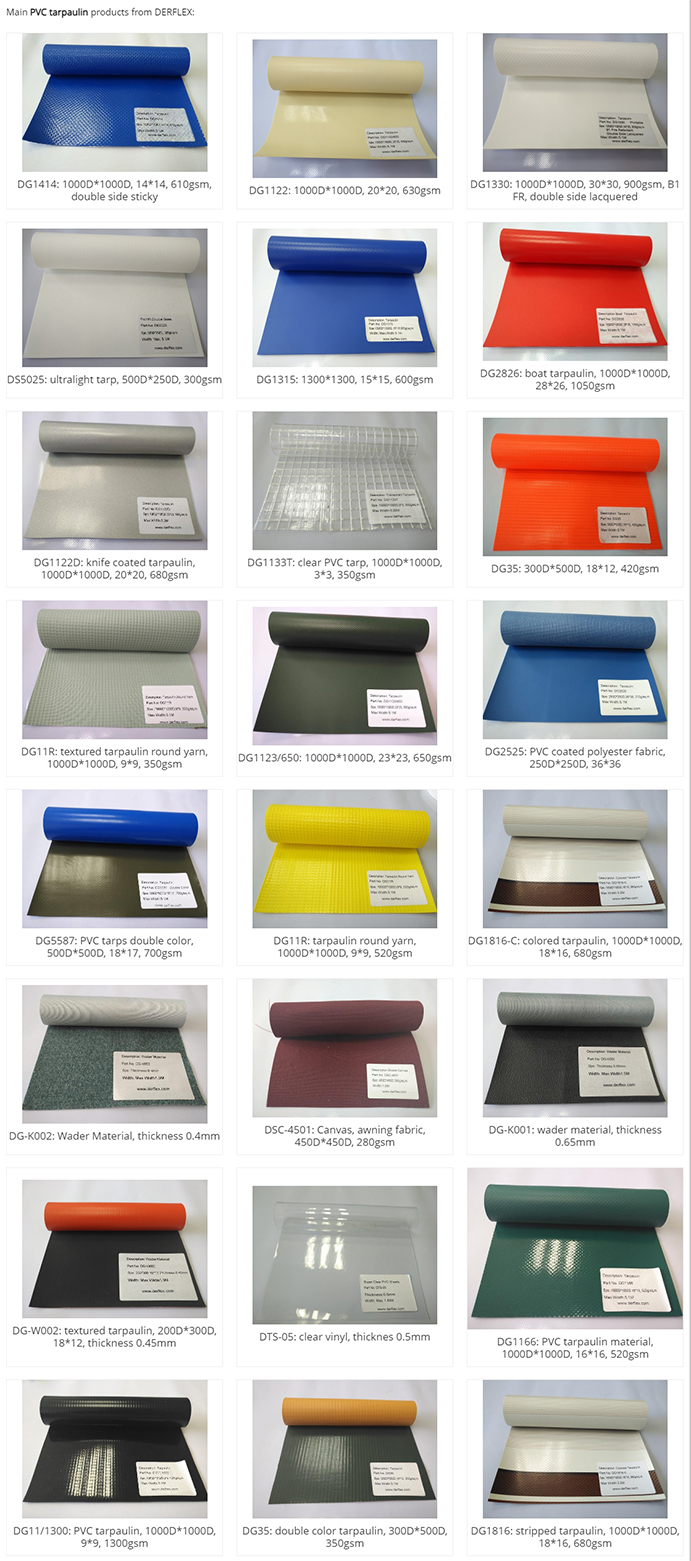
Large covers experience different handling, wind and seam loads than small sheets. Material weight, base fabric, coating, weld layout and reinforcement should be evaluated against the final cover dimensions and service conditions.
Attach a marked photo, sketch or drawing when the shape is difficult to describe in words.
The correct dimensions do not compensate for an unsuitable material. Weight, coating, reinforcement and finish should reflect the way the tarp will be installed and handled.
Decide whether you need sustained waterproof protection or limited water resistance, then review seams and drainage.
Compare waterproof and water-resistant tarps →Light temporary coverage and repeated industrial service place different demands on weight, abrasion and fabrication.
Read the PVC tarp vs poly tarp guide →GSM and thickness are related to construction but do not describe every performance property by themselves.
Choose a practical tarp GSM →DERFLEX supplies PVC-coated and laminated polyester materials, cut panels and finished tarp covers. Size can be coordinated with material weight, edge reinforcement, welding, hardware and p, ackaging requirements.
PVC coated or laminated polyester constructions with project-specific weight, color and finish directions.
Cutting, sewing, hot-air or high-frequency welding, hems and shaped cover processing.
Grommets, webbing, D-rings, straps, buckles, rope edges and reinforcement zones.
Drawing, sample and packaging confirmation can be used for distributor, fleet and OEM programs.
These DERFLEX resources cover thickness, equipment covers and vehicle applications in more detail.
Use these answers as a starting point, then verify the actual installation before ordering.
Measure the complete coverage path from the outermost points, then add the required drop, overhang or overlap on each edge. For a three-dimensional object, add the front and back drops to the length and the left and right drops to the width.
Usually not. A top-only sheet may need edge allowance for rain shedding or tie-down, while an equipment or cargo cover needs additional material to travel down the sides. Exact-fit covers should be patterned or drawn around the object.
There is no universal allowance. It depends on the desired side drop, fastening method, wind exposure and whether the tarp needs to wrap below an edge. Measure the intended drop on each side rather than applying one arbitrary percentage.
Cut size refers to material dimensions before hems and other fabrication steps. Finished size is the usable dimension after processing. Because suppliers may label stock products differently, confirm which definition appears on the quotation or product page.
Measure the loaded length, top width, highest cargo point, required side drop and front/rear coverage. Also mark the location and direction of straps, grommets or other securement points. The deck dimensions alone are not enough for raised cargo.
DERFLEX supports custom PVC tarp materials and finished-cover programs with specified dimensions, seams, hems, reinforcement and hardware. Final feasibility and tolerance should be confirmed from the application drawing, material construction and order requirements.
Send DERFLEX your application photo, finished dimensions, quantity, material direction and fixing method. The team can review a practical PVC tarp construction and quotation basis for your project.
Calculator results are preliminary planning estimates. Final dimensions, material suitability and finished-cover performance depend on the approved drawing, fabrication details, tolerances, installation and service environment.