Company News Industry News

Grain Pile Covers | Outdoor Bulk Grain Storage Tarps | DERFLEX

Outdoor Bulk Grain Protection

Grain Pile Covers — Outdoor Bulk Grain Storage Tarps

DERFLEX grain pile covers are large-format protective tarps for temporary or seasonal outdoor bulk grain storage. The cover material is selected to block rain, resist outdoor exposure, withstand handling and support a practical tie-down layout around conical piles, bunker storage and other grain stockpiles.

A grain cover is one part of the storage system. Successful outdoor storage also depends on dry grain, site drainage, aeration or ventilation planning, correct cover tension, seam placement and wind restraint.

Quick Answer

What Is a Grain Pile Cover?

A grain pile cover is a weather-resistant sheet or fabricated tarp placed over bulk grain stored outside in a conical pile, temporary bunker, low-wall storage area or seasonal stockpile. Its immediate job is to prevent precipitation from entering the grain mass and to reduce direct exposure to sunlight, wind-blown debris and surface contamination.

For larger piles, the cover should be treated as an engineered storage component rather than an oversized general-purpose tarp. Finished geometry, seam direction, edge reinforcement, anchor spacing, drainage path, deployment method and the storage site's aeration strategy all influence real performance.

DERFLEX's existing grain pile cover range includes PVC-coated polyester references and string-reinforced cover options. Final construction should be confirmed against the intended grain, storage duration, climate, pile dimensions and handling method.
340–610 gsmVerified Grain-Cover Material References
10–18 ozListed Grain-Pile Cover Grades
6 / 8 / 10 milListed String-Reinforced Options
CustomFinished Size & Fabrication Direction
Storage-management note: A waterproof top cover cannot correct grain that entered storage too wet or too warm. Site drainage, grain condition, aeration and monitoring should be managed as part of the complete outdoor storage plan.
Verified DERFLEX References

Grain Pile Cover Material Specifications

The table below uses material references already published on the DERFLEX Grain Pile Tarps page. It is a practical starting point for quotation, not a substitute for confirming the current production specification for your project.

DERFLEX Reference Base Fabric Construction Weight Procurement Direction
DG23200D × 300D18 × 12340 gsm / 10 ozLighter verified grain-cover reference; confirm suitability for storage duration, wind and handling frequency.
DG55500D × 500D9 × 9440 gsm / 13 ozMid-duty verified reference for projects needing more body and repeated handling than lighter constructions.
DG35300D × 500D18 × 12440 gsm / 13 ozAlternative 440 gsm structure; selection should follow tear, flexibility and fabrication requirements.
DG111000D × 1000D9 × 9610 gsm / 18 ozHeavy-duty PVC-coated polyester direction for reusable covers, stronger handling and larger finished tarps.
DG11221000D × 1000D20 × 20610 gsm / 18 ozDenser heavy-duty verified reference where robust woven support is preferred.
String-ReinforcedProject-defined reinforced cover construction6 / 8 / 10 mil listedConfirm current material composition, UV direction, finished size and expected service environment before order.

Other dimensions, weights, colors, reinforcements and fabrication details can be discussed according to project requirements. Parameters not shown here should be confirmed with DERFLEX rather than assumed.

Selection Matrix

Choose the Grain Storage Tarp Around the Real Storage Condition

GSM alone does not decide whether a grain pile tarp will work. The more useful specification starts with storage duration, exposure, pile geometry, drainage, tie-down method, handling frequency and whether the site uses aeration or fumigation-related features.

Seasonal Harvest Overflow

Prioritize fast deployment, rain protection, manageable cover weight and a secure perimeter. Use a slope that sheds water and avoid excessive loose fabric that can flap or pool.

Temporary StorageRain SheddingFast Handling

Reusable Outdoor Farm Pile

Consider a more robust coated structure, welded panel construction, reinforced hems and repeatable tie-down positions. Reuse makes abrasion, folding and repairability more important.

PVC DirectionReinforced EdgeRepeated Handling

Large Commercial Grain Bunker

Large covers need a seam map, folding / rolling plan, crew-deployment logic and a restrained edge system. Wind loads increase with exposed surface area, so the anchoring concept must be reviewed with the cover.

Large FormatSeam PlanningWind Restraint

Aerated Pile or Bunker

Do not seal or tension the cover without considering the actual airflow design. Air inlets, ducts, suction, cover restraint and condensation control should work as one system.

Aeration InterfaceCondensation ControlSystem Design

Rough or Abrasive Site

Protect the top cover from dragging across gravel, wall edges and hard contact points. A separate ground sheet, wear pads or localized reinforcement may be more valuable than simply increasing the overall GSM.

Wear ZonesGround SheetAbrasion Control

Fumigation-Ready Storage

If fumigation ports, zippers or gas-sealing details are required, state them in the RFQ. Material compatibility, seams and access details must be agreed for the specific fumigation system; do not assume every general grain tarp is suitable.

Ports / ZipsSealing DetailConfirm Compatibility
Engineering & Fabrication Notes

Five Details That Often Decide Whether a Large Grain Cover Works

Large grain storage covers fail most often at interfaces: the edge, seam, anchor, low spot, contact point or deployment path. These details should be designed before fabrication, not improvised after the cover reaches the site.

1. Pile GeometryActual surface path + side reach
2. Seam MapWater shedding + fabrication width
3. Edge SystemHem + webbing + tie-down points
4. DrainageNo troughs or trapped runoff
5. DeploymentFold / roll orientation for the crew

Seam Direction & Water Shedding

Panel seams should be planned around fabrication width, expected tension and the way rain moves down the pile. For reusable PVC-coated covers, heat-welded seam construction can provide a continuous waterproof joint when the welding process and material are compatible.

  • Avoid creating seam geometry that traps runoff.
  • Keep critical seam intersections away from the highest stress zones where practical.
  • Confirm whether the finished cover will be welded in one piece or assembled from sections on site.

Wind Restraint & Edge Reinforcement

A large solid tarp can develop substantial uplift and flapping if wind enters beneath an uncontrolled edge. Restraint should distribute pull across the perimeter rather than concentrate load at a few eyelets.

  • Map grommets, D-rings, webbing or strap paths to real anchors.
  • Strengthen corners and high-pull zones with larger reinforcement areas.
  • Use additional restraint and site-specific engineering where the consequence of cover failure is high.

Drainage Before Cover Installation

The cover should direct rain away from the pile rather than move water to a low point beside it. Site grading, ground moisture control, raised or crowned storage areas and edge runoff paths matter as much as the top sheet.

  • Do not place a grain pile in a depression or poorly drained area.
  • Provide a continuous slope so the cover cannot form deep water pockets.
  • Consider a ground sheet where soil moisture or contamination is a concern.

Aeration & Condensation

Outdoor piles need grain-management logic under the tarp. The cover reduces rain infiltration, but trapped heat or moisture can still create deterioration if the grain enters storage in poor condition or airflow is inadequate.

  • Coordinate air inlet areas and duct routes with the cover system.
  • Keep cover tension compatible with suction or restraint used by the aeration design.
  • Monitor stored grain and the underside of the cover for condensation-related problems.
Real DERFLEX Image Pack

Grain Pile Cover Application Images

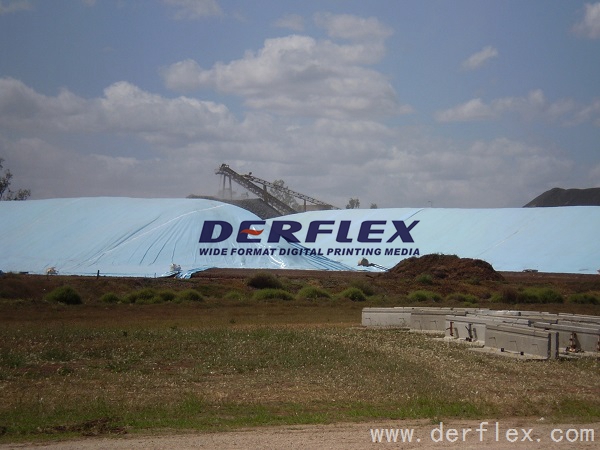
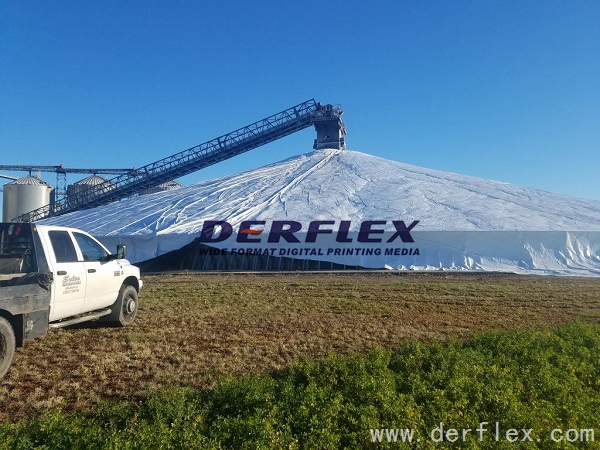
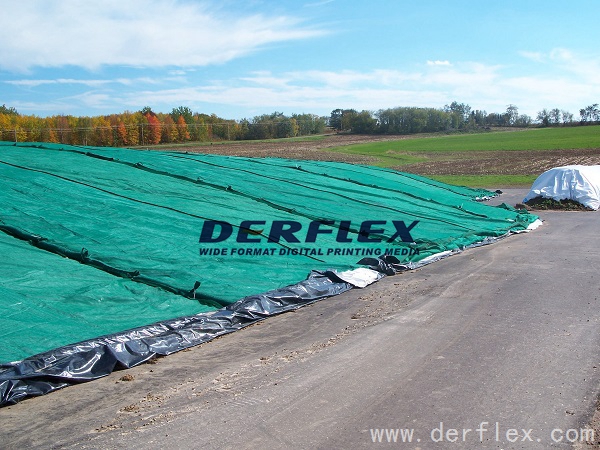
These images are existing DERFLEX website assets and can support the page Hero, Google Images visibility and buyer understanding without relying on generic stock photography.

Application Decision Table

Outdoor Grain Storage Cover by Application

ApplicationMain RiskCover DirectionFabrication Focus
Corn pile / harvest overflowRain infiltration, wind, short deployment windowWaterproof reinforced cover selected for the required seasonFast deployment, reinforced perimeter, runoff slope
Wheat / barley bulk bunkerLarge area, cover handling, seam stressLarge-format PVC-coated or reinforced cover systemPanel layout, welded seams, folding / rolling plan
Soybean stockpileMoisture and temperature controlTop cover combined with correct grain condition and aeration planControlled air paths, drainage and monitoring access
Longer seasonal storageRepeated UV, weather and handling cyclesMore robust reusable coated fabric directionUV specification, repairability, wear zones, strong edge construction
Temporary commercial overflowRapid installation across multiple pilesRepeatable custom sizes and clearly identified cover setsCenter marks, size stenciling, deployment orientation, packaging plan
B2B Procurement Guide

What to Send DERFLEX Before Requesting a Grain Pile Cover Quote

A useful RFQ describes the storage system, not only the tarp length and width. The following information helps reduce material, fabrication and fit errors before sampling or production.

01

Pile or Bunker Geometry

Provide length, width, peak height, slope or actual surface path, wall height, perimeter shape and the amount of edge reach needed for anchoring.

02

Grain & Storage Plan

State the grain type, expected storage duration, whether the pile is temporary or reusable, and how the grain will be aerated, inspected and unloaded.

03

Climate & Exposure

Include rainfall, sunlight / UV exposure, expected temperature range, wind exposure and whether snow or freezing conditions are relevant.

04

Material Direction

Give a target GSM / oz / mil if already specified, or ask DERFLEX to review a suitable grade from the actual duty level and reuse expectation.

05

Edge & Hardware Layout

Mark grommets, webbing, straps, D-rings, rope edges, reinforced corners, lifting points and the real anchor locations around the storage site.

06

Handling & Packaging

State how the cover should be folded or rolled for deployment, desired markings, quantity, private-label requirements and destination.

Common Procurement Mistakes

Six Grain Cover Errors to Catch Before Production

1

Ordering by Footprint Only

The tarp follows the pile surface, side drop and anchor reach. Ground footprint alone can significantly understate the finished cover size.

2

Choosing Only by GSM

Base fabric, coating, tear behavior, seam construction and edge reinforcement can matter more than a small difference in finished weight.

3

Ignoring Water Runoff

An oversized cover with low spots can collect water and create large static loads. Drainage should be designed into both the pile profile and the site.

4

Too Few Tie-Down Points

Large solid covers need distributed restraint. Loading only four corners or a few isolated eyelets can concentrate pull and allow wind under the perimeter.

5

No Deployment Plan

A large fabricated cover can be difficult to move, unfold and orient. Fold direction, center marks, numbering and core / roll format should be planned before shipment.

6

Treating the Tarp as the Entire Storage System

A cover blocks external weather, but grain condition, ground moisture, aeration and monitoring still determine whether bulk grain remains stable in storage.

Why DERFLEX

Manufacturer-Level Support for Custom Grain Cover Programs

DERFLEX focuses on PVC-coated fabrics, tarpaulin materials and fabricated cover solutions. For grain pile cover buyers, that makes it possible to discuss material grade and finished-cover construction together rather than sourcing a generic sheet with fixed retail dimensions.

Material + Fabrication in One Specification

Discuss base fabric, coating, weight, width, color and surface direction together with seams, hems, reinforcement, grommets, webbing and finished size.

B2B & OEM Supply Direction

Programs can be reviewed for roll goods, cut panels or finished tarps with labels, identification printing and project-defined packaging based on quantity and requirements.

People Also Ask

Related Questions About Grain Pile Covers

Direct answers to common buyer and storage-planning questions.

What is the best tarp for an outdoor grain pile?

The best tarp depends on storage duration, pile size, climate, wind exposure and whether the cover will be reused. For demanding and reusable programs, PVC-coated polyester is a practical direction because it can combine waterproof coating, strong woven support, welded fabrication and reinforced edge details. Temporary projects may use lighter reinforced constructions when the storage plan and exposure allow it.

Are grain pile covers completely waterproof?

The cover material can be specified as waterproof, but the finished storage system also depends on seam quality, edge sealing, water shedding, drainage and installation. A waterproof sheet with poor seam or site design can still allow water problems around the pile.

How do I calculate the size of a grain pile tarp?

Measure the actual path over the pile rather than only the ground footprint. Include the top or peak, slopes, side drops, wall height and the additional reach needed to connect to the restraint system. For irregular or very large piles, send a dimensioned top and side drawing.

Should a grain bunker cover include a ground sheet?

A separate ground sheet can be useful where soil moisture, contamination or rough ground is a concern. The decision should follow site preparation, drainage, handling method and the complete grain storage system rather than assuming the top cover alone is enough.

Can grain pile covers be used with aeration systems?

Yes, but the aeration layout and cover restraint need to be coordinated. Air inlets, ducts, suction, edge sealing and condensation control should be designed as one system. Do not block required airflow paths simply to make the tarp look tighter.

How are large grain tarps kept from blowing away?

Large covers need distributed restraint along the perimeter, suitable anchors, controlled tension and a fit that limits wind from getting underneath. Reinforced hems, webbing, straps, D-rings or project-defined tie points can spread load more effectively than relying on a few isolated eyelets.

Can DERFLEX make custom-size grain pile covers?

DERFLEX can discuss custom finished sizes and fabrication details for grain cover projects. Send the pile or bunker dimensions, material direction, edge layout, quantity, handling requirements and destination so the team can review a practical production specification.

What information is needed for a grain tarp quotation?

Provide grain type, storage duration, pile geometry, finished cover size, climate and wind exposure, preferred GSM or material, seam / edge requirements, grommet or strap layout, aeration or fumigation details if applicable, quantity, branding or marking needs, packaging and destination.

Build the Grain Pile Cover Around the Storage System

Send DERFLEX the grain type, pile or bunker drawing, finished dimensions, storage duration, climate, wind exposure, material direction, edge / tie-down layout, aeration details, quantity and destination. The team can review a practical material and fabrication direction for sampling or B2B production.

Pile / bunker dimensionsGrain & storage duration Material / GSM directionSeam & edge layout Aeration / access detailsQuantity & destination
Copyright © 2015 DERFLEX ( PVC tarpaulin manufacturer )All Rights Reserved.