Define what the tarp must cover
Identify whether the job is a flat sheet, draped equipment cover, truck load, trailer system, canopy roof, curtain panel or fitted cover. The geometry decides the measurement path.



A reliable tarp size starts with the coverage path, not the nearest stock label. Measure the surface or object, add only the drop or overlap the installation actually needs, then confirm whether the supplier is quoting finished size or cut size.
This guide combines common tarp size references, formulas for flat and three-dimensional covers, truck and equipment measurement logic, a finished-size calculator, application notes and a B2B quotation checklist.
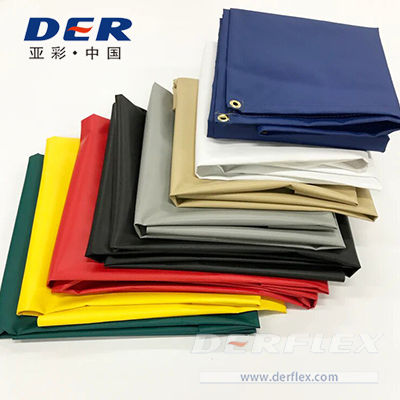
For a flat area, start with the area length and width, then add the required overhang to each edge. For a box-shaped object, add the required side drops to the top dimensions. For trucks, trailers, slopes and irregular equipment, measure the actual fabric travel path rather than only the footprint.
The same nominal tarp size can fit very differently depending on the object profile, weather overlap, tensioning method and whether the dimensions refer to raw fabric or the completed cover.
Identify whether the job is a flat sheet, draped equipment cover, truck load, trailer system, canopy roof, curtain panel or fitted cover. The geometry decides the measurement path.
Record the true length and width. For three-dimensional objects, also record the highest point, unequal side drops, protrusions, access areas and any part the fabric must pass over.
Add only what the installation needs for side protection, rain shedding, fastening reach, tension or panel overlap. Excess material can sag, flap or create water pockets.
Mark grommets, D-rings, straps, webbing, rope edges, pockets, hooks or lacing positions. Size and hardware layout should be reviewed together rather than as separate decisions.
For made-to-measure work, specify the completed usable dimension. For tighter requirements, define how the tarp will be laid out and measured during inspection.
A top view and side view with labeled dimensions can prevent errors that a single “10 × 12 ft” note cannot. Repeat orders should use revision-controlled drawings.
Do not add hem loss to a dimension that is already specified as finished size. If the supplier is manufacturing to a final usable dimension, the fabricator should calculate the extra raw material needed for hems, welded seams, pockets and reinforcement. For a deeper explanation, see the DERFLEX cut size vs finished size guide.
Use these as planning formulas. Fitted covers, tensioned membranes, powered roll-tarp systems and complex industrial shapes should be confirmed from a drawing before production.
Suitable for pallet tops, simple roof protection, floor sheets, stockpiles and other flat coverage where the edges need a defined overlap.
Suitable for simple machinery, crates, equipment or loads where one flat tarp drapes down the front, rear and sides.
Measure along the actual line the fabric follows. A floor plan does not capture roof pitch, an arched frame, a rounded load or a boat profile.
Use the loaded profile and actual fixing locations. Bed length alone does not define the fabric path if the load rises above the rails.
Enter the top or flat-area dimensions plus the allowance needed at each edge. Use one unit consistently—feet, inches, meters or centimeters—and the result stays in that unit.
Planning tool only. It does not add fabrication allowance for hems or seams. If your result is the finished size you need, the manufacturer should calculate raw cut requirements separately.
These are common market reference dimensions, not a promise that every material or supplier stocks every size. The correct tarp still depends on the usable finished dimension and the way it must cover the object.
| Nominal Size (ft) | Approx. Metric Size (m) | Flat Area | Typical Coverage Direction | Measurement Reminder |
|---|---|---|---|---|
| 4 × 6 | 1.22 × 1.83 | 24 ft2 | Small gear, compact ground protection, small bundles | Check whether you need edge overhang; the full 24 ft2 is not usable top coverage if the tarp must drape down. |
| 6 × 8 | 1.83 × 2.44 | 48 ft2 | Small equipment, garden or temporary general-purpose covers | Measure the widest point and add the actual drop needed to reach tie-downs. |
| 8 × 10 | 2.44 × 3.05 | 80 ft2 | Medium equipment, pallet groups, general outdoor protection | Confirm finished dimensions if the object has little tolerance for undersizing. |
| 10 × 12 | 3.05 × 3.66 | 120 ft2 | Roofing work, larger equipment, temporary shelter or storage | Roof pitch and side overlap can consume much more fabric than the footprint suggests. |
| 12 × 16 | 3.66 × 4.88 | 192 ft2 | Vehicles, trailer loads, larger storage and jobsite use | For transport, measure cargo height and rail/tie-down positions, not only the deck. |
| 16 × 20 | 4.88 × 6.10 | 320 ft2 | Construction materials, truck or industrial covers | Large covers benefit from a planned seam direction and reinforced edge layout. |
| 20 × 30 | 6.10 × 9.14 | 600 ft2 | Agricultural stacks, building materials and large equipment | Handling weight and wind load become increasingly important as area grows. |
| 30 × 40 | 9.14 × 12.19 | 1,200 ft2 | Large storage, industrial or agricultural coverage | Review panel welding, anchors, crew handling, drainage and packing before treating size as the only specification. |
Stock-size warning: a nominal “10 × 12 ft” tarp may not provide a full 10 × 12 ft of finished usable coverage if the supplier lists cut size. Confirm the terminology before comparing offers. DERFLEX also maintains a dedicated tarp tolerance guide for projects that need defined acceptance limits.
The highest-value measurement is the one that follows the actual installation. These application paths show which dimensions should be recorded first.
| Application | Measure First | Add / Confirm | Common Sizing Error | Production Note |
|---|---|---|---|---|
| Flat pallet or material pile | Top length and width | Rain overhang, side protection and anchor reach | Ordering only the top footprint | Large sheets may need welded panels and reinforced corners. |
| Machinery / equipment | Longest, widest and highest fixed points | Front/rear/side drops, protrusions, hot or sharp zones | Using brochure dimensions that exclude handles or attachments | Fitted covers may need panel drawings rather than one rectangle. |
| Truck / flatbed cargo | Deck length, width and loaded profile | Side drop, end coverage, rail position and tie-down geometry | Measuring an empty bed instead of the operating load | Plan abrasion reinforcement and hardware around the load path. |
| Roll tarp / trailer system | Roller width, tarp travel and frame / bow geometry | Pockets, bars, arm clearance and roll direction | Using trailer body size as the tarp size | System hardware can make overall length and width insufficient as a specification. |
| Canopy / sloped roof | Actual roof-surface path | Pitch, lacing gap, pocket position, tension and runoff | Using floor footprint or post-to-post spacing only | Confirm whether the cover is loose, tensioned or pocketed. |
| Industrial curtain | Opening width and finished drop | Panel overlap, track height, floor clearance and attachment spacing | Ignoring overlap between curtain panels | Specify each finished panel and reinforcement zone separately. |
For broader specification planning beyond size, see the DERFLEX tarp specifications guide and tarp thickness guide.
Examples make the difference between footprint size and finished cover size easier to see.
Top area: 2.4 × 1.2 m. Required overlap: 0.3 m on each side.
Planning finished size: 3.0 × 1.8 m.
Top: 3.0 × 1.8 m. Front/rear drop: 1.0 m each. Left/right drop: 1.2 m each.
Simple draped-sheet direction: 5.0 × 4.2 m. A fitted cover requires a panel drawing.
A frame may measure 4 m wide on the ground, but the fabric has to travel up and over the roof slope.
Do not substitute the floor width for the real surface path. Pocket, lacing or tension details can further change the finished dimensions.
Most size disputes are not caused by arithmetic. They come from measuring the wrong path or using an undefined size term.
A three-dimensional load uses fabric on the sides. Measure the top or path plus the side drops needed to reach the fastening system.
Ask whether a stock size is cut size or finished size. For custom orders, put “finished dimensions after hems and seams” on the drawing when that is what installation requires.
There is no universal allowance. Add overhang because it performs a job—rain runoff, tie-down reach, tension, panel overlap or side coverage—not because a generic number appears in a guide.
A tarp can have the right outside dimensions yet fit badly if grommets, D-rings or pockets do not align with the structure. Mark fixing points on the same drawing as the size.
Transport covers should follow the operating cargo profile. Different load heights can change side drop, corner stress and the usable tying range.
Area increases material mass and wind exposure. Large covers should be reviewed for seam layout, crew handling, folding, storage, drainage and anchoring—not only length and width.
These are existing DERFLEX website image resources selected to support image search, buyer understanding and the measurement topic. Hero imagery is loaded normally; below-fold images use lazy loading.
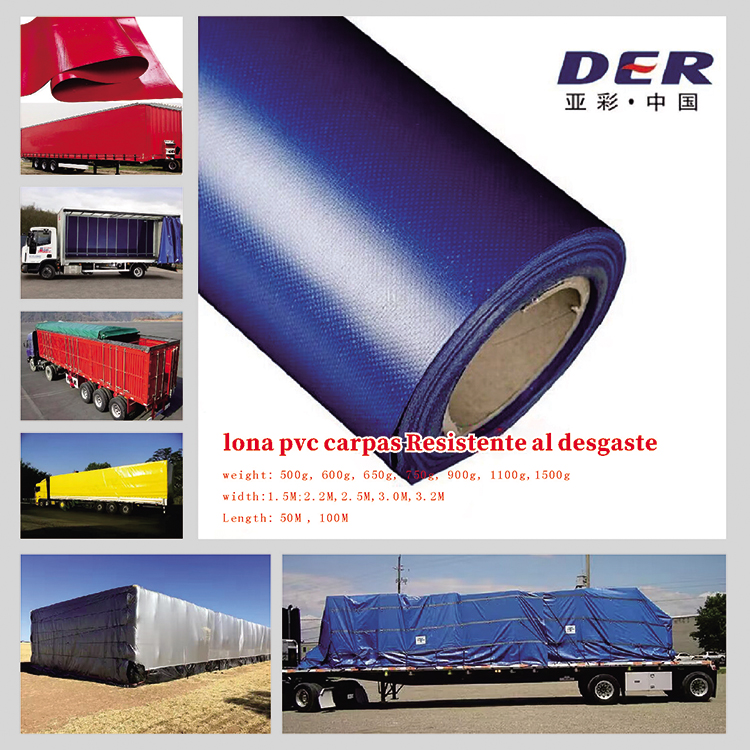
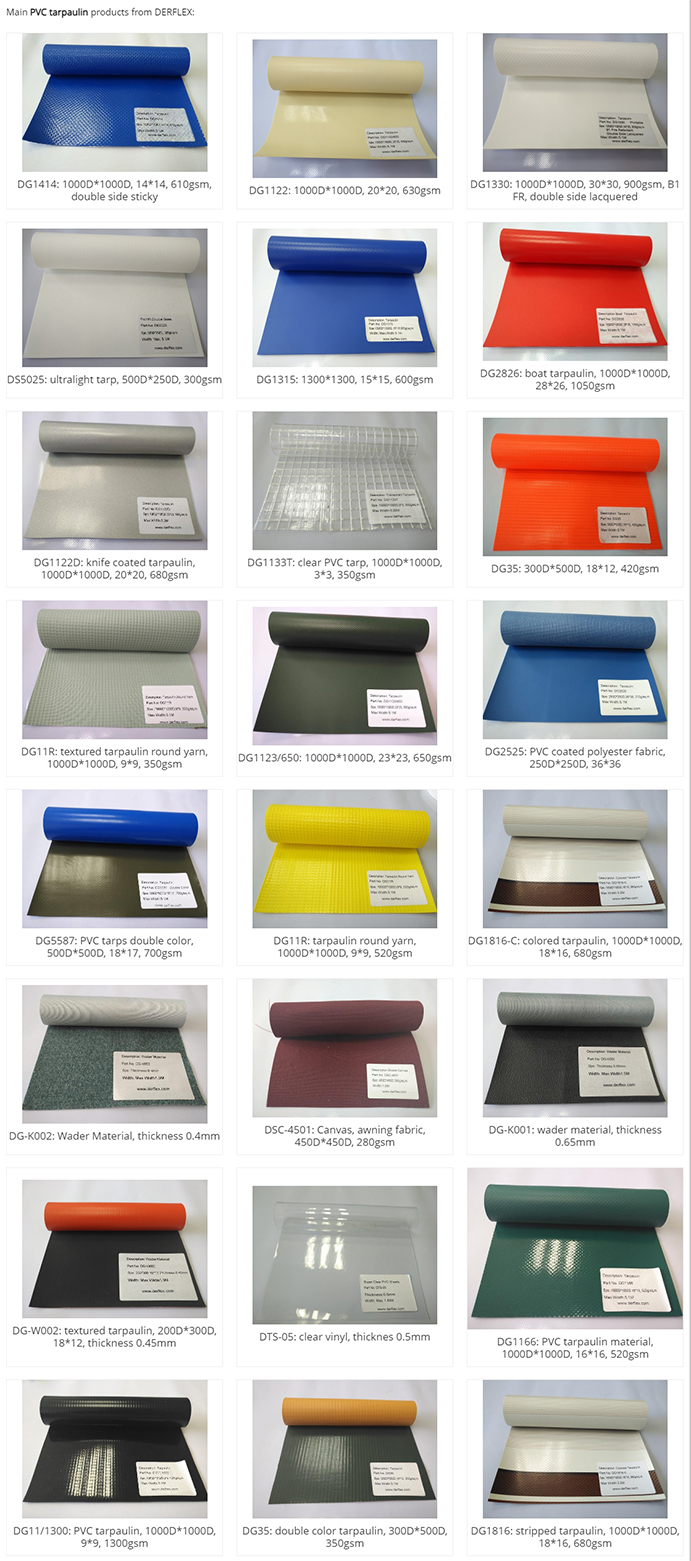
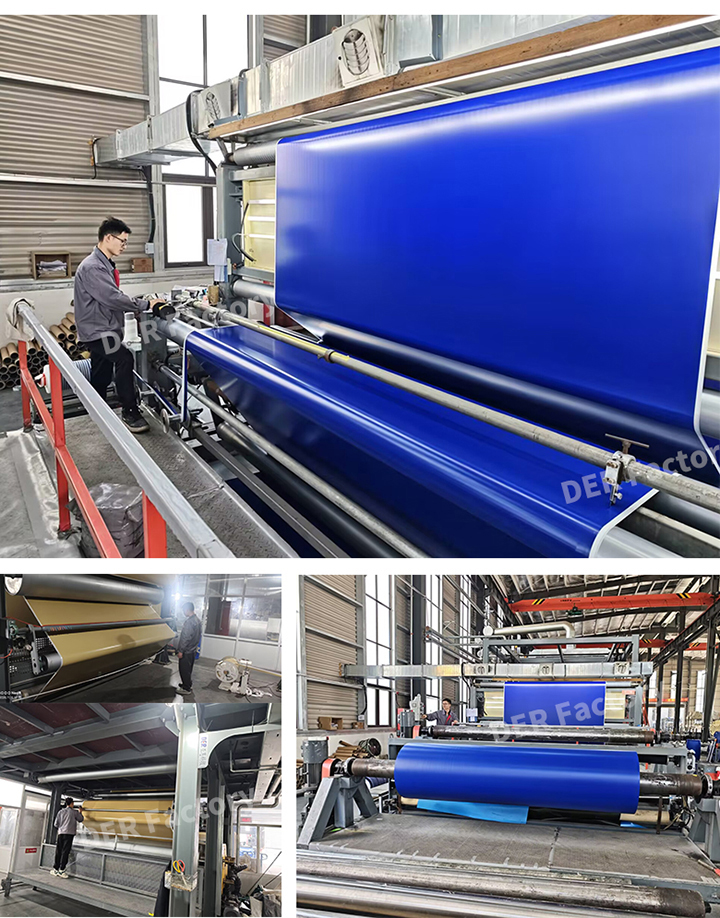
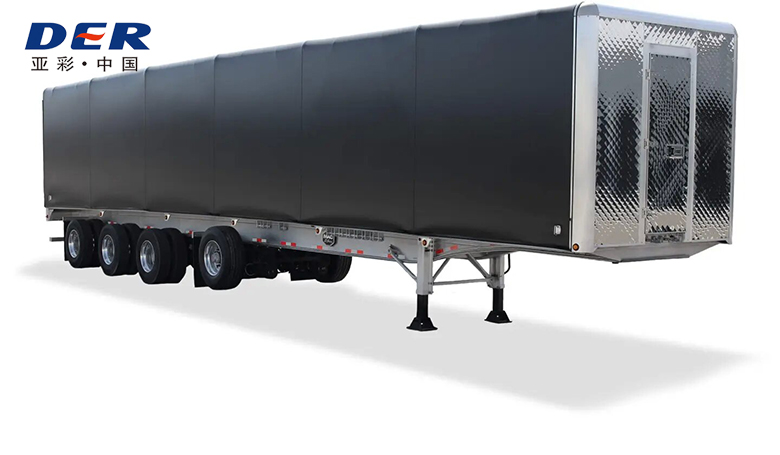
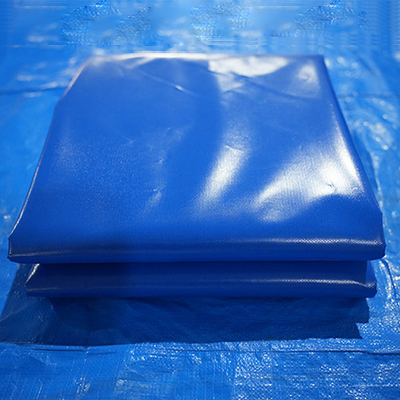
A dimension list is more useful when it is tied to the material, fastening and operating environment. This helps the factory turn “size” into a production-ready specification.
For a full RFQ structure, see custom tarp specifications. For made-to-measure cover engineering, see made-to-measure tarpaulin.
These verified DERFLEX resources separate sizing, tolerance, material construction and purchasing decisions so each page answers a distinct question rather than competing for the same search intent.
Send DERFLEX the application, finished dimensions, drawing or photos, required drop or overlap, material direction, fixing layout, quantity and destination. The team can review a practical PVC tarpaulin or custom cover construction for quotation.