


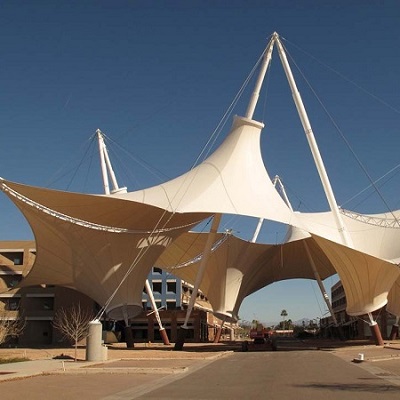
 Architectural PVC / PVDF Membrane Fabric
High-Performance Tensile Membrane Fabric for Modern Architectural Structures
DERFLEX supplies tensile membrane fabric for architectural roofs, canopies, stadium covers, carports, walkways, public shade structures and long-span membrane buildings. Our PVC/PVDF coated polyester membrane fabrics are engineered for high tensile strength, weather resistance, UV stability, flame retardancy and long outdoor service life.
As a professional coated fabric manufacturer, DERFLEX supports architects, tensile structure contractors, fabricators, distributors and project owners with customizable membrane material structures, colors, widths, surface finishes and technical support.
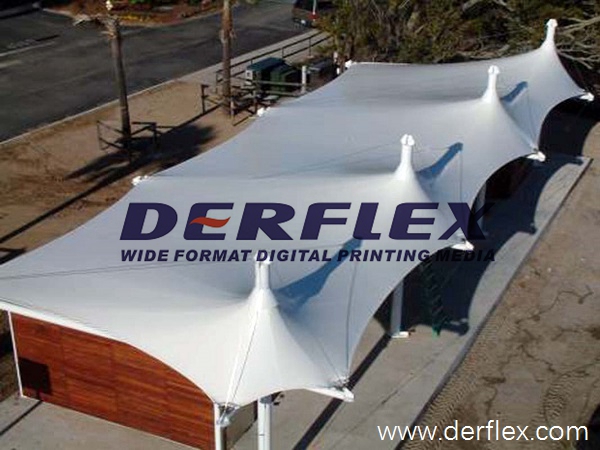
What Is Tensile Membrane Fabric?
Tensile membrane fabric is a high-strength flexible architectural textile designed to carry loads under tension. It is usually made from a woven base fabric, such as polyester or fiberglass, and coated or laminated with weather-resistant polymer layers such as PVC, PVDF, PTFE or ETFE-related systems.
In real projects, the membrane is tensioned over steel frames, cables or support structures to create lightweight roofing, canopy, façade, skylight, shade and long-span architectural forms. Compared with many traditional roofing materials, tensile membrane fabric can reduce structural weight, allow creative curved shapes and provide controlled light transmission.
- Designed for structures working through pre-tension and load distribution.
- Suitable for open or semi-open architectural spaces requiring lightweight roofing.
- Available with UV resistance, flame retardancy, waterproofing and surface lacquer options.
- Can be customized for color, width, weight, yarn density, surface finish and project specification.
DERFLEX Material Positioning
Many tensile membrane companies focus on structure design and installation. DERFLEX focuses on the material itself: coated fabric formulation, coating uniformity, fabric strength, surface treatment, roll stability and export-ready supply.
- Core material: PVC/PVDF coated polyester membrane fabric
- Common structure: 1000D polyester base fabric with high-density weave options
- Surface: lacquered, PVDF, matte, glossy or custom finish
- Performance: UV resistance, flame retardancy, waterproofness, tensile strength and dimensional stability
- Support: OEM material development, sample testing, bulk roll supply and export packaging
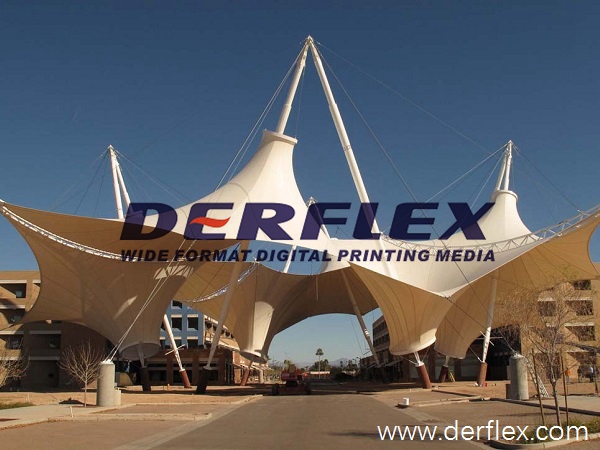
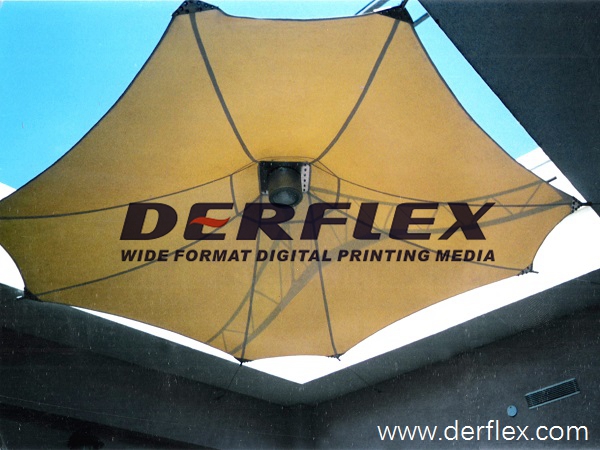
DERFLEX Tensile Membrane Fabric Image Gallery
The original 3 product images from the existing page are retained and redesigned into a cleaner, more international visual layout.
Performance Advantages of DERFLEX Tensile Membrane Fabric
A good tensile membrane fabric must perform as both a building skin and a structural textile. DERFLEX focuses on the practical requirements of architects, contractors, fabricators and long-term building owners.
High Tensile Strength
Reinforced polyester base fabric provides reliable strength under pre-tension, wind load and long-span structural stress.
Weather & UV Resistance
Outdoor membrane structures require resistance to sun exposure, rain, temperature change and long-term weather aging.
Flame Retardant Option
B1 FR and other project-specific flame retardant directions can be developed according to regional building requirements.
Lightweight Roofing
Compared with heavy rigid roofing, membrane fabric can reduce structural load and support more creative lightweight forms.
Translucency & Comfort
White or light-colored membrane can help create soft daylight effects while reducing harsh direct sunlight in shaded spaces.
Custom Surface Finish
PVDF, lacquered, matte, glossy or special surface options help improve cleanability, aesthetics and project compatibility.
DERFLEX Tensile Membrane Fabric Specification Options
The following data upgrades the original page specification table into a clearer buyer-friendly format. Final technical values should be confirmed by project drawings, local standards and laboratory testing.
| Part Number | Specification | Width | Recommended Direction |
|---|---|---|---|
| DG1122 | 1000D × 1000D, 20 × 20, 610gsm | 1.02–5.10m | General architectural cover, canopy, shade and outdoor membrane use |
| DG1414 | 1000D × 1000D, 14 × 14, 610gsm, double-side sticky | 1.02–5.10m | Welding, bonding and fabrication-friendly membrane fabric |
| DG1330 | 1000D × 1000D, 30 × 30, 900gsm, B1 FR, double-side lacquered | 1.02–3.20m | Premium tensile membrane, flame retardant roofing and higher-strength structures |
| DG1315 | 1300D × 1300D, 15 × 15, 600gsm | 1.02–5.10m | Outdoor membrane, canopy and flexible architectural textile |
| DG1122D | Knife coated tarpaulin, 1000D × 1000D, 20 × 20, 680gsm | 1.02–3.20m | Knife-coated architectural fabric for stable coating thickness and stronger surface |
| DG1123/650 | 1000D × 1000D, 23 × 23, 650gsm | 1.02–5.10m | Medium-to-heavy outdoor membrane fabric for shade and roof structures |
| DG1816-C | Colored tarpaulin, 1000D × 1000D, 18 × 16, 680gsm | 1.02–3.20m | Custom color architectural membrane and branded canopy projects |
| DG11/1300 | PVC tarpaulin, 1000D × 1000D, 9 × 9, 1300gsm | 1.02–5.10m | Heavy-duty flexible structure, industrial cover and reinforced membrane applications |
PVC, PVDF, PTFE and ETFE: How to Choose the Right Membrane Direction
In tensile architecture, different membrane systems serve different project goals. PTFE fiberglass membranes are often selected for landmark permanent structures requiring very long life and high fire performance. ETFE film is chosen when very high light transmission and an ultra-lightweight transparent appearance are required.
PVC and PVDF coated polyester fabrics are widely used because they provide a practical balance of cost, strength, color flexibility, weldability, UV resistance and architectural appearance. DERFLEX focuses on PVC/PVDF membrane fabrics for projects that need strong commercial value, reliable outdoor performance and scalable roll supply.
DERFLEX Recommended Use Direction
- PVC membrane: cost-effective, colorful, weldable and suitable for many shade structures
- PVDF surface: improved cleanability, UV resistance and longer outdoor appearance retention
- High-density polyester: improved tensile strength and dimensional stability
- Double-side lacquer: smoother surface and stronger anti-aging direction
- B1 FR option: suitable for projects requiring flame retardant membrane fabric
Applications of Tensile Membrane Fabric
DERFLEX tensile membrane fabric is suitable for permanent, semi-permanent and customized architectural projects where lightweight structure, weather protection and design freedom matter.
Stadium & Arena Roofs
High-strength membrane fabric for grandstands, sports venues, spectator shade and long-span roofing systems.
Commercial Canopies
Suitable for shopping centers, entrances, outdoor corridors, retail plazas and public shade architecture.
Carport Shade Structures
PVC/PVDF coated membrane fabric can be used for parking shade, solar carport covers and large outdoor parking areas.
Walkways & Transportation Hubs
Lightweight membrane roofing for pedestrian walkways, stations, terminals and covered transition spaces.
Public Parks & Landscape Structures
Used for outdoor plazas, amphitheaters, playground shade, landscape roofs and recreational structures.
Industrial & Temporary Structures
Strong flexible roofing material for warehouses, industrial entrances, temporary structures and project shelters.
Why Choose DERFLEX as Your Tensile Membrane Fabric Manufacturer?
For serious architectural projects, buyers need more than a simple roll fabric supplier. They need material consistency, manufacturing control, technical matching and long-term export support.
DERFLEX Manufacturing Advantage
- Over 18 years of tensile membrane fabric and PVC tarpaulin material supply experience.
- Outdoor life option up to more than 15 years depending on material structure and use environment.
- Knife coating lines up to 3.2 meters width, plus hot-melt and laminating lines.
- Material options from lightweight PVC coated fabric to heavy-duty reinforced membrane fabric.
- Custom color, fabric weight, yarn density, surface lacquer, PVDF finish and flame retardant options.
- Suitable for contractors, OEM fabricators, distributors and architectural project material supply.
Common Market Limitations
- Some suppliers focus mainly on installation and do not clearly explain membrane fabric parameters.
- Some pages show project images but lack material comparison, coating structure and technical guidance.
- Some low-cost fabrics may not provide enough UV, FR, welding or outdoor aging support.
- Buyers may need to coordinate separate fabric, fabrication, engineering and export partners.
- Generic product pages often do not support customized OEM membrane fabric development.
How to Select Tensile Membrane Fabric for Your Project
The best membrane fabric is not always the heaviest material. It should match the structure design, local climate, building code and project budget.
Define Structure Type
Confirm whether the project is a canopy, roof, carport, stadium, walkway, façade or temporary structure.
Review Environment
Check UV exposure, wind load, rain, snow, temperature, pollution, coastal climate and cleaning frequency.
Choose Material Grade
Select weight, yarn density, surface finish, FR grade, color and coating structure based on project risk.
Test & Confirm
Request samples, weld tests, coating adhesion data, tensile strength direction and project-specific confirmation.
Example: Commercial Canopy & Public Shade Membrane Project
For a commercial outdoor canopy, the owner usually needs a membrane that looks clean, handles long-term UV exposure, supports curved design and can be fabricated with stable weld seams.
Recommended DERFLEX Solution
- Material direction: PVC/PVDF coated polyester tensile membrane fabric
- Weight direction: 610–900gsm depending on span and structural calculation
- Surface: white, light grey or custom architectural color
- Function: waterproof, UV resistant, flame retardant and weldable
- Support: sample review, material matching and bulk roll export supply
Better Material Matching Means Fewer Project Risks
Tensile membrane projects are exposed to wind, sunlight, tension, repeated temperature changes, dust, rain and maintenance pressure. A material-only price comparison is not enough.
DERFLEX helps buyers compare coating structure, surface treatment, weight, yarn density, weldability, fire-retardant direction and outdoor performance before choosing the final membrane fabric grade.
- Reduce mismatch between material strength and structural design.
- Improve consistency for large-roll supply and repeated project orders.
- Support customized color and surface appearance for architectural design.
Explore More Architectural & Coated Fabric Solutions
Build a stronger material system with related DERFLEX coated fabric, membrane and architectural textile products.
Frequently Asked Questions About Tensile Membrane Fabric
These answers help architects, contractors and fabricators quickly understand DERFLEX tensile membrane fabric options.
What is tensile membrane fabric used for?
Tensile membrane fabric is used for lightweight architectural structures such as stadium roofs, commercial canopies, carports, walkways, public shade structures, landscape structures, entrance roofs and temporary buildings.
What material is best for tensile membrane structures?
PVC/PVDF coated polyester fabric is a practical choice for many commercial and architectural projects because it offers good strength, weldability, color flexibility, waterproofing and cost-performance. PTFE and ETFE are also used for specific landmark or high-transparency projects.
Can DERFLEX provide flame retardant tensile membrane fabric?
Yes. DERFLEX can provide flame-retardant membrane fabric options such as B1 FR direction depending on project requirements, material construction and testing needs.
How long can DERFLEX tensile membrane fabric last outdoors?
DERFLEX has experience with outdoor PVC tarpaulin and tensile membrane materials with service life options up to more than 15 years depending on coating structure, surface finish, climate, installation and maintenance.
Can the membrane fabric color be customized?
Yes. DERFLEX can support white, light grey, blue, green and other custom colors depending on order quantity, coating formula and architectural design requirements.
What information should I provide before requesting a quotation?
Please provide application type, structure size, required fabric weight, color, flame-retardant requirement, expected service life, roll width, quantity, surface finish and any local building standard or test requirement.
Need Tensile Membrane Fabric for Your Architectural Project?
Send DERFLEX your project type, drawing, target fabric weight, color, fire requirement, roll width and quantity. Our team will recommend a suitable PVC/PVDF membrane fabric structure for your tensile roof, canopy, carport or public shade project.