

 Industrial coated fabrics · Truck tarp guide
What Kind of Tarps Do Truckers Use?
Truckers use lumber, steel, coil, machinery and general flatbed tarps for exposed freight, plus mesh, solid dump truck and roll-off covers for loose loads. Choose by cargo geometry, rain exposure, abrasion, fastening points and how the cover is deployed—not by material weight alone. This guide helps fleets, importers, tarp converters and OEM buyers specify suitable PVC-coated fabrics, reinforcement details and finished covers.

Which Truck Tarp Fits Which Load?
Short answer: Use a deep-drop lumber tarp for tall rectangular freight, a shorter steel tarp for compact loads, a fitted coil tarp for round products, a shaped machinery tarp for equipment, and mesh or solid dump/roll-off covers according to the bulk load and weather requirement. Flatbed tarps protect freight; they do not replace legally required cargo securement.
| Truck / load | Common tarp | Main selection point | Confirm before ordering |
|---|---|---|---|
| Tall lumber, drywall, stacked construction materials | Lumber tarp | Deep drops and end-flap coverage | Stack height, rear flap, D-ring rows, overlap |
| Steel plate, bars, rebar, low pallets | Steel tarp | Shorter drop; abrasion protection | Sharp edges, corner guards, fastening path |
| Steel coils, spools, cylindrical freight | Coil / fitted tarp | Coverage around curved profiles | Diameter, cradle geometry and seam placement |
| Equipment and mixed open-deck freight | Machinery / flatbed tarp | Flexible layout for uneven cargo | Highest points, corners, joint layout, number of pieces |
| Gravel, green waste, mulch, other loose cargo | Mesh dump tarp | Airflow and containment where suitable | Local rules, particle size, mesh aperture, roller fit |
| Rain-sensitive loose cargo | Solid dump tarp | More rain coverage than open mesh | Drainage, sealing details and cover mechanism |
| Roll-off bins and detachable containers | Roll-off / container cover | Rapid deployment and container fit | Container opening, pocket, attachment and wear zones |
| Curtain-side trailer bodies | Sliding side-curtain fabric | Repeated flexing and side access | Rail, buckle, strap and sliding-interface design |
Terms such as “steel tarp” describe a cover style, not the tarp's material. Exact dimensions vary by fleet and supplier. For detailed flatbed differences, see the lumber tarp vs. steel tarp comparison.
Ten Truck Tarp Styles Drivers and Fleets Use
The most useful way to distinguish tarp types is by the cargo profile and deployment method. Names overlap in the market: a “flatbed tarp” may be a lumber, steel or machinery style, while a “roll tarp” describes the way the cover operates.
1. Lumber tarps
Often designed around high stacks with deep side drops and end flaps. Important failure points include exposed top corners, flap overlap and the fastening loads at D-ring rows. These tarps may take more effort to lift and fold than short-drop alternatives.
2. Steel tarps
Shorter-drop covers for plate, pipe, bars and low-profile industrial loads. Reinforced corners, under-tarp edge protection and abrasion resistance matter more than simply selecting the heaviest fabric.
3. Coil tarps
Fitted or shaped covers for coils, reels and circular cargo. Measure the true loaded profile and cradle position; poorly placed seams or excess loose fabric can create water pockets and accelerated wear.
4. Machinery / general flatbed tarps
Flexible rectangular or shaped panels protect crates, machine assemblies and equipment with mixed heights. Specify high spots, protrusions and how individual pieces overlap on long open-deck freight.
5. Dump truck tarps
Open-top dump bodies often use manual or powered rolling/arm systems. Choose solid or mesh material by cargo, weather, particle size and applicable transport requirements. Fabric selection cannot establish compatibility with a motor or arm assembly.
6. Mesh truck tarps
PVC-coated mesh can reduce trapped air pressure and cover loose loads while remaining breathable. Openings allow rain through; a mesh tarp is not a sealed waterproof cargo cover and does not stop every small particle.
7. Roll-off container tarps
Repetitive unrolling and retraction change the wear pattern. Container opening dimensions, end pockets, crossbars and system geometry must be measured before ordering replacement covers.
8. Curtain-side and trailer tarps
Sliding curtain materials are tensioned moving side walls with repeated bending and buckle contact. They are different from loose freight covers and need system-specific width, reinforcement, print and attachment details.
9. Smoke or nose tarps
Small front-position tarps help limit grime, insect and road-debris exposure at the leading portion of selected flatbed loads. They do not replace a full cover when freight needs complete rain protection.
10. Parachute / hybrid lightweight tarps
Some commercial tarp kits combine a heavier vinyl top with lighter fabric side panels to lower manual handling weight. Verify fabric construction and water-exposure limits; these are not interchangeable with all-solid heavy-duty vinyl tarps.
Truck Cover Materials and Applications
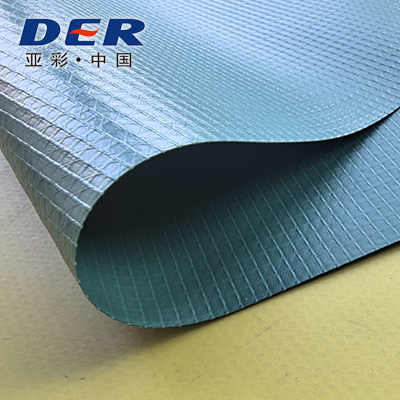
These existing DERFLEX library images show different finished-cover forms and fabric details. Material photographs are labeled as samples, not represented as completed freight installations or test results.


What Are Heavy-Duty Truck Tarps Made Of?
For frequent road use, the fabric needs suitable mechanical strength, weather protection and a fabrication method matched to the finished tarp. Material type alone cannot guarantee protection if the seams, overlaps, corners or attachment points are poorly designed.
| Material | Advantages | Trade-offs | Practical use |
|---|---|---|---|
| PVC-coated polyester (vinyl) | Coated waterproof surface, reinforced scrim, weldable panels, washable finishes | Mass and stiffness vary by structure; edge abrasion still needs protection | Long-haul flatbed, lumber, steel and many trailer covers |
| PVC-coated mesh | Air-permeable with reinforced mesh structures | Not waterproof; openness must suit loose cargo and local rules | Dump trucks, waste and landscape transport |
| Woven PE / polyethylene tarp | Light handling and economical temporary coverage | Grades vary widely; lighter grades may be less suited to repeated abrasion | Selected temporary or short-duty covers |
| Treated canvas | Breathability can suit selected moisture-sensitive uses | Coating/treatment and maintenance vary; not automatically waterproof | Equipment and specialty covers where condensation matters |
“Vinyl tarp” and “PVC-coated polyester tarp” often describe the same material family, while GSM and oz/yd² describe mass per area and mil describes thickness. As a conversion example, 18 oz/yd² is about 610 g/m²; that figure is not a DERFLEX model promise or a proxy for tested tear strength. For broader material context see PVC tarpaulin material and the heavy-duty tarp selection overview.
How to Measure a Truck Tarp Before Ordering
The trailer's nominal length is not the finished tarp size. Start from the loaded freight envelope, then add the side drop, closures, overlaps, seams and fastening geometry. For irregular equipment, send a side/rear photo and a dimensioned sketch.
Record length and width over the load, maximum height above deck, and any projections, sharp corners or step changes.
Specify drop on each side, front and rear closure, tail flap and whether one, two or three panels will overlap.
Locate rails, D-ring rows, grommets, straps, tarp pockets and abrasion pads against a dimensioned drawing.
Illustrative measurement: A load measuring 2.44 m (8 ft) across with a required 1.22 m (4 ft) drop on each side needs about 4.88 m (16 ft) of developed transverse coverage before allowing for corner geometry, seam joins and hems. This is a geometry example—not a stocked tarp size, roll width or recommended finished pattern.
Wide covers may use joined panels. Confirm where seams will fall relative to corners and high-wear areas, because a waterproof coated fabric is not by itself proof that every seam and opening is watertight.
Why Edges, Seams and Hardware Matter as Much as Fabric
Specify the complete cover, not only its weight
- Scrim and coating: yarn structure, coating adhesion, surface and flex requirements.
- Welded or stitched seams: joining method, seam location and needed water exposure performance.
- Edge reinforcement: webbing, hems, corner patches and extra abrasion protection at contact areas.
- Fastening layout: grommet materials, D-ring rows, spacing and orientation suited to the truck.
- Handling: folding weight, stiffness in cold weather, cover storage and repeated deployment.
Material versus finished system
A heavy-duty PVC coating can help shield cargo from water, but it is the finished installation that determines whether gaps, wind-driven rain and drainage paths are controlled. A strong D-ring patch does not make the cargo secured: tiedowns and load-restraint systems must be specified and used separately.
For fleets buying repeated replacements, lock the drawing revision and approved sample for color, material, panel size, seam details and hardware layout. Ask the manufacturer to confirm applicable test methods and supporting reports for the precise material grade, rather than assuming every tarp shares the same ratings.
Ready-Stock Truck Tarp or Custom OEM Supply?
Ready-stock tarp
Usually the practical choice for replacing a common finished size quickly, provided its dimensions, fastening layout, material and capacity meet the job. Confirm what the retailer's stated length and width actually measure.
Best for: one-off replacements, common truck sizes and urgent inventory needs.
Custom manufacturer program
Useful when a fleet or distributor needs matched cuts, measured drop, repeat hardware spacing, controlled material specifications, branded colors or a consistent sequence of repeat orders.
Best for: OEM body builders, converters, fleet buyers and private-label wholesale programs.
DERFLEX discusses roll goods, cut and semi-finished panels, and finished custom covers. For powered roll-off and dump systems, clarify whether the quotation covers only the flexible fabric or a replacement tarp cut to interface with specific hardware. Motors, rollers, arms and full system installation must not be assumed to be included.
For current cost drivers without inventing retail prices, see the truck tarp price and quotation guide.
Truck Tarp RFQ Checklist
Send the following details so the material and completed-cover scope can be evaluated without guessing. A rough sketch is useful even before a formal CAD drawing is available.
- Truck or trailer type and cargo description
- Loaded length, width, maximum height and side drops
- Tarp set: one piece, overlapping pieces or replacement panel
- Rain protection versus airflow and particle containment
- Preferred material, existing tarp sample or target handling weight
- Seam layout, end flaps, wear strips and corner reinforcements
- Fastening point locations, D-ring rows and grommet spacing
- Manual, roll-off, sliding or powered mechanism interface
- Color, artwork, labeling and packaging requirement
- Quantity, destination, required documentation and timeline
Specify a Truck Tarp That Fits the Freight
Share your load profile, finish requirements and order quantity. DERFLEX can review suitable PVC-coated fabrics, mesh material directions and custom cover processing before a formal quotation is issued.
Application note: a tarp is a protective or containment cover, not a substitute for properly securing the load. Follow the cargo-specific laws and equipment instructions for the route. U.S. operators can consult the FMCSA cargo securement rules.
Truck Tarp Questions Buyers Ask
What kind of tarps do most flatbed truckers use?
Flatbed drivers commonly use lumber tarps for tall building-material loads, steel tarps for compact low-profile freight, machinery tarps for irregular equipment, and coil tarps for selected rounded cargo. The correct choice depends on the loaded dimensions and required coverage, not simply the cargo name.
What is the difference between lumber tarps and steel tarps?
Lumber tarps normally have deeper side drops and often an end flap to cover taller stacks. Steel tarps typically have shorter drops for dense, lower-profile freight, helping reduce excess material and handling weight. Either style can require additional corner protection.
Are mesh truck tarps waterproof?
No. Open mesh allows air and water through and is generally used for airflow and load containment where permitted. For rain-sensitive cargo, choose a suitable solid cover and check seam construction, overlaps and fastening details.
Is an 18 oz vinyl tarp the same as an 18 mil tarp?
No. Ounces per square yard describe fabric mass per area, while mil describes thickness. An 18 oz/yd² fabric is approximately 610 g/m², but fabric mass does not determine thickness or tear strength by itself.
How do I measure a flatbed tarp before ordering?
Measure the loaded length, width and maximum height. Specify the required side drop, front and rear closure, number of tarp pieces, seam and overlap allowances, D-ring rows, and any sharp-corner protection. A truck or trailer model alone is not a finished tarp drawing.
Can DERFLEX supply tarp material instead of a complete tarp system?
DERFLEX offers a discussion path for PVC-coated fabric rolls, cut or semi-finished panels and custom finished covers. Confirm the scope in the quotation. Motors, arms, rollers, trailer hardware and installation are not included unless explicitly specified and accepted.
Explore DERFLEX Truck Tarp Resources
Use these linked resources to move from general tarp selection to application-specific fabric and finished-cover procurement.