



Automatic Tarp Systems for Roll-Off Trucks: Types & Buying Guide
Automatic tarp systems for roll-off trucks use powered rollers, pivot arms, adjustable gantries or other mechanisms to cover detachable waste containers without manually spreading a tarp over the load. Fleet operators compare electric and hydraulic drive, container size variation, system clearance and service access. DERFLEX focuses on the tarp-side supply: coated mesh, solid PVC-coated polyester and fabricated replacement covers matched to the selected mechanism—not unverified motors or hydraulic equipment.
For fleet operators, body builders, refuse-equipment distributors and tarp-system OEMs.
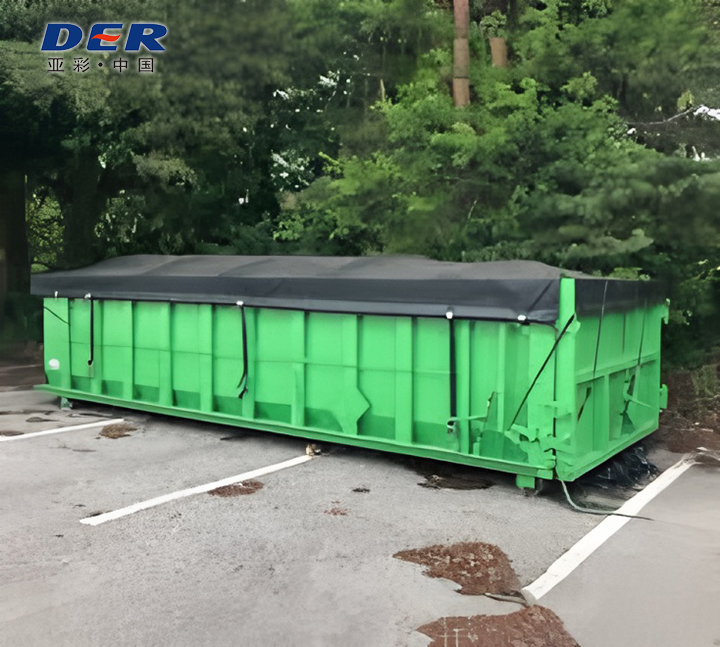
What automatic roll-off tarp systems are available?
The main choices are electric pivot-arm systems, hydraulic pivot-arm systems, adjustable gantry or telescopic-arm systems, and powered armless / slide-carriage arrangements. They differ in power source, how the tarp crosses a container, and how well they handle varying container heights.
Most roll-off auto tarpers combine a truck-mounted roller with arms or a guided mechanism that extends the tarp across an open-top container. The correct system depends on the roll-off hoist or hooklift, axle and chassis arrangement, the shortest and longest containers handled, the load's maximum profile, and available hydraulic or electrical power. A tarp sized correctly for the box can still fail if its attachment pocket or overall mass conflicts with the mechanism.
For the product-specific cover side, see DERFLEX's roll-off truck tarps and replacement covers. This guide instead helps procurement teams understand system families and write a compatible replacement-tarp brief.
Four Common Automatic Roll-Off Truck Tarp System Types
These are mechanism categories, not four DERFLEX machine models. Real truck tarp systems can combine several features, such as an electric roller with adjustable gantry positioning or hydraulic arms with a separate roller drive.
Electric pivot-arm roll-off tarp system
A gear motor winds and unwinds the cover while spring-loaded or controlled arms carry it over the container. Switch-operated or remote-controlled variants reduce routine manual handling.
Electric rollerFixed or selected adjustable geometryBest questions: Are the normal containers consistent in length and height? Is electrical capacity adequate? Can the cover roll evenly without excess weight?
Hydraulic roll-off tarp system
Hydraulic drive operates the roller, arms or both, depending on design. This approach may suit heavy-duty fleets whose vehicles already support the required hydraulic power and hose layout.
Truck hydraulicsHeavy-duty arm optionsBest questions: What flow and pressure does the system require? How will hoses, controls and moving arms be serviced safely?
Adjustable gantry / telescoping-arm tarper
Adjustable gantries change roller elevation; telescoping arms or pivot geometry can accommodate different container heights and lengths. This flexibility matters when a single truck hauls several box styles.
Variable containersClearance-sensitiveBest questions: What is the confirmed working envelope? Can the gantry clear the tallest approved load and truck equipment?
Powered armless / sliding-carriage arrangement
Selected systems use a moving carriage or armless path rather than conventional flip arms. Tarp tension and tracking depend on the actual guide design, container profile and manufacturer configuration.
Specialized geometryOEM verificationBest questions: Is the mechanism designed for the vehicle? How do roller pockets, leading edges and sliding contact affect fabric wear?
Electric vs. Hydraulic vs. Adjustable Systems
Do not compare systems on the motor alone. Judge the combination of power source, truck fit, container range, tarp travel path, maintenance access and the exact cover specifications required by the system manufacturer.
| System direction | Operation | Common fit | What to verify |
|---|---|---|---|
| Electric flip / pivot arms | Electric gear motor with switch or remote, arm-assisted movement | Regular containers and many frequent-haul routes | Power supply, roller size, arm travel, tarp mass and retraction |
| Hydraulic pivot arms | Hydraulic actuators and/or roller drive | Vehicles set up for heavy-duty hydraulic equipment | Hydraulic compatibility, hose routing, controls and maintenance envelope |
| Adjustable / telescopic | Electric or hydraulic, plus gantry or arm adjustment | Mixed-height or mixed-length detachable containers | Minimum and maximum container geometry, pivot clearance, loaded height |
| Armless or slide carriage | Powered guided travel, model-dependent | Specific compatible hoists or container families | Guide path, movement constraints, tarp attachment and debris interference |
Choose the Tarp Material After the Mechanism
Automatic mechanisms repeatedly flex, pull and roll the cover. That makes fabric mass, edge stiffness, roll diameter, pocket construction and abrasion zones important alongside tensile or tear resistance. A stronger-looking heavy tarp is not automatically a compatible tarp.
| Waste / exposure | Material direction | Why consider it | Important limitation |
|---|---|---|---|
| Dry recyclables, branches, green waste | PVC-coated mesh | Breathable containment and potentially lower handling weight | Mesh is not waterproof; check opening size, containment and wind exposure |
| Fine debris, wet waste, rain-sensitive cargo | Solid PVC-coated polyester | Closed fabric surface and options for reinforced fabrication | Check roller capacity, seam overlap and actual installed cover weather sealing |
| Demolition / mixed abrasive loads | Reinforced mesh or solid cover | Local wear strips and stronger contact-zone construction | Sharp projections can still damage the tarp; do not cover overloaded sharp loads |
| High-cycle fleet replacement | Approved system-specific cover | Repeatable pockets, hems and dimensional fit | Use a drawing / accepted sample; generic nominal dimensions are insufficient |
Mesh is not a rain barrier
The open construction allows airflow and water through. It can be useful where wind behavior and cover handling are priorities, but it must still contain the intended waste stream.
Solid vinyl is not a sealed system
PVC-coated fabric can resist liquid penetration through its sheet surface, while gaps at edges, fasteners and seams still influence whole-cover performance.
DERFLEX can review PVC-coated fabric rolls, coated mesh, cut panels and custom finished replacement tarps based on dimensions, samples and finishing details. Motor assemblies, gantries, hydraulic cylinders, electrical controls and on-truck installation are not automatically included in a tarp quotation.
What Roll-Off Cover Construction Looks Like
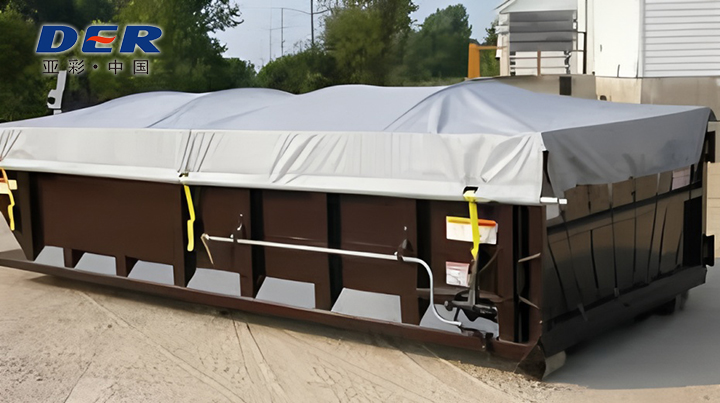
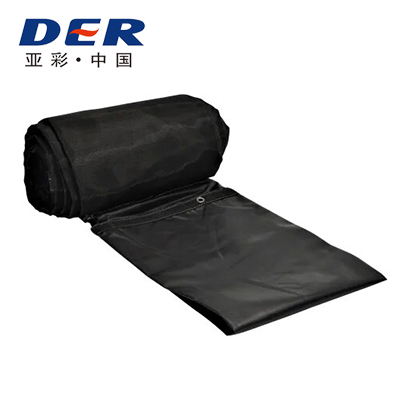
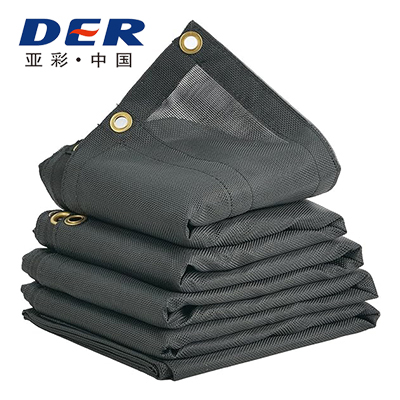
Images below are real files in DERFLEX's up/pro/ library. They illustrate tarp material and finished covers, not specific automated systems or proof of compatibility with a named mechanism.

How to Specify a Replacement Tarp for an Auto Tarper
A 20-yard or 40-yard container description is not a finished tarp drawing. Two similar-volume roll-off boxes may need different covers because the roller position, gantry, arms, mounting points, side rails and load profile differ.
When possible, send the failed cover as a reference and photograph the recurring damage zones. A repair pattern can guide a reinforced redesign, but a changed cover needs a trial fit and safe deployment check before fleet-wide adoption. More details are available in DERFLEX's roll-off container tarp replacement guide.
Where Automatic Roll-Off Tarps Typically Wear
Roller and pocket line
Repeated bending, fabric stacking and concentrated pull force can damage the roller pocket. Confirm pocket geometry and check the mechanism for binding before simply choosing a heavier sheet.
Side hem and rail contact
Long side edges may rub against container rails or protruding scrap. A localized wear strip or adjusted path may improve fit more than blanket fabric weight.
Front / rear pull and fasteners
Pull bars, loops, grommets or tied attachments focus loads into small areas. Reinforcement should follow the actual loading direction and hardware pattern.
Snagging and poor retraction
Overfilled or irregular waste can catch the cover. Excessive tarp mass, rigid corners and mismatched pockets can also interrupt smooth retraction. Inspect the system and cargo before modifying fabric.
Always follow the equipment maker's operating, lockout and safety instructions. A fabric replacement alone is not proof that the vehicle or tarp system complies with local load-containment requirements.
What to Send for a Useful Fleet or Distributor Quote
Technical brief
- Auto tarper brand, model and drive type
- Truck, hoist and container models and photos
- Existing finished cover dimensions and pocket sizes
- Attachment / reinforced-edge drawing and known wear zones
- Waste stream, weather, operating temperature and daily cycles
- Preferred mesh or solid PVC direction; required test documentation
Commercial brief
- Quantity by size and expected reorder pattern
- Finished covers, cut panels or coated-fabric rolls
- Color, label, branding and SKU identification
- Packaging, shipment destination and target project schedule
- Approval workflow and dimensional inspection criteria
- Whether samples or existing worn tarp can be supplied for review
Price and compatibility are separate decisions
Quotation depends on material construction, cover area, cut utilization, pocket and reinforcement work, hardware layout, order size and packaging. System hardware costs, installation and service are normally quoted by the equipment supplier. Compare replacement covers against an identical approved drawing, not just a rough length or a generic “heavy duty” label.
For an application-focused procurement view, see refuse truck tarp programs and truck tarp cost drivers.
Example procurement workflow (illustrative)
A fleet with three roll-off systems may use different tarp pockets even if the containers are similar in volume. Instead of buying one unverified replacement SKU, the buyer groups vehicles by tarper model, measures one approved cover for each family, samples the chosen mesh or solid PVC construction, runs a safe fit check with the equipment provider and records distinct drawing revisions for reorder. This is a buying-method example, not a claim of a completed DERFLEX customer project.
Automatic Roll-Off Tarp Systems FAQ
What are the main types of automatic tarp systems for roll-off trucks?
Common options include electric pivot-arm systems with a roller and gantry, hydraulic arm-and-gantry systems, adjustable or telescoping-arm designs for variable containers, and powered armless or sliding-carriage designs. The correct choice depends on truck geometry, container variation and the equipment manufacturer’s compatibility rules.
Is an electric or hydraulic roll-off tarper better?
Electric systems can suit fleets wanting motorized operation and simple switch or remote controls. Hydraulic systems can suit vehicles equipped to power heavier mechanisms. Neither power source is universally better: compare container range, available power, service access, control arrangement and whole-system specifications.
Can the same replacement tarp fit Roll·Rite and Pioneer systems?
Do not assume cross-brand compatibility. Even when two tarps have similar nominal dimensions, roller pockets, bars, cuts, corner reinforcements and the movement path may be different. Use a confirmed part reference, approved drawing or accurately measured old cover.
Should I choose mesh or waterproof vinyl for a roll-off truck?
Breathable coated mesh is often useful for bulky, dry recycling or green waste when airflow and lower handling weight matter. Solid PVC-coated polyester provides a closed-surface rain barrier for certain fine or wet loads. The assembled cover is only as weather-resistant as its seams, overlaps and attachments.
How do I measure a roll-off tarp for an automatic system?
Record the existing finished tarp width and deployed length, front and rear overlap, pocket or roller tube dimensions, edge attachment pattern, arm clearances and the usual highest load profile. Photograph the system deployed and retracted; container cubic-yard capacity alone does not determine tarp size.
Does DERFLEX supply automatic roll-off tarping motors and hydraulic arms?
This page covers system selection education and DERFLEX tarp-side supply: coated fabric, custom finished replacement covers and OEM cover programs. Motors, arms, hydraulics, electronics, installation and system certification require the equipment manufacturer or an expressly agreed project scope.
What should I include in a bulk replacement tarp RFQ?
Provide the truck and system brand/model, container sizes, finished cover drawing or sample, cargo and exposure, mesh or solid-material preference, reinforced pocket and attachment details, quantities, SKU requirements, destination and any requested inspection evidence.
Related DERFLEX Tarp Materials and Applications
Need a Replacement Tarp for an Automatic Roll-Off System?
Send the system brand and model, cover drawing or worn sample, finished dimensions, mesh or solid-material preference, wear-zone photos and quantity. DERFLEX can review the tarp construction and scope a custom material or finished-cover quotation.
Request a Custom Tarp QuoteHardware compatibility and vehicle operation must be checked with the relevant equipment supplier.