Shorter Side Drop
Steel loads are often lower than lumber stacks. A shorter drop reduces unnecessary fabric, wind-catching slack and driver handling weight.



A practical guide for flatbed truckers, fleets, tarp distributors, fabricators and OEM buyers who need to understand steel tarp meaning, drop depth, material choices, tie-down design and the difference between steel and lumber tarps.
A steel tarp is a reinforced flatbed truck tarp sized for relatively low-profile, dense cargo such as steel plate, pipe, rebar, cable, coils and compact machinery. Compared with a lumber tarp, it usually uses a shorter side drop and may omit a large rear flap, reducing excess fabric and handling weight. The name describes the hauling style—it does not mean the tarp is made of steel.
A steel tarp is a member of the flatbed tarp family. It is commonly used over shorter, heavier or lower-profile freight where a deep lumber-style side drop would add unnecessary material. Typical loads include steel plate, structural sections, pipe, rebar, cable, wire products, selected coils and compact industrial equipment.
The term can be misleading to first-time buyers. A steel truck tarp is normally made from a flexible coated textile—commonly PVC or vinyl-coated polyester—not metal. Its job is weather and surface protection during transport. It is not a substitute for chains, straps, binders, blocking or other legally required cargo securement.
For B2B sourcing, the useful question is not only “what is a steel tarp?” but “what loaded profile, drop depth, abrasion exposure and tie-down layout must the tarp fit?” That is the point where a product name becomes a production specification.
Road use concentrates wear at edges, corners, seams and tie-down points. A useful steel tarp specification treats the cover as a system rather than only a piece of vinyl.
Steel loads are often lower than lumber stacks. A shorter drop reduces unnecessary fabric, wind-catching slack and driver handling weight.
D-rings, grommets and webbing distribute tension so the same tarp can be tensioned around different load heights and shapes.
Corner patches, double layers, webbing and sacrificial reinforcement can be placed where steel edges or repeated folds create concentrated abrasion.
PVC-coated polyester is commonly used when buyers need a flexible, weldable, reusable cover with strong rain and road-spray protection.
In flatbed language, “drop” is the approximate vertical coverage down each side of the load. Common market formats include 12-foot-wide tarps associated with about a 2-foot drop and 16-foot-wide tarps associated with about a 4-foot drop, but the real fit depends on loaded width, shape and where the tarp must be tensioned.
Rule of thumb only: a nominally 8 ft wide load with 4 ft desired coverage on each side suggests about 16 ft of tarp width. Real orders must allow for load shape, crown, overlap, finished-size tolerance, hems and the actual tie-down path.
Useful for very low-profile freight when excess side material would be difficult to manage. Common legacy industry naming links 12 ft total width with a 2 ft drop concept.
A widely used steel-tarp pattern for low to medium flatbed freight. It provides more side coverage while remaining shallower than many lumber tarps.
Best for fleet programs, unusual machinery, non-standard trailer geometry or cargo where standard drop depths leave too much slack or too little overlap.
The strongest-looking tarp is not automatically the best tarp. Material weight, base textile, finished dimensions, welding, reinforcement and tie-down geometry work together.
| Specification item | Practical direction | Why buyers should care |
|---|---|---|
| Material family | PVC coated polyester / vinyl-coated polyester is common for heavy-duty flatbed use. | Combines textile reinforcement, weather resistance, weldability and reusable handling. |
| Fabric weight | Market references commonly include 14 oz, 16 oz and 18 oz structures; DERFLEX's current steel-tarp program discusses approximately 550–1100 gsm by project. | Heavier material can increase durability but also increases lifting, folding and storage weight. |
| Finished size | Custom width and length; common market examples include 12 × 27 ft and 16 × 20/24/27 ft. | Finished size controls fit. Hemming and fabrication can make finished dimensions differ from cut dimensions. |
| Side drop | About 2 ft or 4 ft are common steel-tarp patterns; custom drops are possible. | Too little drop reduces coverage. Too much creates extra handling weight and loose material. |
| D-ring rows | One or multiple rows depending on tarp width, load height and fastening pattern. | Multiple rows let drivers tension the tarp closer to the actual loaded profile. |
| Grommets / eyelets | Perimeter hardware can be added at buyer-specified spacing. | Useful for auxiliary tensioning, edge closure and local fastening. |
| Hems & webbing | Webbing-reinforced hems, double layers or rope-edge constructions as required. | Tie-down loads often fail the perimeter before the central fabric. |
| Seams | Hot-air, hot-wedge, HF welding, sewing or combined fabrication depending on construction. | Seam placement affects waterproofing, flexibility and fatigue at high-stress zones. |
| Local reinforcement | Corner patches, wear strips and D-ring patches around known contact zones. | Targeted reinforcement can be more efficient than increasing the weight of the entire tarp. |
| OEM details | Color, printed logo, labels, packaging and documented repeat-order specifications. | Important for distributors, fleets and private-label programs that need consistent repeat supply. |
For material-level comparison, see DERFLEX's PVC coated polyester tarpaulin guide. The tarp specification should be confirmed from the actual load and service conditions rather than copied from a retail size chart.
The simplest difference is coverage geometry. Steel tarps are usually built for lower loads; lumber tarps usually need deeper side drops and commonly include more end coverage for taller stacks.
| Comparison | Steel tarp | Lumber tarp |
|---|---|---|
| Typical cargo profile | Low, dense or compact flatbed freight | Tall, rectangular or stacked freight |
| Common cargo | Steel plate, rebar, pipe, cable, compact machinery, selected coils | Lumber, plywood, wallboard, insulation and tall palletized building materials |
| Side drop | Often shorter; 2 ft and 4 ft patterns are common | Commonly deeper; 4 ft, 6 ft and 8 ft patterns are widely used |
| Rear flap | May be omitted on classic rectangular steel tarp styles | Frequently used to close the back of a tall load |
| Handling | Less excess material can reduce tarp weight and folding effort | More material gives greater coverage but adds handling weight |
| Primary risk | Sharp edges, abrasion and concentrated contact points | Tall corners, large side area and wind-exposed fabric |
If your operation regularly covers tall building materials, review DERFLEX's lumber tarp guide. If you cover mixed open-deck freight, the broader truck tarp hub helps separate flatbed, dump, roll-off and curtain-side systems.
This decision table is intentionally application-first. It helps buyers choose a direction before discussing a final material or sample.
| Load / operating condition | Useful steel tarp direction | Engineering focus |
|---|---|---|
| Low rectangular plate or bundled steel | Short-drop rectangular flatbed steel tarp | Correct finished width, side drop, D-ring rows and edge protectors at sharp corners. |
| Pipe, rebar or uneven bundles | Flexible steel tarp with adjustable tie-down rows | Prevent bridging over gaps; reinforce known rubbing zones and keep the cover tensioned. |
| Coils or rounded cargo | Steel tarp or a more fitted coil-style cover depending on orientation | Rounded geometry, concentrated contact points, overlap and edge protection matter more than nominal tarp size. |
| Compact machinery | Steel tarp / machinery-tarp hybrid or custom shape | Map protrusions, sharp points, access areas and local patch locations before fabrication. |
| High-frequency driver handling | Evaluate lighter 14–16 oz class structures or weight-optimized coated fabric | Balance field durability against lifting, folding and storage effort; validate with a sample. |
| Severe abrasion route | Heavier or strongly reinforced construction | Use edge protectors and targeted wear patches; do not rely on added tarp weight alone. |
| Fleet / distributor repeat program | Documented custom steel tarp specification | Lock finished size, hardware spacing, fabric construction, color, labels, packaging and approved sample. |
For broader tarp-selection logic across PVC, PE, canvas and mesh, use the DERFLEX tarp buying guide.
These mistakes explain many field failures that are incorrectly blamed on “bad vinyl.”
Two tarps with the same nominal weight can differ in base cloth, coating balance, seam quality and edge reinforcement.
Ordering from cut dimensions can leave the finished tarp short after hems, seams and reinforcements are added.
Extra material looks safer but can increase flapping, snagging, driver fatigue and fold volume.
Sharp steel can cut through even heavy tarp material. Use suitable corner or edge protectors at aggressive contact points.
Hardware rows that do not align with real load heights can create slack or concentrate force at a few attachment points.
A steel tarp is a protective cover. It should never be expected to restrain cargo that requires chains, straps or engineered securement.
Fleets and distributors should document the approved fabric, dimensions, hardware map and packing so future orders match the first one.
A useful inquiry starts with the actual load and ends with documented production details.
Truck type, loaded dimensions, cargo profile, sharp edges and route exposure.
Fabric weight, base textile, PVC coating, flexibility and weather requirement.
D-ring rows, grommet spacing, webbing, hem type and stress-zone patches.
Confirm finished size, detail drawing or approved reference sample before repeat orders.
Roll goods, cut panels, semi-finished components or finished covers with OEM packing.
All images below are from DERFLEX's own website. The hero image is loaded immediately; below-fold images use lazy loading and descriptive alt text.
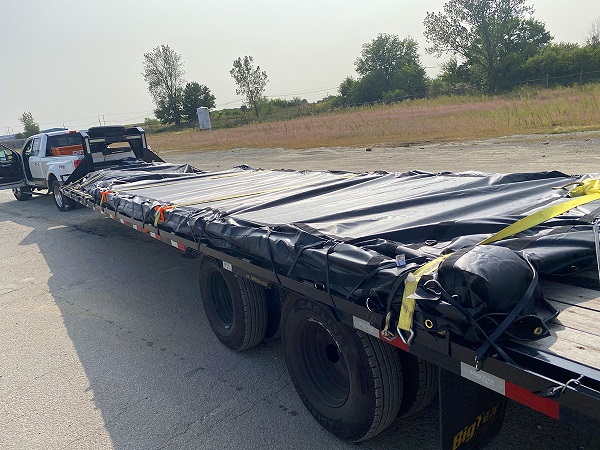
Low-profile load coverage with the tarp tensioned close to the trailer deck.
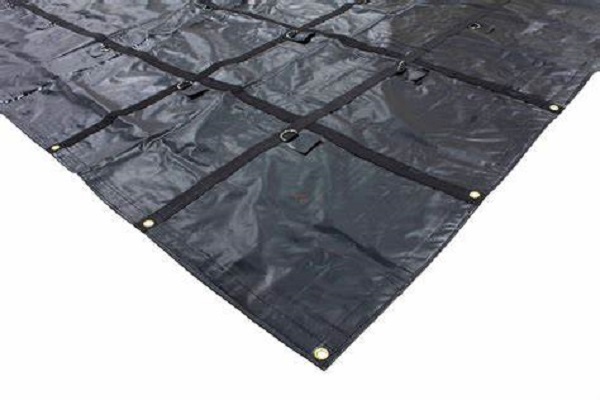
D-rings, webbing and grommets show why flatbed tarp durability depends on more than fabric weight.
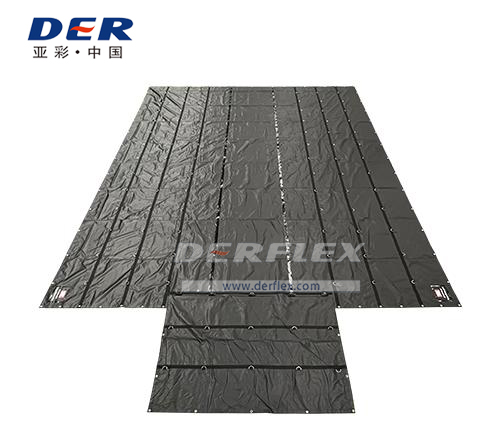
A laid-flat product view makes drop panels, hardware rows and reinforcement easier to inspect.
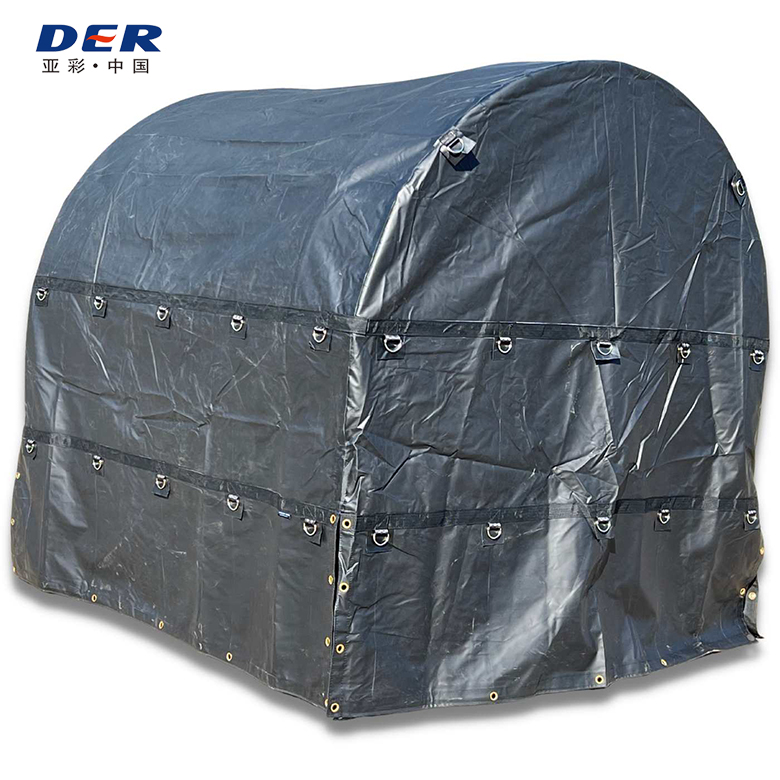
Multiple tie-down rows help adapt the cover to changing cargo profiles and tension paths.
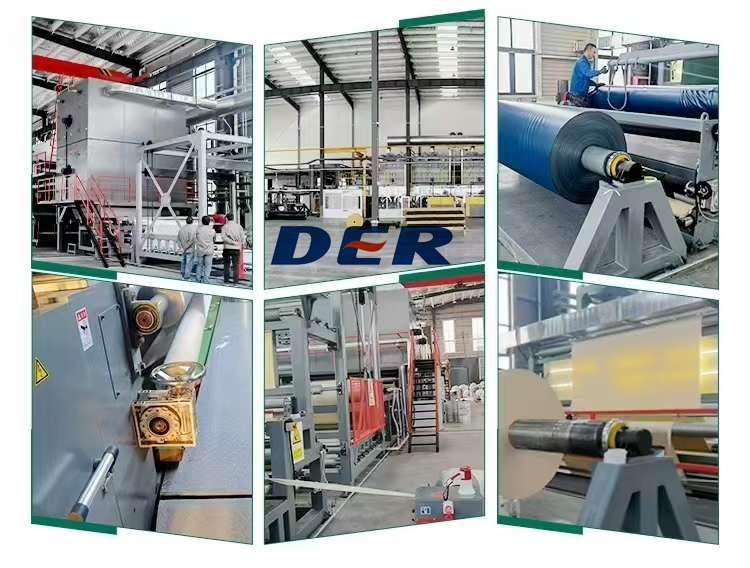
Coated-fabric production capability supports roll goods, conversion-ready panels and finished custom tarp programs.
Good RFQ data reduces back-and-forth and makes quotations easier to compare.
DERFLEX can discuss PVC coated fabric rolls, cut panels, semi-finished components and completed custom tarps. For non-standard dimensions or special hardware maps, the custom truck tarp program is the most relevant next step.
Answer-first responses for users, procurement teams and search systems.
A steel tarp is a reinforced flatbed tarp designed mainly for low-profile, heavy or dense loads such as steel plate, pipe, rebar, cable, coils and compact machinery. It normally uses less side drop than a lumber tarp so the driver handles less excess material around shorter freight.
No. “Steel tarp” describes the common load style, not the tarp material. Heavy-duty steel tarps are typically made from flexible PVC or vinyl-coated polyester fabric with reinforced hems, D-rings, grommets and local wear protection.
Steel tarps are used to protect flatbed freight from rain, road spray, dirt, sunlight and wind-driven debris. Typical cargo includes steel sheet, plate, pipe, rebar, cable, structural metal and compact equipment. They may also be used on other low-profile loads even when the cargo is not steel.
A steel tarp is usually shallower because steel and industrial loads are often lower. A lumber tarp normally has deeper side drops and often a rear flap to cover tall stacks of lumber, plywood or wallboard. The correct choice should follow the loaded cargo profile rather than the product name alone.
Start with the loaded cargo width, length and height—not only the trailer dimensions. A simple width estimate is loaded width plus the desired side drop on both sides, but real fit must also allow for load crown, overlap, hems, finished-size tolerance and the tie-down path. Common market steel-tarp sizes include 12 ft and 16 ft widths with about 2 ft or 4 ft drop patterns.
No. 18 oz vinyl is a common heavy-duty market specification, but the best material depends on abrasion risk, handling frequency, climate and service-life target. Lighter coated structures can reduce driver lifting effort, while severe routes may benefit from heavier fabric or more targeted reinforcement. Base-cloth strength and fabrication quality matter as much as nominal weight.
Solid PVC or vinyl-coated steel tarps can provide strong waterproof weather protection when the fabric, seams, overlaps and attachment details are correctly designed. Water can still enter through poorly placed openings, damaged areas or incomplete coverage, so finished construction and fit matter.
Use appropriate edge or corner protectors between the cargo and tarp, and add local reinforcement at known rubbing points. A heavier tarp alone should not be expected to resist repeated cutting action from exposed steel corners. Correct tension also helps reduce fabric movement over abrasive edges.
Send DERFLEX your load profile, finished dimensions, desired drop, material direction, D-ring and grommet layout, reinforcement areas, quantity, destination and any special performance requirements. The team can review a suitable roll-material, panel or finished-cover supply route.