Protective Top Finish
Influences gloss, touch, stain-release direction, scuff visibility and compatibility with approved cleaning products.
 News
News

 Office Seating Material Program
 DERFLEX supplies custom office chair PU leather for task chairs, executive seating, conference chairs, visitor chairs and commercial furniture programs. The material can be developed around the actual chair: surface grain, hand feel, backing, thickness, stretch, abrasion direction, humidity resistance, cleaning route and repeat-order appearance.
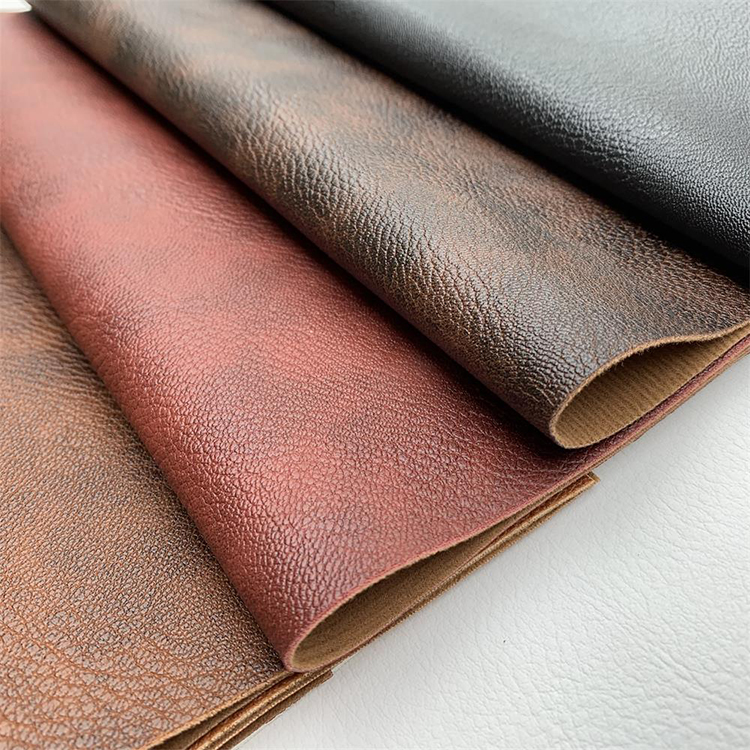
Office chair PU leather is a polyurethane synthetic upholstery material used to cover chair seats, backrests, arm pads, headrests and decorative panels. A practical construction combines a PU surface system with a selected textile, nonwoven or microfiber backing, then matches the total structure to cutting, sewing, wrapping, stretching, cleaning and repeated contact.
For B2B sourcing, the most important decision is not simply whether a sample “looks like leather.” The better question is whether the approved surface, backing, thickness, stretch direction and test route remain suitable after the material is cut, stitched, tensioned over foam and repeatedly used on the finished chair.
Office seating is not one application. Different chair types place different emphasis on touch, wear zones, wrapping behavior, appearance consistency and project cost.
| Chair Type | Material Priorities | Useful Surface Direction | Questions to Confirm Before Sampling |
|---|---|---|---|
| Task Chair | Repeated seat contact, front-edge wear, flexing, easy cleaning, stable replenishment | Matte or fine grain, practical hand feel, controlled stretch | Seat construction, daily use intensity, cleaning routine, backing and abrasion test method |
| Executive Chair | Premium appearance, soft touch, large-panel wrapping, wrinkle control, color depth | Napa-style, pebbled or refined low-gloss grain | Foam geometry, panel size, seam layout, touch target and batch color reference |
| Conference / Visitor Chair | Consistent appearance across larger quantities, efficient upholstery, easy maintenance | Fine grain, semi-matte or coordinated collection finish | Quantity, color split, chair family, production method and repeat-order plan |
| Reception / Lounge Seating | Comfort, softer visual language, cleanability, shape conformity | Soft touch, warm matte, subtle grain or custom embossing | Curved panels, seam stress, cushion softness, hospitality or office maintenance routine |
| Gaming / Hybrid Office Chair | High-contact zones, contrast panels, decorative stitching, perforation and brand colors | Custom color blocking, smooth/fine grain combinations | Panel map, perforation, embroidery, stretch direction and highest-wear zones |
Chair performance depends on the full material architecture. A surface that looks excellent as a flat swatch can still behave poorly when sewn, stretched or repeatedly flexed.
Influences gloss, touch, stain-release direction, scuff visibility and compatibility with approved cleaning products.
Creates the leather-like face and contributes to flexibility, grain definition, color depth and repeated-contact behavior.
Helps the surface remain integrated with the backing during sewing, wrapping, flexing and upholstery tension.
Knitted, woven, nonwoven and microfiber backings create different balances of stretch, body, tear behavior and stitch response.
Fine grain, pebbled grain, napa-style, smooth and matte directions influence both design language and visible wear behavior.
The practical buying specification is the complete package: surface + backing + thickness + finish + test route + approved reference sample.
Mapping the material to the contact zone helps prevent both under-specification and unnecessary over-specification.
Use this table as an RFQ framework. Final specification, tolerance, test method and documentation should be confirmed against the approved project.
| Material Structure | PU surface over knitted, woven, nonwoven or microfiber backing; final construction selected by application and process. |
|---|---|
| Thickness | Approx. 0.6–2.0 mm or project-specific. Thicker is not automatically better; chair geometry may require controlled drape and stretch. |
| Surface | Matte Semi-Matte Smooth Fine Grain Pebbled Napa-Style Custom Embossing |
| Color | Standard colors or buyer-reference matching. Repeat furniture programs should retain a defined approval reference for future replenishment. |
| Stretch / Drape | Matched to upholstery method, foam geometry, panel shape and seam layout to reduce wrinkles, seam stress and poor corner wrapping. |
| Abrasion Direction | Agree the test method, abrasive medium, load, endpoint and target. Do not compare cycle numbers from different test conditions as if they are equivalent. |
| Hydrolysis / Humidity Direction | Accelerated humidity/heat ageing can be discussed when humid markets, storage conditions, cleaning frequency or longer product cycles make it relevant. |
| Easy-Clean Finish | Selected around the intended cleaner family and maintenance protocol. Strong solvents or unapproved chemicals can damage some PU finishes. |
| Flame Test Route | Project-specific where contract seating or local requirements apply. A flame-retardant claim should be tied to a named test and relevant upholstery construction. |
| Roll Format | Confirm roll width, usable width, roll length, labels, packing and any batch-identification requirement before order. |
Technical note: the values and performance descriptions above are sourcing directions, not automatic guarantees. Final composition, tolerance, test results and destination-market requirements should be confirmed for the approved order.
Use a controlled approval path so a visually attractive swatch does not become a production problem after sewing, stretching or repeated use.
Send chair type, panel zones, foam geometry, upholstery method and target market.
Confirm color, grain, gloss, hand feel and visual match under realistic lighting.
Cut, sew and tension the material on a representative chair or upholstery section.
Apply the agreed abrasion, flex, peel, humidity, rub, cleaning or project-specific test route.
Retain the approved construction and visual reference for bulk production and future replenishment.
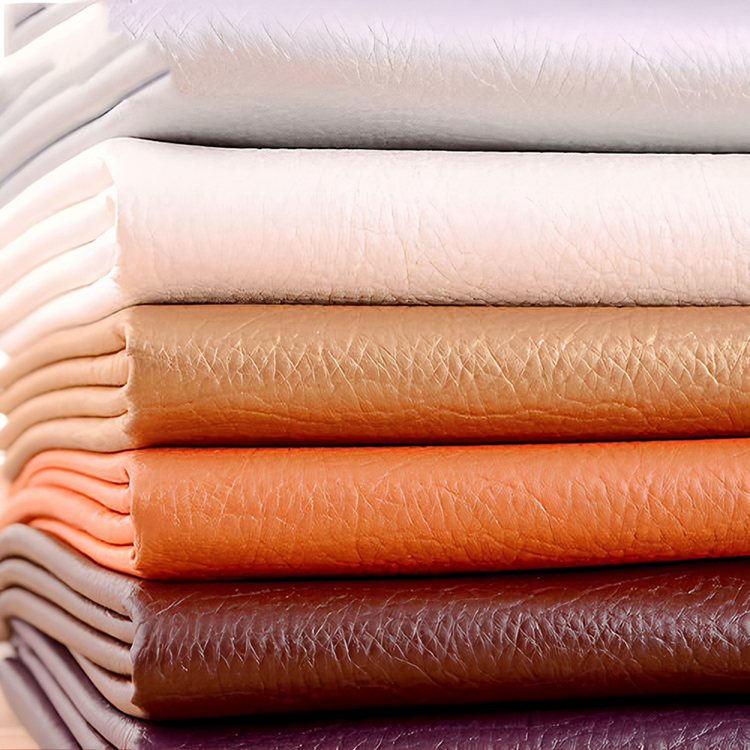
Office furniture is often sold as a coordinated collection. A task chair, executive chair, conference chair, visitor chair and lounge seat may need to share the same design language even when their structures differ.
DERFLEX can discuss custom color matching, embossed texture, matte level, backing, thickness and roll format around the finished product and target market. The approved sample should remain the visual and structural reference for bulk production and future replenishment.
Troubleshooting by symptom is more useful than asking for a generic “higher quality” leather.
| Observed Problem | What to Recheck | Why It Matters |
|---|---|---|
| Wrinkles around curved panels | Backing, stretch direction, thickness, foam geometry and upholstery tension | The problem may be construction-fit rather than surface quality. |
| Fast polishing on seat edge | Top finish, abrasion protocol, high-contact zone and surface sheen | Visual wear can appear before structural failure and affect product perception. |
| Surface separation or peeling | Adhesion, flexing, humidity ageing, cleaning chemistry and actual use conditions | Failure can come from the interaction of layers and environment, not one variable alone. |
| Color differs on repeat order | Approved master, batch reference, lighting condition and replenishment control | Office collections require stronger repeat-order visual discipline than one-time projects. |
| Seam distortion or tearing | Backing type, stitch density, seam allowance, material stretch and panel tension | The upholstery process must be considered together with the leather construction. |
| Cleaner leaves marks or tackiness | Cleaner family, contact time, concentration and top-finish compatibility | “Easy clean” should be connected to the actual maintenance protocol, not treated as a universal claim. |
Price per meter is only one part of procurement. Upholstery yield and line behavior can create hidden cost if the material does not fit the chair production method.
Confirm usable width against the seat and backrest panel map. A nominally cheaper roll can create more waste if the width produces poor nesting.
Mark and control the direction that best fits the panel geometry. Uncontrolled rotation during cutting can change wrapping behavior from chair to chair.
Test stitch density, seam allowance, needle choice and tension on the approved construction before bulk cutting, especially around tight curves and load-bearing seams.
Front edges, thick cushions and sculpted executive-chair foam can place different stress on the same leather. Trial the actual geometry, not only a flat coupon.
For repeat programs, define label, batch reference and packing logic so production teams can separate and trace rolls more reliably.
Retain the approved color/grain reference and clearly describe the repeat-order requirement when the same chair family will remain in the market over time.
There is no universal best upholstery. The suitable option depends on touch, appearance, cleaning, processing, project cost and use environment.
| Material Direction | When Buyers Commonly Consider It | What to Confirm |
|---|---|---|
| PU Leather | Softer leather-like touch, broad grain/color development, refined task/executive/conference seating appearance | Backing, flexing, hydrolysis direction, cleanability and repeated-contact zones |
| PVC Leather | Practical cost control, coated-surface cleanability and volume commercial programs | Touch target, flexibility, surface feel, cleaning and project positioning |
| Microfiber PU | Upgraded backing structure or higher material positioning | Hand feel, thickness, sewing behavior, cost justification and specific wear target |
| Textile Fabric | Breathable seating and woven aesthetics | Stain behavior, cleaning route, fraying, seam performance and visual design |
DERFLEX supports furniture factories, seating brands, importers, upholstery converters and distributors with application-led material development.
Start from a current material, chair photo, color target or performance brief to narrow the construction around the actual product.
Color, grain, embossing, gloss and hand feel can be discussed for office furniture collections and brand-specific design directions.
Backing, thickness, stretch and drape can be reviewed against cutting, sewing, wrapping, quilting and upholstery methods.
Abrasion, hydrolysis, cleanability, water-resistance and flame-test routes can be discussed when the application requires them.
Approved references, color/grain communication, roll format and packing requirements help reduce variation across replenishment orders.
Bulk roll programs can be coordinated around quantity, labels, protective packing, shipment planning and customer documentation needs.
Avoiding these mistakes often creates more value than simply requesting a “stronger” material.
A visually correct sample can still have the wrong backing, stretch or surface behavior for the chair.
Abrasion numbers are not meaningful without the test method, load, abrasive medium and failure endpoint.
Flat-swatch approval misses wrinkles, seam stress, edge behavior and recovery on the actual chair geometry.
Routine wipe-down products can interact with the top finish; cleaning should be validated rather than assumed.
Without a retained reference, future color, grain and gloss communication becomes harder for long-running chair programs.
A complete brief reduces unsuitable samples and makes the quotation more relevant to the finished chair.
| Send This | Example | Why It Helps |
|---|---|---|
| Chair type | Task, executive, conference, visitor, gaming, lounge | Changes touch, wear and upholstery priorities. |
| Target zone | Seat, backrest, arm pad, side panel or full chair | Identifies the real friction, flexing and cleaning location. |
| Reference material | Current swatch, photo or existing chair sample | Provides a visual and structural benchmark. |
| Surface direction | Matte, fine grain, pebbled, smooth, soft touch | Aligns sample selection with product positioning. |
| Backing / thickness | Current specification or request for recommendation | Improves sewing, wrapping and drape compatibility. |
| Testing | Abrasion, flex, hydrolysis, rub fastness, FR or cleaning protocol | Prevents vague perfor, mance assumptions. |
| Commercial data | Quantity, color split, roll format, destination and timeline | Supports more practical sampling and quotation planning. |
These six verified DERFLEX pages support adjacent stages of specification, performance planning and material comparison.
Core custom PU leather page covering structure, color, backing and bulk roll supply.
Furniture and commercial seating material selection by surface, backing and production needs.
Build a wear specification around the actual repeated-contact zone and named test conditions.
Review humidity, heat and ageing direction for longer-life or humid-market upholstery programs.
Plan a named flame-test route for contract and project seating when required.
Compare high-contact, cleaning and upholstery specification logic for healthcare seating applications.
Direct answers for furniture factories, seating brands, importers, distributors and OEM sourcing teams.
Yes, when the surface, backing, thickness and performance route are matched to the chair design and use environment. Task-chair seats, executive-chair backs and arm pads may place different demands on abrasion, stretch, flexing, cleaning and humidity resistance.
Confirm the full construction, usable roll width, backing, thickness, grain, color reference, stretch direction, upholstery method, abrasion protocol, hydrolysis requirement, cleaning route, packing and repeat-order controls. Approve a representative physical sample and trial cover before commercial production.
Do not compare only the stated cycle number. Confirm the test method, abrasive material, load or pressure, wet/dry condition, endpoint and pass/fail rule. Cycle values from different conditions may not be directly comparable.
Deterioration can relate to resin system, coating-to-backing adhesion, flexing, humidity ageing, cleaning chemistry, storage or actual use conditions. Better sourcing starts by identifying the failure mode and validating the required test route on the approved construction.
Thickness should be selected together with backing, foam geometry, seam design, stretch and desired hand feel. A thicker material is not automatically better. DERFLEX currently presents an approximate 0.6–2.0 mm project range for this application, with the final target confirmed by sampling and production fit.
DERFLEX can discuss custom color matching, embossed grain, matte or low-gloss finish, hand feel, backing, thickness and roll format. Custom development is subject to sample approval, order quantity and production feasibility.
Project-specific easy-clean and flame-retardant directions can be discussed. Flame performance should be connected to a named test method and, where relevant, the complete upholstery composite. Cleaning performance should be checked against the intended cleaner family and maintenance protocol.
Send the chair type, target panel, current sample or photo, grain/color target, backing, thickness, test requirements, quantity, color split, roll format, destination and required timeline. This helps narrow the sample direction faster.
Share your office chair type, target surface, color/grain reference, backing, thickness, test requirements, quantity and destination. DERFLEX can review a practical PU leather direction for sampling and quotation.
Product descriptions are for material-selection and sourcing discussion. Final composition, tolerances, test results, compliance documents and finished-product suitability must be confirmed for the approved order and destination-market requirements.