Protective Finish
The top finish influences scuff visibility, surface friction, cleanability, gloss retention and how quickly the grain shows polishing or wear.



 Performance Synthetic Leather Program
Develop wear-resistant PU leather around the part that actually fails: the seat bolster, bag corner, shoe toe, armrest, grip zone, panel edge or other high-contact surface—not around a generic “durable leather” label.
“Abrasion resistant” is useful only when the test method, load, abrasive, endpoint and application are clear.
Abrasion resistant PU leather is a polyurethane synthetic leather developed for products that experience repeated surface contact. Compared with a standard decorative PU, the construction may use a more wear-focused finish system, a more robust PU surface, a denser backing, a microfiber base or a different balance between coating thickness, flexibility and adhesion.
For procurement teams, the critical point is that abrasion performance is not one universal number. A Martindale result, a rotary-platform abrasion result and an in-house rub test may use different motion, abrasive media, load and failure criteria. Two materials described with the same number of “cycles” may therefore represent very different levels of real-world wear.
DERFLEX approaches high abrasion PU leather as an application-matched material program. Buyers can start with the finished product, identify its highest-wear zones, define the manufacturing process and then agree on the surface, backing, thickness direction and verification route before bulk production.
High abrasion performance usually comes from the full layer system working together. The visible top surface is only one part of the construction.
The top finish influences scuff visibility, surface friction, cleanability, gloss retention and how quickly the grain shows polishing or wear.
Polyurethane formulation, coating build and cure direction affect flexibility, surface integrity and resistance to repeated contact.
The interface between surface and substrate matters because a wear-resistant face is not useful if repeated flexing or stress causes separation.
Woven, knitted, nonwoven and microfiber bases create different balances of body, stretch, tear behavior, stitch response and dimensional stability.
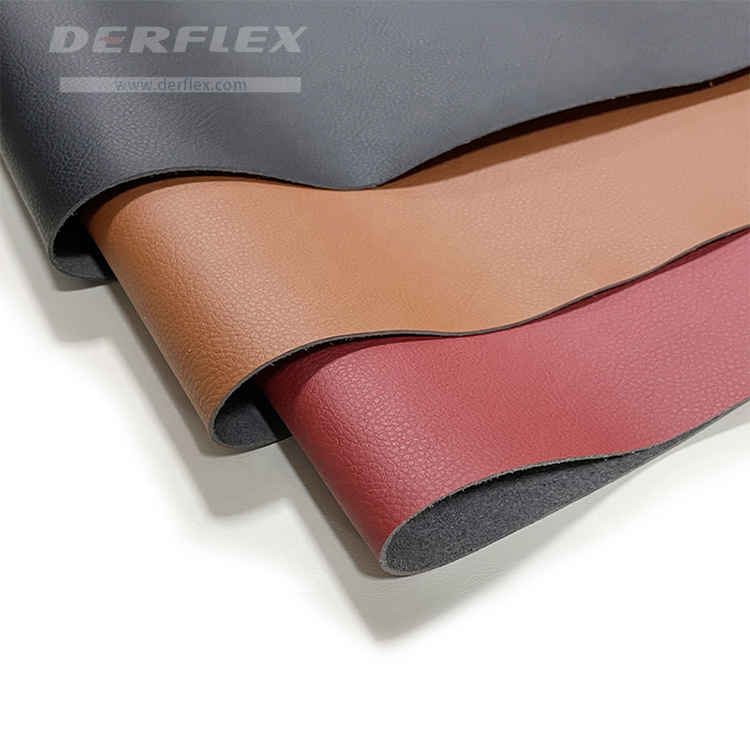
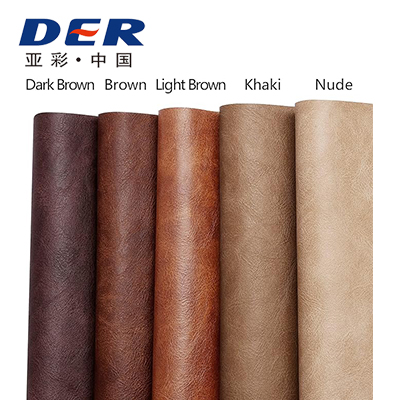
These DERFLEX website images illustrate leather-look surface options and flexible backing structures. Final abrasion target, coating structure and specification should be confirmed for the project.
For coated synthetic leather, the test route should fit the material construction and the buyer’s acceptance protocol. Ask the supplier or laboratory to state the complete condition—not only the final cycle number.
ISO 5470-2:2021 specifies Martindale methods for wet and dry abrasion of rubber- or plastics-coated fabrics. ASTM D3884 covers abrasion resistance of textile fabrics using a rotary platform abrader. The appropriate method should be agreed according to the material, buyer specification and laboratory scope.
A high cycle number can look impressive but does not tell procurement enough by itself. Request these details in the test report or specification.
A useful abrasion resistant PU leather specification begins by identifying where friction actually concentrates. That location influences surface texture, backing, thickness, flex requirement and test plan.
Entry/exit sliding, clothing friction and repeated body contact can polish or abrade the surface before low-contact panels show visible wear.
Review: abrasion + flex + color + backing stabilityRestaurant booths, office chairs, waiting areas and hospitality seating need a balance of touch, appearance, cleanability and repeated-use performance.
Review: abrasion + cleanability + seam behaviorEdge rubbing, floor contact, hand oils and repeated handling may create concentrated wear that a body panel never experiences.
Review: abrasion + flex + edge finishing + backingShoe materials combine flexing with scuffing, so abrasion performance should be considered together with bend endurance and hydrolysis direction.
Review: abrasion + flexing + hydrolysis + adhesionTool pouches, pads, protective panels and equipment-contact areas may need a firmer surface or higher-friction texture alongside wear resistance.
Review: abrasion + grip + tear + dimensional stabilityRetail, transport, electronics and interior components may prioritize a controlled matte appearance that hides micro-scuffing during frequent use.
Review: visual wear + adhesion + color consistencyThe table below is a sourcing framework rather than a fixed DERFLEX performance promise. Exact values, tolerances and tests should be confirmed on the approved construction.
| Specification Item | What Can Be Discussed | Why It Matters for High-Wear Use |
|---|---|---|
| Surface System | PU leather-like surface with matte, semi-matte, pebbled, smooth, crosshatch, printed or custom texture direction. | Texture and finish influence scuff visibility, friction, gloss change and cleanability. |
| Backing | Knitted, woven, nonwoven, polyester, microfiber or application-specific backing direction. | Backing affects tear behavior, stretch, sewing, bonding, panel stability and repeated flexing. |
| Thickness | Customized by product architecture, processing route, body requirement and approved sample. | Thickness alone does not determine wear performance, but it influences hand feel, body and construction balance. |
| Width / Roll Format | Commercial roll width and roll length discussed around construction, cutting layout and packing needs. | Marker efficiency and roll consistency affect real material cost, especially for large-volume programs. |
| Abrasion Target | Buyer-defined target under an agreed ISO, ASTM, brand or laboratory method. | Cycle values are meaningful only when method, abrasive, load, condition and endpoint are stated. |
| Flex / Hydrolysis Direction | Can be reviewed for footwear, automotive, humid climates or other products with repeated bending and aging exposure. | Some products fail by cracking or PU degradation before the face visibly wears through. |
| Color / Grain | Standard colors, buyer sample matching, custom grain, gloss and embossing direction. | High-wear products should be evaluated for both physical damage and visible appearance change. |
| Processing Compatibility | Cutting, sewing, quilting, wrapping, gluing, foam bonding, edge folding, skiving or lamination. | A technically durable surface still needs to run reliably through the buyer's production process. |
| Supply Control | Approved reference, sample card, roll packing, labels, carton marks and repeat-order communication. | Consistency is important when a high-wear material becomes part of a long-running product line. |
Technical suitability depends on coating chemistry, backing, thickness, finish, test method, manufacturing process, storage conditions and finished-product design. Confirm the final specification through approved samples and testing.
There is no universal “best” synthetic leather. Select the construction that fits the product's wear pattern, touch requirement, manufacturing method, budget and verification plan.
DERFLEX can structure development around the product rather than asking buyers to choose from a generic “high durability” catalog.
Identify where the final product rubs, slides, flexes, bends, contacts the floor or receives hand/body friction.
Confirm grain, color, gloss, touch, scuff visibility and cleanability direction.
Review backing, thickness, softness, stretch and processing behavior for the production line.
Set the method, condition, endpoint and any related flex, hydrolysis, adhesion or color requirements.
Confirm samples, bulk reference, roll packing, labels and repeat-order communication before commercial supply.
A complete brief makes it easier to select a suitable starting construction and reduces unnecessary sample rounds.
DERFLEX already supports polyurethane leather development around surface, backing, thickness, processing behavior and application-specific performance direction. For abrasion resistant PU leather, this allows the discussion to start from the wear mechanism and manufacturing process rather than from appearance alone.
The same sourcing team can also compare standard PU, microfiber direction, PVC leather and other synthetic leather systems where a different balance of touch, cleanability, structure or cost is more appropriate.
Material direction can be discussed around final use, contact zone and processing route.
Color, grain, gloss, embossing and hand feel can be developed around the product line.
Knitted, woven, nonwoven and microfiber directions can be compared for body and process behavior.
Approved samples and production trials help align appearance, processing and performance expectations.
Roll format, labels, packing and export coordination can support distributors and manufacturing programs.
PU can be reviewed alongside microfiber and PVC directions rather than forced into every application.
Six closely related pages help buyers move from general PU material selection to application-specific development.
Practical answers for furniture factories, automotive suppliers, bag makers, footwear manufacturers, importers, converters and OEM product teams.
Abrasion resistant PU leather is a polyurethane synthetic leather developed for repeated rubbing, scuffing or surface contact. Its performance depends on the surface finish, PU layer, backing, adhesion, thickness and the test method used to verify wear.
The test should be selected according to the material and buyer protocol. ISO 5470-2:2021 specifies Martindale methods for abrasion of coated fabric surfaces, while ASTM D3884 covers a rotary-platform abrasion method for textile fabrics. Always state the abrasive, load, wet/dry condition, endpoint and approved sample when comparing results.
There is no single cycle value suitable for every product. Automotive bolsters, commercial seating, bag corners and footwear uppers experience different wear. The target should be set by the buyer's end use and test method, then confirmed on the approved material. Cycle numbers from different test conditions should not be treated as directly equivalent.
DERFLEX can discuss custom color, grain, gloss, backing, thickness, hand feel, roll format and project-specific abrasion direction. Related requirements such as flexing, hydrolysis, cleanability, water-resistance or UV direction can also be reviewed when relevant.
A PU surface can be developed toward water resistance, but abrasion resistance does not automatically make the finished product waterproof. Backing, seams, needle holes, edges, zippers, bonding and product construction all influence water entry. Confirm the requirement with a suitable finished-product test.
Send the final product and component, high-wear zone, color and grain target, thickness and backing direction, processing method, abrasion test requirement, related performance needs, estimated quantity, roll packing expectation and destination market.
Send DERFLEX your current PU leather sample, finished product, abrasion requirement, color/grain reference, backing direction and estimated quantity. The team can review a suitable high-wear PU leather development path.
Page content is for material-selection and sourcing discussion. Final composition, tolerances, test methods, test results, compliance documents and finished-product suitability must be confirmed for the approved order and destination-market requirements.