Protective Finish
Controls touch, gloss, stain-release direction, color appearance and interaction with cleaners. The finish should be chosen together with the intended use and maintenance routine.



 Engineered Synthetic Leather for Humid-Climate Programs
Custom polyurethane leather developed for products exposed to sustained humidity, heat, repeated cleaning and long storage cycles—where ordinary PU constructions may lose adhesion, flexibility or surface integrity over time.
DERFLEX supports upholstery factories, automotive interior suppliers, bag manufacturers, distributors and OEM brands with application-led material development, custom grain and backing, sample approval, hydrolysis test planning and repeatable roll supply. Final performance is confirmed against the agreed construction and test criteria.
Humidity resistance depends on resin chemistry, coating architecture, backing, finish, storage, cleaning and the actual use environment. DERFLEX can review an accelerated ageing route and acceptance criteria with the buyer before bulk production.
Hydrolysis is moisture-driven chemical degradation within a polyurethane system. Heat and humidity can accelerate the process. In a synthetic leather construction, the result may appear as reduced coating strength, loss of adhesion, surface tackiness, powdering, cracking or peeling—sometimes after storage and sometimes after repeated use.
Hydrolysis resistant PU leather is therefore not a single fixed material. It is a performance direction created by choosing a suitable resin route, layer structure, substrate, adhesive or tie layer, top finish and process conditions for the expected environment.
For procurement teams, the useful question is not simply “Is this anti-hydrolysis PU?” It is: what will be tested, under which conditions, for how long, and what must remain acceptable after the test?
A durable result is influenced by more than the visible PU face. Each layer changes how the material reacts to humidity, heat, flexing, cleaning and processing.
Controls touch, gloss, stain-release direction, color appearance and interaction with cleaners. The finish should be chosen together with the intended use and maintenance routine.
The polyurethane chemistry and coating build influence softness, flex, adhesion and moisture-ageing behavior. Polyester, polyether, polycarbonate and hybrid routes are not interchangeable.
Bonding between the surface and the substrate is a critical failure point. A hydrolysis review should consider post-ageing peel or adhesion, not only visual appearance.
Knitted, woven, nonwoven and microfiber structures create different balances of stretch, body, tear behavior, sewing performance and dimensional stability.
Accelerated humidity testing is useful, but real service life cannot be inferred responsibly from a number alone without an agreed method, construction and acceptance rule.
Do not pay for an over-specified material when the product does not need it—and do not rely on a broad durability claim when a humid-market application needs a measurable ageing target.
Use this table to prepare a clearer inquiry. Exact values are project-specific and should be confirmed through approved samples, testing and written order documents.
| Item | Available Direction | What the Buyer Should Confirm |
|---|---|---|
| Product Type | Hydrolysis resistant PU leather, anti-hydrolysis synthetic leather, microfiber PU direction or application-specific polyurethane leather. | Finished product, target market and whether the requirement applies to the surface, backing or complete composite. |
| Surface | Fine grain, napa-style, pebbled, smooth, matte, semi-matte, semi-gloss, embossed, printed, perforated or custom visual direction. | Physical swatch, color reference, gloss level and embossing depth. |
| Backing | Knitted, woven, nonwoven, polyester base, microfiber or another engineered substrate. | Sewing, wrapping, lamination, stretch, body and tear behavior required by the manufacturing process. |
| Thickness / Width | Customized according to the construction, application and equipment compatibility. | Finished thickness target, tolerance, roll width, marker layout and cutting yield. |
| Hydrolysis Route | Material system selected for improved resistance to humid-heat ageing. | Ageing condition, test duration and visual / physical pass criteria. Do not rely on a “years” label alone. |
| Additional Performance | Abrasion, flexing, easy-clean, UV direction, anti-mildew, cold-crack, water-resistance or flame-retardant pathway may be discussed. | Prioritize only the requirements that matter in actual use; some combinations require trade-off review. |
| OEM Supply | Sample development, color card, roll length, label, carton mark, packing and export documentation support. | MOQ, repeat-order reference, packaging format, shipment plan and documentation required by the destination market. |
| Quality Review | Appearance, color, thickness, roll presentation and project-specific physical testing can be arranged according to the agreed order route. | Define who approves the master sample and which test report is required before shipment. |
The correct construction changes by application. Upholstery softness, automotive wrapping, bag edge processing and marine moisture exposure do not create the same material priorities.
For seat covers, door panels, armrests and trim where cabin heat, humidity, flexing and cleaning can accelerate ageing. Confirm color, backing, wrapping behavior and post-ageing surface integrity.
For sofas, office chairs, hotel seating and commercial furniture where touch, grain and repeat cleaning must remain balanced with longer-term moisture stability.
Useful for environments with repeated wipe-down cycles, air-conditioning transitions and high occupancy. Cleaning chemistry should be included in sample evaluation.
For interior marine cushions, leisure seating and humid recreation areas. Hydrolysis direction should be considered together with water resistance, mildew direction and UV exposure.
For products shipped or stored in humid markets where edge folding, flexing, bonding and surface stability matter after warehouse and retail storage.
For importers and brands that need a documented sample, consistent grain and color, defined test criteria, roll labeling and repeat-order control.
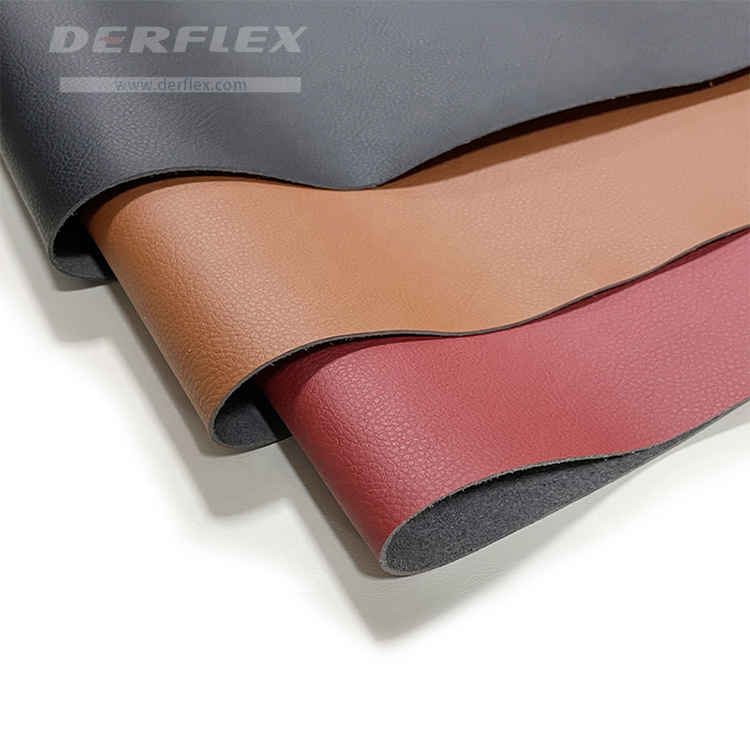
These DERFLEX website images illustrate synthetic leather color, grain and flexible backing directions. Final hydrolysis-resistant construction is developed against the approved project sample and specification.
Grain, softness, backing and thickness can be matched to seating, trim, wrapped panels and upholstery conversion.
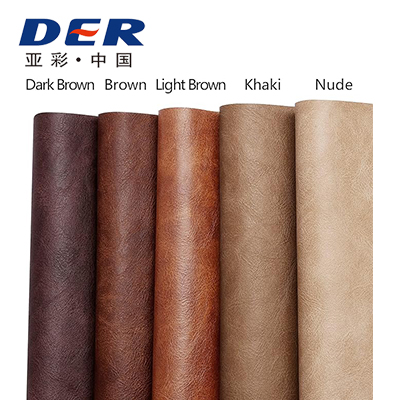
Custom color families and surface effects can be coordinated for OEM collections and repeat purchasing.
A structured development process helps prevent a visually attractive sample from becoming a poor fit in real production or humid-market use.
Share application, climate, cleaning method, storage condition, processing route and target market.
Review PU chemistry direction, surface build, backing, thickness, softness and finish.
Confirm color, grain, touch, backing, sewing or wrapping behavior and visual acceptance.
Agree hydrolysis ageing condition and any additional abrasion, flex, adhesion or cleaning checks.
Use the approved reference, order specification, packing details and inspection points for repeatable supply.
Furniture, automotive, bag and hospitality projects are reviewed around their real processing and exposure conditions.
Color, grain, gloss, hand feel, backing and thickness can be discussed in one development workflow.
Test condition, exposure time and acceptance points can be clarified before commercial production when required.
Approved samples and written specifications support better color, grain, roll and batch consistency over repeated orders.
Roll length, labels, carton marks, packing and project documentation can be coordinated according to order requirements.
If PU is not the right route, adjacent synthetic leather structures can be compared by performance, processing and budget.
Six related internal pages help buyers compare general PU leather, custom development and application-specific requirements.
Practical answers for sourcing managers, upholstery factories, automotive suppliers and OEM product teams.
It is polyurethane synthetic leather developed to better resist degradation caused by humid and hot conditions. The result depends on the complete material system, including PU chemistry, coating structure, backing, adhesion and finish. It should be confirmed by a defined ageing and performance test rather than assumed from the product name alone.
Heat and moisture can accelerate chemical degradation in some polyurethane systems and can weaken the relationship between coating layers and backing. Depending on construction, the visible symptoms may include tackiness, cracking, powdering, loss of flexibility or peeling. Cleaning chemistry, storage and mechanical stress can accelerate the problem further.
A commonly used accelerated approach exposes samples to high temperature and high relative humidity, often around 70°C and 95% RH. The duration and pass/fail criteria should be agreed for the project or linked to a specified method. After ageing, buyers may review appearance, adhesion, peel strength, tensile retention or flex performance depending on the end use.
Such conversions are sometimes used commercially, but they should not be treated as a universal rule. Real-life ageing depends on climate, product construction, use intensity, cleaners, UV, mechanical stress and storage. DERFLEX recommends specifying the laboratory condition and acceptance criteria directly instead of relying only on a year-equivalence statement.
DERFLEX can discuss custom color, grain, gloss, backing, thickness, hand feel, roll width, roll length, labels, packing and project-specific performance direction. Final construction and performance should be approved by sample review and testing appropriate to the application.
Typical examples include automotive interiors, furniture and contract seating in humid climates, hospitality interiors, moisture-prone leisure or marine seating, bags and accessories with long storage cycles, and OEM products sold into tropical or subtropical markets.
Please send the finished application, destination market, current sample or photo, color and grain target, backing, thickness, roll width, quantity, processing method, cleaning environment, packing needs and any requested hydrolysis, abrasion, flex, adhesion or compliance testing.
Send DERFLEX your application, climate, reference sample, grain, color, backing, thickness, quantity and desired ageing test route. The team can review a practical material direction for sampling and quotation.