


PU Leather Manufacturer for Custom Upholstery, Automotive, Marine, Medical, and OEM Projects
DERFLEX supplies custom PU leather rolls for brands, converters, traders, furniture factories, project contractors, and product manufacturers that need a dependable balance of appearance, performance, processability, and commercial efficiency. Whether your focus is sofa upholstery, automotive seating, marine cushions, healthcare surfaces, hospitality seating, bags, or decorative panels, our team helps you move from sample selection to bulk production with clear specifications, repeatable quality, and factory-direct support.
As a professional PU leather manufacturer, we understand that buyers do not only compare a material by price. They evaluate hand feel, embossing consistency, color stability, coating adhesion, surface durability, order flexibility, lead time, packaging reliability, and how easily the material performs in cutting, sewing, wrapping, laminating, quilting, or upholstery operations. That is why DERFLEX approaches each project as a material engineering and supply-chain assignment rather than a simple roll sale.
Why Buyers Source from DERFLEX
- OEM and custom development for color, grain, backing, width, and thickness
- Commercial support for furniture, automotive, marine, medical, and bag applications
- Clear focus on quality consistency, delivery coordination, and bulk supply reliability
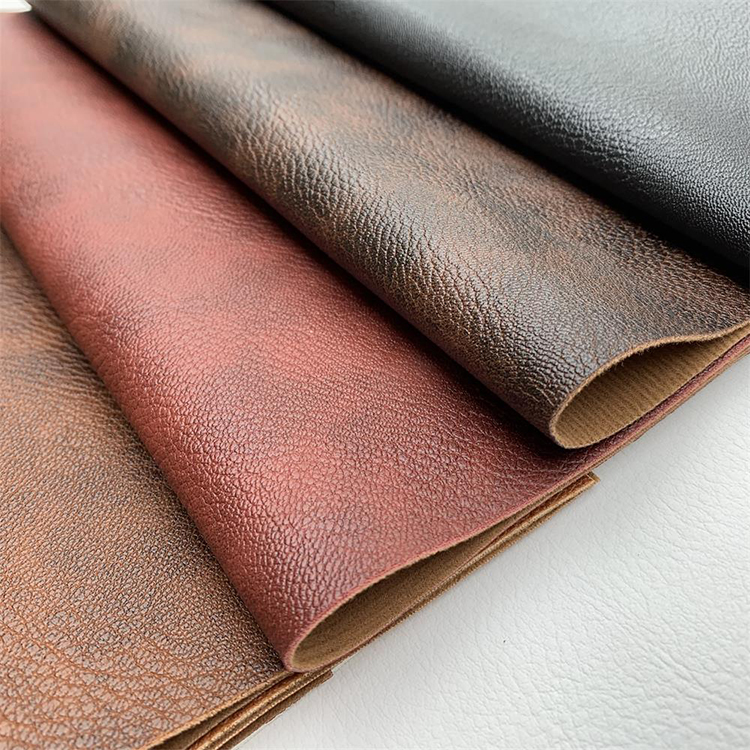
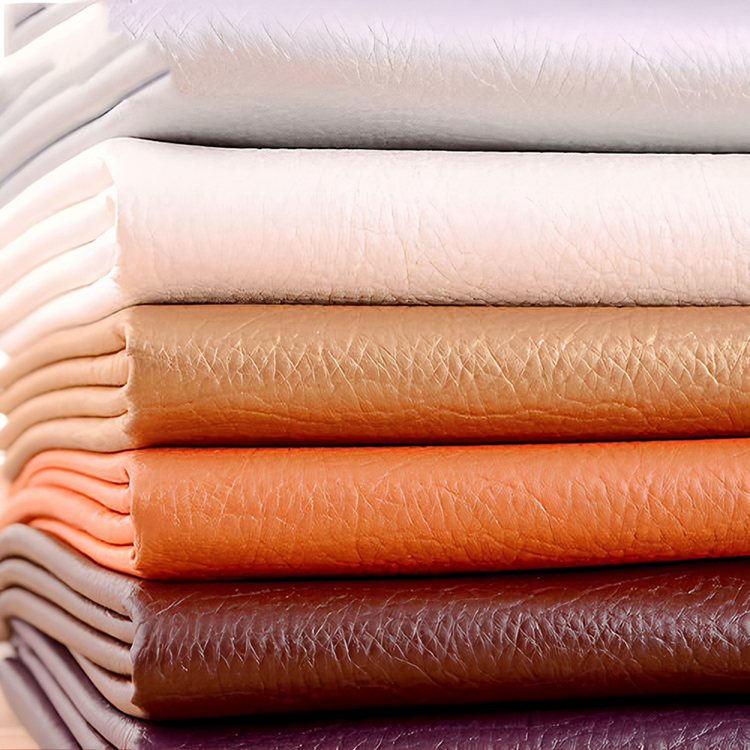
- Multiple surface styles including smooth, matte, semi-gloss, lychee, napa, and special embossing
- Factory-oriented communication for private label, converters, importers, and project supply
Custom Development
From entry-level commercial programs to upgraded premium upholstery collections, DERFLEX can align material structure and visual direction with your target market.
Production Efficiency
We support buyers that need PU leather rolls compatible with cutting, stitching, edge wrapping, quilting, pressing, bonding, and upholstery assembly.
Application Fit
Material selection can be matched to end use such as residential furniture, public seating, car interiors, marine seating, mattress covers, or fashion accessories.
Commercial Confidence
Bulk buyers value lead-time control, sample-to-order consistency, packaging security, and a supplier able to speak in practical specifications rather than only broad promises.
What Is PU Leather and Why Do Global Buyers Continue to Choose It?
PU leather, also called polyurethane leather or synthetic leather, is a man-made surface material designed to deliver the visual appeal and practical utility of leather-like finishes while offering broader customization and more controlled production variables. In most commercial supply chains, buyers choose PU leather when they need a material that looks refined, feels comfortable to the touch, offers flexible aesthetic design, and can be adapted for different market levels and processing requirements.
A professional PU leather manufacturer does much more than coat a substrate and ship rolls. The value is in how the structure is engineered for the intended application. A furniture buyer may want a supple hand feel, low glare, consistent embossing, and a broad color family that works across a sofa collection. An automotive trim buyer may need a tighter appearance, better dimensional stability, and a surface that stays visually clean in daily use. A marine seating producer may focus on cleanability, humidity resistance, and long-term visual retention. A medical mattress converter may need a wipeable surface and reliable fabrication behavior. In every case, the word manufacturer matters because process control determines whether a PU leather program succeeds after the first shipment.
For many international buyers, the attraction of custom PU leather is not simply that it imitates natural leather. The stronger reason is that it allows a product line to be developed with commercial precision. Texture can be tuned from smooth minimal surfaces to classic lychee grain, fine napa grain, semi-gloss fashion effects, or soft-touch matte finishes. Thickness can be adjusted according to seat cushion wrapping, panel lamination, bag body structure, or decorative paneling. Backing can be aligned with sewing, bonding, or upholstery methods. This adaptability helps a converter or brand develop collections that are visually coherent and operationally efficient.
PU leather is also widely selected because it helps buyers standardize product appearance. Natural leather may vary significantly from hide to hide, while a well-controlled synthetic leather program can offer more predictable color tone, grain repeatability, and batch continuity. That matters when a hotel seating program must match samples across multiple rooms, when an office chair brand must keep a product line stable over repeated production cycles, or when a distributor must replenish inventory without forcing downstream customers to redesign their products.
Another reason buyers work with a PU leather supplier is segmentation. One factory may need an economical range for large volume residential furniture, a mid-range range for online retail upholstery, and a premium collection for contract seating or decorative interior applications. PU leather supports this layered positioning effectively because the surface, backing, and finishing system can be tailored to different price-performance targets. A good manufacturer can help a customer avoid over-specifying a low-end product or under-specifying a high-visibility application.
In addition, PU leather offers broad design freedom. Some programs require classic upholstery visuals; others need contemporary textures, two-tone effects, embossed geometric patterns, suede-like appearances, or softer fashion-oriented surfaces for bags and accessories. Because the material can be engineered around a commercial design brief, it supports product differentiation without forcing the buyer into the supply limitations of traditional materials.
For sourcing teams, the practical question is never only “What is PU leather?” It is “Which PU leather program will give my product the right combination of appearance, process behavior, durability, and landed cost?” DERFLEX approaches the answer through application logic. We look at where the material will be used, how it will be converted, what visual standard it must reach, what market it will enter, and how the purchasing cycle needs to operate. That is the difference between buying a roll and building a repeatable product platform.
Because the market uses the terms faux leather manufacturer, vegan leather manufacturer, synthetic leather factory, and PU leather supplier in overlapping ways, buyers can easily be overwhelmed by language that sounds similar but hides important structural differences. Our goal is to make the selection process direct. We identify the surface effect you want, the backing and thickness that fit your process, the commercial level your market will accept, and the delivery plan your business can rely on.
Need a supplier that can match your sample, target price, and product application?
Tell DERFLEX your application, preferred texture, target thickness, width, order quantity, and destination market. We can recommend a more suitable PU leather range and provide a fast quotation path for OEM or bulk supply.
Key Features Buyers Expect from a Competitive PU Leather Manufacturer
Consistent Appearance Across Production Batches
For distributors, brands, and OEM factories, appearance consistency is a core purchasing criterion. Grain repeatability, gloss balance, color match, and hand feel consistency all influence whether the final product feels coherent across multiple runs. DERFLEX develops PU leather programs with the understanding that downstream customers are comparing samples not only against the first order, but against future replenishment, replacement, and expansion orders.
When a sofa manufacturer launches a new upholstery line, the initial sample book is only the beginning. Dealers, e-commerce listings, showroom photography, and future collections all depend on a stable material identity. A synthetic leather manufacturer that cannot keep the visual language stable creates commercial friction for the customer. That is why consistent surface control is one of the first things buyers evaluate in any serious PU leather supplier.
Designed for Efficient Cutting, Sewing, Wrapping, and Upholstery
A material that looks attractive but behaves unpredictably in production becomes expensive very quickly. DERFLEX pays close attention to the way PU leather interacts with real factory operations. Upholstery plants need material that cuts cleanly, folds with control, stretches appropriately around corners, and supports seam appearance. Bag producers need structural stability without losing surface attractiveness. Decorative panel projects may require material that laminates or wraps with fewer surprises.
That is why custom PU leather is often built around end-use processing rather than a purely visual brief. Backing choice, thickness range, softness, and surface finish all influence how smoothly a product moves through production. In commercial terms, better process compatibility helps reduce waste, improve line efficiency, and lower hidden conversion costs.
Multiple Quality Tiers for Different Price and Product Levels
Not every buyer is building the same product. A private-label online furniture seller may need a cost-conscious program that still looks elevated on product photography. A contract seating supplier may need a more controlled and durable material. A marine or healthcare buyer may prioritize easy-clean performance and dependable visual retention. A PU leather factory that only offers one standard grade is rarely the best long-term partner.
DERFLEX supports sourcing discussions by aligning the material platform with the market strategy. This helps customers avoid mismatches between material cost and product position. It also creates room for program expansion, where a customer begins with one collection and later adds upgraded textures, premium finishes, or project-specific variants.
Color, Grain, Thickness, Backing, and Width Can Be Tailored
Custom development is one of the main reasons global buyers work with a direct manufacturer instead of a simple trader. The ability to adjust thickness, embossing style, backing, color direction, and roll width gives buyers better control over both product aesthetics and production practicality. For example, furniture upholstery often requires a different softness and backing behavior than bag materials or decorative wrapped panels.
Custom PU leather manufacturing also allows brands to build recognizable collections. Instead of choosing from a limited warehouse assortment, a buyer can define a specific tactile and visual identity aligned with the end product. Over time, this strengthens product differentiation and reduces the risk of competing on the exact same material used by many other sellers.
Lead Time, Packaging, and Repeat-Order Coordination Matter
Bulk buyers do not evaluate a PU leather supplier by sample quality alone. They look at whether the supplier can communicate clearly on order timing, support repeat procurement, provide practical packaging, and reduce avoidable surprises. In other words, the material and the delivery system must work together. DERFLEX treats this as part of product quality because a shipment that arrives late, mixed, or insufficiently protected damages the customer’s business regardless of how good the material looks.
For this reason, we emphasize transparent communication on production plans, quantity expectations, and application requirements. The stronger the initial brief, the stronger the probability of a stable long-term supply relationship.
Suitable for Wholesalers, Importers, Brands, and Product Manufacturers
The best PU leather manufacturer is not always the one with the broadest catalog. It is the one that can understand what the buyer is building and how the buyer sells. A wholesaler needs assortments that move. A furniture factory needs conversion compatibility. A project contractor needs dependable color and specification control. A brand needs consistency across seasons. DERFLEX structures product recommendations around those commercial realities.
This approach is especially useful for customers expanding into new markets or adding new product categories. A manufacturer that can advise on material positioning becomes more valuable than one that only ships roll stock.
Technical Specifications for Custom PU Leather Rolls
Every application has its own performance priorities, and that is why the most useful specification sheet is one that stays practical. The table below presents typical customizable ranges used in commercial sourcing conversations for PU synthetic leather. Final specifications should always be matched to the end use, conversion process, target price, and destination market. For upholstery, bag, automotive, marine, medical, and decorative projects, DERFLEX can recommend a more suitable structure after reviewing your requirements.
| Item | Typical Customizable Range / Option | Commercial Importance |
|---|---|---|
| Product Type | PU leather, semi-PU leather, microfiber-style synthetic leather, special-touch faux leather | Allows positioning from economical upholstery programs to upgraded premium collections. |
| Surface Finish | Smooth, matte, semi-gloss, glossy, lychee grain, napa grain, embossed patterns, suede-like appearance | Directly influences product style, brand identity, and market segment suitability. |
| Thickness | Typical commercial range 0.6 mm – 1.4 mm | Impacts softness, body, seam performance, wrapping behavior, and product structure. |
| Backing | Knitted, woven, non-woven, brushed, microfiber-style, reinforced textile backing | Changes processability for sewing, upholstery, lamination, and product shaping. |
| Roll Width | Common options include 137 cm, 140 cm, 152 cm; custom discussion possible depending on program | Affects cutting efficiency, nesting optimization, and factory yield. |
| Color Range | Standard colors, custom Pantone-approach development, collection-based matching | Important for furniture lines, branded products, and repeat-order continuity. |
| Hand Feel | Soft touch, firm touch, smooth touch, cushioned feel, dry touch, premium upholstery touch | Critical for user perception and product positioning. |
| Pattern Repeat | Embossing and grain structure developed around target style | Consistency supports premium presentation and better sample-to-order alignment. |
| Performance Add-ons | Easy-clean surface, anti-scratch direction, hydrolysis-focused improvement, stain-resistant finish, project-oriented treatment | Useful for healthcare, hospitality, marine seating, contract furniture, and heavy-use seating. |
| Application Categories | Furniture upholstery, office chairs, automotive trim, marine seating, bags, footwear components, mattress cover surfaces, wall panels | Application fit determines the right combination of structure and finish. |
| MOQ / Sampling | Project-based discussion depending on stock, color development, and OEM requirements | Helps buyers plan launch cycles, pilot runs, and volume contracts. |
| Packing | Roll packing with protection suitable for export-oriented bulk logistics | Protects surface quality and reduces claims caused by shipment damage. |
Note: Specifications above are presented as typical reference ranges for commercial discussion. Actual product data should be confirmed according to application, sample approval, and order requirement.
How to Read PU Leather Specifications Like a Professional Buyer
When buyers search for PU leather manufacturer, they often receive many catalogs that look similar at first glance. The difference becomes clear when specifications are interpreted in relation to real production and product performance. Thickness, for example, cannot be evaluated in isolation. A sofa arm wrapping project may require a different balance of softness and body than a bag shell or decorative wall panel. A material that feels appealing in hand may still perform poorly if the backing is not right for your process or if the surface finish does not match the use environment.
That is why professional sourcing should begin with application questions, not only sample liking. What are you making? How is the material being processed? Is the end product low-touch residential use, higher-frequency commercial seating, or a wipeable healthcare surface? Will the material be stitched, folded, wrapped, pressed, or laminated? Will it be presented in close-up photography for e-commerce? These questions affect which specification actually matters most. DERFLEX helps customers make that translation so the final material selection serves the real product, not just the sample board.
Another overlooked point is width strategy. Buyers sometimes focus only on price per meter while ignoring conversion yield. However, the wrong width can increase waste and reduce line efficiency. In upholstery and bag production, a more suitable width can improve cutting plans and reduce hidden material loss. For ongoing programs, those savings become commercially meaningful over time.
What to Send When Requesting a PU Leather Quote
- End use: sofa, office chair, bag, marine cushion, car trim, mattress, wall panel, or other
- Preferred thickness and width
- Color requirement or sample reference
- Texture / embossing preference
- Monthly or annual quantity expectation
- Target market and quality level
- Delivery destination and timeline
- Any process notes such as sewing, wrapping, lamination, or quilting
Send your target thickness, texture, quantity, and end use for a faster recommendation
DERFLEX can help narrow the material range quickly when you provide the real application and commercial target. This avoids wasting time on unsuitable samples and speeds up OEM development.
Applications for Custom PU Leather Across Multiple Industries
One of the reasons the market continues to search for a reliable synthetic leather manufacturer is that PU leather serves an exceptionally wide application range. However, application diversity does not mean one material suits all uses. A capable supplier must understand how each industry evaluates surface feel, cleanability, visual style, structural behavior, and commercial value. The sections below show how DERFLEX positions PU leather for different end-use categories and why buyers usually select different constructions for each one.
1. Sofa and Furniture Upholstery
Furniture is one of the strongest commercial segments for custom PU leather. Buyers in this space typically want a material that looks premium enough to elevate the product, feels comfortable for prolonged touch, and remains commercially workable at scale. The upholstery market is broad, covering price-conscious residential sofas, upgraded retail collections, project-based apartment furniture, and hospitality seating. Each segment needs a slightly different material strategy.
Residential upholstery often values softness, visual richness, easy color coordination, and predictable cutting performance. Contract furniture may emphasize a more controlled appearance, easier cleaning, and stronger repeat-order continuity. Online furniture brands care deeply about how the surface photographs under lighting and whether the color family looks consistent across multiple SKUs. In all these cases, a PU leather supplier must think beyond a single roll and help the customer build a reliable collection.
DERFLEX supports sofa and upholstery buyers with a range of grain styles, touch options, color direction, and backing configurations. We also help customers think through practical details such as corner wrapping behavior, seam visual quality, and how the selected surface aligns with the product’s market level. For many furniture buyers, this is the difference between launching a collection that looks acceptable and launching one that feels intentionally desig, ned.
2. Automotive Seating and Interior Trims
Automotive-related sourcing places a different emphasis on visual precision, dimensional control, and day-to-day usability. Whether the material is used for aftermarket seat covers, decorative inserts, trim elements, or commercial vehicle interiors, buyers want a finish that appears modern, clean, and balanced in hand feel. Even when the application is not OEM vehicle manufacturing, the visual reference point remains high because consumers associate automotive interiors with tactile quality.
Automotive PU leather often requires careful alignment between softness and structural stability. Too soft, and the material may not present the required shape. Too firm, and it may lose the comfort impression buyers want. Surface style also matters. Some programs prefer a sleek smooth finish, while others prefer subtle grain to create warmth and reduce the appearance of wear. DERFLEX helps automotive buyers select a material platform that supports both visual appeal and practical conversion for seat cover, trim, or interior accessory applications.
Because automotive-related buyers usually operate on repeatable SKUs, consistency across batches is especially important. We therefore emphasize specification clarity and sample approval discipline before bulk production moves forward.
3. Marine Seating and Outdoor-Influenced Cushion Programs
Marine seating and water-adjacent use environments require PU leather programs that stay commercially attractive while also supporting easier maintenance. Boat cushions, yacht seating, outdoor-adjacent lounge systems, and floating leisure products usually prioritize wipeability, good appearance, and dependable surface behavior in humid conditions. Although different marine programs have different performance levels, the key sourcing principle remains the same: application-specific construction matters.
Buyers in this category also pay close attention to color appearance and long-term presentation because marine environments are visually exposed. A supplier that can coordinate elegant texture options with cleanable, project-suitable surfaces becomes much more valuable. DERFLEX helps customers review not only the surface effect but also the way the material will be cut, sewn, and upholstered for marine-style cushions and seating systems.
For brands selling into lifestyle and leisure channels, marine-grade positioning can also be a brand story. That means the chosen material should support the premium message rather than undermine it. Carefully selected PU leather can help achieve that balance.
4. Medical Mattress, Healthcare Seating, and Care Environments
Healthcare-related applications are often evaluated through cleanliness, wipeability, and dependable fabrication behavior. Medical mattress covers, treatment seating, care-environment cushions, and clinic furniture surfaces need materials that are practical to clean and that support repeat supply for institutional procurement. Visual appearance still matters, but the decision is usually grounded more directly in function and confidence.
DERFLEX supports discussions for healthcare-oriented PU leather by focusing on how the material will be used, cleaned, fabricated, and replenished. Some buyers need a stable white, blue, or hospital-neutral color family. Others need a more comfortable, hospitality-style look for care environments where patient experience matters. A direct PU leather manufacturer can help match these priorities with an appropriate material system rather than forcing buyers into an overly generic option.
Because medical and care projects often involve volume planning and tender-like purchasing, clarity on specification and supply is just as important as the material itself.
5. Office Chairs, Contract Seating, and Hospitality Programs
Office seating and contract furniture sit between style-sensitive upholstery and more performance-aware commercial use. Buyers in this segment often want a clean professional look, a modern touch profile, and material that works efficiently in production. They also need consistency because chair families are frequently sold in coordinated ranges across multiple colors and models. A mismatch between sample and reorder can disrupt showrooms, tenders, and catalog continuity.
Hospitality seating adds another layer. Here the material must help express design intent while also supporting maintenance and project repeatability. Lounge chairs, headboards, banquette seating, restaurant booths, and public-area furniture may all use PU leather, but not all should use the same construction. DERFLEX helps buyers identify the right direction by balancing appearance, processing needs, and project economics.
For procurement teams serving hotels, offices, and public environments, factory responsiveness is particularly valuable because project timelines are often fixed. Lead-time discipline and clear approval steps help reduce risk.
6. Bags, Accessories, and Fashion-Oriented Components
Bag makers, accessory brands, and fashion component suppliers often search specifically for a faux leather manufacturer that can create distinctive visual character. In this segment, design detail carries exceptional weight. Buyers may want refined grain, trend-driven colors, soft fold behavior, or a structured body that helps a product keep its shape. The chosen surface must support not only use but also merchandising, photography, and brand storytelling.
Compared with upholstery, bags and accessories often require more attention to thickness-body balance and finishing detail. A material that looks good laid flat may not be ideal when stitched into a shaped product. DERFLEX works with buyers to understand whether the priority is softness, structure, premium appearance, or price efficiency, and then recommends a material direction that supports the final design more intelligently.
This application category also benefits from custom collections. Instead of repeating common market textures, brands can develop material families that feel more exclusive and coherent.
7. Decorative Panels, Wall Covering Elements, and Interior Design Components
PU leather is increasingly used in decorative environments where visual luxury, tactile value, and material adaptability are important. Wrapped wall panels, decorative boards, door inserts, acoustic-facing elements, display features, and custom interior pieces can all benefit from the controlled look of synthetic leather. In these projects, the material may not be touched as heavily as seating, but it is seen closely and judged on finish quality.
Interior design applications often demand sophisticated surface language. A matte warm neutral texture may be perfect for a hospitality suite. A deep embossed effect may suit a retail display. A clean minimal smooth surface may fit corporate interior concepts. DERFLEX helps buyers align these design ambitions with practical roll supply and project execution.
Because decorative applications frequently involve project schedules and staged installation, dependable supply planning matters. Stable batch appearance is also critical when multiple panels are installed side by side.
8. Footwear Components and Secondary Product Surfaces
In footwear and secondary product applications, buyers may need PU leather for uppers, accents, reinforcement pieces, insoles, or visual detail elements. These uses are highly design-sensitive and often quantity-sensitive. A buyer may need a short-run custom look for one program and larger-volume replenishment for another. Here again, the manufacturer’s ability to align finish, thickness, and backing with the actual product is more valuable than a broad but unfocused catalog.
DERFLEX supports sourcing conversations for these segments by clarifying what the material needs to do in use and in assembly. This makes it easier to select an option that provides the right visual effect without creating avoidable processing issues.
Across all categories, the message is consistent: the best PU leather manufacturer is the one that understands your end product as clearly as you do.
Why Choose DERFLEX as Your PU Leather Manufacturer
1. Factory-Oriented OEM Thinking
DERFLEX is not positioned as a simple catalog reseller. We approach projects with a factory mindset: what does the customer need to manufacture, how will the material be processed, what visual standard must be met, and how can the supply plan support repeated business? This makes our recommendations more useful for product manufacturers, converters, and procurement teams.
2. Customization That Serves Real Products
Many suppliers say they offer custom service, but the meaningful question is whether customization improves the final product. DERFLEX supports color, texture, backing, thickness, and width choices with the goal of improving application fit and commercial performance, not just increasing option count.
3. Clear Focus on Quality Consistency
Repeatability matters. Buyers need confidence that a material approved today can still support future orders, replenishment, and collection expansion. We pay close attention to the continuity issues that affect professional sourcing decisions.
4. Communication Built Around Specification, Not Guesswork
A good quote depends on clear input. DERFLEX helps buyers define thickness, use environment, surface style, quantity, and delivery needs in a way that improves quotation accuracy and sample relevance. This reduces delays and unnecessary sample loops.
5. Suitable for Multiple Buyer Types
Whether you are an importer, furniture factory, marine seating producer, office chair manufacturer, medical project supplier, wholesaler, or brand owner, we can frame the material discussion around your commercial model and production method.
6. Reliable Support for Bulk Orders and Repeat Programs
Long-term value in synthetic leather sourcing comes from stable repeat performance. DERFLEX aims to become a dependable material partner for ongoing product lines, seasonal programs, and project-driven supply needs.
Quality, Lead Time, and Commercial Confidence
When buyers ask for a strong PU leather manufacturer, they are often concerned about three commercial risks at the same time: quality inconsistency, delayed delivery, and poor communication. These issues rarely show up in the first sample presentation, but they appear quickly once the buyer starts planning a real order. That is why DERFLEX treats commercial discipline as part of product value.
Quality means more than receiving a visually acceptable roll. It includes whether the embossing stays coherent from batch to batch, whether the hand feel aligns with approved samples, whether the width and thickness are in the expected range for processing, and whether the material arrives packaged in a way that protects its sellable condition. Lead time matters because many customers build production schedules, launch calendars, and shipment bookings around material arrival. Communication matters because sourcing decisions require clarity, especially when the buyer is aligning design, finance, manufacturing, and logistics teams across regions.
DERFLEX is structured to support these realities. We focus on translating application into specification, sample into approved direction, and approved direction into bulk supply planning. Buyers looking for an OEM synthetic leather supplier generally want exactly this kind of working relationship: not broad promises, but a process that reduces uncertainty and helps the business move faster.
What Buyers Often Ask DERFLEX to Customize
- Embossed grain style for private-label collections
- Thickness adjustment for different upholstery structures
- Backing selection for sewing or wrapping behavior
- Color family development for furniture lines or seasonal launches
- Commercial packaging suited to bulk export
- Material positioning for cost-sensitive vs upgraded product tiers
Looking for an OEM PU leather supplier that understands product development and bulk delivery?
Use DERFLEX as your direct factory contact for custom synthetic leather programs. We support standard collections, sample matching, repeat orders, and application-based material recommendations.
PU Leather Compared with Other Material Choices
Buyers rarely choose PU leather in a vacuum. The real sourcing decision usually involves comparison with genuine leather, PVC leather, microfiber synthetic leather, fabric upholstery, or other engineered surface materials. The most useful comparison is not about abstract superiority. It is about fitness for purpose. The right material is the one that gives the product the correct balance of appearance, processability, commercial efficiency, and expected use performance.
PU Leather vs Genuine Leather
Genuine leather carries a natural narrative and can perform strongly in premium positions, but it also introduces variability, different sourcing dynamics, and a different cost structure. PU leather is often chosen when buyers want a more controlled surface appearance, broader design freedom, and easier standardization across large product runs. For many commercial seating, furniture, accessory, and project programs, that controllability is highly valuable.
Buyers should ask themselves whether their product truly requires the natural-hide story or whether a high-quality PU leather program would better serve the brand, process, and margin structure. In many markets, the answer favors a refined synthetic leather platform.
PU Leather vs PVC Leather
PU leather is commonly selected when buyers want a softer hand feel, a more upscale upholstery impression, and a wider range of tactile finishing. PVC leather often remains attractive for cost-sensitive and highly waterproof use scenarios. The better choice depends on product type, target market, visual expectation, and budget. A knowledgeable supplier helps buyers decide with application logic instead of generic claims.
DERFLEX can support buyers who are comparing PU vs PVC for furniture, seating, decorative, or project applications and who want a realistic view of how each material aligns with their commercial objective.
PU Leather vs Fabric Upholstery
Fabric upholstery offers softness and visual texture variety, but PU leather provides a different value set: cleaner wipeability, a leather-like visual impression, easier consistency across colors and finishes, and strong suitability for contemporary upholstery and contract-style products. In spaces where maintenance and sleek presentation matter, PU leather often becomes the more commercially persuasive option.
For many buyers, the decision is not about replacing fabric everywhere, but about using PU leather strategically in collections where easy maintenance and a cleaner premium look offer stronger sales value.
How to Choose the Right Material for Your Market
If your target market is strongly price-driven and focused on basic function, a simpler material structure may be appropriate. If your market responds to elevated design, better touch, and stronger presentation, upgraded PU leather becomes more attractive. If your product lives in environments where easy cleaning and polished appearance matter, PU leather often provides a powerful middle ground between natural story and commercial control.
This is why the term best PU leather manufacturer is not simply about who offers the broadest marketing claims. It is about who can help you choose intelligently among realistic alternatives. DERFLEX helps customers avoid the common sourcing mistake of selecting by appearance alone. Instead, we position the material based on how it will be sold, used, and manufactured.
For global buyers, that guidance saves both time and money. It reduces the chance of overbuying specification, underbuying quality, or selecting a surface that creates issues in production or after launch. It also helps with line architecture, where a customer may intentionally use different material families for different product tiers.
Fast Material Selection Guide
- Choose PU leather when you want a refined leather-like look with broad customization.
- Compare against PVC when cost sensitivity and waterproof-oriented requirements dominate.
- Compare against genuine leather when natural variation and premium heritage are part of the brand story.
- Compare against textile upholstery when softness, woven aesthetics, or fabric storytelling matter more than wipeability.
- Always decide based on end use, converting method, and customer expectation.
Representative Customer Scenarios for Custom PU Leather Supply
Case 1: Upholstery Collection Upgrade for a Furniture Brand
A regional furniture brand wanted to move its sofa collection from an entry-level visual impression to a more premium retail look without jumping into the variability and cost structure of natural leather. The client needed a soft-touch upholstery PU leather with a controlled matte appearance, a grain subtle enough for modern styling, and consistent color continuity for future repeat orders.
DERFLEX recommended a custom direction focused on hand feel, balanced body, and a grain style suited to broad upholstery use. The commercial goal was not only to improve the visual finish of the sofa line, but also to help the brand maintain continuity across multiple color options and product launches. Because the customer sold through both showroom and e-commerce channels, surface photography and consistency were major considerations.
The result was a material program better aligned with the brand’s market position. The client benefited from a more intentional upholstery identity, clearer sample development, and a more confident replenishment path for future production.
Case 2: Office Chair Producer Needed Stable Repeat Supply
An office chair manufacturer was expanding its seating range and needed a PU leather supplier able to support repeated color continuity for standard SKUs. Previous sourcing attempts had created issues with inconsistent appearance from batch to batch, which complicated showroom sales and inventory planning.
DERFLEX approached the project by first clarifying the chair structures, target market level, and surface expectation. Instead of overcomplicating the offer, the objective was to build a dependable, business-friendly material platform with practical consistency and straightforward replenishment logic. Attention was given to how the material would behave in chair upholstery and how the finish would read in professional office environments.
By centering the discussion on repeat program management rather than one-time sampling, the customer was able to move toward a more stable sourcing model. For contract seating and office furniture, that continuity is often more valuable than chasing the cheapest spot offer.
Case 3: Bag and Accessory Buyer Wanted a Signature Texture
A buyer in the accessories segment needed a faux leather manufacturer that could support a more distinctive look than common warehouse materials. The brief emphasized a recognizable grain pattern, a controlled medium body for bag construction, and a color palette that aligned with the brand’s seasonal design story.
DERFLEX worked from the product intent backward. Instead of choosing the material only by flat sample appearance, we considered how the leather-like surface would behave once stitched into shape and how the finish would communicate perceived quality in close-up retail presentation. This is especially important in bags and accessories, where tactile identity and visual detail influence consumer response strongly.
The resulting development path helped the customer move toward a more differentiated collection. Rather than competing with generic market stock, the brand could offer a more recognizable material expression backed by factory supply.
Why Case Scenarios Matter in PU Leather Sourcing
Some suppliers present only broad product claims, but serious buyers often learn more from application scenarios. A case-based view shows how materials are selected and refined around commercial realities: product category, market level, design brief, converting method, and reorder logic. Whether the end use is furniture, office seating, fashion accessories, marine cushions, or care-environment surfaces, the pattern is always the same. Success comes from aligning the surface material with both the product and the business model.
For that reason, DERFLEX encourages customers to describe the use case in practical detail. What are you making? What does the market expect visually? How is the product fabricated? What reorder rhythm do you anticipate? Which features matter most to the end customer? Once these questions are answered, the material recommendation becomes sharper, and the quotation process becomes more productive.
Best-Fit Customers for This Page
- Furniture manufacturers and upholstery converters
- Office chair and contract seating factories
- Marine seating and leisure cushion suppliers
- Medical mattress and healthcare seating producers
- Bag, accessory, and decorative material buyers
- Importers, wholesalers, and private-label product developers
Have a project that needs a custom color, grain, or bulk supply plan?
Send your sample, target specification, application, and required quantity. DERFLEX can recommend a suitable PU leather solution for private label, OEM production, or long-term bulk supply.
Frequently Asked Questions About Working with a PU Leather Manufacturer
What does DERFLEX supply as a PU leather manufacturer?
DERFLEX supplies custom PU leather and synthetic leather roll materials for furniture upholstery, office chairs, automotive trims, marine seating, medical mattress surfaces, decorative panels, bags, accessories, and other OEM applications. Instead of focusing only on a broad catalog, we help buyers identify a more suitable combination of surface style, backing, thickness, width, and commercial positioning for the intended product.
Can you customize color, grain, backing, and thickness?
Yes. Custom development is one of the main reasons buyers choose a direct manufacturer. DERFLEX supports discussions on embossing pattern, color family, touch profile, thickness range, width, and backing selection. The goal is to make the material work better for the end use and production process, not simply to offer more options without direction.
How should I choose between PU leather and PVC leather?
The decision depends on your product and market. PU leather is often preferred when a softer, more refined upholstery impression is needed. PVC leather is commonly chosen for cost-sensitive or more waterproof-oriented requirements. The best way to decide is to review your end use, price band, look-and-feel target, and processing method with the supplier before sampling.
What information do you need in order to quote accurately?
A strong quote usually starts with five practical details: your end use, preferred thickness, preferred width, target texture or sample reference, and estimated order quantity. It is also helpful to know your destination market, expected delivery timing, and whether the material will be sewn, wrapped, laminated, quilted, or upholstered. The clearer the brief, the more relevant the recommendation.
Can DERFLEX support OEM and private-label development?
Yes. DERFLEX works with importers, brands, wholesalers, converters, and manufacturers that need custom synthetic leather for proprietary collections, private-label programs, or repeatable long-term supply. OEM support may include color matching, embossing direction, material positioning by product tier, and packaging coordination for bulk export.
What industries commonly buy PU leather from a direct manufacturer?
Common industries include furniture upholstery, office seating, contract hospitality seating, marine cushions, care-environment surfaces, automotive aftermarket interiors, bags and accessories, decorative panels, and secondary footwear or fashion components. Each application usually requires a different material logic, which is why direct factory communication is valuable.
Is PU leather suitable for premium-looking products?
Yes, when the material is selected intelligently. Premium-looking products depend on more than the words “PU leather.” They depend on the surface finish, grain design, gloss control, hand feel, consistency, and how the material performs after conversion into the final product. A well-developed custom PU leather range can support a very polished and commercially persuasive final presentation.
How do repeat orders stay consistent?
Repeat-order consistency improves when the original specification is clearly defined and sample approval is disciplined. That includes color direction, grain type, thickness, width, backing, and intended application. DERFLEX places strong emphasis on this front because long-term buyers need more than a good first shipment; they need a stable material program.
Can PU leather be used for medical mattress or marine seating applications?
Yes, PU leather can be positioned for those applications when the structure and finish are aligned with the use environment. Medical and care environments often prioritize wipeability and dependable fabrication. Marine seating often emphasizes a clean look, maintainability, and suitability for humid environments. The recommended material should always be selected around the specific project brief.
How do I start a project with DERFLEX?
The fastest way is to send your application, sample or reference image, preferred thickness, width, color direction, texture requirement, estimated quantity, and delivery destination through the DERFLEX Request A Quote page. From there we can recommend a suitable material direction and move into sample and bulk-order discussion.
Start Your PU Leather Project with DERFLEX
If you are comparing PU leather suppliers, send DERFLEX the details that matter: end use, preferred style, target thickness, width, quantity, sample reference, and destination market. We can recommend a more suitable material direction for OEM development, private-label collections, and bulk repeat supply.