Handling-friendly planning direction
Smaller roll width can simplify access, positioning and roof-zone staging, especially where cranes, elevators or narrow access routes limit material movement. The trade-off is more field seams per roof area.
 News
News

TPO roll size is not just a catalog dimension. Width controls seam count and rooftop handling; length changes roll changes, lifting and pallet weight; membrane construction and unit mass determine the actual roll weight. This guide turns those variables into a practical specification for contractors, distributors and project buyers.
Current DERFLEX TPO pages publish 2 m, 3 m and 4 m width directions, 20 m, 30 m and 50 m length directions, and common project thicknesses from 1.2 mm to 2.0 mm. Final manufacturable combinations and net roll weights must be confirmed for the exact membrane construction.
TPO roofing membrane is sold in multiple widths and lengths rather than one universal roll size. DERFLEX currently publishes 2 m, 3 m and 4 m width directions and 20 m, 30 m and 50 m length directions for project planning. In North American commercial roofing, major manufacturers also publish widths such as 5, 6, 8, 10 and 12 ft, commonly with 75–100 ft lengths depending on thickness and construction. Roll weight is product-specific and should be confirmed from the exact membrane's unit mass or manufacturer data sheet—not estimated from thickness alone.
The matrix below converts DERFLEX's currently published width and length directions into gross sheet area. It is a project-planning tool; confirm the exact manufacturable roll format, tolerance, core, packing and roll weight in the quotation.
| Width | Length | Gross Area / Roll | Approx. ft² / Roll | Planning Use | Weight Status |
|---|---|---|---|---|---|
| 2 m | 20 m | 40 m² | 431 ft² | Compact staging, easier roof movement | Confirm exact kg/roll |
| 2 m | 30 m | 60 m² | 646 ft² | Balanced length for project planning | Confirm exact kg/roll |
| 2 m | 50 m | 100 m² | 1,076 ft² | Long runs; check lifting and winding limits | Confirm exact kg/roll |
| 3 m | 20 m | 60 m² | 646 ft² | Fewer seams than 2 m while retaining shorter roll | Confirm exact kg/roll |
| 3 m | 30 m | 90 m² | 969 ft² | Large commercial roof-field planning | Confirm exact kg/roll |
| 3 m | 50 m | 150 m² | 1,615 ft² | High coverage per roll; handling review essential | Confirm exact kg/roll |
| 4 m | 20 m | 80 m² | 861 ft² | Wide-sheet seam reduction with shorter roll | Confirm exact kg/roll |
| 4 m | 30 m | 120 m² | 1,292 ft² | Large open roof zones with suitable lifting access | Confirm exact kg/roll |
| 4 m | 50 m | 200 m² | 2,153 ft² | Maximum planning area in this matrix; not a guaranteed stock size | Confirm exact kg/roll |
There is no single correct TPO roll weight. The same nominal width, length and thickness can weigh differently because reinforcement, formulation, backing layers, adhesive layers and construction differ.
For freight, crane and pallet calculations, add the actual core, wrapping and packaging weight specified by the supplier. If unit mass is not on the data sheet, request it before finalizing the loading plan.
Public manufacturer data illustrates the variation. GAF lists an average 60 mil, 10 ft × 100 ft smooth TPO roll at about 322 lb (146 kg), while Johns Manville publishes a 60 mil, 10 ft × 100 ft roll around 357 lb in its TPO systems brochure. Both are 60 mil and 1,000 ft², yet the published roll weights differ.
Wider membrane increases area and therefore roll mass if length and unit mass stay constant.
Longer rolls reduce roll changes but can materially increase lifting, staging and pallet requirements.
Reinforced TPO, fleece-backed and homogeneous constructions do not have identical mass per square meter.
Self-adhered TPO includes additional adhesive and release-liner components that change shipping weight and handling.
Market reference sources checked for this guide: GAF EverGuard TPO data sheet and Johns Manville TPO systems brochure.
Use it for early estimating. Replace the default roll dimensions with your intended format and enter the supplier-confirmed unit mass if you want a weight estimate.
The editable allowance is only a planning input. Final waste depends on lap design, roof geometry, penetrations, perimeter details and installation layout.
The widest roll is not automatically the best roll. Seam reduction must be balanced against wind exposure during layout, crew size, rooftop access, hoist capacity and the attachment system.
Smaller roll width can simplify access, positioning and roof-zone staging, especially where cranes, elevators or narrow access routes limit material movement. The trade-off is more field seams per roof area.
A mid-width roll can be attractive for open commercial roofs where installers want fewer seams than 2 m rolls without moving immediately to the largest available sheet format.
Wide sheets can reduce the number of longitudinal field seams, but roll mass, wind during deployment, lifting, alignment and crew capability become more important. Confirm the full roof-system design before ordering.
International buyers often need to translate between metric project specifications and U.S. roofing catalog sizes. The numbers below are market references, not DERFLEX SKU commitments.
| Market Reference | Published Width Examples | Published Length Examples | What Buyers Should Learn |
|---|---|---|---|
| DERFLEX current public direction | 2 m, 3 m, 4 m | 20 m, 30 m, 50 m | Project-oriented metric roll planning; confirm final production combination. |
| GAF EverGuard smooth TPO | 5, 6, 8, 10, 12 ft | 100 ft | One membrane family can be offered in several widths to suit installation and roof geometry. |
| Johns Manville TPO | 5, 6, 8, 10, 12 ft | 75 or 100 ft depending on product/thickness | Length can change with thickness and product construction, so “standard roll length” is not universal. |
| Elevate UltraPly TPO | Various widths from about 1.0 m to 3.05 m in published ranges | 30.5 m common in EMEA data; other lengths appear in U.S. product ranges | Regional portfolios differ; quote by exact market, construction and roof system. |
A professional TPO RFQ should connect roll dimensions to rooftop handling, installation, shipping and repeat-order control.
Confirm the net roll mass, wrapped roll mass, lifting method, roof access and safe handling procedure before shipping. Do not plan crane or manual movement from a generic 60-mil weight found online.
Large sheets present more exposed surface area during layout. Crew sequencing, temporary restraint and site conditions should be addressed in the installation plan.
Wider rolls can reduce the count of field laps, but seam quantity is only one variable. Roof penetrations, perimeter geometry, attachment layout and welding workflow also control productivity.
Ask for rolls per pallet, pallet gross weight, pallet dimensions and container loading arrangement. These values are commercial packing data, not properties that can be inferred safely from membrane thickness.
Core diameter, winding tension, roll edge condition and protective wrapping affect handling and storage. Buyers should include any special core or private-label requirements in the purchase order.
Membrane roll size cannot override fastening, wind-uplift, adhesive, insulation or local code requirements. For broader material selection, see DERFLEX waterproof membrane solutions.
Real product photography supports image search and helps B2B buyers understand what they are sourcing before sample approval.
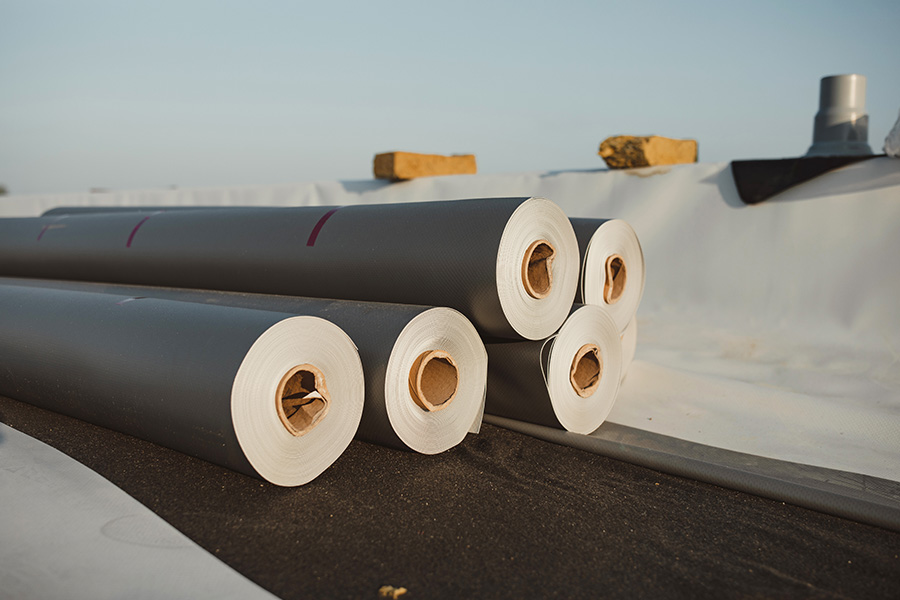
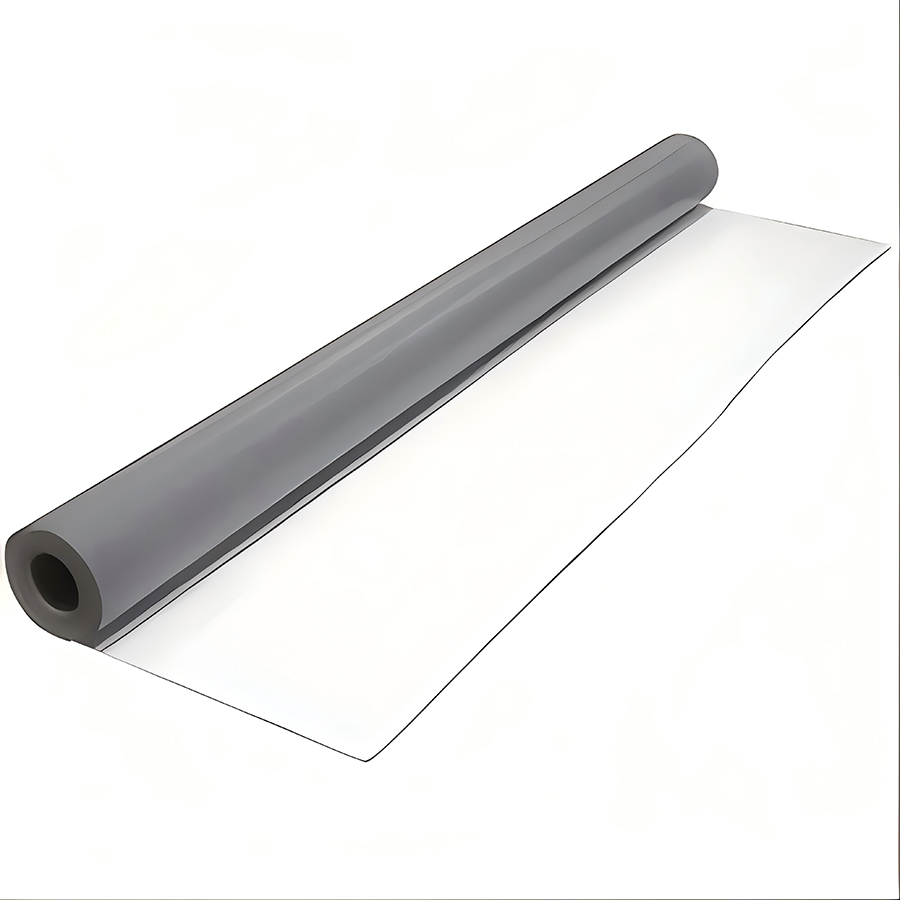
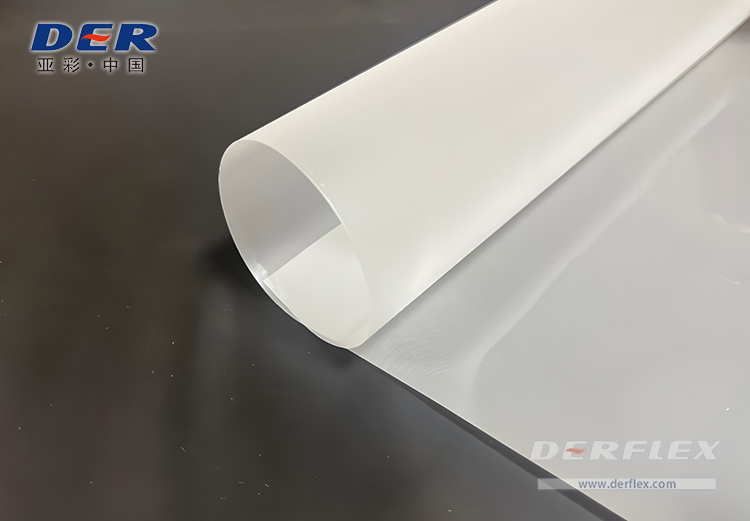
A complete RFQ lets the factory calculate the correct roll construction, dimensions, weight and packing plan rather than replying with a generic membrane price.
For accurate pricing and logistics, define membrane structure and roll geometry together. The same width × length request can produce a different roll weight when reinforcement, backing or adhesive construction changes.
Thickness alone does not define reinforcement, unit mass, backing, seam behavior, standards or packing.
Published manufacturer data proves otherwise. Use the exact SKU or production specification for lifting and freight.
Large rolls can increase handling difficulty and wind exposure during placement. Balance seam count with jobsite logistics.
Gross roll area is width × length, but project material quantity must account for laps, details, roof geometry and layout.
Pallet gross weight influences loading, unloading, warehouse handling and sometimes inland delivery restrictions.
Both are thermoplastic roof membranes, but they are different material systems. Buyers comparing alternatives can review DERFLEX PVC roofing membrane separately.
There is no universal standard roll size across all manufacturers and constructions. DERFLEX currently publishes project directions of 2 m, 3 m and 4 m widths with 20 m, 30 m and 50 m lengths. Major North American systems commonly publish 5–12 ft widths with product-specific lengths such as 75 or 100 ft. Always buy to the exact project specification.
Commercial TPO widths vary by market and manufacturer. DERFLEX currently lists 2 m, 3 m and 4 m width directions. U.S. product ranges commonly include 5, 6, 8, 10 and 12 ft widths. Wider membrane can reduce seam count but may increase handling and wind-management requirements.
DERFLEX currently lists 20 m, 30 m and 50 m roll-length directions. Other commercial systems may use 75, 100 or other product-specific lengths. The best length depends on roll weight, roof access, crew handling, roof geometry and packing requirements.
It depends on the exact product. As a public market reference, major U.S. manufacturers publish different weights for the same nominal 60 mil, 10 ft × 100 ft format. That is why lifting and freight calculations should use the exact supplier data sheet or confirmed kg/m² value, not a generic online number.
Gross area equals width × length. A 10 ft × 100 ft roll has 1,000 ft² of gross sheet area; a 12 ft × 100 ft roll has 1,200 ft². For metric planning, a 2 m × 20 m roll has 40 m². Actual project ordering must include laps, details, geometry and waste allowance.
Use: roll width × roll length × the manufacturer's confirmed unit mass in kg/m². Add core and packaging weight when calculating shipping or lifting loads. Do not calculate product weight from nominal thickness alone unless the manufacturer has supplied a validated density/construction basis for that exact membrane.
No. Wider rolls can reduce field seams, but they also increase sheet area per roll and can complicate lifting, rooftop positioning, wind control and crew handling. The preferred width should be chosen with the complete roof layout and installation method.
DERFLEX's current TPO pages state that project-specific roll planning can be discussed. Send the membrane construction, thickness, preferred width and length, quantity, destination, packing requirements and any roll-weight or handling limit so manufacturability can be confirmed before quotation.
Send DERFLEX the membrane type, thickness, width × length, quantity, destination and any crane, pallet or container restriction. The final quotation can be built around a confirmed roll format rather than an assumed catalog weight.