DERFLEX manufactures TPO membrane rolls for commercial low-slope roofing and waterproofing. Compare reinforced, fleece-backed and self-adhered TPO, 1.2–2.0 mm thicknesses, roll sizes, welding, QC, OEM and bulk supply.
TPO Membrane Manufacturer for Commercial Roofing & Waterproofing
DERFLEX manufactures TPO membrane rolls for commercial low-slope roofing, industrial buildings, roof recovery, waterproofing distributors and private-label programs. Buyers can specify membrane structure, nominal thickness, roll format, color, hot-air weldability, packaging and project documentation around the actual order.
This page is designed as a manufacturer-level TPO membrane specification and procurement guide: compare reinforced, fleece-backed, self-adhered and homogeneous constructions; translate mm to mil; match the membrane to the attachment concept; define QC; and build a cleaner RFQ before bulk purchase.
Low-slope commercial roofingHot-air welded seamsWhite / gray / tan directionsOEM & export roll supply
Thermoplastic Polyolefin Roofing MembraneSingle-ply waterproof membrane for commercial roofs, industrial buildings and project supply.
1.2–2.0 mmCommon project thickness range on current DERFLEX TPO membrane page
2–4 mCommon roll width directions, with custom production discussion
Hot-AirThermoplastic seam welding for continuous waterproof lap joints
White / Gray / TanCommon reflective roofing color directions
60,000㎡Integrated production area
450+Full-time employees
25+Senior engineers
120+Countries & regions served
Quick Answer
What is a TPO membrane?
A TPO membrane is a thermoplastic polyolefin sheet used as a single-ply waterproofing layer, most commonly on flat and low-slope commercial roofs. Roofing sheets are joined with hot-air welded laps, creating a continuous membrane surface when the system is correctly designed and installed.
“TPO membrane,” “TPO roofing membrane” and “TPO roof membrane” usually refer to the same roofing material family. For procurement, however, the generic name is not enough: define reinforcement, nominal thickness, thickness over reinforcement where required, roll width and length, backing, color, attachment concept, weldability and the project’s test-document requirements.
Terminology & Construction
TPO membrane, TPO roofing membrane and TPO roof membrane
All three terms describe the same core product category: thermoplastic polyolefin sheet used in single-ply roofing and waterproofing. Search terminology changes by market, but buying decisions should be based on construction and declared performance—not the wording in the product name.
For a typical reinforced roofing sheet, think in three functional zones: a weathering layer, a reinforcement scrim, and a lower TPO layer. The exact formulation and reinforcement design vary by manufacturer and product specification.
Buyer rule: do not approve a TPO membrane only from “1.5 mm” or “60 mil.” Ask for the exact construction, reinforcement position, nominal thickness, applicable test method and the document set that will ship with the offered product.
Top TPO Weathering Layer
Polyester Reinforcement
Bottom TPO Layer
Structure Selection
Choose the TPO membrane construction before you choose the roll size
The same “TPO membrane” search can describe several constructions. Matching the membrane structure to the roof assembly reduces specification confusion and prevents a distributor or contractor from buying the wrong sheet for the intended attachment method.
Main Roof Field
Reinforced TPO Membrane
Polyester-reinforced construction for dimensional stability and mechanical performance in exposed roof fields.
Common commercial roofing direction
Suitable for large-area membrane layouts
Discuss thickness and reinforcement with project requirements
Recover / Adhesion
Fleece-Backed TPO
Membrane with an integral backing layer for selected adhered, recover or substrate-specific assemblies.
Useful where backing compatibility matters
Can support recover-system planning
Confirm adhesive, substrate and assembly design
Labor Planning
Self-Adhered TPO
Factory-applied adhesive direction intended for projects seeking a simplified adhered installation workflow.
Reduces field-applied adhesive handling
Requires substrate and temperature compatibility
Storage and application conditions matter
Detail Work
Homogeneous TPO Sheet
Non-reinforced thermoplastic sheet direction for selected waterproofing, flashing and fabrication requirements.
Useful for specific detail fabrication
Flexible thermoplastic construction
Confirm intended use before bulk ordering
Specification Framework
TPO membrane specifications: what to define before requesting a quotation
The table below uses specification directions already shown on DERFLEX TPO pages. Final values should be confirmed against the actual roof assembly, local code, contract documents and the required test standard before purchase.
Specification Item
DERFLEX TPO Direction
What the Buyer Should Confirm
Product Type
Thermoplastic Polyolefin (TPO) roofing membrane
Reinforced, fleece-backed, self-adhered or homogeneous construction
Common Thickness
1.2 mm, 1.5 mm, 1.8 mm, 2.0 mm
Roof traffic, puncture exposure, assembly design, warranty/specification target and budget
Roll Width
2 m, 3 m, 4 m or project-specific discussion
Seam count, rooftop handling, crane/hoist limitations and installation crew workflow
Roll Length
20 m, 30 m, 50 m or project-specific roll planning
Roll weight, loading plan, rooftop movement and waste reduction
Surface Colors
White, gray, tan; custom direction subject to project discussion
Reflectivity requirements, aesthetics and minimum production quantity for custom color
Seam Method
Hot-air welding
Welder settings, membrane condition, overlap, speed/pressure and on-site test welds
Installation Direction
Mechanically attached, fully adhered or compatible project system
Roll supply with labeling and export packing direction
Private label, roll label, palletization, container loading and shipping marks
Documentation
Project-specific documentation discussed before order
Required standard, test method, batch documentation, inspection plan and destination-market paperwork
Important: do not assume a requested standard or certification applies automatically. If your tender references ASTM D6878, a local roofing code or another test standard, include the exact requirement in the RFQ and ask DERFLEX to confirm the applicable document set for the offered membrane.
Standards & Tender Control
What ASTM D6878/D6878M means when you buy TPO roofing membrane
ASTM D6878/D6878M is a material specification for reinforced thermoplastic polyolefin-based sheet roofing. For procurement, it is useful because it defines sheet-level requirements and test areas such as dimensions, thickness, coating thickness over reinforcement, strength, weathering-related properties and factory seam performance.
Put the standard into the RFQ correctly
State the exact standard and edition required by the tender or market.
Identify the offered membrane construction—not simply “TPO.”
State nominal thickness and any thickness-over-reinforcement requirement.
List which test reports, declarations or batch documents must be reviewed before shipment.
Use an approved sample and written specification as the repeat-order reference.
Thickness Guide
1.2 mm, 1.5 mm, 1.8 mm or 2.0 mm TPO?
Thickness should be selected as part of the complete roof assembly. The conversion below helps international buyers compare metric specifications with common “mil” terminology used in North American roofing.
1.2 mm ≈ 47.2 mil
Near the 45-mil market class. Useful where the approved system calls for a lighter membrane and handling efficiency matters.
1.5 mm ≈ 59.1 mil
Near the 60-mil class. A common commercial comparison point for buyers balancing durability, handling and material cost.
1.8 mm ≈ 70.9 mil
An intermediate heavier option for projects that want more membrane thickness without moving directly to a 2.0 mm class.
2.0 mm ≈ 78.7 mil
Near the 80-mil class and typically evaluated where a heavier sheet is specified for more demanding roof service.
Conversion reference: 1 mil = 0.0254 mm. Metric and imperial market classes are close but not always mathematically identical. Purchase to the exact nominal specification written in the contract.
Buyer Decision Matrix
How to choose a TPO membrane by roof condition and buying objective
A procurement-ready TPO specification connects three decisions: the membrane construction, how it will be attached, and what conditions exist on the roof. This is more useful than choosing by thickness alone.
Large warehouse or factory roof
Usually evaluate: reinforced TPO, wide-roll planning, mechanically attached or fully adhered system, white reflective surface, welding productivity and repeatable batch supply. Confirm wind design and detail accessories separately.
Existing roof recovery
Usually evaluate: substrate condition, moisture survey, compatibility layer, fleece-backed or other recover-friendly construction, attachment method and whether the existing assembly can remain in place under local project rules.
Roof with frequent service traffic
Usually evaluate: heavier membrane direction, designated walkways, protection around equipment, puncture exposure and maintenance routing. Membrane thickness alone does not replace traffic protection design.
Distributor / private-label program
Usually evaluate: repeatable SKU structure, thickness tolerance, roll dimensions, color consistency, labeling, palletization, container loading, sample approval and how production-batch documentation will be controlled.
Tender or engineering specification
Usually evaluate: the exact referenced test standard, test method, declared values, submission documents, sample approval, inspection plan and traceability expectations before commercial pricing is finalized.
Real DERFLEX Images
TPO membrane roll, roof sheet and project-supply visuals
Using real product imagery helps contractors and importers understand roll format, sheet appearance and the physical product they are sourcing.
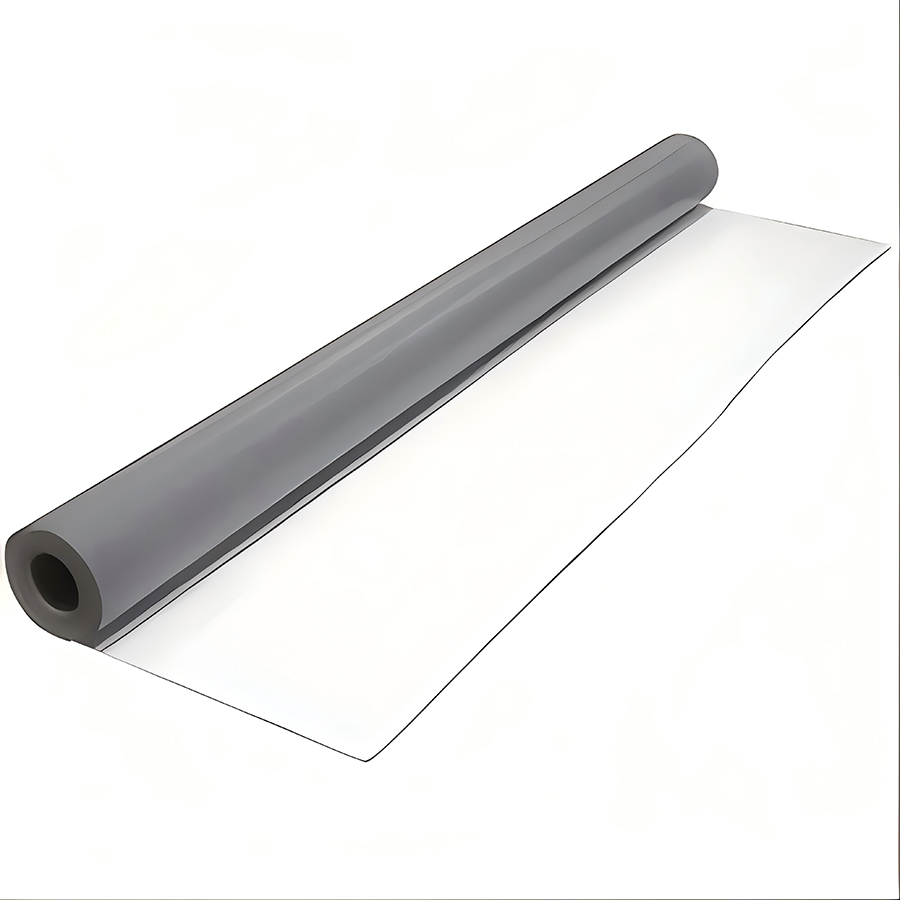
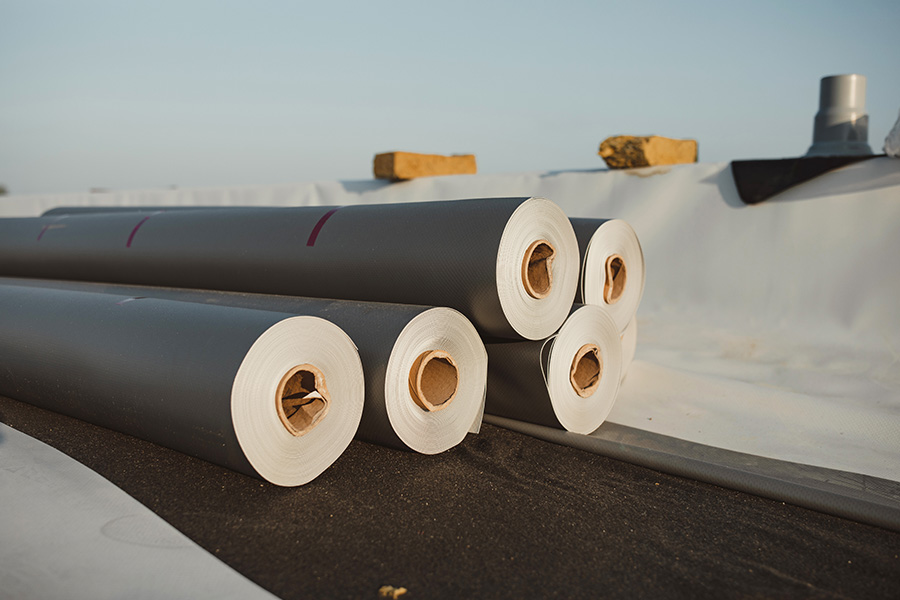
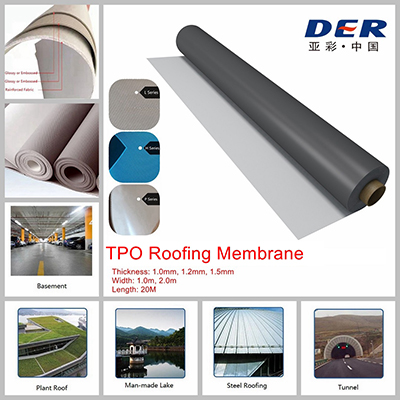
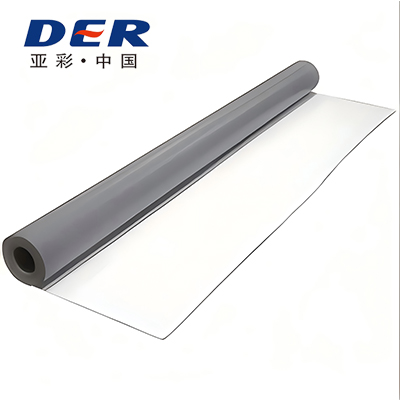
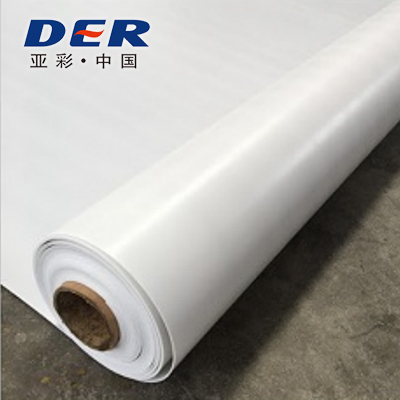
TPO membrane rolls prepared for roofing and waterproofing use.White TPO membrane roll shown as a product material reference.Single-ply TPO sheet format for commercial roofing specification.
Installation Logic
Three common TPO roof attachment approaches
The final roof assembly must be designed by the project team and installed by trained roofing professionals. The material order should match the attachment method because roll layout, fasteners, adhesive, substrate condition and labor planning are different.
Mechanically Attached
Membrane is secured through the roofing assembly with a designed fastening pattern, then adjacent sheets are heat welded. Confirm deck type, fastener pullout, perimeter zones and wind-uplift requirements.
Fully Adhered
Membrane is bonded over an approved substrate using a compatible adhesive system. Surface condition, adhesive coverage, ambient conditions and compatible insulation/cover board are critical.
Self-Adhered Direction
Factory-applied pressure-sensitive adhesive can simplify the field workflow on suitable substrates. Storage temperature, release liner handling, alignment and rolling pressure must be managed carefully.
Field Seam Quality
TPO membrane welding: four field checks that matter more than a temperature number
Hot-air welding is one reason TPO is widely used as a single-ply roofing membrane, but there is no universal machine temperature that should be copied into every project. Membrane condition, ambient temperature, wind, welding speed, pressure and equipment all affect the correct setup.
1
Prepare the lap
Keep overlap areas clean, dry, correctly aligned and free from contamination that can interfere with fusion.
2
Make a trial weld
Before production seaming, make and inspect a test weld under actual site conditions and adjust equipment accordingly.
3
Control heat, speed & pressure
Stable welding requires the variables to work together. A temperature number alone does not define seam quality.
4
Inspect the finished seam
Use the project-approved inspection method and repair suspect areas before the roof is released.
Manufacturing & QC
How to control a TPO membrane order from approved sample to repeat shipment
For bulk TPO membrane procurement, the important question is not only “Can the factory make TPO?” It is whether the same specification can be repeated with controlled thickness, reinforcement, surface, welding behavior, roll dimensions and packaging.
2. Sample ApprovalConfirm physical construction, surface, roll direction and any required test documents.
3. Production ControlMonitor thickness consistency, reinforcement alignment, appearance and roll dimensions.
4. Welding ReviewCheck seam-welding compatibility and define field test-weld expectations before installation.
5. Packing & ReleaseVerify labels, pallet plan, quantity, shipping marks and document package before shipment.
Factory Release Checklist
What a TPO membrane factory should control before the rolls ship
For importers and OEM buyers, repeatability is the commercial issue. The release plan should focus on the attributes that can change installation behavior, project acceptance or the consistency of a private-label SKU.
Construction
Confirm membrane type, reinforcement/backing direction and the approved product construction.
Thickness & Dimensions
Verify the agreed nominal thickness, roll width, roll length and project-specific tolerance plan.
Surface & Color
Check appearance, color direction, contamination and defects that could affect acceptance or welding.
Roll Winding
Review roll formation, edges, identification and handling condition before packing.
Traceability
Keep label, batch, SKU and approved-sample references aligned for repeat orders.
Packing & Documents
Match palletization, shipping marks and the agreed inspection/test document package to the purchase order.
Manufa, cturer Evidence
Built for B2B roll supply, OEM programs and repeat specifications
DERFLEX publicly presents an integrated production base and export-oriented organization supporting international material supply. For a TPO project, the relevant value is the ability to discuss specification, production control, labeling, packaging and repeat-order consistency around the actual commercial program.
60,000㎡Integrated production area published by DERFLEX
450+Full-time employees published by DERFLEX
25+Senior engineers published by DERFLEX
120+Countries and regions served, published by DERFLEX
Specific TPO production capacity, MOQ, lead time, available reports and custom options should be confirmed for the exact membrane specification in the quotation. This page does not invent project-specific commercial figures.
Commercial Roofing Applications
Where TPO roofing membrane is commonly specified
TPO is especially relevant where large roof areas benefit from a single-ply membrane with welded seams and light-colored reflective surfaces. Project suitability still depends on the total roof assembly and local design requirements.
Warehouses & Logistics
Large low-slope roof areas where roll width, installation speed, seam planning and reflective white surfaces can influence project efficiency.
Factories & Industrial Buildings
Waterproof roof systems for manufacturing and storage facilities, with attention to rooftop equipment, maintenance traffic and penetrations.
Retail & Commercial Buildings
Single-ply roof assemblies for shopping, office and mixed-use buildings requiring practical maintenance and waterproofing access.
Public & Institutional Roofs
Schools, terminals, healthcare and municipal buildings where specification documentation and installation quality control are important.
Roof Retrofit / Recover
Existing roof upgrades after substrate, moisture and compatibility conditions have been professionally evaluated.
OEM & Distributor Stock
Repeatable roll goods for importers and roofing-material brands that need stable dimensions, labeling, packaging and export coordination.
Material Comparison
TPO vs PVC vs EPDM roofing membrane
There is no single membrane that is ideal for every roof. The more useful comparison is based on seam method, chemical exposure, reflectivity, flexibility, installation system and the local contractor’s experience.
Decision Area
TPO
PVC
EPDM
Material Family
Thermoplastic polyolefin
Thermoplastic polyvinyl chloride
Thermoset synthetic rubber
Typical Seam Logic
Hot-air welded
Hot-air welded
Taped / adhesive seam systems
Reflective White Surface
Commonly specified
Commonly available
Typically black, with white variants available in some systems
Chemical / Grease Exposure
Evaluate project-specific compatibility
Often considered where chemical and grease resistance is a major requirement
Evaluate chemical compatibility carefully
Commercial Low-Slope Roofs
Widely used direction
Widely used direction
Widely used direction
Best Buying Question
Which structure and thickness fit the roof assembly?
Does the project need PVC-specific chemical/fire performance?
Does the contractor prefer a thermoset seam system?
For a deeper material alternative within DERFLEX, review the PVC vinyl roofing membrane page. Membrane selection should follow the complete roof-system specification, not a generic material ranking.
Procurement Risk Control
Common TPO membrane sourcing mistakes
These issues create more downstream cost than a small difference in roll price.
Buying by thickness name only
“60 mil TPO” is not a complete specification. Reinforcement, thickness over reinforcement, backing, surface and test requirements can still differ.
Ignoring the roof attachment system
A roll specification should be compatible with how the project is mechanically fastened, adhered or otherwise assembled.
Assuming every TPO meets the tender standard
Place the exact standard and required test documents in the RFQ. Do not accept a generic “TPO” description as proof of compliance.
Choosing the widest roll without handling review
Wider rolls reduce seams but can increase roll weight and rooftop handling difficulty. Balance seam reduction with logistics and crew capability.
Not testing weld settings on site
Hot-air welding depends on membrane condition, ambient conditions, speed, pressure and temperature. Make test welds before production seaming.
Skipping repeat-order controls
For distributor programs, keep approved samples, agreed specs, labels and inspection points consistent so later containers match the commercial SKU.
Tender Specification Builder
Copy this TPO membrane specification framework into your RFQ
A structured tender reduces vague quotations and makes supplier comparison easier. Replace every bracketed field with the actual project requirement.
What to send DERFLEX for a more accurate TPO membrane quotation
A complete RFQ reduces back-and-forth and helps the factory quote the correct construction rather than a generic membrane roll.
1
Project & Roof Information
Building type and roof area
New roof, replacement or recover
Deck / insulation / cover-board direction
Climate and wind-design requirements
Installation method and contractor preference
2
Membrane Specification
Reinforced, fleece-backed, self-adhered or homogeneous
Thickness and roll dimensions
White, gray, tan or custom color
Required test standard / documentation
Quantity, private label and packaging requirements
3
Commercial Information
Destination country and port
Required delivery window
Sample requirement before bulk order
Pallet / container loading preferences
Repeat-order or distributor-program expectations
4
Approval & Quality Plan
Approved sample / golden sample process
Critical dimensions and tolerances
Required inspection records
Welding or application test expectations
Batch labeling / traceability requirements
Manufacturer Supply Model
Why importers and project buyers use DERFLEX as a TPO membrane manufacturer
DERFLEX serves the manufacturer side of the supply chain: membrane roll production, specification coordination, OEM/private-label direction, packing and repeat international supply. Buyers searching for a TPO membrane manufacturer in China should still separate material manufacturing from local roof-system design, installation, code approval and contractor warranties—those responsibilities belong to the complete project system.
Specification Discussion
Thickness, width, length, color, reinforcement/backing and packaging can be discussed around the actual order instead of being limited to one retail SKU.
OEM & Distributor Programs
Private-label direction, roll labels, pallet planning and repeat-order SKU control can be built into the sourcing process.
Export-Oriented Supply
International buyers can coordinate packing, shipment information and the document package required for the specific project or market.
DERFLEX TPO Topic Cluster
Related TPO and roofing membrane resources
Use these pages for narrower technical or material questions while keeping this page as the main commercial TPO roofing membrane manufacturer entry.
TPO roofing membrane questions from project buyers
What thickness of TPO roofing membrane should I choose?
Common DERFLEX project directions include 1.2 mm, 1.5 mm, 1.8 mm and 2.0 mm. The right thickness depends on the specified roof system, traffic, puncture exposure, attachment method, service environment and project requirements. Do not select thickness in isolation from reinforcement and the full roof assembly.
Is 1.5 mm TPO the same as 60 mil TPO?
They are close but not mathematically identical. 1.5 mm is about 59 mil, while 60 mil is 1.524 mm. For tender and purchasing documents, use the exact nominal thickness required by the project rather than treating the terms as automatically interchangeable.
How are TPO roofing membrane seams joined?
TPO is a thermoplastic membrane, so field seams are normally joined with hot-air welding. Successful welding depends on membrane condition, overlap, temperature, speed and pressure. Installers should make test welds and follow the approved project installation procedure.
What is the difference between reinforced and fleece-backed TPO?
Reinforced TPO contains internal reinforcement for dimensional and mechanical stability in the membrane sheet. Fleece-backed TPO adds an integral backing layer that can be useful in selected adhered or recovery assemblies. The correct construction depends on the roof system and substrate.
Can TPO membrane be supplied in custom width and color?
DERFLEX currently presents common width directions of 2 m, 3 m and 4 m and common colors including white, gray and tan, with custom production discussion available. Custom requirements should be confirmed with quantity, roll handling and project specifications before order.
Does DERFLEX TPO membrane meet ASTM D6878?
If ASTM D6878 or another standard is required, include the exact standard and document requirement in your RFQ. This page does not make an unverified blanket certification claim. DERFLEX should confirm the applicable test report or offered specification before purchase.
What does TPO membrane stand for?
TPO stands for thermoplastic polyolefin. In roofing, the term describes a heat-weldable thermoplastic single-ply membrane used on flat and low-slope roofs.
Is TPO membrane waterproof?
The TPO sheet is used as the waterproofing layer in a single-ply roof system. Actual roof watertightness depends on the complete assembly, welded seams, penetrations, edges, flashings, drainage and installation quality—not the sheet alone.
Should I choose 60 mil or 80 mil TPO?
That choice should follow the roof specification and service conditions. A thicker sheet can add material thickness, but durability also depends on reinforcement, membrane formulation, rooftop traffic, puncture exposure, attachment, detailing and maintenance. Compare the complete specification rather than thickness alone.
Is TPO membrane the same as PVC roofing membrane?
No. Both are thermoplastic single-ply roofing membranes and both can use hot-air welded seams, but TPO is based on thermoplastic polyolefin while PVC is based on polyvinyl chloride. Chemical exposure, formulation, accessories and project requirements can make one material more suitable than the other.
What information is needed for a TPO membrane quotation?
Send the roof application, membrane structure, target thickness, roll width and length, color, attachment method, quantity, destination, private-label requirements and any required test standard or documentation. For project work, also include deck, insulation and wind-design information when available.
Send your TPO membrane specification for manufacturer review
For a project or distributor quotation, provide the membrane structure, thickness, roll size, color, attachment direction, order quantity, destination and required standard/document package.
✓ Roof area / application✓ Reinforced / fleece-backed / self-adhered✓ Thickness & roll size✓ Color & packaging✓ Quantity & destination✓ Required standard / test documents