


Reinforced TPO Roofing Membrane for Commercial Low-Slope Roofs
Reinforced TPO roofing membrane combines a thermoplastic polyolefin weathering layer with internal polyester reinforcement to improve dimensional stability and load distribution in commercial roofing systems. DERFLEX supports project buyers with thickness, roll width, color, reinforcement direction, packaging and hot-air-weldable membrane supply.
Designed for contractors, roofing-material distributors, waterproofing brands, project procurement teams and OEM programs that need a reinforced TPO membrane specified around the roof assembly—not selected by membrane thickness alone.
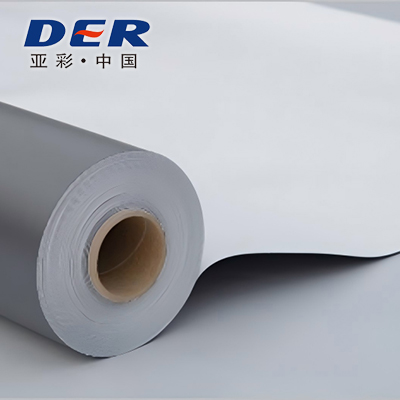
What is reinforced TPO roofing membrane?
It is a heat-weldable thermoplastic polyolefin roof membrane with an internal fabric or scrim reinforcement—commonly polyester—encapsulated within the sheet. The reinforcement helps the membrane carry tensile loads, resist distortion around fastening zones and maintain dimensional stability across large low-slope roof areas.
For procurement, the important point is that “reinforced” is a construction type, not a complete roof-system specification. The roof deck, insulation, cover board, attachment method, fastener pattern, adhesive, perimeter details, welding and local code requirements still determine the final assembly.
Why buyers specify a reinforced TPO membrane instead of generic TPO sheet
A generic TPO sheet may describe the polymer family but does not tell a contractor how the membrane will behave under attachment loads, thermal cycling or large-area installation. Reinforced membranes add an engineered carrier layer inside the sheet so the membrane can better distribute stress and support roofing assemblies where mechanical strength and dimensional control matter.
This is especially relevant for mechanically attached roofs, large warehouse roofs, industrial buildings, distribution centers and other projects where membrane width, fastener layout, seam placement and wind-uplift design interact with one another.
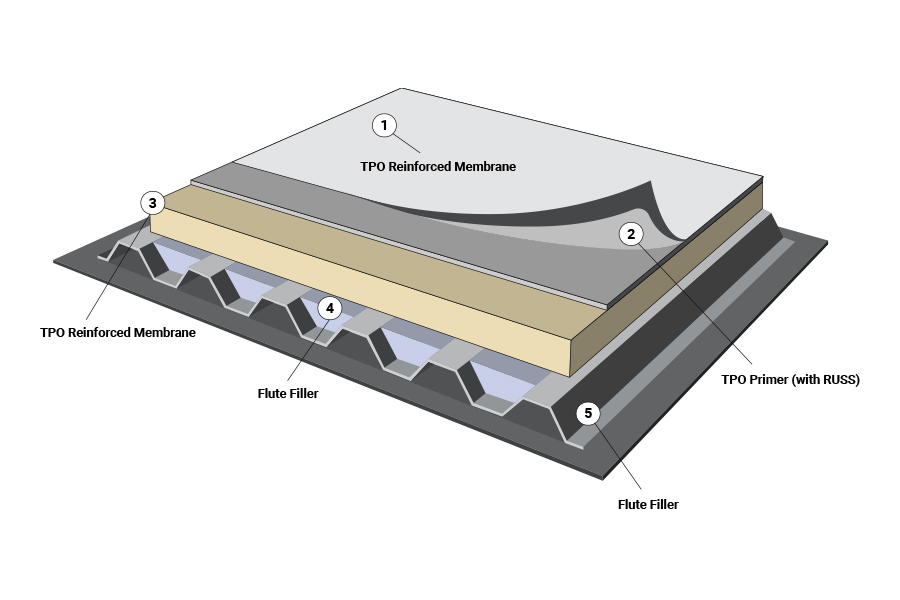
Inside a polyester-reinforced TPO roofing membrane
Reinforcement should be evaluated as part of the membrane construction, not as a marketing label. Ask where the scrim sits, how it is encapsulated, what the finished thickness is, and which roof system the sheet is intended to support.
Top TPO weathering layer
The exposed thermoplastic surface provides the roof-facing weathering layer and a weldable surface for compatible hot-air seam construction.
Polyester reinforcement / scrim
The internal carrier provides tensile support and helps distribute mechanical loads. Reinforcement density, yarn construction and position should be confirmed when the project has defined engineering requirements.
Bottom TPO layer
The lower polymer layer encapsulates the reinforcement and completes the membrane sheet. Compatibility with adhesives, substrate layers and accessories is system-dependent.
Weldable overlap zone
Successful seams depend on clean surfaces, suitable overlap, membrane formulation, welding temperature, speed and pressure. Site trial welds should be part of installation control.
Performance advantages that matter in real roof assemblies
The internal scrim does not replace proper roof engineering, but it changes how the sheet handles stress, installation loads and dimensional movement.
Tensile load distribution
Reinforcement helps spread forces through the membrane rather than relying only on the polymer layers, which is important around securement and large field areas.
Dimensional stability
A reinforced construction can help control sheet movement during handling, temperature cycling and installation, supporting more predictable field layout.
Tear propagation resistance
The scrim provides an internal network that can help resist tear growth when the membrane is subjected to localized stress. Exact values require product-specific test data.
Mechanical attachment support
Reinforced sheets are commonly used in mechanically attached single-ply systems because the membrane must work with fasteners, plates and roof-zone loading.
Heat-welded seam construction
TPO remains thermoplastic and weldable at lap seams. Reinforcement sits inside the sheet while the exposed TPO surfaces create the welded overlap.
Project specification control
Reinforced construction makes it practical to specify thickness, width, color, carrier direction, packaging and documentation as a coordinated procurement package.
Reinforced TPO vs homogeneous, fleece-backed and self-adhered TPO
These product forms solve different installation problems. Use the table to identify the right starting point, then confirm the complete roof-system design.
| TPO structure | Main construction idea | Typical procurement intent | Where to pay attention |
|---|---|---|---|
| Reinforced TPO roofing membrane | Internal polyester scrim encapsulated by TPO layers | Commercial roof field membrane; mechanically attached or compatible adhered systems | Scrim type, nominal thickness, thickness over scrim, fastener/plate system, wind-uplift assembly |
| Homogeneous / non-reinforced TPO | TPO sheet without internal reinforcement | Specific waterproofing, detailing or fabrication directions where extra conformability may be required | Do not substitute for reinforced field membrane without system approval |
| Fleece-backed TPO | TPO membrane with fleece laminated to the back | Adhered, recover or substrate-specific systems depending on the manufacturer | Adhesive compatibility, fleece weight, existing roof condition, moisture and substrate preparation |
| Self-adhered TPO | Factory-applied adhesive layer on the membrane back | Projects aiming to simplify adhesive application and installation workflow | Storage, substrate condition, primer/adhesive system, temperature limits and manufacturer instructions |
Reinforced TPO membrane specifications for early-stage sourcing
Use these items to build an RFQ. Final product values must be confirmed against project design, local code, required test documents and the exact DERFLEX production specification.
| Item | DERFLEX sourcing direction | Buyer verification |
|---|---|---|
| Product type | Reinforced TPO roofing / waterproofing membrane | Confirm exposed roof use and intended assembly |
| Reinforcement | Polyester reinforcement direction available for reinforced TPO | Request scrim construction and product-specific data when required |
| Common thickness direction | 1.2 mm, 1.5 mm, 1.8 mm, 2.0 mm; project-specific options may be discussed | State nominal thickness and any required test method |
| Roll width | 2 m, 3 m, 4 m or customized production width direction | Balance seam count, lifting weight, roof access and installation crew capability |
| Roll length | 20 m, 30 m, 50 m or project-specific roll planning | Confirm final roll weight and handling plan |
| Surface color | White, gray, tan; custom colors subject to order conditions | Specify reflectance/color requirement if project documentation requires it |
| Seaming | Hot-air weldable TPO | Confirm welding procedure, test weld protocol and compatible accessories |
| Installation direction | Mechanically attached, fully adhered or other compatible system direction | Final assembly must be designed around deck, insulation, wind and code requirements |
| Packaging | Protective roll packing, labels and pallet direction can be discussed | Include roll identification, batch traceability and private-label requirements in the PO |
Common North American thickness references
How to choose a reinforced TPO membrane for the roof system
Start with the assembly and installation method, then select membrane thickness and roll format. This avoids over-specifying thickness while under-specifying the parts that control actual roof performance.
Mechanically attached commercial roof
- Prioritize reinforced field membrane and compatible securement system.
- Provide deck type, building height, roof dimensions and project wind-design requirements.
- Confirm fastener/plate layout and perimeter/corner zones through the roof-system design.
- Do not treat membrane tensile strength as a substitute for system wind-uplift approval.
Fully adhered roof system
- Confirm reinforced membrane suitability with the intended adhesive and substrate.
- Include insulation/cover-board type and surface condition in the RFQ.
- Define any vapor-control or recover conditions before selecting the membrane backing.
- Ask for system-compatible primers, adhesives and detail accessories where required.
Large warehouse / logistics center
- Optimize roll width around crane/roof access, crew handling and seam count.
- Coordinate sheet layout with drains, curbs, skylights and rooftop equipment.
- Use white or other project-approved color when reflective roof design is required.
- Plan repeatable roll labeling to simplify large-roof installation sequencing.
Roof recover / retrofit
- Inspect the existing roof and moisture condition before choosing a recover system.
- Determine whether smooth reinforced, fleece-backed or another construction better fits the substrate.
- Confirm separation layer, cover board and compatibility requirements.
- Do not specify a recover based only on avoiding tear-off; the existing assembly must be technically suitable.
Product, roll-supply and roof-application context
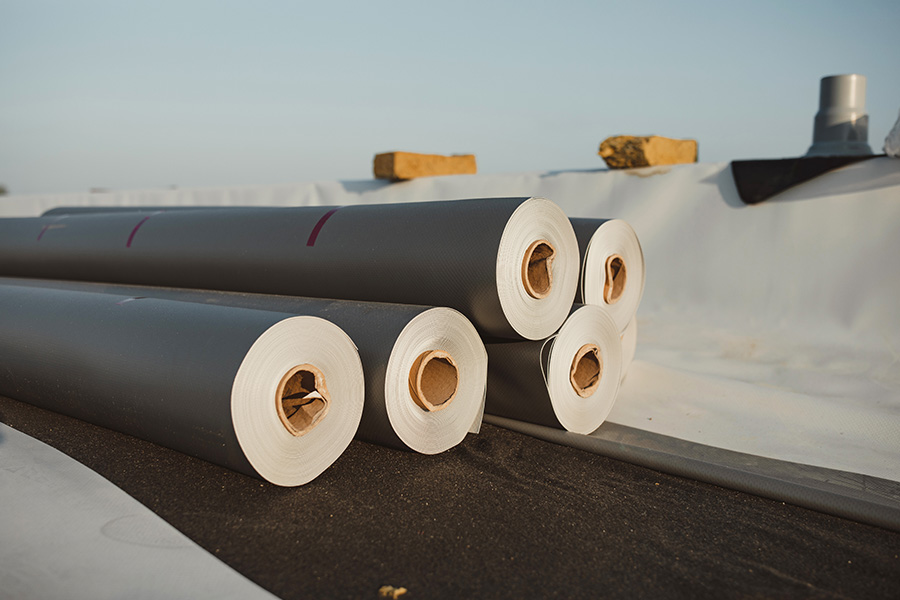
Use product and project images to communicate membrane format, installation scale and roof-system context—not decorative stock photography.
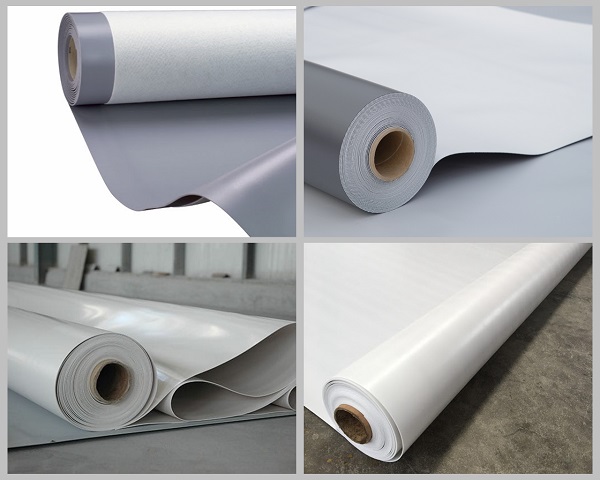
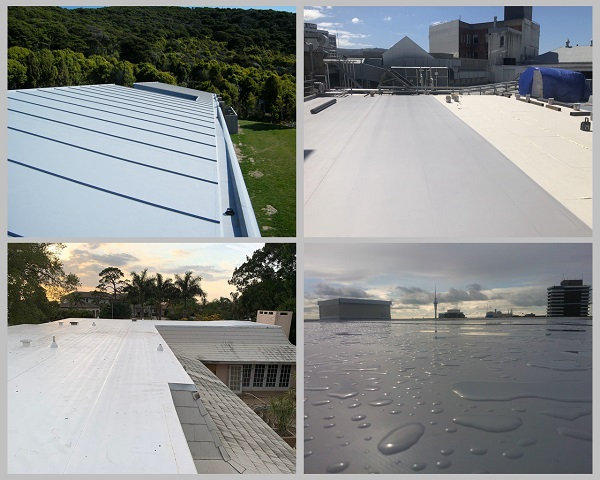
Reinforced TPO still depends on correct welding and detailing
A strong reinforced sheet cannot compensate for dirty weld surfaces, incompatible accessories or poor roof detailing. Treat installation controls as part of product acceptance.
Common mistakes when sourcing reinforced TPO roofing membrane
The lowest roll price is rarely the only cost driver. Poorly defined specifications can create more seams, difficult handling, incompatible system components or missing project documentation.
Add reinforcement type, roll dimensions, color, installation direction, required standard, packaging and document requirements.
Wind performance belongs to the tested roof assembly. Deck, fasteners, plates, insulation and roof-zone layout matter.
For reinforced membranes, total nominal thickness alone does not describe how much polymer lies above the reinforcement.
Wider rolls can reduce field seams, but they also increase roll weight and may complicate lifting, roof access and crew handling.
Flashings, adhesives, coated metal and cleaners should be confirmed for compatibility with the intended membrane system.
Put test reports, labels, batch information and any project-required compliance documents into the RFQ and purchase order.
Where reinforced TPO roof membrane is commonly specified
The product is most relevant where large low-slope roof areas need a heat-weldable field membrane with internal reinforcement and controlled system attachment.
Warehouses
Large roof fields where sheet layout, roll width, seam planning and mechanically attached systems are important procurement variables.
Industrial facilities
Factories and plants needing exposed single-ply waterproofing with project-specific thickness and attachment direction.
Logistics centers
Wide low-slope roofs where installation efficiency and repeatable roll supply can materially affect project workflow.
Retail & commercial buildings
Shopping centers, offices and mixed-use facilities where reflective roof design and maintainable welded seams may be specified.
Public buildings
Schools, municipal buildings and institutional facilities requiring clear documentation and coordinated roofing assemblies.
Roof retrofit projects
Re-roofing programs where existing roof condition is evaluated and a compatible reinforced or backed TPO system is selected.
What to send DERFLEX before asking for reinforced TPO pricing
A complete RFQ helps the supplier quote the correct construction instead of returning a generic TPO roll price that may not fit the project.
Roof & system information
- Building type and project location
- Total roof area and approximate dimensions
- Roof deck / existing roof substrate
- New construction, replacement or recover
- Mechanically attached, adhered or other system direction
- Insulation / cover-board structure if already defined
- Wind-design, code or approval requirements
Membrane & order information
- Required reinforced TPO construction
- Target thickness in mm or mil
- Roll width and preferred roll length
- Color / reflectance requirement
- Required ASTM, EN or local test documentation
- Quantity, destination port and delivery plan
- Label, pallet and private-label packaging needs
A sourcing page built around specification control—not generic roofing claims
DERFLEX already supplies TPO membrane and related waterproofing materials. For reinforced TPO projects, the purchasing conversation can be structured around the variables buyers actually need to control.
Structure-specific discussion
Compare reinforced, homogeneous, fleece-backed and self-adhered directions instead of treating every TPO sheet as the same product.
Roll planning for projects
Discuss thickness, width, roll length and packaging against roof area, installation workflow, handling and export requirements.
Documentation before production
Put project standards, test-document requirements, labeling and batch information into the sourcing process before the order is locked.
Continue through the TPO roofing topic cluster
These existing DERFLEX pages cover broader TPO supply, film structures, thickness planning and alternative waterproofing materials.
Reinforced TPO roofing membrane questions buyers ask
Short, direct answers for contractors, distributors and project procurement teams.
What does “reinforced TPO membrane” mean?
It means the TPO sheet contains an internal fabric or scrim reinforcement, commonly polyester, encapsulated between thermoplastic layers. The reinforcement is intended to improve mechanical support and dimensional stability compared with a purely homogeneous sheet.
Is reinforced TPO better than non-reinforced TPO?
They serve different purposes. Reinforced TPO is commonly used as field membrane where tensile support and system attachment matter. Non-reinforced TPO can be useful for certain detailing or fabrication needs because it is more conformable. The correct product depends on the roof-system design.
What thickness should I choose for reinforced TPO roofing?
Thickness should be selected together with roof traffic, expected service conditions, system attachment, code requirements and project documentation. DERFLEX's current TPO sourcing direction includes 1.2, 1.5, 1.8 and 2.0 mm options; confirm the exact product specification before ordering.
Is 60 mil TPO the same as 1.5 mm TPO?
They are close but not identical: 60 mil is approximately 1.524 mm. If a tender specifies a mil value or a formal test method, keep that requirement explicit rather than assuming a rounded metric thickness is automatically equivalent.
Can reinforced TPO be mechanically attached?
Yes, reinforced TPO is widely used in mechanically attached roofing systems. However, the membrane alone does not determine wind-uplift performance. The tested assembly, roof deck, fasteners, plates, insulation and fastening layout must be designed together.
TPO field seams are normally joined by hot-air welding. Surface cleanliness, overlap, welding temperature, speed and pressure must be set for the actual membrane and site conditions, with trial welds and seam inspection used as installation controls.
What information should I send for a DERFLEX reinforced TPO quote?
Send project location, roof area, deck or substrate, installation system, target thickness, roll dimensions, color, quantity, required standards or test documents, packaging/label needs and destination. This gives the supplier enough information to quote the intended construction rather than a generic TPO roll.
Request a reinforced TPO membrane specification
Send DERFLEX the roof application, target membrane thickness, reinforcement requirement, roll width, installation method, quantity, destination and required standards. The quotation can then be aligned with your project or distribution program.
Important: project performance and code compliance depend on the complete roofing assembly and verified product documentation. Final specifications should be confirmed before procurement and installation.