Wood Chip Tarps for Outdoor Biomass and Bulk Storage
Keep rainfall protection, moisture release and daily access in the same specification. DERFLEX supports custom PVC coated polyester wood chip tarps for storage projects where a non-breathable rain barrier is appropriate, with welded panels, reinforced edges and drawing-based finishing.
Fresh or actively drying chips may require a verified vapour-permeable cover. Standard PVC tarpaulin is not a breathable biomass membrane.
Start with the pile.Then specify the cover.
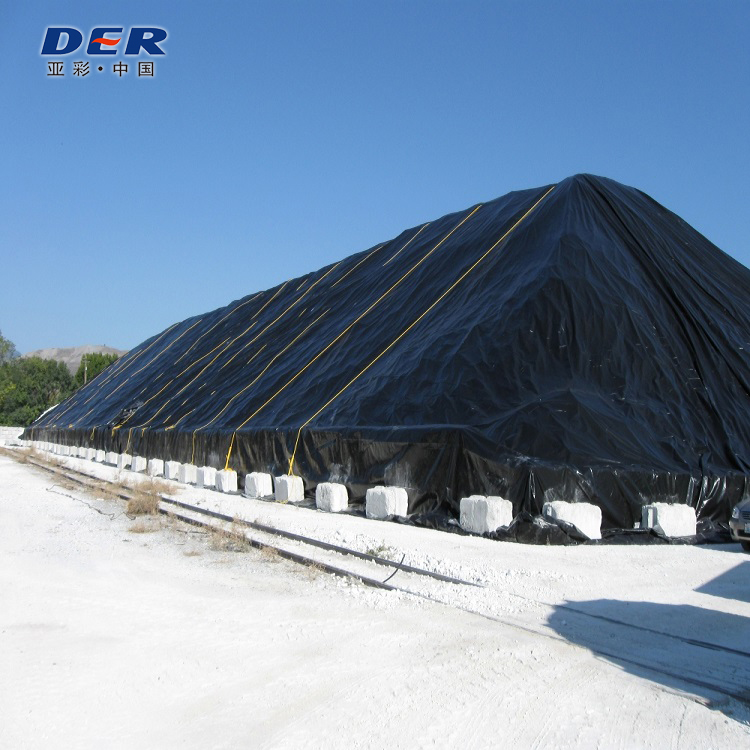
DERFLEX bulk-stockpile reference image. Material suitability and layout for wood chips require separate project review.
The essential answer
What makes a suitable wood chip cover?
A suitable wood chip cover limits rain entry while matching the pile's need to release moisture and heat. Waterproof and breathable describe different functions. Choose the storage method first, then the fabric, seams and anchoring. A heavier impermeable sheet does not replace a drying or ventilation plan.
01 / Material decision
Choose the moisture strategy before the material weight.
Biomass fuel suppliers, sawmills and storage-yard buyers can use this comparison to define the duty before requesting a quotation.
Moisture-release priority
Breathable biomass cover
Assess a purpose-made, water-shedding membrane when fresh or seasoning chips need to release vapour through the covering itself.
Confirm before ordering
Measured vapour transmission, water resistance, installation slope and suitability for the intended chip condition.
DERFLEX PVC cover scope
Non-breathable rain barrier
Discuss custom PVC coated fabric where the storage plan permits an impermeable cover and separately addresses moisture, ventilation and pile condition.
Confirm before ordering
Drainage, condensation management, contact temperature, opening method and site-approved restraint.
System-design priority
Supported roof or enclosure
Consider a separately engineered structure when regular loader access or separation between rainfall protection and the pile is central to operations.
Confirm before ordering
Structural design, clearances, ventilation, fire strategy and which components are included in supply.
Breathable-fabric comparison is selection guidance; it is not a statement that DERFLEX supplies a tested breathable biomass membrane. For related moisture behaviour, read the guide to condensation under tarps.
02 / Pile geometry
Ground width is not cover width.
A tarp must follow the surface of the pile, including its slopes. Sending only the footprint can leave too little fabric for edge coverage, attachment or a change in pile shape.
Record the maximum profile. Provide length, ground width, height and a cross-section at the fullest operating condition.
Measure the developed surface. Include the slope lengths, end treatment and the intended edge termination.
Add the operating details. Mark overlap zones, restraint positions, loader approach and panels opened during withdrawal.
Concept only, not to scale. It shows measurement logic, not an approved wood-chip covering, ventilation or anchoring design.
03 / Custom PVC specification
Turn the storage brief into an agreed cover build.
Use this schedule for enquiry and sample approval. These are specification fields, not a stock product's certified performance values.
PVC coated polyester fabric; a non-breathable barrier.
State whether the project needs rainfall exclusion, vapour release or a separate ventilation system.
GSM, thickness & strength
Confirm the actual construction with DERFLEX against the proposed duty.
Cover area, handling frequency, tear risk and the required test method.
Panel size & seams
Drawing-based dimensions; hot-air or high-frequency welding as appropriate to the build.
Developed surface, roll-width constraints, weld layout and finished-size tolerances.
Perimeter & attachments
Reinforced hems, webbing, eyelets, D-rings, sleeves or pockets for project review.
Site restraint design, loading direction, edge spacing and attachment compatibility.
Outdoor exposure
Review UV and cold-flex requirements, surface finish and colour options.
Location, exposure period, minimum handling temperature and possible pile-contact temperature.
Access & packaging
Discuss modular sections, orientation marking and folded or roll supply.
Loader route, opening sequence, crew or equipment limits, packing and destination.
Agree material, seam and attachment checks before production. GSM alone does not establish finished-cover performance, wind resistance or suitability for hot biomass.
The finished cover has to work as a handled assembly. Its details matter as much as the coated sheet.
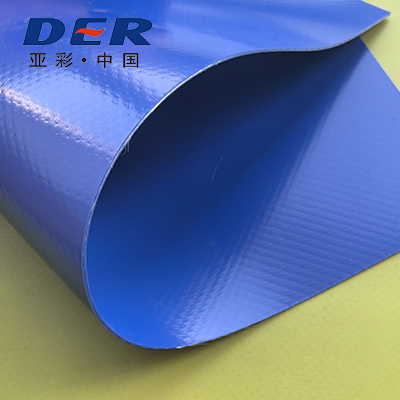
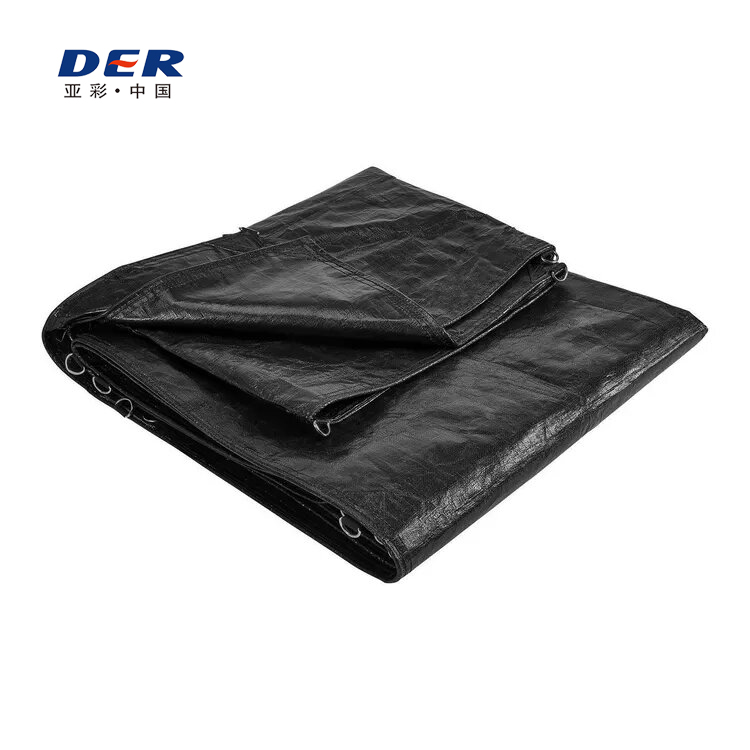
Bulk-cover referenceShows a stockpile application, not a prescribed anchoring or ventilation arrangement for wood chips.Coated fabricReview the actual sample, construction and test requirements for your storage duty.Attachment referenceReinforcement and fitting positions should follow the agreed cover and restraint drawings.
01
Keep water moving off the cover
Map welds, overlaps and edge terminations around the drainage direction. Review low points as the pile settles or material is removed; ponding can change the load on the cover.
02
Spread pull through the perimeter
Specify how restraint transfers into reinforced fabric. Adding more eyelets does not by itself solve a weak hem or an unsuitable anchor layout.
03
Protect against local abrasion
Identify splinters, wall corners and ground contact. Discuss reinforcement or compatible sacrificial protection at contact zones instead of dragging the sheet across rough surfaces.
04
Size panels around real handling
Modular cover sections may simplify partial opening, but they add joins to manage. As a planning check, panel mass in kg ≈ area in m² × GSM ÷ 1,000, before reinforcement and hardware.
Rain protection is one part of biomass management. The operator still needs an appropriate pile arrangement, drainage, inspection and a response plan for abnormal conditions.
Self-heating needs its own controls.Wood chips can generate heat during storage. A PVC tarp is neither a cooling device nor a fire-control system. Have a competent storage specialist approve the arrangement and monitoring; do not assume that flame-retardant fabric makes a pile safe.
Match the cover to the stock condition
Fresh, wet, drying and preconditioned chips are different duties. Record the incoming condition, target condition, turnover pattern and storage duration. Do not infer suitability from the word “biomass” on a quotation.
Keep drainage and access workable
Plan where runoff goes and how equipment approaches. Keep restraints clear of designated traffic routes. Reassess the cover profile after material withdrawal and weather events. Compare related outdoor storage tarp configurations when reviewing the access arrangement.
Inspect, clean and retire deliberately
Check seams, hems, contact wear and loose fittings before reuse. Agree repair materials and acceptance criteria. Clean and dry the cover before packing; use the tarp cleaning and storage guide for general care.
DERFLEX's published custom stockpile cover capabilities combine PVC coated material with drawing-based welding and perimeter finishing. For OEM, distributor or project orders, use one approved drawing and sample specification to align material, fabrication and packing.
Price depends on the developed area and finished build. MOQ, sample arrangements and production lead time need confirmation for the actual order.
Feedstock type, moisture condition, drying requirement and expected storage period.
Pile or bay drawing
Maximum dimensions, cross-section, developed surface and edge details.
Exposure & site plan
Location, drainage, ventilation approach and the approved restraint arrangement.
Opening & handling
Loader access, panel sequence, folding method and handling equipment.
Material & acceptance
GSM or thickness if known, test methods, colour and any documented project requirements.
Order & destination
Number of covers, repeat-order plan, labelling, packing and delivery destination.
07 / Buyer questions
Before you order.
Practical answers for comparing wood chip storage covers and preparing a custom specification.
What are wood chip tarps?
Wood chip tarps are flexible covers used to limit rain and surface contamination during outdoor chip storage. The term can refer to impermeable coated sheets or specialist breathable covers, so buyers should specify the required moisture behaviour rather than ordering by the product name alone.
Should a wood chip cover be waterproof or breathable?
If fresh chips need to release moisture, assess a verified vapour-permeable, water-shedding cover or a separately engineered storage system. A conventional PVC tarp forms a non-breathable rain barrier and requires a project-specific moisture and ventilation assessment. Waterproofing alone does not establish suitability for drying biomass.
Can I seal fresh wood chips under a PVC tarp?
Do not assume that sealing fresh chips is suitable. Wet biomass can release moisture and heat, while an impermeable cover can retain condensation. Have the storage operator or competent specialist approve the cover arrangement and monitoring plan before use; a tarp is not a fire-control system.
What size tarp do I need for a wood chip pile?
Measure the pile's maximum length and developed surface width across its slopes, then specify end coverage, edge allowance, panel overlaps and attachment details. Ground width alone understates the material needed over a peaked pile. Supply a cross-section and allow for changing pile shape during withdrawal.
Does a heavier tarp prevent tearing and wind damage?
Fabric weight is only one variable. Base-fabric strength, weld quality, reinforcement, anchor design, abrasion and the size of each handling panel also matter. Ask for the agreed material and seam checks, and have wind restraint designed for the site rather than selecting by GSM alone.
What are the price, MOQ and lead time for custom covers?
DERFLEX quotes against the approved material, developed cover area, panel count, reinforcement, quantity, packaging and destination. MOQ, samples and lead time require confirmation for the actual specification. Send the pile drawing and storage brief to request a project quotation.
Define the duty. Specify the cover.
Bring your pile profile. Let's review the cover details.
Share the chip condition, drawing, moisture strategy, quantity and destination. DERFLEX can review the custom PVC cover scope against your project brief.