
PVC Barrier Layers
Double-sided PVC coating creates the weather barrier and supports cleaning, welding and repeated outdoor handling. Surface finish and formulation can be adjusted for the project.



A large cover should be engineered around the pile—not enlarged from a standard tarp pattern.
DERFLEX supplies custom stockpile cover tarp systems made from PVC coated polyester fabric for exposed coal, ore, aggregate, salt, fertilizer, soil and other bulk materials. Material grade, panel layout, welded seams, perimeter reinforcement and anchoring details are matched to the actual storage condition.
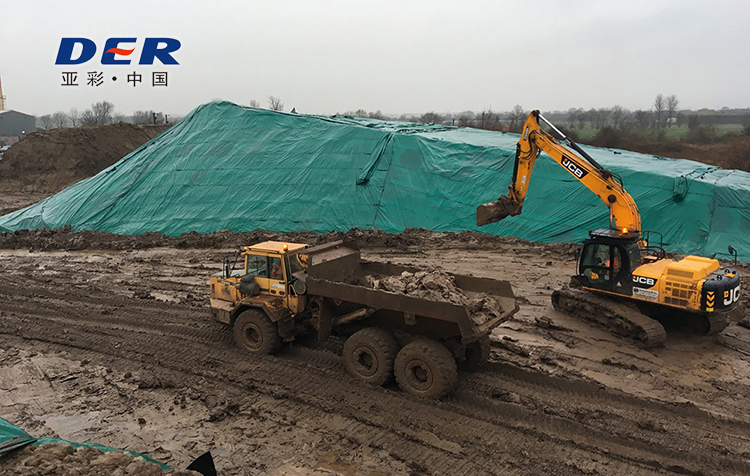
A stockpile cover tarp is a fabricated protective sheet used over loose bulk materials stored in open yards, bunkers, bays or temporary stock areas. Its job may include limiting rainwater entry, reducing surface contamination, controlling material loss, separating the pile from surrounding debris and supporting cleaner site management.
Large stockpile covers behave differently from ordinary utility tarps. A steep pile concentrates tension near the ridge. A low, wide pile creates long wind-exposed spans. Conveyors, retaining walls, loading equipment and uneven ground introduce complex edges. For this reason, the cover specification should combine material selection with seam mapping, perimeter design, anchor spacing and deployment planning.
Fabric weight matters, but it cannot compensate for weak seam placement, an under-designed perimeter or an unsuitable anchoring method.
Double-sided PVC coating creates the weather barrier and supports cleaning, welding and repeated outdoor handling. Surface finish and formulation can be adjusted for the project.
The woven polyester base fabric carries tension and helps resist tearing. Yarn, density and weave direction should reflect the expected pull and cover size.
Panel orientation and weld paths influence water flow, folding, tension distribution and repairability. Seams can be placed away from concentrated wear zones where practical.
Webbing, hems, D-rings, eyelets, sleeves, rope edges or ballast pockets transfer wind and handling loads into the restraint system.
Different sites fail in different ways. The material and fabrication plan should prioritize the most severe exposure rather than adding every optional feature without a clear reason.
PVC coated fabric forms a waterproof surface. Finished-cover performance also depends on seam welding, penetrations, overlap design and drainage management.
UV-stabilized compounds can be selected for outdoor storage programs. Color, surface lacquer and expected exposure duration should be discussed before production.
Reinforced polyester structures support tension and repeated movement. Local patches can be added around corners, lifting points and high-load edge zones.
Heavier coating and sacrificial reinforcement can be used where the cover contacts rough aggregate, walls, machinery or the ground.
Cold-resistant formulation options help reduce stiffness and cracking risk during low-temperature folding, deployment and wind movement.
Split panels, roll-back sections, lifting tabs and marked orientation can simplify partial uncovering for loaders, sampling or material withdrawal.
The values below are engineering directions for quotation. Final construction should be confirmed against pile geometry, local climate, installation method and intended service cycle.
| Product | Custom stockpile cover tarp, bulk material cover, modular stockpile tarp system |
|---|---|
| Main Material | High-tenacity polyester base fabric with double-sided PVC coating |
| Typical Weight Direction | Approximately 550–900 gsm; lighter or heavier structures can be discussed according to cover area and handling method |
| Temperature Direction | Selected compounds may target approximately -30°C to +70°C; confirm the required low-temperature and heat exposure conditions |
| Surface | Matte, semi-matte, glossy or embossed; optional protective lacquer subject to project requirements |
| Color | Black, green, white, blue, grey and custom color matching subject to production feasibility |
| Fabrication | Hot-air welding, high-frequency welding, reinforced sewing where appropriate, modular panel assembly |
| Perimeter Options | Webbing hem, rope edge, D-rings, eyelets, anchor tabs, sleeves, cable pockets or ballast pockets |
| Optional Treatments | UV resistance, cold resistance, flame-retardant, anti-static, anti-mildew or selected chemical-resistance direction |
| Supply Format | Finished cover, numbered modular sections, cut panels or PVC tarpaulin rolls for local fabrication |
| Packaging | Folded and marked by section; pallet, crate or export roll packaging according to size and handling plan |
For projects where manageable panel weight, frequent deployment and transport efficiency are important. Confirm wind exposure and abrasion zones.
A common direction for reusable outdoor covers that need a balance of strength, weldability and field handling.
For high-wear contact areas, longer exposure or demanding restraint systems where additional mass and coating are acceptable.
Performance is influenced by fabric specification, cover geometry, installation, anchoring, drainage, maintenance and site conditions. The table is not a service-life guarantee.
DERFLEX can supply material rolls, fabricated panels or a complete custom stockpile cover tarp according to the buyer’s conversion and installation capability.
These checks help procurement teams compare quotations on equal terms and reduce avoidable changes after production.
Steep or irregular profiles can concentrate tension and create air pockets. Modular sections may adapt better where the pile changes frequently.
Low points can collect water and overload the fabric. Drainage direction, slope continuity and seam orientation should be considered before fabrication.
Closely spaced grommets alone do not guarantee reliable restraint. The perimeter reinforcement must distribute load into webbing, ropes, cables, ballast or fixed points.
Panel weight, folding direction, lifting tabs, equipment access and available crew determine whether the cover can be deployed without damaging it.
Ridges, concrete walls, rough aggregate, conveyor frames and ground contact often need sacrificial pads or local reinforcement rather than a heavier full cover.
The cover structure should be adapted to the stored material, required cleanliness, site access and potential contact with sharp or chemically active substances.
Weather protection and site containment for exposed mineral stock.
Temporary or seasonal covering for bulk products stored near production and job sites.
Protection for selected agricultural bulk storage, subject to hygiene and material-contact requirements.
Reduce direct rain exposure and cross-contamination in municipal or commercial storage yards.
Flexible coverage for plant feedstock and process-related bulk materials.
Temporary separation and weather shielding where project-specific containment design is required.
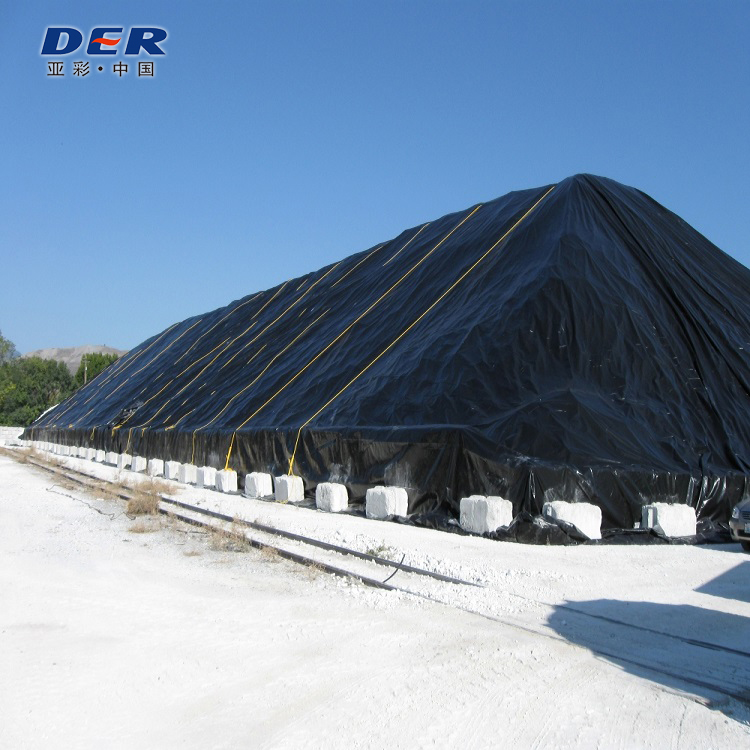
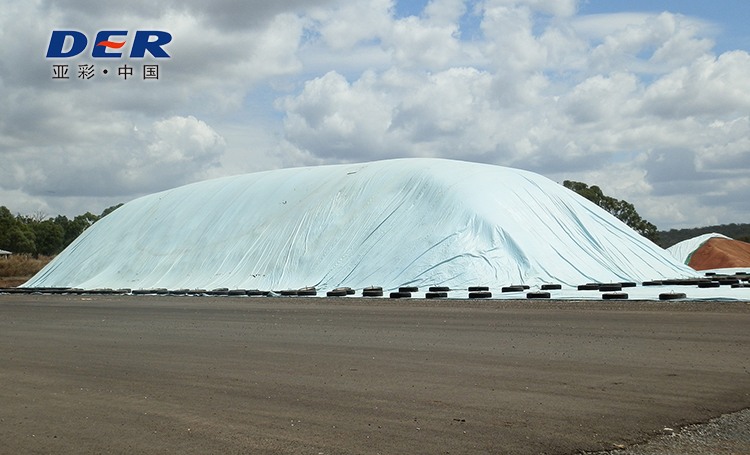
For large-area products, consistent fabrication is as important as the base fabric. Inspection should follow the approved drawing and agreed project specification.
DERFLEX can align inspection items with the confirmed specification and order requirements.
When comparing a stockpile cover tarp supplier, industrial buyers need more than a catalogue size. They need a clear path from coated-fabric selection to repeatable fabrication and export-ready delivery.
DERFLEX can discuss the polyester base fabric, PVC coating, weight, surface, weather package and welding route together rather than treating the cover as an undefined finished sheet.
As a stockpile cover tarp manufacturer, DERFLEX can review dimensions, panel logic, reinforced areas, fastening hardware and packaging against the intended installation method.
Stockpile cover tarp wholesale programs can include repeat dimensions, specification control, section markings, OEM labels and packing plans for distributors, contractors and multi-site operators.
Drawings, samples and agreed inspection points help both parties define what the waterproof stockpile cover tarp is expected to do before bulk production begins.
A useful comparison normalizes material construction, finished dimensions, seam design, reinforcement, hardware, packaging and documentation.
Ask whether the quoted weight describes the finished coated fabric and whether yarn, density, coating and tolerance are defined.
Clarify whether dimensions are cut size or finished size and how weld overlap, hems and slope allowance are handled.
Review seam width, orientation, panel numbering and the maximum handling weight of each section.
Compare webbing width, reinforcement layers, ring type, eyelet spacing, pockets and corner details.
Define who supplies anchors, ropes, ballast, lifting equipment, site labor and any installation drawing.
For multi-section covers, preserve drawings and section identification so damaged areas can be replaced without remaking the full system.
These six internal resources support stockpile-cover selection, especially for mining, large-area fabrication, severe-duty exposure and PVC material comparison.
Answers for industrial buyers comparing custom dimensions, heavy-duty materials, waterproof construction and wholesale supply.
Send DERFLEX the material type, pile dimensions, photos or drawing, expected exposure, anchoring method and order quantity. The team can review a suitable fabric and fabrication direction for quotation.